George Zinn received a harsher prison sentence after police found child sex abuse materials on his phone after arresting him at UVU
In the chaotic moments after Charlie Kirk was shot at Utah Valley University, a man approached a detective who was searching for the killer and yelled, “I shot him! Now shoot me.”
But that man, George Zinn, had nothing to do with Kirk’s death.
Now, the 71-year-old is going to prison for making the false claim, which authorities say diverted law enforcement’s attention when they were trying to find the actual shooter.
Zinn pleaded no contest on Thursday to a third-degree felony charge of obstruction of justice. He also pleaded guilty to two counts of sexual exploitation of a minor, admitting that police found child sex abuse materials on his phone when they questioned him on Sept. 10 after he claimed he had killed Kirk.
Fourth District Court Judge Thomas Low sentenced Zinn to spend up to 15 years in prison for the crimes: Two one-to-15 year terms for the second-degree felony exploitation charges, and a zero-to-five year sentence for obstruction. He will serve the terms concurrently.
I got hearing aids a few years ago, and this is kind of how it feels, especially if you play a musical instrument. For adults, acclimation takes much longer because adult brains reprogram more slowly than kids. Everybody should have their hearing tested periodically or before taking on something that depends on good hearing, like learning a language, music, bird watching, conversation and much more. My audiologist told me it takes the average adult seven years to get hearing aids after they have been diagnosed with hearing loss, which typically declines slowly. For years, I thought my computer was bad because I could not hear videos clearly even at top volume (it wasn’t). Not hearing well has significant behavioral ramifications, which you will discover if you get HAs. Personally, I don’t feel embarrassed about wearing them in the least. They are basically eyeglasses for your ears. I love the tech and even think they are kind of cool. Plus I can actually hear quite well again. ABN
“Monks, a friend endowed with seven qualities is worth associating with. Which seven? He gives what is hard to give. He does what is hard to do. He endures what is hard to endure. He reveals his secrets to you. He keeps your secrets. When misfortunes strike, he doesn’t abandon you. When you’re down & out, he doesn’t look down on you. A friend endowed with these seven qualities is worth associating with.”
This is reportedly from a few years ago in Taiwan before Jensen became super-rich and famous. Nothing very special about it except it shows a dimension of Taiwan culture and Jensen’s personality. They eventually sing a song in English. It’s a good ‘slice of life’ video. ABN
Jensen Huang speaks Taiwanese Hokkien and Mandarin Chinese, though his Mandarin is described as “rusty” and learned later in life. He was born in Taipei, Taiwan, and grew up speaking Taiwanese Hokkien with his parents, who were native speakers. He began learning Mandarin in the 1980s while working at AMD to communicate with Chinese photomask workers. He has since spoken Mandarin in public, including a notable speech at the 2025 China International Supply Chain Expo, where he said, “I am very happy to be here in China,” in Mandarin. He also frequently uses Taiwanese Hokkien when in Taiwan and has been seen speaking it in public events and interviews.
“REPORT: DOMINION DELETED 2.7 MILLION TRUMP VOTES NATIONWIDE. DATA ANALYSIS FINDS 221,000 PENNSYLVANIA VOTES SWITCHED FROM PRESIDENT TRUMP TO BIDEN. 941,000 TRUMP VOTES DELETED. STATES USING DOMINION VOTING SYSTEMS SWITCHED 435,000 VOTES FROM TRUMP TO BIDEN.”
This is infuriating, and entirely due to something else in the background {GO DEEP}. Former National Security Council member (Russia/EurAsia desk) Alexander Vindman is running for a Florida senate seat against Republican Ashley Moody.
First, Alexander Vindman doesn’t stand a chance at winning; however, that’s not his objective with this announcement. Here is where it becomes important to understand the game.
Vindman is directly tied to the background issue of the fraudulent impeachment effort, which I have been working to bring to the forefront. Progress is agonizingly slow but moving forward.
Alexander Vindman has two primary objectives in announcing this effort: (#1) to give himself the political defense against any accountability for his involvement in the IC coup against President Trump in 2019. By running for the Florida Senate seat, Vindman will claim evidence is only coming to light as an outcome of his seeking elected office, i.e. it is a political attack. And (#2) running for office allows Vindman to accept campaign donations that will ultimately be used in his defense against #1. This is how they roll.
Education frees us from whatever ignorant state came before it. But it can also trap us in a different sort of ignorance.
For example, someone who feels lost and alone may join a street gang and learn many new things while forming new alliances. But that same person may well trap themselves in a criminal life-style. Once learned, the education a gang provides can prevent gang members from learning even better things.
I believe all education can be like that if we are not careful. To be clear, education in this context refers to learning anything.
Another way to say the above is once we learn or take on a new semiotic matrix or code, we may become trapped by it. Many people who fell for the semiotics of the Obama campaign retained their “belief” in him long after he had shown himself to be a disappointment. Because many of his supporters are good people, they were trapped in his attractive, but false, semiotic matrix of hope and change.
Similarly, another person may learn that his religion is wrong and take on the semiotics of “science” without realizing for many years that science has limits and that it can operate in ways that resemble fundamentalist religion.
I think we can say with few reservations that it is axiomatic that semiotics, language, and education can trap us even as they free us from whatever state came before them. They do not always trap us, but they almost always can trap us if we are not careful.
A microcosmic example of how language can trap us might be this: you say something sort of muddled, get called on it as if your statement were much more specific, and before you know it you find yourself trapped in defending a point of view you never held.
A teenager might want to learn about psychology and in doing so learn what the word personality means. Then they might decide that their personality is of some type. Then they may get trapped in molding themselves according to their understanding of that personality type. The same thing can happen with astrological signs—you read yours when you are young and retain for many years, if not a lifetime, some sense that you belong to the semiotic matrix indicated by that sign.
In good science, real skeptical science, bold science that demands explanations of facts, traps are usually discovered and overcome quickly. But science has a limited range and it cannot do very much for the emotions, subjectivity, or authentic uniqueness of each individual.
Individuals can overcome some individual or subjective traps through science and general learning, but they can never overcome them all in those ways. Our deepest and most significant subjective states can never be well understood through generalities.
And if those subjective states contain errors or traps (as they surely do), they can only be cleared up by observing those errors or traps as they function in real-world situations.
An especially alert and intelligent gang member might gain insight into what his gang membership is doing to him and how it is trapping him. But he will surely retain many of the gang’s subjective interpretations of the world around him even after he has left the gang. His comprehension of cultural semiotics—the semiotic matrix that he perceives around him—will remain deeply imbued with the gang’s interpretations long after he has left.
For example, the former gang member may retain a sense of pride that makes him quick to anger. He may retain feelings of fear or non-belonging after leaving the gang. Psychotherapy may help in these areas, but a practice like FIML will do even more because FIML will allow the person to see how their former interpretations of the world are still actively functioning even though they may have repudiated the general semiotics of those interpretations.
Joining the gang liberated him from his former state, and then leaving the gang liberated him from the strictures of gang life. But in both cases, his new education has imposed a new semiotic code that can easily trap him in new mistakes and miseries.
The same can be said about all of us concerning almost anything we learn, which means practically anything we do. If we do not come to fully understand how our subjective states—our interpretations–actually function within the semiotic codes we have taken on, we will be trapped in the new state even as we have been liberated, partially, from the former state.
China has executed 11 members of a notorious Myanmar mafia family that was infamous for duping victims in fake online romances.
The Ming crime family was sentenced to death in September by a court in the eastern Chinese city of Wenzhou, with the same court also carrying out the executions on Thursday.
Residents in the UK and the US have fallen victim to similar, sophisticated schemes, after being lured into romantic relationships that resulted in the loss of large amounts of cash.
The clan members were executed for crimes including ‘intentional homicide, intentional injury, unlawful detention, fraud and casino establishment’, according to news agency Xinhua.
The death sentences were approved by the Supreme People’s Court in Beijing, which found that the evidence produced of crimes committed since 2015 was ‘conclusive and sufficient’.
The ‘Ming family criminal group’ had contributed to the deaths of 14 Chinese citizens and injuries to ‘many others’, according to local media.
‘The criminals’ close relatives were allowed to meet with them before the execution,’ Xinhua added.
China has executed 11 people linked to Myanmar criminal gangs, including ‘key members’ of telecom scam operations (pictured, some of the crime family at their sentencing in October at the Wenzhou Intermediate People’s Court in eastern China’s Zhejiang Province)
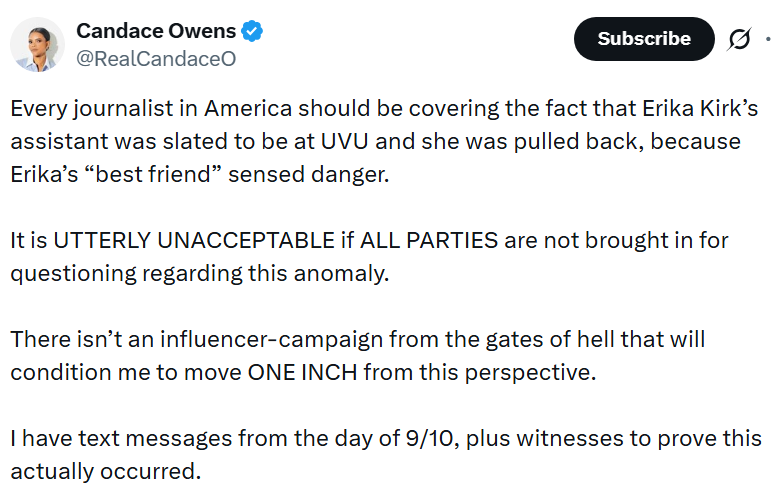
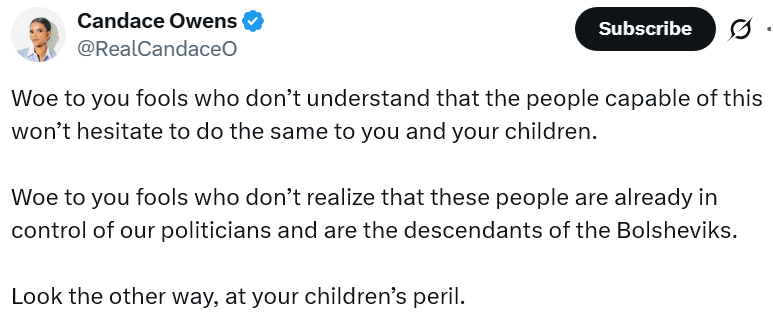
UPDATE: Candace is at her best when she is angry for a good reason. Just my personal opinion, but she has a deeply female way of thinking and expressing herself, on top of which she also has high intelligence and rhetorical talent. If you have missed her series on Charlie Kirk’s assassination or on Brigitte Macron, you might want to check them out. Once you get into the story, it builds like true-life novel. ABN
Here is a study that shows how quickly we distort our memories: Event completion: Event based inferences distort memory in a matter of seconds. The study concludes, in part, that “…results suggest that as people perceive events, they generate rapid conceptual interpretations that can have a powerful effect on how events are remembered.”
This study shows that our memories of events are dynamic and can become distorted very quickly. These findings well support FIMLpractice, which is based on quick interventions while we are speaking to capture sound, usable data that both partners can agree on.
Blogger Christian Jarrett writes about this study saying that “memory invention was specifically triggered by observing a consequence (e.g. a ball flying off into the distance) that implied an earlier causal action had happened and had been seen (Your memory of events is distorted within seconds).” Well-put.
From a FIML point of view, we generate or maintain neurotic interpretations (mistaken interpretations) by believing we are “observing a consequence…that implied an earlier causal action had happened.”
When we misinterpret an utterance during a conversation, we tend to do so in habitual ways; we tend to respond to that utterance as if it had meant something it did not; we tend to understand the “consequence” that happens in our minds as “implying” or being based on something that our partner actually had intended when they had not had any such intention.
This study illustrates very well why FIML practitioners want to develop their skills so that both partners are able to quickly disengage from their conversation while taking a meta-position that allows them to gather and agree upon good data that they can discuss objectively and rationally.
When your partner denies that they meant what you thought they meant, this study will help you believe them.
As the Buddha said: “The mind is everything. What you think you become.”