Taking the stairs will help you live longer – according to new research from the University of East Anglia and the Norfolk and Norwich University Hospital.
A major new study published today reveals that climbing the stairs significantly reduces the risk of dying from cardiovascular disease.
Over the course of the study, people who regularly climb stairs were 39 per cent less likely to die from heart-related problems and 24 per cent less likely to die from any cause – compared with people who don’t climb stairs as often.
The study also reveals that people who climbed the stairs were less likely to develop major cardiovascular conditions such as heart attack, stroke and heart failure.
This video demonstrates some very easy exercises to overcome ‘residual vertigo’, something I have had for many months. The exercises worked well for me after just one go, so I am posting this for others who may have this problem. ABN
A Falcon 9 stage slammed into the lunar surface at seven times the speed of sound, releasing energy equivalent to three tons of TNT
UPDATE: This is apparently a fake video: The attached video is not real footage of the impact. The Falcon 9 upper stage is believed to have crashed into the Moon as described, but no close-up video exists. The crater is too small to see from Earth.
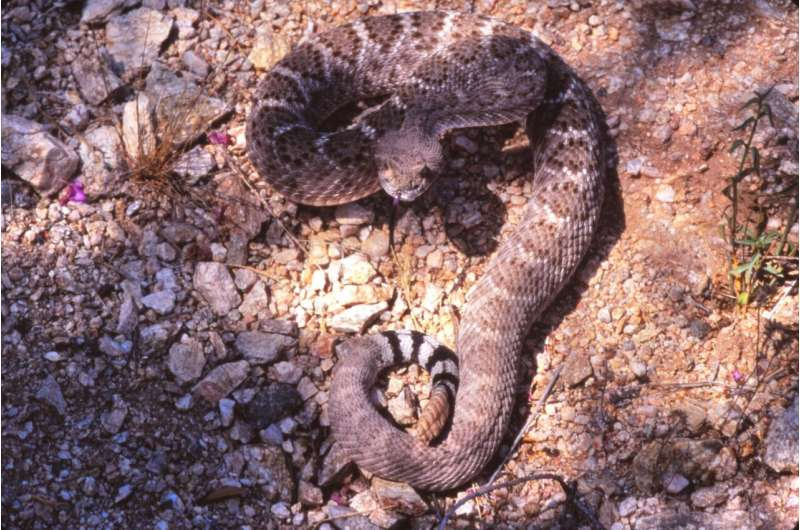
A western diamondback rattlesnake. Credit: Sean B. Carroll
University of Maryland researchers discovered a new approach to treating venomous snakebites—using the same toxin-blocking proteins that snakes evolved to protect themselves. The team found that specific combinations of blood proteins from western diamondback rattlesnakes provided unprecedented neutralizing power against the venom of multiple dangerous snake species.
“This is one of those great stories when nature has already solved a problem we’ve been grappling with for decades,” said Carroll, who also holds the Andrew and Mary Balo and Nicholas and Susan Simon Endowed Chair at UMD.
A neglected treatment gap
Snakebites remain one of the world’s most neglected tropical diseases. The World Health Organization estimates that venomous snakebites kill 80,000 to 140,000 people each year and leave hundreds of thousands more with permanent disabilities. Many victims live in rural regions where access to effective antivenoms is limited.
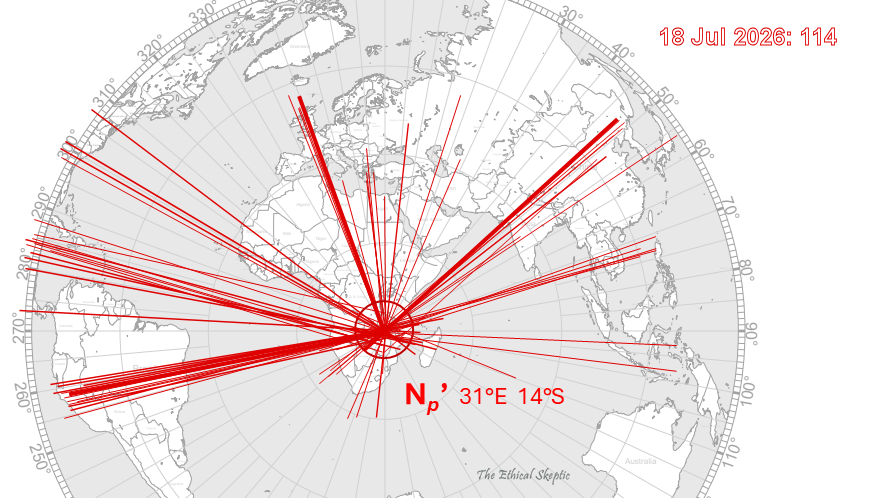
If only the crust displaces, where do we derive the anisotropy necessary to substantiate the 175 sudden cataclysm traditions? The crust, oceans, polar ice, etc., are not even 1% of the way to sufficiency in this regard.
And if the Earth’s architecture involves one integral object with no decoupling potential, how would we ever observe two rotational states to begin with, as the monuments so clearly demonstrate?
The geophysical answer is constrained to somewhere between those bookends, and only the core-mantle boundary contains all five geophysical factors necessary for a decoupling.
This decoupling mechanism must also explain, and function in concert with, rapid climate change.
Thus one can perceive the utter elegance of ECDO Theory. It resolves every current geophysical, cultural, and climate challenge at an optimal logical saddle point.
Plants and bryophytes display diverse forms of electrical activity, yet the organization of endogenous signals in mosses has received little attention. In this work, we present a long, uninterrupted macro-electrode recording of extracellular activity in Brachythecium rutabulum, providing the first centimetre-scale, multi-day characterization of its natural electrical behaviour. The moss exhibits a rich repertoire of electrical events, including components consistent with both physiological activity and slower drift-related processes: fast oscillatory spikes, slower rhythmic fluctuations and very slow depolarization waves. These patterns form a nested hierarchy of time scales, revealing that the moss operates simultaneously through rapid electrical events and slow integrative processes. Analysis across multiple electrode sites shows that electrical activity is not confined to local regions but propagates across the moss cushion with clearly ordered temporal delays. The recordings further reveal gradual baseline shifts, extended epochs of increased and decreased excitability and persistent temporal structure extending across long durations. Together, these findings suggest that moss cushions behave as spatially distributed excitable systems potentially capable of coordinating and integrating electrical signals across both space and time. This multi-layered organization supports the emerging view that moss can serve as a naturally evolved, energy-efficient living substrate for biohybrid sensing and unconventional computation.
Brachythecium rutabulum, commonly known as Rough-stalked Feather-moss, is a widespread, large forest moss in the family Brachytheciaceae. It forms dense, shiny, yellow-green to brownish mats on tree bases, rotten logs, soil, and rocks across the Northern Hemisphere, Europe, Asia, and parts of the Southern Hemisphere.
It should be noted that Canada clutches its pearls, claiming the USA should send “support” to assist Canada is fighting wildfires instead of blaming them for mismanagement. However, reciprocity is a big problem.
Most of the firefighting takes place as an outcome of private-public contracts for costs. The Canadian government blocks U.S. companies from fighting fires in Canada because the Canadian government wants to only pay Canadian companies and workers. U.S. firefighting is not allowed to assist in Canada and get reimbursed.
Conversely, the Canadians quickly want to come to the U.S. to fight fires because the USA reimburses firefighting companies at a higher rate than Canada. The USA has no federal restrictions on Canadian firefighting assistance.
Canadian firefighting professionals would rather fight forest fires in the USA because they make more money. There is no incentive for U.S. firefighting professionals to volunteer their time and effort without getting reimbursed; which is the position of Canada.
In essence, come to Canada and fight our fires for free because we will only pay Canadians. However, also, let our Canadian firefighters come to the USA and make money. It is a very Canadian argument.
Modern surface temperatures are an echo from the past. The Earth is an ocean planet, driven by a pulsating 1,000-year conveyor belt known as Thermohaline Circulation. We are witnessing a planetary memory in the oceans operating on a scale humans struggle to imagine — where deep currents are only now responding to thermal signals set in motion during the Roman Warm Period (250 BC–400 AD).
Indeed, a landmark study by Jake Gebbie (Woods Hole) and Peter Huybers (Harvard) found that the deep Pacific lags so far behind the atmosphere that it is still actively cooling from the later Medieval Warm Period, and only just beginning to digest the climate shift of the Little Ice Age.
The top 3.5 meters of the oceans hold the same heat capacity as the entire global atmosphere. The 3,700 meters below, is the Earth’s thermal vault of all retained heat energy. Oceanic inertia – or momentum – smooths out atmospheric hot and cold spikes.
The oceans absorb and retain 90% of the system’s excess heat while the atmosphere is simply a gaseous envelope, thin and reactive, largely a passenger on the back of the massive oceanic flywheel.
Their high-end 5-degree warnings from 20 years ago were used to drive public anxiety and justify massive overhauls to trusted energy systems. These are evaporating under the sheer weight of actual data.
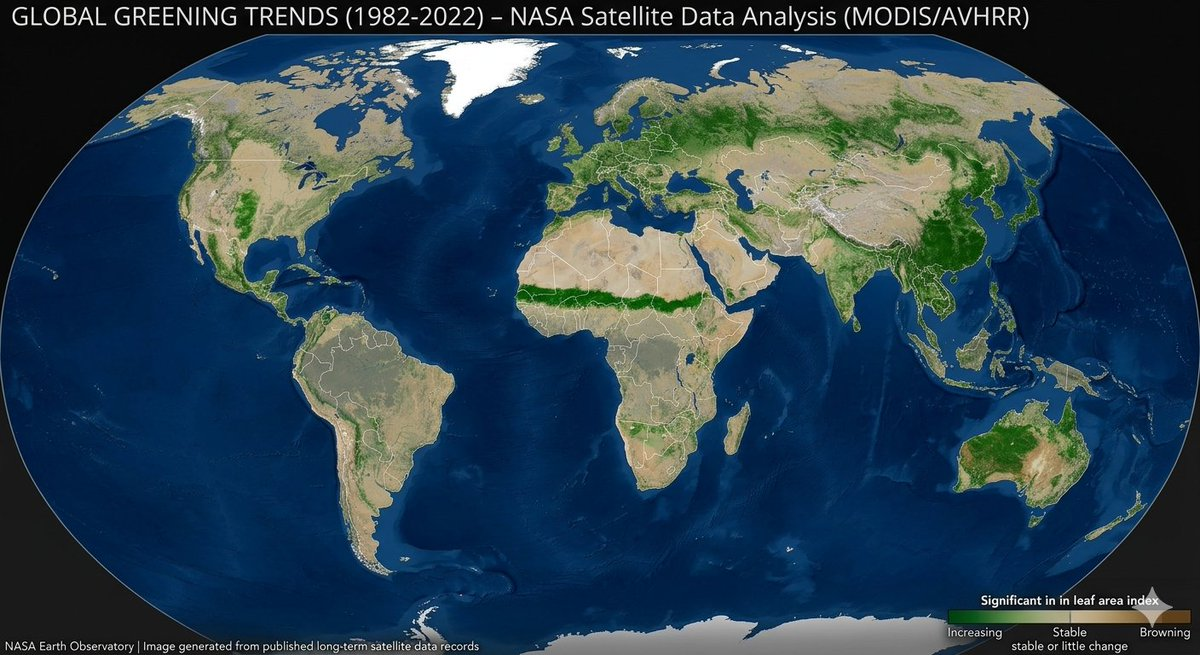
The fear narrative may be ending, but the biosphere is flourishing. NASA satellite data reveal that between 25% and 50% of Earth’s vegetated lands have shown significant greening over the last four decades.
This is an expansion of biomass equivalent to twice the area of the continental United States—and CO₂ fertilisation is responsible for roughly 70% of it. The higher atmospheric CO₂ (hovering around 426 ppm) allows leaf pores (stomata) to stay open for less time to absorb carbon.
This is nature’s built-in water saver, drastically cutting moisture loss and boosting natural drought resistance. As a result, vegetation is actively reclaiming arid fringes of the Sahel, the Middle East and the Australian Outback. Nature is using this extra airborne fuel to thrive in regions once deemed too barren.
Nevertheless, climate bureaucrats are still fixated on economic modeling and their 2050 net zero bank balance target.
The planet itself doesn’t care. Instead it demonstrates the profound, biological benefits of elevated CO₂.
The first of its kind to examine such an extended timeline for recovery and a wide range of biotic groups in boreal forests after clear-cutting, the study analyzed 190 data sets across North America, Europe and Russia. The research looked at the biodiversity of communities within different forest types, including broadleaf trees like aspen or birch, coniferous trees like spruce or pine, and a mix of the two types.
In about half the cases studied, the biodiversity of the forest communities returned to pre-logged levels in less than 30 years, particularly in faster-growing broadleaf forests, where vascular plants and mosses either weren’t affected at all or recovered within 12 to 25 years.
But in mixed and coniferous forests, recovery was much slower, taking more than 55 years for small mammals such as mice and voles, 85 years for flowering plants, 95 years for lichens, and more than 100 years for mosses and liverworts. And beetles dependent on deadwood for survival showed no signs of recovery at all within the 16 to 29 years of existing data available for review.






 American Buddhist Net