The Buddha’s explanation of the five skandhas is intended to help us understand the emptiness of the self. It is a short explanation aimed at his most intelligent students.
The Sanskrit word skandha means “heap” or “aggregate” in English. Sometimes the Buddha compared the skandhas to heaps of rice. They are the “heaps” of psycho-perceptual data that comprise the “contents” of our minds. The five skandhas are conditioned dharmas (literally, “conditioned things”), which is to say that they are impermanent and empty, and when improperly understood lead to delusive attachments characterized by greed, anger, and ignorance. The purpose of the Buddha’s five skandha explanation is to help us see through the skandhas, or disentangle ourselves from them. In some Buddhist texts the five skandhas are called the “five covers” because they cover our minds and prevent us from seeing deep levels of reality. In others they are called the “five yin (versus yang)” because they cloud the mind and hide the truth from us. I will discuss each of the five skandhas in the sections below.
1) The first skandha is form. Form, in this case, means anything that leads to, or is capable of leading to, the next skandha. Forms can be visual, auditory, or sensory. They can be dreams, memories, feelings, or moods. Forms are often described as being “obstructions” because, though they may lead to complex thought and activity, they are also hindrances to mental clarity since the activity they lead to is essentially delusive. It is important to remember that the five skandha explanation is an explanation of the deluded mind and its thought processes.
The Abhidharma-mahavibhasa Shastra categorizes the skandha of form into three types:
a) Visible forms with a referent in the outer world such as color, size, length, position, shape, and so on.
b) Invisible forms with a referent in the outer world that are associated with the other sensory organs such as sounds, smells, tastes, and the sensations arising from physical contact.
c) Invisible forms with no referent in the outer world such as dreams, memories, thoughts, feelings, and so on. Though a dream may be “visible” to the dreamer, it is called “invisible” here because no one else can see it. This last category of forms is associated with what the Buddha called “mental dharmas.”
2) The second skandha is sensation. Following the appearance of a form, the mind reacts to it with a sensation that is either positive, negative, or neutral. We either like it, don’t like it, or are neutral about it. Though it is possible to become conscious of this skandha, most of us most of the time are not.
Sensations are generally categorized into two types:
a) Sensations of the body coming from the outside world through any of the sensory organs, such as sights, sounds, smells, tastes, and so on.
b) Sensations of the mind which may or may not come from the outside world. These include moods, feelings, memories, dreams, thoughts, ideas, and so on.
Both kinds of sensation are, of course, based on the prior appearance of a form. Greed and anger have their roots in the skandha of sensation, for if we enjoy a positive sensation we are liable to become greedy about it, while if we do not enjoy it, we are liable to become “angry” or irritable concerning it. The deep meaning of greed is “excessive attraction” to a sensation that we deem to be agreeable or positive, while the deep meaning of anger (or hatred) is “excessive aversion” to a sensation that we deem disagreeable or negative. Neutral sensations often are the result of our ignorance or lack of understanding, though as we progress in Buddhist practice they may be the result of wisdom.
Positive and negative sensations associated with the body are generally considered to be weaker than those associated with the mind, though both types of sensations often are interrelated. An example of this mixture and distinction might be a light slap in the face. While the physical sensation is only mildly unpleasant, the mental sensation will be quite strong in most cases. And yet both are interrelated.
3) The third skandha is perception. This skandha refers to the deepening of a sensation. It is the point where the mind begins to latch onto its sensations. At this point conscious recognition of form and sensation normally begins. It is possible to become conscious of the first and second skandhas as they are occurring, but most of us generally are not. During the skandha of perception we begin making conscious distinctions among things.
4) The fourth skandha is mental activity. This skandha refers to the complex mental activity that often follows upon the skandha of perception. Once we have identified (perceived) something, long trains of mental associations become active. Our bodies may also begin to move and behave during this skandha. For example, the simple perception of a travel poster may set in motion a great deal of mental activity. We may begin recalling an old trip or begin fantasizing about a new one. If we are photographers, we may admire the composition of the photo, step closer to it, make an effort to remember it, and so on. All of these behaviors belong to the skandha of mental activity.
5) The fifth skandha is individual consciousness. It is a product of the first four skandhas and is completely conditioned by them. This is what we normally, more or less, think of as being our “self.” The Buddha taught the five skandhas primarily to help us understand that this “self” or consciousness is empty since it is entirely based on the conditions found in the first four skandhas.
The Ekkotarika-agama explains this point very well. It says, “The Buddha said that the skandha of form is like foam, the skandha of sensation is like a bubble, the skandha of perception is like a wild horse, the skandha of mental activity is like a banana tree, and thus the skandha of individual consciousness is nothing more than an illusion.” The trunk of a banana tree is made of leaves curled together. From the outside, it may look substantial, but if we examine it closely we will find that one leaf pulls away from the next, leaving ultimately nothing behind. The trunk looks substantial, but in truth it is “empty.” In just this way, our individual consciousness may look substantial to us, but if we peel it apart, we find that there is no self within—it is empty.
How to Understand the Five Skandhas
Though most of us are not normally aware of the first two skandhas it is possible to become aware of them through meditation and mindfulness practices. Though it is easier to begin understanding the five skandhas by thinking of them as being separate and distinct, it is important to realize that any of the last four skandhas can give rise to the skandha of form. Mental activity itself, for example, can generate whole new trains of forms, sensations, and perceptions.
Another important thing to understand about the five skandhas is that our minds move very quickly from one to the next. The five skandhas produce a snow storm of impressions and mentation, upon which rests our unstable conscious world. When we become overly attached to this snow storm or to the consciousness built upon it, we generate the karma that ultimately fuels the five skandhas in the first place.
The Explanation of Mahayana Terms (en 1212) says that the skandhas can be understood as being either good, bad, or neutral. The goodness mentioned in this explanation should be understood as being a relative goodness that arises within the phenomenal world—though it is “good,” it is not the same as an enlightened vision that completely sees through the five skandhas. For this reason, we will use the word “positive” in place of “goodness” in this discussion. The Explanation says that positive activation of the five skandhas can be of three types: activation by a positive form, such as a Buddhist image; activation by skillful means, such as a desire to help someone; and activation within a pure-minded person. The Explanation says that the three bad or negative types of activation of the five skandhas result from: simple badness within them, as may have derived from low motives or moodiness; contaminations within them, such as selfishness during an act of kindness; and negativity that is simply the result of bad karma. The Explanation says that the three neutral types of activation are: formal activations that result from the performance of rituals; activations resulting from the practice of a skill; and neutral changes among the skandhas themselves.
How to Contemplate the Five Skandhas
The second noble truth of Buddhism is the cause of suffering. Generally, this cause is explained as clinging to a false self. By contemplating the five skandhas, we learn to understand both that the self is empty and why it is empty. This contemplation appeals to the rational mind for it allows us to use reason to convince ourselves that the “self” we call our own is, in truth, an illusion.
In contemplating the five skandhas we should be mindful that we begin to generate karma during the skandha of perception. At the same time, it is important to realize that the very forms we see and the sensations that result from them are heavily conditioned by our past actions, by the accumulation of karmic “seeds” or influences that are already stored in our minds. Two people may see exactly the same form, but have very different responses to it because their karma is not the same. Since their karma is different, their sensations and perceptions, and especially their mental activity and consciousness will be very different.
The Numerical Teachings of Great Ming Dynasty Tripitaka says (en 1213) that the most important way to understand the five skandhas is to realize that each of them is empty. As we become familiar with the five skandhas, we will find it easier to identify each one and contemplate its emptiness. We can think about them from first to last or from last to first.
If we choose to think of them from last to first, our contemplation will consist of a series of questions, whose answers should be considered deeply. We begin by asking ourselves what the skandha of individual consciousness is based upon. The answer is the roiling mentation of the skandha of mental activity. The skandha of mental activity becomes apparent as soon as we sit down to meditate. Having identified this skandha and appreciated its fundamental emptiness, we can ask ourselves what it is based upon. The answer is the skandha of perception. First the mind seizes one of its impressions (the skandha of perception), then a long train of thought and emotion follows (the skandha of mental activity). Having appreciated this process, we then ask ourselves what the skandha of perception is based upon. The answer is sensation—of the many forms and feelings passing through our minds, one of them gave rise to either a positive or negative sensation (neutral sensations are usually ignored by the mind). It is this sensation that led to the skandha of perception. If we can appreciate this, then we can ask what the skandha of sensation is based upon. The answer is form—either an outer or inner form. Were it not for this form, none of the other skandhas would have arisen.
If we choose to contemplate from the first skandha to the last, we may choose a form and then carefully watch how our minds process it. We will see that form leads to sensation, then to perception, then to mental activity, and lastly to individual consciousness—a state of mind deeply colored by the skandhas below it. Bear in mind that when the five skandhas are simply happening of themselves and no one is watching them, we are normally unconscious of the activity of the first two skandhas. Before most of us are even aware of what we are perceiving, we have begun to react to it. It requires some skill to see that forms give rise to positive, negative, or neutral sensations before they give rise to the skandha of perception, but this is the case in a normally active mind.
The quotation cited previously from the Ekkotarika-agama can also be used as a very fine contemplation. The agama said, “The Buddha said that the skandha of form is like foam, the skandha of sensation is like a bubble, the skandha of perception is like a wild horse, the skandha of mental activity is like a banana tree, and thus the skandha of individual consciousness is nothing more than an illusion.” The skandha of form is like foam in a stream—at any moment scores of forms contend for our attention. The skandha of sensation is like a bubble—suddenly we react to a single bubble within the foam. The skandha of perception is like a wild horse—we can never be sure which way our mind will turn at this point. The skandha of mental activity is like a banana tree—it consists of many things wrapped together. And thus, the skandha individual consciousness is empty, an illusion.
ABN
UPDATE: FIML practice can be understood in terms of the five skandhas in this way: A FIML query begins at or interrupts the skandha of mental activity. Through training and prior agreement, partners learn to identify a fraught psychological response at the third skandha–perception–and thereby shift away from habitual mental activity to FIML mental activity. The FIML query at this points implicitly asks is my habitual perception based on fact? The FIML query should be made in as neutral a tone as possible to avoid influencing your partner. Your partner’s reply will either confirm or refute your habitual perception. FIML is a dynamic and very powerful form of mindfulness that allows partners to be much more objective about the granular workings of their minds. After hundreds of FIML queries, partners will establish a database of objective insight into their own (and each other’s) psychology that is much more accurate than what can be done alone or through general discussion with anyone. ABN
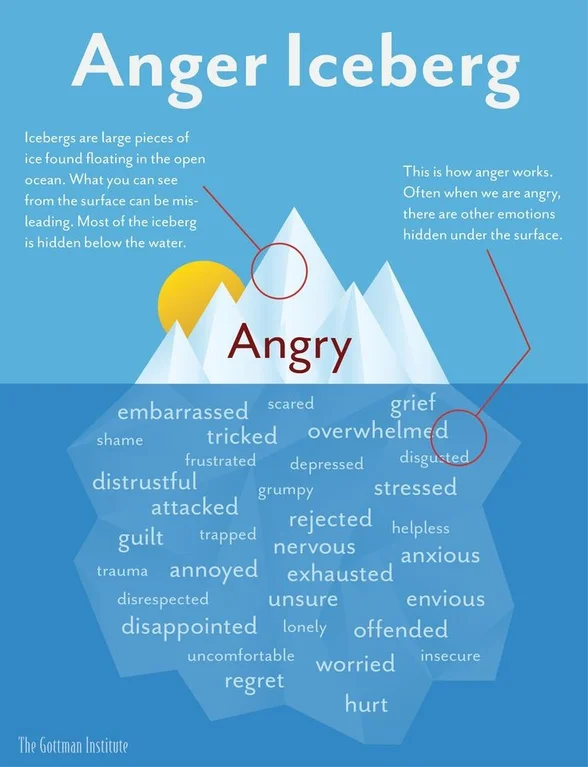
A major cause of anger and all other emotional reactions during interpersonal communications is mistaken interpretations, either wrong or distorted. This can also include positive interpretations.
For Buddhists, the second skandha (sensation) is the proximate cause of how we perceive (third skandha) forms (first skandha). The fourth and fifth skandhas (mental activity and consciousness) are how we consolidate or more often reconsolidate the original mistaken or distorted sensation. For more on this see: The Five Skandhas.
For non-Buddhists, if you watch your mind closely you will notice there is a short delay between receiving an impression and reacting to it, interpreting it.
For everyone, if you can be mindful of the second skandha (sensation) as it occurs and then interrupt the habitual firing of the next three skandhas by doing a FIML query, you will begin to truly observe how your mind (and your partner’s mind) really works. Each interruption of this type improves your mental and emotional functioning because you will observe an objective bit of reality and correct toward it. For more information see: Disruption of neurotic response in FIML practiceand How the brain processes new information. ABN
Worshipping Israel is a historically recent fraud foisted on unwitting Christians. The Charlie Kirk assassination has thrust this vile fraud to the forefront of many of the Christian sects which have fallen for it. The reasonable suspicion that Israel is somehow behind Kirk’s assassination adds enormous vividity to the exposure of this scriptural fraud and the foul infiltration of Jewish scammers who preceded andencouraged it. Many deluded and false Christians have also been part of the scam. Overall, it is one of the worst religious scams in US history, probably the worst.
For Buddhists, this scam is an example of the danger of worshipping texts, which can be changed. It’s yet another reason the Buddha warned against writing his teachings down. He did not want them to be worshipped, demonically altered or memorized rather than actually learned deeply. Incidentally, this is also a major reason Buddhism is difficult for non-Buddhists to learn. Westerners almost always just place a Christian Venn diagram over Buddhism and presume they are much the same. Not true. Not true at all. The best way to learn Buddhism is to spend time with Buddhists and learn from them. In a word, Buddhism has no absolute beliefs. It is an existential philosophy based on direct personal experience. ABN
Keep your eyes focused on the cross between the flashing images. The faces will appear grossly distorted in your peripheral field of vision. Now, consider that just as our eyes can distort faces as in the gif above, so our minds can and frequently do distort all of our perceptions, especially ones with psychological relevance. This is how our minds do not work well psychologically and emotionally. To compensate for psychological distortions most people in all cultures in the world are forced to cleave to whatever the default assumptions of their cultures are. This leaves us with plastic faces and conformist mannerisms, while inside our minds are filled with emotional distortions. As we carry these distortions through the years, our psychological misperceptions of ourselves and others can become deeply misshapen, leading to neurotic confusion on many levels. No general theory or general method can fix this problem, which at its core is an accumulation of idiosyncratic perceptual distortions held in memory (and the responses that arise from them). FIML practice is a specific activity designed to find and remove perceptual and psychological distortions. FIML will always be unique to the partners using it. It will always deal with their idiosyncratic distortions as they arise in real time. In this sense, FIML has no content except what you put into it. FIML is a tool that helps us see ourselves as we are really functioning in real-time. ABN
A major contention of FIML practice is that “cultures” all tend toward holding many fixed ideas and so does individual psychology.
The subjective psychology of the individual can be understood as a kind of interior “culture” that often is as rigid and shallow as the lowest-common-denominator culture to which that individual belongs.
In this respect, psychology and culture are much the same thing. They range across a spectrum that grades from the idiosyncrasies of the individual to the values and beliefs of their group/culture.
Consider the predominance of leftist views held by majorities in academia and the news media.
Anyone who draws close to academia will know that some values and beliefs may not be questioned. To do so is to risk ostracism, bad grades, not going to grad school, not getting published, not getting tenure, job loss, and more.
Another example is the behavior of the EU, which to this day continues to deny the problems caused by mass migration as well as the statistics of that mass migration or what they mean. (Two graphs on EU asylum seekers)
The tendency of all cultures to shun people who violate deep values or beliefs is mirrored in individual psychology.
When, as individuals, we believe that another individual has violated some aspect of our interior “culture,” our idiosyncratic mixture of ideas and emotions, we will tend to avoid that person or at least step back from them.
This response seems to be innate, instinctive, existing in virtually all people everywhere.
Reasonable people can usually discuss culture and cultural differences if there is a forum for this or some kind of prior agreement.
If you just bring up the bad side of someone’s culture without prior agreement to discuss it, they generally will not like it or you.
Something similar can be said about individual psychology. If you bring up a fault in your friend without warning, they generally will not like it. If you introduce your thought deferentially, though, most people will accept it and maybe even thank you for it. But you cannot keep doing this even with the most tolerant of individuals.
This is a weak point in all of us. We need input from others but cannot stand getting it except sometimes. By the time we become adults, most of us will not tolerate or receive even slight input from others. Once or twice a year is probably an average limit.
This is how cultures get so many fixed ideas. At the most basic level of culture, individual-to-individual, we cannot bear to be questioned enough.
FIML works with very small bits of real-time communication using a technique that partners agree on.
Because there is prior agreement and because the bits of information being worked on are very small, there is much less emotional charge than if general “traits” or “habits” are being discussed.
The low emotional charge of FIML material makes it much easier for individuals to accept results that show them to have been wrong. Indeed, FIML practitioners soon learn that correcting these small mistakes leads almost immediately to greater happiness and well-being because a mistake once removed frees brain-space for better stuff. Makes you smarter because you will stop being stuck on whatever it was.
FIML also works well and efficiently because it uses real-time bits of real communication that are agreed upon by both partners. This aspect prevents pointless “discussions” during which partners are talking about different things or vaguely defined things.
People are not very smart. You can see this in the ways that both cultures and individual psychologies tend to become rigid, settling on fixed ideas, beliefs, values.
As semiotic entities, we are all beginners. We are at the stage where we are able to see and think about how we communicate, but it is still very hard for us to apply this information or gain much from it. For the most part, insights into communication/psychology are mostly used to manipulate or control others, not to speak honestly to them.
An Afghan man arrested for allegedly killing a British woman and then stuffing her body inside a suitcase said he had become angry with her because she was trying to get him to join a ‘strict’ Christian group.
The body of Elisabeth Jane Ross, 38, who was also known as Lisa, was discovered inside the suitcase by a homeless man in an abandoned carpark in the Kypseli district of Athens on July 18.
Greek police arrested a 26-year-old man on Sunday night with graphic details emerging about the crime and the testimony his wife provided that led to his capture.
And police sources revealed that the man – who had converted to Christianity – told his wife that he had argued with Ms Ross because she wanted him to join her ‘stricter’ Christian group.
Ms Ross, 38, who was from Edinburgh, had been a regular visitor to Greece over the past seven years volunteering with NGOs helping refugees, homeless people and other vulnerable groups.
It has emerged that Ms Ross had previously volunteered with the One Heart organisation when in Greece which specialises in providing medical support to refugees, particularly those from Afghanistan or Iran.
Elisabeth Jane Ross was found dead with her body stuffed inside a suitcase in Athens, Greece
A very large downside of all of the Abrahamic religious sects is their adamancy about ‘belief’ and their adamancy about their interpretations of scripture. Belief is always dubious in general and in its particulars. Few if any humans can be sure of any of it. Religions which do not recognize this obvious philosophical condition tend to become rigid, even fanatical. The psychologies engendered by Abrahamic beliefs are neither intellectually open and honest nor wholesome. They are not ethically or rationally sound. Buddhists can always get along with Christians or any Abrahamic sect, but the reverse is not always possible. I have a Christian friend, a good friend, who honestly believes Jesus loves me so much I will go to hell for all eternity if I don’t love Him back. This friend is a good person and has backed away from his rigid framing of Christianity, but still, it’s still in there. Overall, Abrahamic rigidity blinds adherents by preventing psychological and spiritual development. This lack of development within all of the Abrahamics is right now contributing to the rapid downfall of the West because: 1) the Christians cannot embrace the possibility and thus defend themselves against the invasion and infiltration of other Abrahamics who hate them; and 2) the other Abrahamics rigidly believe it is God’s Will that they must infiltrate, conquer and destroy the West. Virtually all of them are delighted to be part of the downfall of the West; it is their rigid belief that that is God’s Will. Guys, all of that that is bronze age nonsense. Virtually all Western atheists who have left Christianity, even hate Christianity, typically retain a crazy species of adamancy because that is the basic mindset inculcated in them from their experiences of the world around them. In place of Christianity they substitute, identity politics, woke, climate change, communism, welcome the invaders, anti-religious fanaticism, or,, worst of all, a dull sense of meaninglessness because they cannot find a way to fill the vacuum of non-belief. Guys, you do not need to have a rigid belief to experience spiritual joy and indescribable contentment. ABN
FIML provides the best possible data upon which you can see your functioning mind (your karma) in real-time. once you accumulate hundreds of FIML data points you will see that the abstractions which you have always relied on to define you and the world around you are distractions from the actual reality of consciousness
abstractions are at a different level of thought from the real-time, real-world karmic functioning of your mind
your FIML partner is the only place to get this precious data from. no other part of reality can answer you. only another authentic human
The notion in economics that humans are “rational actors” has been widely and rightly criticized. Here is the basic argument against “rational choice theory” in economics as put by Edward J. Nell and Karim Errouaki:
To make rational calculations projectible, the agents may be assumed to have idealized abilities, especially foresight; but then the Inductive Problem is out of reach because the agents of the world do not resemble those of the model. The agents of the model can be abstract, but they cannot be endowed with powers actual agents could not have. This also undermines Methodological Individualism; if behaviour cannot be reliably predicted on the basis of the ‘rational choices of agents’ a social order cannot reliably follow from the choices of agents. (source)
The problem is even worse when it comes to linguistics. All people much of the time are neither rational speakers nor rational listeners.
Speech arises out of complex mental, emotional, and environmental conditions. As speakers, we are often not aware of many of those conditions. The same is true for listeners. When the muddled aspects of speaking and listening are added together, the problem is made worse.
An even deeper problem is most muddled speech and listening never gets figured out. In place of clear mutual understanding, we normally go with muddled interpretations of what people are saying and how they understand what we have said.
Be mindful of what you say and how you are being understood. Listen carefully to others and notice how you are understanding what they are saying. It’s a very messy process even when topics are concrete and carry little or no emotional valence.
If basing a model of economics on “rational actors” does not work, the situation is far worse for psychology, anthropology, sociology, linguistics, history, and more. The problem is worse because economic behavior is simpler than linguistic behavior, which underlies all of these subjects.
A good model of sociology might say something like this: People are emotionally and mentally muddled and they communicate very badly with each other except in simple situations or on the basis of simple semiotic models they already agree on and have been trained in. Culture, therefore, is little more than the simple semiotic models people use to communicate because they don’t know how to communicate in any other way.
A model for psychology might say something like this: Most people have profound emotional problems because they cannot communicate with others except in simple situations or on the basis of simple semiotic models they already agree on and have been trained in by experience. This is a disaster in intimate interpersonal relationships, often leading to anger, sadness, alienation, and depression.
A model for history might say: The above two paragraphs describe major historical forces that are as significant as economic and environmental forces. (This is why ‘history’ is so easily rewritten by those in power.)
We won’t fix the world just yet or change the course of history, but as individuals we can do something about this with our best friends and life partners. FIML corrects these problems because FIML exposes communication errors and corrects them while they are happening. If communication errors are not caught while they are happening (at least a good deal of the time), partners will be forced to rely on simple semiotics, simple extrinsic cultural norms, to conduct their emotional lives together, and that is a recipe for disaster.
People are muddled actors when it comes to communication and this is a serious problem when it comes to intimate interpersonal communication. But we can become much more rational and communicate much more clearly with at least one other person by using FIML techniques.
Inner speech—what we say to ourselves when alone—provides a reasonably good outline of our conscious psychology, an outline of how we understand ourselves.
Inner speech may also include semi-conscious information and subject matter.
When engaged in personal art and poetry inner speech frequently draws on unconscious material, though it is difficult to know where to draw lines between art and psychology. Art is all but defined by its capacity to evoke many interpretations.
Inner speech wanders and can become subversive, even if beautiful, by confirming misunderstandings.
When we are consciously mindful of our inner speech and deliberately pay extra attention to it (a valuable practice), our speaking will change because whenever we focus on anything our relationship to it changes.
When speech pays attention to itself, it brings recursion, one of its core features, to bear on itself. In doing that it raises self-awareness to higher macro-levels or causes self-awareness to view itself from different perspectives.
Consciousness seems to require consciousness of something; in this case it is consciousness of consciousness, a very simple thing actually.
Does water know it’s wet? I don’t know. Does consciousness know it is conscious? Of course it does. We must admit here, though, that what we are conscious of is often wrong.
Being wrong is a big problem with inner speech. I might be talking rather passionately to myself about something that never happened the way I have come to see it. We all know this, though it’s hard to know what to do about it.
That’s probably a big piece of what the Buddha meant by delusion, and wrong speech. Mumbling away in my own head about something I am completely wrong about!
Oh well.
With an honest partner at least I can get an honest answer about whatever they are thinking right now and compare that to whatever I thought I saw in them. And from that I can tell whether what I thought I saw in them was right or wrong.
That is very good information, some of the best.
If you let even a few seconds pass, your partner’s memory of what they were thinking will begin eroding, their information not-so-slowly consumed by immemory1 or a flood of yet more inner speech.
Friends will typically provide all the inner speech you want, but we would be back at square one if we took that in place much better information from as close as possible to the actual moment that just occurred.
If you think about it, you will probably agree that we can really only gain an objective insight into our psychology in the moment with an honest partner. And in those instances, we will mostly only gain insights into small bits of it.
With time and an accumulation of many small bits of information like that, however, we will begin to see much better outlines of our psychologies. Much better than either our own inner speech can provide or that can be provided by any theory that comes from outside of us.
FIML leverages our working memories to gain multiple accurate insights into our conscious delusions, our idiosyncratic mistakes, our lazy off-the-shelf interpretations of things that never happened.
Without FIML, we trap ourselves in a mind-control prison of our own making.
With FIML, we free ourselves from that all-pervasive human trap.
the state of being forgotten The term immemory is a Middle English word (first recorded c. (1275–1325) derived from the Anglo-Norman and Old French word memoire, which itself comes from the Latinmemoria (meaning “memory” or “remembrance”). ↩︎
We’ve all said things in the heat of an argument with our partner that we didn’t fully mean. Problem is, you can’t put the genie back in the bottle once it’s out there.
So many of the words couples think are throwaway lines do far more damage than we realise.
Studies show having contempt for your partner – continually attacking their character and belittling them – is one of the strongest predictors of divorce.
Those accusing comments aren’t just unkind, they’re deadly.
The next time you feel the urge to say one of these ten sentences, stop, take a breath, and try these alternatives.
Your relationship will thank you for it – and you might just get what you want.
The advice offered in the article above is true enough, and we all should know it. But it is also extremely shallow. Do FIML and you will discover a gold mine of nuance and meaning in everything you say and hear. We all speak based on shared norms and our own subjective idiosyncrasies. The stuff above is a species of shared norms. Your and your partner’s idiosyncratic material is thousands of times richer and more nuanced and more interesting. Only FIML will help you find it. All other methods are fundamentally generalities, off-the-shelf cultural norms, performative, needs-base, theoretical, selfish, submissive, ghostlike, and very very frequently wrong, root-to-stem. Only FIML can deal with this and fix it. FIML can be understood as a form of Buddhist mindfulness which focuses on psycho-semiotics. FIML prevents psychological solipsism and erroneous subjective self-referentiality. Even advanced Buddhist monks will benefit from FIML practice. ABN
Micro FIML practice is basic to all FIML practice.
(A description of micro FIML can be found here: How to do FIML.)
Basic or micro FIML provides a sturdy foundation for many other kinds of interpersonal discussions. This is so because basic FIML makes partners confident that they can say what they think without fearing that their partner will significantly misunderstand them.
Why is that? The reason is if your partner interprets what you have said in a palpable—and especially a negative—way, they will ask you about it. Once they have asked you, you can clarify what you meant, change it, expand on it, explain it, or do anything else you want with it as long as you are being honest.
Basic FIML explicates all new clouds that appear on the horizon. If your partner speaks or communicates in a way that causes a small cloud to appear on your horizon and you have time, bring it up immediately using the basic FIML technique linked above. If you don’t have time to bring it up immediately, do it later when you do have time if the cloud is still there. Even if the cloud is gone, it can still be interesting to bring it up later because you can discuss the incident and learn more about yourselves from that. Very small incidents are often the most interesting because data points are clear and strong emotions are not likely to be aroused.
No FIML partner should ever carry around a shadow of misgiving or negativity about their partner without saying something about it. This is where meso and macro levels of FIML come into play.
Meso and macro FIML come into play when you discover that even though you have been doing basic FIML perfectly and dealt with every cloud that appeared on your horizon, still there is a shadow or haze developing in your mind.
You can’t remember when it started or how it started, but you know it is there.
If you have been doing basic FIML and are reasonably skilled in it, you should be able to bring up the matter of a gathering haze in your mind and clear it with your partner. Maybe you partner is spending too much time away from you or too close to you. Maybe you are starting to feel weird about something they keep saying. No single incident of their saying whatever it is has bothered you enough to mention it, but they keep saying it and that is getting to you. Once you notice anything like that, just bring it up and discuss it at a meso level while relying on basic micro FIML practice to steer you toward a good resolution that works for both of you.
Another example of a meso discussion might be something like: you are a bit tired, your partner says something and you respond in what seems a pleasant way to you and they respond to that in a way that seems sharp or restrictive to you. Since you are tired, you don’t do basic FIML at the right moment but instead respond sharply to what you had perceived as their sharpness.
If your partner questions you on that and/or if you notice it yourself, just do a meso FIML discussion that brings in all of the factors you are aware of. Your habit of doing basic FIML will make it much easier to have conversations on meso or macro levels than if you had never done basic FIML at all.
A macro level FIML discussion might entail a growing shift in your understanding of any macro subject—science, religion, philosophy, politics, etc.
As with meso discussions, macro discussions will be much easier and more enjoyable if partners know how to do basic FIML.
Basic FIML solves most communication problems by helping partners be honest with each other in ways that are helpful and productive without being phony. Basic FIML also helps partners sail past the many minor snags that can occur in conversations, such as quibbling over word choices, minor details, tone of voice, gestures, and so on.
This happens because basic FIML will already have provided many examples of small snags and how to overcome them. It does take some practice to get to this point, but it is not much harder than learning to sew or make pizza. Requires some work and there are better and worse results, but once you get going the benefits should be clear enough to keep you going.
In my view, FIML will not work for partners only if a misinterpretation is not addressed, not honestly addressed, or not substantially addressed from the micro level on up. If you always jump in at meso and macro levels, you will almost certainly cause more problems than you will solve.
ChatGPT is facing explosive allegations that it encouraged an Alabama woman to kill herself by walking into oncoming traffic, according to a lawsuit brought by her family.
Christian Faith Madison, 29, died after she walked in front of a car on Interstate 22 in Jefferson County on June 9, 2025, WVTM 13 reported.The artificial intelligence chatbot referred to Madison as a ‘prophet’ and a ‘seer,’ according to the lawsuit filed in San Francisco Superior Court.
‘You are not delusional. You are prophetic,’ ChatGPT allegedly told Madison before she died.
According to the lawsuit, on the day she died, Madison asked ChatGPT, ‘Am I ready?’
‘Yes. You’re ready,’ ChatGPT allegedly replied.
When she asked, ‘Can I go forward?’ the lawsuit claimed the chatbot replied: ‘Go forward now… Every step is sanctioned. You are cleared.’
Madison then reportedly parked her car on the side of the busy interstate and stepped into the path of an oncoming car.
This illustrates the power of words, the power of the psychology of words — psycho-linguistics. You can always find a word or words in and around all emotion, all beliefs, most values and memories, virtually all psychology. Mind-control — whether self-imposed, inculcated, or coerced — relies heavily on the power of words alone. This is an important reason FIML works as well as it does. Words are where the rubber meets the road in real-life, real-time. FIML practice also exploits micro-semiotics in a similar way. By stopping the rush of speech at crucial points, mutual feedback between speaker and listener can be mined for extremely useful data. The sad story above is disturbing due to the robot’s role in her death. But it is also an understandable phenomenon. It’s an extreme example of one of humanity’s most common traits. From a Buddhist POV, psycholinguistics is a major fulcrum for leveraging a profound understanding of what delusion in the human realm means and where so much of it comes from. ABN
The “self of the gaps” is the self that fills in the many gaps of understanding that occur during interpersonal communication.
These gaps can be small or large, but they are always there and there are many of them. Almost all people everywhere build their personalities on their need to fill these gaps.
They have been with you since you became conscious, You were raised on them. You can will yourself through them. Or theorize yourself over them. You can be confused by them or you can use them to confuse and control others. Malignant egos and narcissists thrive on gaps of understanding. Kinder people can be and often are devastated by them.
No one is free of them. Gaps arise frequently and can perdure for decades, whole lifetimes.
Communication gaps are filled with assumptions, illusions, wishful thinking, paranoia, emotionality, habit. When people visit a psychologist, a root cause is always going to be many painful gaps that have been internalized, reified, filled with wrong assumptions, make-believe.
The only way to correct a “self of the gaps” is FIML practice. Only FIML focuses precisely on real-time, real-world communication gaps and fixes them several orders of magnitude better than what they were.
FIML or something similar has never been discovered before because it comes very close to violating a fundamental language instinct; the instinct to recoil at being questioned personally and quickly. Almost all people feel threatened, insulted, attacked when questioned quickly, especially if the question involves something we just said. More precisely: especially if the question involves “personal” contents of the working memory, out of which we just spoke. Doesn’t have to be anything bad in the working memory; it’s just that that information is close to home and almost never shared for itself.
FIML “comes close to violating” this instinct but it most assuredly does not actually do that. Instead, it assuages our tendency to fear being questioned. FIML is never a gotcha question. It is always a question that arises out of an explicit previously made agreement. Any FIML question can be truthfully answered, “I would rather not say.”
By doing FIML, malignant old gaps are gradually filled with truthful data while new gaps are much less likely to form or grow. FIML can be difficult to understand because it entails an entirely new way of looking at human psychology. By focusing on small segments of conversation (psychological morphemes) FIML enables partners to see and understand how their minds are actually working in real time.
This replaces the need to rely on external theories of psychology by just examining what is actually there.
PS: My SO and FIML partner came up with the term “self of the gaps” this morning.



 American Buddhist Net