
Category: Buddhism
Dalai Lama’s elder brother, who led several rounds of talks with China, dies at 97
NEW DELHI (AP) — The elder brother of the Dalai Lama and former chairman of the Tibetan government-in-exile in India, Gyalo Thondup, who led several rounds of talks with China and worked with foreign governments for the Tibetan cause, has died. He was 97.
Thondup died at his home in Kalimpong, a hill town in the Himalayan foothills of eastern West Bengal state, on Saturday evening, media reports said. No other details were immediately released about his death.
Tibetan media outlets credited Thondup for networking with foreign governments and praised his role in facilitating U.S. support for the Tibetan struggle.
The Dalai Lama led a prayer session for Thondup at a monastery in Bylakuppe town in India’s southern state of Karnataka on Sunday where the spiritual leader is currently staying for the winter months.
He prayed for Thondup’s “swift rebirth,” in accordance with Buddhist traditions, and said “his efforts towards the Tibetan struggle were immense and we are grateful for his contribution.”
Thondup, one of six siblings of the Tibetan spiritual leader and the only brother not groomed for a religious life, made India his home in 1952 and helped develop early contacts with the Indian and U.S. governments to seek support for Tibet. In 1957, Thondup helped recruit Tibetan fighters who were sent to U.S. training camps in subsequent years, a report by the U.S.-funded Radio Free Asia said.



Emotion versus reason in numbers
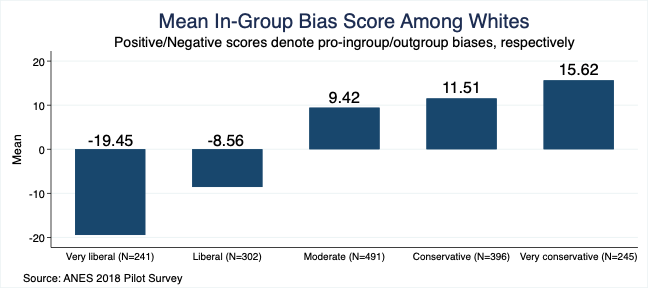
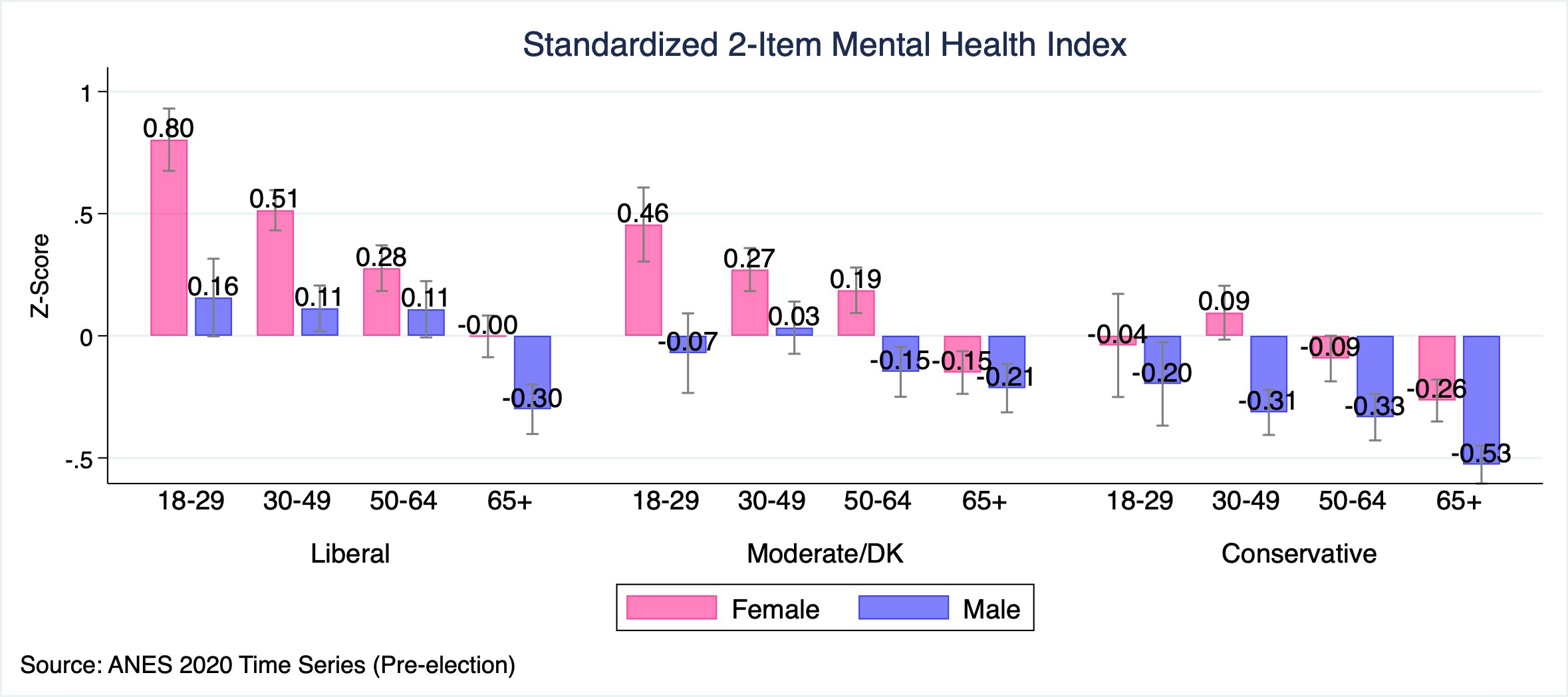
My sense is these statistics are roughly correct. They also bolster the Buddhist ethical position that compassion must be based on wisdom. Indeed, the greatest virtue in Buddhism is wisdom, not compassion. Buddhism counsels dispassion and calm reflection on all speech and behavior; I would add perception as well. An argument that appeals to emotion is not necessarily all bad. But one that uses emotion as mind-control is all bad. The wise often lose political debates because their positions are more complex, based on dispassionate analysis rather than single-minded emotion. Women have had many years in power now and the results are not good. This is probably due to greater emotionality among our dearly loved fair sex. Not sure where this will lead but it is always best to place your bets on reason and sound ethics above all else. Of course, emotion and compassion can and should be factors in any complex position, just not the preeminent, leading factors. ABN
Global Workspace Theory and mistake awareness & correction
Global workspace theory is a description of how our minds work. The word global refers to the whole mind or brain, not the world.
The central feature of this theory—the global workspace—is conscious working memory, or working memory that could be made conscious with minimal effort.
This global workspace is also what a great deal of Buddhist mindfulness attends to. If we focus our attention on what is coming in and out of our global workspace, we will gain many insights into how our minds operate.
The Buddha’s five skandha explanation of consciousness can be understood as a form (or percepta) entering the global workspace.
Consciousness is the fifth skandha in the chain of skandhas. It is very important to recognize that whatever we become conscious of is not necessarily right.
With this in mind, we can see that being mindful of what is entering and leaving our global workspace can help us forestall errors from forming and growing in our minds.
In the Buddhist tradition, ignorance (a kind of error) is the deep source of all delusion.
But how do I know if the percepta or bits of information entering my awareness are right or wrong?
Well, there is science and Bayesian thought processes to help us, and they are both very good, but is there anything else?
What about my actual mind? My psychology? My understanding of my being in the world? How do I become mindful and more right about these?
Besides science and Bayes, I can ask an honest friend who knows me well if the percepta I think I just received from them is right or wrong.
If my friend knows the game, they will be ready to answer me before my global workspace changes too much. If my friend confirms my interpretation of what they just did or said, I will know that my interpretation (or consciousness) is correct.
If they disconfirm, I will know that my interpretation was incorrect, a mistake.
This kind of information is wonderful!
We calibrate fine instruments to be sure we are getting accurate readings from them. Why not our own minds?
This kind of calibration can be done in a general way, but you will get a general answer in that case. If you want a precise reading, a mindfulness answer, you need to play the FIML communication game.
first posted February 12, 2020
Researchers find out some stuff about the brains of meditators
…The results showed significant differences between meditators and non-meditators in three of the four frequency bands studied: theta, alpha, and gamma. “These larger amplitudes are present when measured globally (across all brain regions), but also when we examined the distribution of these brain waves across the head,” Bailey told PsyPost.
Theta activity, associated with attention and working memory, was higher in meditators compared to non-meditators. This increase was most prominent in posterior brain regions, suggesting enhanced neural processes related to focus and information processing in experienced meditators.
For alpha activity, meditators displayed greater overall power as well as a distinctive distribution pattern. While non-meditators showed stronger alpha activity primarily in posterior regions, meditators exhibited higher alpha activity in frontal regions relative to the rest of the brain. This shift in distribution may reflect greater inhibitory control over irrelevant or distracting thoughts, a cognitive function often enhanced through mindfulness practice.
Gamma activity, linked to higher-order cognitive functions and neural integration, was also higher in meditators. The increase was particularly pronounced in frontal regions, indicating potential neuroplastic changes associated with prolonged meditation practice. Gamma waves are thought to play a role in attention and the integration of sensory information, suggesting that meditation might strengthen these capacities over time.
“Since these results were obtained while participants were simply resting (not performing any task), it is not obvious what cognitive processes these differences in brain activity reflect,” Bailey explained. “However, each of these brain waves have been associated with specific neural processes – theta brain waves have been associated with the direction of attention and selection of a specific thing to focus on when distractions are present, alpha brain waves have been associated with the engagement of top-down neural activity to inhibit brain regions that aren’t relevant to the task at hand, and gamma brain waves have been associated with energy intensive processing of sensory information as well as higher order cognitive functions and working memory. The fact that meditators show increased amplitude of each of these brain activities might suggest that they can engage these brain activities more strongly when needed, perhaps providing a potential mechanism underpinning the improved cognitive function associated with long-term practice of mindfulness meditation.”
UPDATE: This research describes some of the valuable, though mundane, benefits of meditation. In Buddhism, meditation fundamentally refers to the samadhi and dhyana states. The eighth element of the Noble Eightfold Path is Right Samadhi. Samadhi is the experience of a different state of mind with many levels of depth and importance. In many senses it is the experiential reward of Buddhist practice, a thing in itself, a practice that is its own reward. More information on samadhi can be found here. Definitionally, descriptively, samadhi is fairly simple. It entails the closing down or shutting off the the senses, while remaining mindful of what remains while that happens. ABN

Does the Universe think? (with Bernardo Kastrup)
228
UPDATE: I’ve watched 45 minutes of this and, so far, it is a beautiful model of how to talk. These guys are both trained philosophers and act like it. They listen charitably (means use the best possible interpretation of what they hear) to each other, delight in rebuttals, and quickly and easily clear up misunderstandings with evident pleasure as they move almost seamlessly together deeper and deeper into their topic without losing sight of where they want to go. Maybe at minute 46 they are going to kill each other in a fit of anger, who knows? Up to minute 45, they provide an exquisite example of how to talk about philosophy. And what FIML can teach partners about how to talk to each other.
The field of FIML is not philosophy per se. It is the idiosyncratic intermeshed fields of the FIML partners themselves. I have often said FIML has no content save what partners bring to it. FIML is a technique which reveals what our content is, what we are bringing to our relationship. Once both partners see clearly through the eyes and ears of each other what both of you are bringing, you will also delight in the fun of being able to talk as well as Kastrup and Hawkins (but about much more than just philosophy). I doubt either one of them does FIML and both of them might find it difficult since so much of their psycholinguistic constellations are defined by academic philosophy, but I know they could do it if they tried. ABN
Concepts don’t exist — as objective, phenomenological, cognitive, or neural structures
The case for removing concepts from cognitive science and AI research
It can be difficult to convince someone that concepts don’t exist. Everyday experience appears to provide overwhelming evidence to the contrary. Concepts are not only intuitively perceived to be active in daily life, they are also a widespread feature of theories across AI and cognitive science, where they are assumed to be necessary for symbolic and logical thought¹. Most who read the title of this post would be tempted to brush off the argument as patently, demonstrably absurd. It’s akin to trying to convince a European 500 years ago that God doesn’t exist, when everything around them appears to be evidence of, and indeed presupposes God’s existence. Any contrary argument is likely to be taken as the result of sophistry or word-wrangling, or because some critical piece has been neglected.
Despite their seeming obviousness, it is worth noting that there is still no complete and unambiguous explanation for what concepts are, or how they work on thoughts —and indeed how to program them into AI. The human ability to learn and create concepts is multifaceted and complex. AI theories and implementations generally only touch on one or two of its features, while neglecting large numbers of counter-cases. This has lead some researchers, notably Lawrence Barsalou, to suspect that the way we think of concepts is flawed. Perhaps the whole notion of concepts — as a native mechanism for grouping experiences — is untenable.
This article is well-worth reading. Below, I have made a few notes based on my reading of it. To my eye, it demonstrates the existence of consciousness as a thing, the existence of a very real subjective world, the high probability that this subjective world is not entirely confined in your head, that consciousness is a primary of existence and not confined to our brains, and also, importantly for this website, why FIML works so well.
(The sections in quotes are from the article.)
Firstly, concepts: they exist within consciousness and are used to reason, analyze, communicate, organize, and so on. They are probably a features of consciousness itself, depending on how you define them. They need not be stable.
Secondly, FIML:
To begin with, there is no scientific experiment or empirical observation that can be used to prove that any given concept “exists”, and by extension that concepts exist at all.
No. FIML practice provides unlimited empirical observations that concepts exist. FIML is a scientific experiment and can easily be repeated as many times as you like.
To objectively prove that any given interpretation matches reality, you would somehow have to compare your subjective mental concepts against an objective view of the real situation. But the latter isn’t possible.
Yes, it is possible. FIML is precisely that—a means ‘to compare your subjective mental concepts against an objective view of the real situation’.
FIML accomplishes this by allowing two subjective consciousnesses to objectively compare their mutually ‘subjective mental concepts’ against each other. To claim that ‘an objective view of the real situation’ can only be achieved by some other means is absurd. The very best means to objectively compare subjective states is to have two honest informants compare them based on a shared micro unit of communication in the real-world in real-time. This is what FIML does.
Continue reading “Concepts don’t exist — as objective, phenomenological, cognitive, or neural structures”The discreteness of concepts is a built-in requirement of language itself, one that does not necessarily reflect what an individual mind is doing.
Bodhisattva
Bernardo Kastrup, Richard Watson, and Mike Levin — conversation 1
UPDATE: This is a very accessible philosophical discussion during which Kastrup lays out a clear argument for Analytical Idealism. What Kastrup describes is a very good way to understand Buddhist philosophy, which is based on similar thinking but takes it further. I highly recommend this discussion and other videos and essays by Kastrup. He is a perfect advocate for understanding Buddhism since he seems to be entirely unaware of Buddhist thought and entirely devoid of normative Buddhist cliches. ABN
Origin of cultural learning: babies imitate because they are imitated
For the study, the researchers looked at the interaction between mother and child over several months. The babies came into the lab for the first time at the age of 6 months, while their final visit was when they were 18 months old. As they engaged in various play situations, the interactions and imitations of mother and child were analyzed.
The longitudinal study shows that the more sensitive a mother was in her interactions with her six-month-old child and the more often she imitated the infant, the greater the child’s ability was at the age of 18 months to imitate others.
In the interaction between parents and child, mutual imitation is a sign of communication. Parents respond to the signals given by the child and reflect and amplify them. A mutual imitation of actions and gestures develops. “These experiences create connections between what the child feels and does on the one hand and what it sees on the other. Associations are formed. The child’s visual experience is connected to its own motor activity,” says Markus Paulus, explaining the neuro-cognitive process.
Children learn a variety of skills through imitation, such as how to use objects, cultural gestures like waving, and the acquisition of language. “Children are incredible imitators. Mimicry paves the way to their further development. Imitation is the start of the cultural process toward becoming human,” says Markus Paulus. In psychology, the theory that the ability to imitate is inborn held sway for a long time. The LMU study is further evidence that the ability is actually acquired.
Mutual imitation and/or rapport are fundamental to interpersonal communication and a constant of it. FIML practice is a metacognitive method for making these processes ‘objective’ and thus mutually understandable, analyzable, and correctable or transformable as needed or desired. FIML works with objective material, which is defined as material both partners agree on. Real-world, real-time mutually agreed upon moments of micro communication discovered during FIML practice are some of the best objective psychological material you will ever acquire. Analyzing it with your partner is a total blast! There is no other way to do it except through FIML practice. ABN
UPDATE: This study reveals the profound importance of imitation for the infant brain. Imitation is one of the first things humans learn and it establishes a basis for social interactions from then on. Imitation is a major foundation of all cultures. People within any culture always imitate each other a lot. This includes adults who form new cultures or conform to deep transitions within their already accepted cultures. Often, cultural transitions are so large, the original culture is lost to time. This instinct to keep up with the group through imitation is a major factor in behavioral mind-control. This video provides an excellent example of how blunt, crude, nasty and deeply fear-based mind-controlled cultural transitions often are. Not only are viewers lured into being terrified of the invisible virus, they are also bullied into conforming to the one and only way to save themselves—taking a dangerous and untested vax. When children and then babies were also sucked into this whirlpool of anti-science, all morality was gone and all that was left was fear and insane conformity. If the mind-controllers learned anything from this, they will probably leave pregnant women and babies alone next time. More likely is they will cause even greater fear. ABN
 American Buddhist Net