Do your best. Speak the truth.

Some twenty percent of the world stood up against covid malfeasance—the lies, the harmful non-treatments, mandates, and bans. Despite censorship and name-calling, this twenty percent of the world found each other. We found cures, effective medications and how to get them. As our families and friends rejected us, we found each other and shared humor and wisdom. It’s worth spending some real time just contemplating how wonderful and beautiful this side of covid has been and still is. This is the energy that will lead us away from evil and toward the good. With no one to help us but ourselves, with no indispensable leaders, about twenty percent of the world chose freedom, reason, compassion and wisdom. ABN
I see this AI filter as an illusion similar to Buddhist illusions of the small self or ego; the deluded self which clings to imported illusions akin to AI filters or self-generated illusory filters such as narcissism or almost any personality construct since all of them are false constructs—communicative illusions and expectations—that cover over and obscure authentic thusness of real being. The day may come when AI will help us see through all this. Our real fear of AI transhumanism is that it will be the false-humanism we have always known but made stronger and even harder to escape from. Buddhism is all about escaping the delusions of the false self, escaping the cage the false self constructs around itself and projects at others. A good AI program might be one whose highest level of thought is the Buddhadharma complete with its morality/ethics and realization that all identities, selves, and filters are false constructs. ABN
Continue reading “New AI filter rolled out on tiktok. 😳”Acolossal statue of the Buddha, surrounded by cells for monks who conduct daily prayer services. That might be how we imagine a Buddhist monastery today. But for many who lived in present-day Sri Lanka a thousand years ago, that was what a hospital looked like.
Religious leaders throughout history have sought to care for their followers in various ways, and Buddhists were no exception. In fact, excavation projects in Sri Lanka have come up with the ruins of medieval monastic hospitals of a scale that hasn’t yet been seen anywhere in South Asia—even in India, with its long-standing Ayurvedic tradition. With new archaeological data, historians can now reconstruct these medieval healthcare administrations, endowments, and facilities.
link
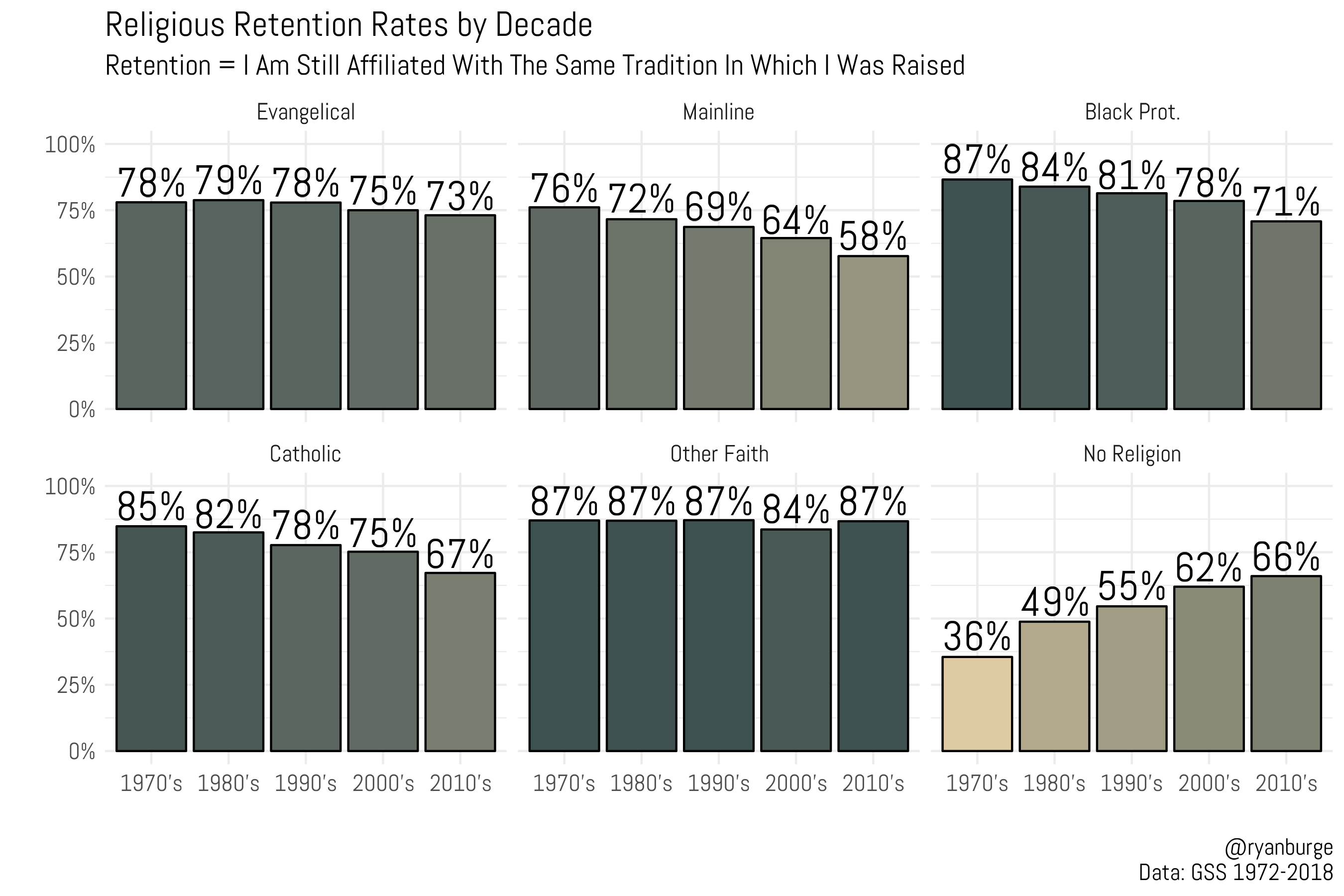
Fundamentally a religion is held together by a vocabulary. The vocabularies of many religions have overlapping meanings or mutually understandable interpretations. This does not mean they are the same but it does mean that today and throughout human history, religions have more or less aimed at similar ideals and goals while also differing about what those are and how to get them. Religion is a top-level meaning which determines the meanings of words (and values, beliefs, etc) beneath it. In this sense, atheism is a religion, scientism is a religion, as are many political movements and sometimes science itself.
For some, gender, sexual, or racial identities are also religious. This shows how strong the power of top-level vocabularies can be in that they can be based simply on physical attributes or imagined ones. It would be good if more people understood that no person knows what God is or what happens after death or what the Buddha meant by never discussing these issues because to describe them is to reify them in ways harmful to experiential religious understanding. I wish more people would see religion as described here because this illuminates religion’s: 1) enormous importance; 2) its ever-present variety; 3) its depths of possibility; and 4) its universal nature. Fundamentally, a human language (with attendant beliefs, values, etc) cannot exist without a religion. ABN
Global workspace theory is a description of how our minds work. The word global refers to the whole mind or brain, not the world.
The central feature of this theory—the global workspace—is conscious working memory, or working memory that could be made conscious with minimal effort.
This global workspace is also what a great deal of Buddhist mindfulness attends to. If we focus our attention on what is coming in and out of our global workspace, we will gain many insights into how our minds operate.
The Buddha’s five skandha explanation of consciousness can be understood as a form (or percepta) entering the global workspace.
Consciousness is the fifth skandha in the chain of skandhas. It is very important to recognize that whatever we become conscious of is not necessarily right.
With this in mind, we can see that being mindful of what is entering and leaving our global workspace can help us forestall errors from forming and growing in our minds.
In the Buddhist tradition, ignorance (a kind of error) is the deep source of all delusion.
But how do I know if the percepta or bits of information entering my awareness are right or wrong?
Well, there is science and Bayesian thought processes to help us, and they are both very good, but is there anything else?
What about my actual mind? My psychology? My understanding of my being in the world? How do I become mindful and more right about these?
Besides science and Bayes, I can ask an honest friend who knows me well if the percepta I think I just received from them is right or wrong.
If my friend knows the game, they will be ready to answer me before my global workspace changes too much. If my friend confirms my interpretation of what they just did or said, I will know that my interpretation (or consciousness) is correct.
If they disconfirm, I will know that my interpretation was incorrect, a mistake.
This kind of information is wonderful!
We calibrate fine instruments to be sure we are getting accurate readings from them. Why not our own minds?
This kind of calibration can be done in a general way, but you will get a general answer in that case. If you want a precise reading, a mindfulness answer, you need to play the FIML communication game.
Elizabeth Koch, 47, who grew up in in a $13 million mansion in Wichita, Kansas, spoke to the Times about the trauma she faced thanks to her wealthy upbringing, and her comments sparked fierce fury from social media users who branded the outlet as ’embarrassing’ and ‘humiliating’ for giving the billionaires a platform ‘to rehabilitate their public images.’
Elizabeth stated that being around so much money as a kid left her severely damaged, thanks to the deep ‘fear’ she developed over being judged for her riches and her long-lasting struggle to impress her powerful father.
link
One of the core concepts in Buddhism is that life in the “heavenly realm” can be a negative thing, principally because there is no impetus to comprehend the Four Noble Truths. A life without knowledge of suffering encourages clinging, which generates even more problems. I am instinctively on Elizabeth’s side, even without reading the NYT interview, because I am certain her suffering is real. Her audience of people who can understand her is obviously small, and that makes her position even more lonely. Very good-looking people, especially if they are also talented, can also suffer enormous pain due to the envy of the people around them. Envy and hatred of people who are wealthier or better than us generates terrible karma. When someone like Elizabeth speaks her mind, why not listen respectfully and take it in? I personally live simply and generally relate more to lower and middle class people than to wealthy ones, but I know wealthy people also suffer and can be excellent human beings. The Buddha himself was born into a very wealthy royal family. ABN
Buddhism is very much a system of ethics. Buddhist practice is founded on the Five Precepts of refraining from killing, stealing, sexual misconduct, lying, and the irresponsible use of alcohol.
In most Buddhist traditions, these precepts are often taught as if they were fundamental to the workings of the universe. But how can morality be fundamental to the workings of the universe? Why does morality even matter to human beings?
If we think of a human being as a signaling system, we may be able to show that ethical thoughts and behavior are of fundamental importance to the system itself.
Human signaling systems signal internally, within themselves, and externally, toward other people. Our most important signaling system is the one we share with that person who is most important to us, our mate or best friend. Let’s confine our discussion to this sort of primary signaling system.
If I lie to my partner or cheat her, I may gain something outside of our shared signaling system, but that signaling system will suffer. And when that shared system suffers, my own internal signaling system will also suffer because it will contain errors. It will no longer be in its optimal state. Similarly, if she lies to me or cheats me, our mutual signaling system will become less than optimal as will both of our individual, or internal, signaling systems.
My own signaling system cannot grow or become optimal without my partner treating me with the best ethical behavior she can muster. And the same is true for her with respect to me. And we both know this.
We would be good to each other anyway, but it is helpful to see that our being good to each other has a very practical foundation—it assures us optimal performance of our mutual and internal signaling systems.
FIML practice is designed to provide partners with a clear and reasonably objective means to communicate honestly with each other. FIML practice will gradually optimize communication between partners by making it much clearer and more honest. In doing this, it will also optimize the operations of their mutual and individual signaling systems.
To my knowledge, there is nothing like FIML in any Buddhist tradition. But if I try to read FIML into the tradition, I may be able to find something similar in the way monks traveled together in pairs for much of the year. I don’t know what instructions the Buddha may have given them or how they spoke to each other, but it may be that they did a practice with each other similar to FIML practice.
In any case, if we view human being as a signaling system, we may be able to claim that clear signaling—that is, ethical signaling—is fundamental to the optimization of that system.
Our “true self” or, as I prefer, “authentic being” can be revealed through FIML practice, which requires two people each of whom provides a check on the other’s beliefs about what they are thinking or feeling. Personas are for people who have never experienced their authentic being. Without FIML the individual mind is plagued by doubt, suspicion, error, fantasy, conceits and delusions both pleasant and unpleasant. All of us are raised in conditions like that. Our parents, families, caregivers all were like that. FIML will fix all of it and show that your “true self” is not scary. It is simply not known to you. It is also not a self but a state of being, a dynamic state of being. It is much more complex and also much simpler than any persona. The hardest part about FIML is finding a partner to do it with. FIML is something you do. It is not a static doctrine. I am coming to the belief that the West is failing because Westerners see the emptiness of personas but cannot see the fullness of authentic being. It’s quite possible FIML practitioners are the “philosophers of the future” that Nietzsche wrote about, the “free spirits” who go not beyond good and evil but beyond confinement within fallacious personas. ABN
“Monks, these eight worldly conditions spin after the world, and the world spins after these eight worldly conditions. Which eight? Gain, loss, status, disgrace, censure, praise, pleasure, & pain. These are the eight worldly conditions that spin after the world, and the world spins after these eight worldly conditions.
“For an uninstructed ordinary person there arise gain, loss, status, disgrace, censure, praise, pleasure, & pain. For a well-instructed disciple of the noble ones there also arise gain, loss, status, disgrace, censure, praise, pleasure, & pain. So what difference, what distinction, what distinguishing factor is there between the well-instructed disciple of the noble ones and the uninstructed ordinary person?”
link
These “eight worldly conditions” are often referred to as the eight winds. Contemplating these eight conditions is a beneficial Buddhist practice. Contemplation prepares us for them and informs us how to respond. ABN
The handsome international sportsman, who represented UCLA and the Philippines in the decathlon, roared around Los Angeles in his yellow Lamborghini, returning home to his wife – a former model – and daughter – a model – for lavish parties in the mansion once owned by Kylie Jenner.
To his friends he was a jet-set businessman who generously included them in his lucrative deals and was involved in California’s booming marijuana business.
The pristine image fell apart when friends learnt to their horror that Bunevacz’s seemingly-gilded existence was indeed a sham – after he was arrested and charged last year over a $35million fraud.
link
The eight winds of Buddhism formed a cyclone around Bunevacz and many were blasted and battered by the turbulence. ABN
Try reading the following paper while keeping the Mind Only Buddhist interpretation of our world in mind.
In 2005, an essay was published in Nature asserting that the universe is mental and that we must abandon our tendency to conceptualize observations as things. Since then, experiments have confi rmed that — as predicted by quantum mechanics — reality is contextual, which contradicts at least intuitive formulations of realism and corroborates the hypothesis of a mental universe. Yet, to give this hypothesis a coherent rendering, one must explain how a mental universe can — at least in principle — accommodate (a) our experience of ourselves as distinct individual minds sharing a world beyond the control of our volition; and (b) the empirical fact that this world is contextual despite being seemingly shared. By combining a modern formulation of the ontology of idealism with the relational interpretation of quantum mechanics, the present paper attempts to provide a viable explanatory framework for both points. In the process of doing so, the paper also addresses key philosophical qualms of the relational interpretation. (Making Sense of the Mental Universe)
Edit: The explanation offered in the linked paper, without saying as much, provides a very reasonable way to see Buddhist rebirth occurring without there being any soul or pudgala being reborn. Nothing need fly out of the body or transmigrate anywhere.
Instead, the classic Buddhist description of karma alone giving rise to a new life works perfectly. Rather than conceive of ourselves as fundamentally material beings, we can conceive of our personal individuality as being (a part of a “mental universe”) enclosed within a Markov blanket.
If there is still karma, a new Markov blanket or bodily form will be “reborn” or rearise after the extinction of its prior existence. In Kastrup’s way of putting it, our physical bodies are themselves Markov blankets causing or allowing us to arise as forms separate from the wholeness of the mental universe.
I suppose we might venture to say that enlightenment occurs when the karma, or reason for our separation in a Markov blanket, is gone and “we” remain the whole (of the mental universe) without being reborn (in a body).
first posted JANUARY 29, 2020
Although it is widely accepted that human beings have an ingrained ‘need to belong,’ there seem to be a substantial subset of young people who seclude themselves for most of the time at home and no longer engage in education or work, ultimately withdrawing from participation in society. In Japan, this phenomenon has been labeled as ‘hikikomori,’ but given its global presence it may be preferable to use the term ‘extreme social withdrawal’ (ESW). In this qualitative review, we provide a description and definition of ESW, provide figures on its prevalence, and discuss a number of associated concepts, including loneliness and “aloneliness,” school absenteeism and dropout, the ‘new’ developmental stage of adultolescence, and the labor force categories of freeter (‘freelance arbeiter’) and NEET (a young person not in employment, education, or training). The core of the paper is focused on the origins of ESW in young people and provides a narrative overview of relevant etiological factors, such as aberrant brain processes, unfavorable temperament, psychiatric conditions, adverse family processes including detrimental parenting, negative peer experiences, societal pressures, and excessive internet and digital media use, which are all placed within a comprehensive developmental psychopathology framework. We will close with a discussion of possible interventions for young people with ESW and formulate a guideline that describes (the temporal order of) various components that need to be included in such a treatment.
link
I have only read the abstract linked above but am posting this paper because it may be of interest to readers of this site. From a Buddhist point of view, there are many legitimate reasons to withdraw from society or reduce one’s participation in it. I am not encouraging that but am saying asceticism is a major form of Buddhist practice as are long silence retreats. This is not the same as what’s known as hikikomori and for the most part I do not think Buddhist asceticism is pathological in any way. Since I haven’t read the paper, I have no more to say than that. ABN
Tone of voice is difficult to define clearly or control. It can also be very seriously misunderstood.
Nonetheless an algorithm designed by researchers has succeeded in predicting the outcomes of marital counseling with 79% accuracy, which is better than what human counselors predicted.
The study shows that tone of voice is measurable with decent accuracy and thus is an objective aspect of language to a point. I qualify that statement because tone of voice can also be misunderstood and misunderstandings can become habits and/or become serious hindrances to understanding if they are not properly analyzed.
One of the researchers had this to say of the study:
Psychological practitioners and researchers have long known that the way that partners talk about and discuss problems has important implications for the health of their relationships. However, the lack of efficient and reliable tools for measuring the important elements in those conversations has been a major impediment in their widespread clinical use. These findings represent a major step forward in making objective measurement of behavior practical and feasible for couple therapists. (Source)
Note the line: “…the lack of efficient and reliable tools for measuring the important elements in those conversations has been a major impediment in their widespread clinical use…”
This is good news for clinics, but what do you do at home years before you need to seek counseling for a rocky marriage?
What you can do is analyze at home using FIML techniques.
When FIML partners focus on analyzing tone of voice long before they are experiencing problems in their relationship, I am confident most of them will not develop problems, and surely most will never develop problems related to tone of voice.
Tone of voice is accessible to rational analysis and understanding if partners make FIML-type agreements to do so. Besides avoiding marital discord, FIML analyses provide many other insights into the idiosyncrasies of partners’ unique relationships and circumstances.
The study can be found here: Still Together?: The Role of Acoustic Features in Predicting Marital Outcome.
An article about the study can be found here: Words can deceive, but tone of voice cannot.
first posted NOVEMBER 26, 2015
 American Buddhist Net