Ketamine experiment on brain recorded in detail

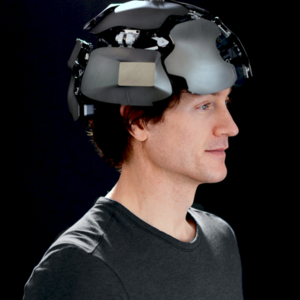
I injected the horse tranquilizer Ketamine and tracked my brain data for 15 days. It completely scrambled my brain.

In a world-first we answered the question ‘what happens to the brain before, during, and after ketamine treatment?’ We also discovered how long it took for my brain to return to ‘normal’.

The results surprised me. 

link

Someday this kind of technology will assist FIML practice. I doubt it will replace it but it likely will enhance it. ABN

The deep importance of intentional language

A major feature in language is the importance of asking and how you ask.

The impetus for all speech resides deeply in and around the imperative that we must want and ask for the spiritual development we are seeking. Frivolous asking and mundane desires do not count in this. They are outside of deep language use.

The Buddha only spoke on the Dharma when and if he was asked to do so.

The source and meaning of language and meaning itself can be glimpsed in this. Right Language is a soul-deep operation of the mind.

In this respect, FIML is a profound philosophical answer to what language is, what meaning is, what communication and communion are. FIML is this answer because it reveals and analyzes real-time, real-world speech between honest partners.

You cannot cut that close to the bone in any other way. Two people, true speech, true analysis — the source of linguistic being is revealed. The conundrums of psychology are healed.

FIML speaks to us within language, not from outside of language. With practice, FIML will move the source of your speech and meaning to your true experience. It will remove from you the need to understand yourself through extrinsic language and meaning.

In this sense, FIML is truly a philosopher’s stone. It will take you to the deepest levels you are capable of. ABN

You can’t say what they don’t already know

Micro-aggression or micro-aguessin’?

Do FIML practice successfully 25 times and you will understand how wrong the notion of micro-aggression is. Not only wrong but also destructive to self and other. Rather than have us probe own minds, micro-aggression asks us to assert a false interpretation of someone else’s mind. From a Buddhist point of view, micro-aggression turns us 180 degrees away from wisdom and enlightenment ABN.

Global Workspace Theory and mistake awareness & correction

Global workspace theory is a description of how our minds work. The word global refers to the whole mind or brain, not the world.

The central feature of this theory—the global workspace—is conscious working memory, or working memory that could be made conscious with minimal effort.

This global workspace is also what a great deal of Buddhist mindfulness attends to. If we focus our attention on what is coming in and out of our global workspace, we will gain many insights into how our minds operate.

The Buddha’s five skandha explanation of consciousness can be understood as a form (or percepta) entering the global workspace.

Consciousness is the fifth skandha in the chain of skandhas. It is very important to recognize that whatever we become conscious of is not necessarily right.

With this in mind, we can see that being mindful of what is entering and leaving our global workspace can help us forestall errors from forming and growing in our minds.

In the Buddhist tradition, ignorance (a kind of error) is the deep source of all delusion.

But how do I know if the percepta or bits of information entering my awareness are right or wrong?

Well, there is science and Bayesian thought processes to help us, and they are both very good, but is there anything else?

What about my actual mind? My psychology? My understanding of my being in the world? How do I become mindful and more right about these?

Besides science and Bayes, I can ask an honest friend who knows me well if the percepta I think I just received from them is right or wrong.

If my friend knows the game, they will be ready to answer me before my global workspace changes too much. If my friend confirms my interpretation of what they just did or said, I will know that my interpretation (or consciousness) is correct.

If they disconfirm, I will know that my interpretation was incorrect, a mistake.

This kind of information is wonderful!

We calibrate fine instruments to be sure we are getting accurate readings from them. Why not our own minds?

This kind of calibration can be done in a general way, but you will get a general answer in that case. If you want a precise reading, a mindfulness answer, you need to play the FIML communication game.

first posted February 12, 2020

Does the Universe think? (with Bernardo Kastrup)

228

UPDATE: I’ve watched 45 minutes of this and, so far, it is a beautiful model of how to talk. These guys are both trained philosophers and act like it. They listen charitably (means use the best possible interpretation of what they hear) to each other, delight in rebuttals, and quickly and easily clear up misunderstandings with evident pleasure as they move almost seamlessly together deeper and deeper into their topic without losing sight of where they want to go. Maybe at minute 46 they are going to kill each other in a fit of anger, who knows? Up to minute 45, they provide an exquisite example of how to talk about philosophy. And what FIML can teach partners about how to talk to each other.

The field of FIML is not philosophy per se. It is the idiosyncratic intermeshed fields of the FIML partners themselves. I have often said FIML has no content save what partners bring to it. FIML is a technique which reveals what our content is, what we are bringing to our relationship. Once both partners see clearly through the eyes and ears of each other what both of you are bringing, you will also delight in the fun of being able to talk as well as Kastrup and Hawkins (but about much more than just philosophy). I doubt either one of them does FIML and both of them might find it difficult since so much of their psycholinguistic constellations are defined by academic philosophy, but I know they could do it if they tried. ABN

Concepts don’t exist — as objective, phenomenological, cognitive, or neural structures

The case for removing concepts from cognitive science and AI research

It can be difficult to convince someone that concepts don’t exist. Everyday experience appears to provide overwhelming evidence to the contrary. Concepts are not only intuitively perceived to be active in daily life, they are also a widespread feature of theories across AI and cognitive science, where they are assumed to be necessary for symbolic and logical thought¹. Most who read the title of this post would be tempted to brush off the argument as patently, demonstrably absurd. It’s akin to trying to convince a European 500 years ago that God doesn’t exist, when everything around them appears to be evidence of, and indeed presupposes God’s existence. Any contrary argument is likely to be taken as the result of sophistry or word-wrangling, or because some critical piece has been neglected.

Despite their seeming obviousness, it is worth noting that there is still no complete and unambiguous explanation for what concepts are, or how they work on thoughts —and indeed how to program them into AI. The human ability to learn and create concepts is multifaceted and complex. AI theories and implementations generally only touch on one or two of its features, while neglecting large numbers of counter-cases. This has lead some researchers, notably Lawrence Barsalou, to suspect that the way we think of concepts is flawed. Perhaps the whole notion of concepts — as a native mechanism for grouping experiences — is untenable.

source

This article is well-worth reading. Below, I have made a few notes based on my reading of it. To my eye, it demonstrates the existence of consciousness as a thing, the existence of a very real subjective world, the high probability that this subjective world is not entirely confined in your head, that consciousness is a primary of existence and not confined to our brains, and also, importantly for this website, why FIML works so well.

(The sections in quotes are from the article.)

Firstly, concepts: they exist within consciousness and are used to reason, analyze, communicate, organize, and so on. They are probably a features of consciousness itself, depending on how you define them. They need not be stable.

Secondly, FIML:

To begin with, there is no scientific experiment or empirical observation that can be used to prove that any given concept “exists”, and by extension that concepts exist at all.

No. FIML practice provides unlimited empirical observations that concepts exist. FIML is a scientific experiment and can easily be repeated as many times as you like.

To objectively prove that any given interpretation matches reality, you would somehow have to compare your subjective mental concepts against an objective view of the real situation. But the latter isn’t possible.

Yes, it is possible. FIML is precisely that—a means ‘to compare your subjective mental concepts against an objective view of the real situation’.

FIML accomplishes this by allowing two subjective consciousnesses to objectively compare their mutually ‘subjective mental concepts’ against each other. To claim that ‘an objective view of the real situation’ can only be achieved by some other means is absurd. The very best means to objectively compare subjective states is to have two honest informants compare them based on a shared micro unit of communication in the real-world in real-time. This is what FIML does.

The discreteness of concepts is a built-in requirement of language itself, one that does not necessarily reflect what an individual mind is doing.

Continue reading “Concepts don’t exist — as objective, phenomenological, cognitive, or neural structures”

Psychological optimization

Why settle for not being crazy when you could be going for psychological optimization?

A mental disorder, also called a mental illness or psychiatric disorder, is a diagnosis of a behavioral or mental pattern that can cause suffering or a poor ability to function in ordinary life.

Why settle for being able to “function in ordinary life” when you could have an extraordinary life?

Why take pills to get by when you could be optimizing your brain?

Humans go for optimization whenever we can. We optimize technology, our diets, our medical treatments, our educations, even our friendships.

Optimization : an act, process, or methodology of making something (as a design, system, or decision) as fully perfect, functional, or effective as possible.

Hell yeah. That’s what you want for your mind, your life. Why settle for less?

OK, that does read like a sales spiel, but I will deliver.

All you have to do is put time and thought into the process of optimizing your psychology. An optimized psychology is an optimized brain and life.

First, you have to learn how to do FIML.

This requires about as much time and effort as learning to play a musical instrument at a beginner’s level. About as much time as it takes to learn to drive a car. Or to learn to play pool well enough to enjoy it.

FIML takes less time to learn than a semester at school, whatever grade. Less time than most job-training courses. Less time than becoming a decent amateur cook. Less time than buying a house or redoing your kitchen.

The hardest part about FIML is learning the technique through reading. Start here: How to do FIML.

The second hardest part is having a friend or mate who is willing and able to do it with you. Sadly, this is a deal-breaker for too many people.

I hate saying this, but it is fairly normal for people world-wide not to have a friend who is close enough to do FIML with. This is the result of so many non-optimized psychologies in this world!

Many people have five or more “good friends” and a loving spouse, but not even one of them willing or able to do FIML.

Their excuses will be they can’t understand it, don’t want to bother, don’t want to be that honest, don’t want that kind of relationship, don’t have the time, already are doing it (no, you are not), etc.

The result is they and you will continue to languish in less than optimal mental states. Moods, alcohol, pills, arguments over nothing, ridiculous misunderstandings, ominous silences, severance of ties, and worse will rule your world(s).

For most, the best relief they will find are self-help books based on generalities, career books about “getting ahead” as defined by more generalities, nonsense about “loving yourself,” low levels of religious belief and practice, exercise programs, etc.

You didn’t learn to drive a car that way. Driving a car requires interaction, observation, the help of another person.

Your psychology needs similar kinds of input.

Once you have learned to do FIML with a trustworthy partner, the practice will tend to self-generate because the insights gained will be real and have real and deeply felt benefits for both partners.

Besides the “how to” and FAQ links at the top of this page, most posts on this site describe some aspect of FIML practice.

For psychologists, I honestly do not see how you can claim to be able to treat other people if you have not done at least a few years of FIML practice. Human interactions without any technique for consistent meta-control and understanding (which FIML provides) are 100% guaranteed to be riddled with misunderstanding and wrong views.

Origin of cultural learning: babies imitate because they are imitated

For the study, the researchers looked at the interaction between mother and child over several months. The babies came into the lab for the first time at the age of 6 months, while their final visit was when they were 18 months old. As they engaged in various play situations, the interactions and imitations of mother and child were analyzed.

The longitudinal study shows that the more sensitive a mother was in her interactions with her six-month-old child and the more often she imitated the infant, the greater the child’s ability was at the age of 18 months to imitate others.

In the interaction between parents and child, mutual imitation is a sign of communication. Parents respond to the signals given by the child and reflect and amplify them. A mutual imitation of actions and gestures develops. “These experiences create connections between what the child feels and does on the one hand and what it sees on the other. Associations are formed. The child’s visual experience is connected to its own motor activity,” says Markus Paulus, explaining the neuro-cognitive process.

Children learn a variety of skills through imitation, such as how to use objects, cultural gestures like waving, and the acquisition of language. “Children are incredible imitators. Mimicry paves the way to their further development. Imitation is the start of the cultural process toward becoming human,” says Markus Paulus. In psychology, the theory that the ability to imitate is inborn held sway for a long time. The LMU study is further evidence that the ability is actually acquired.

source

Mutual imitation and/or rapport are fundamental to interpersonal communication and a constant of it. FIML practice is a metacognitive method for making these processes ‘objective’ and thus mutually understandable, analyzable, and correctable or transformable as needed or desired. FIML works with objective material, which is defined as material both partners agree on. Real-world, real-time mutually agreed upon moments of micro communication discovered during FIML practice are some of the best objective psychological material you will ever acquire. Analyzing it with your partner is a total blast! There is no other way to do it except through FIML practice. ABN

UPDATE: This study reveals the profound importance of imitation for the infant brain. Imitation is one of the first things humans learn and it establishes a basis for social interactions from then on. Imitation is a major foundation of all cultures. People within any culture always imitate each other a lot. This includes adults who form new cultures or conform to deep transitions within their already accepted cultures. Often, cultural transitions are so large, the original culture is lost to time. This instinct to keep up with the group through imitation is a major factor in behavioral mind-control. This video provides an excellent example of how blunt, crude, nasty and deeply fear-based mind-controlled cultural transitions often are. Not only are viewers lured into being terrified of the invisible virus, they are also bullied into conforming to the one and only way to save themselves—taking a dangerous and untested vax. When children and then babies were also sucked into this whirlpool of anti-science, all morality was gone and all that was left was fear and insane conformity. If the mind-controllers learned anything from this, they will probably leave pregnant women and babies alone next time. More likely is they will cause even greater fear. ABN

Do you realize how ambiguous you are when you speak?

And how bad you are at interpreting what others say to you?

If not, you are living in a very muddled world that is probably “anchored” to nothing more than your “feelings,” your “identity,” or some form of extrinsic “belief” or “faith” in your nation, group, religion, career.

Either you are a sort of slave to a public semiotic (religion, ethnicity, career, etc.) or you are a sort of slave to your muddled interior—your volatile emotional sense of “who” you “are.”

The only way I know of to fully comprehend how badly you speak and listen is to do FIML practice.

You may understand in the abstract how wrong and ambiguous speech and listening frequently are, but if you don’t do FIML you won’t be able to see with any specificity  how wrong you are and where and why. If your understanding is only general or abstract, it will function as just another level of ambiguity, another source of mistakes.

Mildly sorry for being so blunt, but it’s true. Only FIML, or something very similar, can give you and your partner real-time access to objectively agreed upon communication mistakes being made between you. And there is no general or abstract substitute for that.

Even a single mistake can have massive consequences. But we all make dozens of mistakes every day.

first posted August 8, 2013

FIML is like a hand compared to a dog’s paw. ABN

How (intimate) interpersonal language functions

Parentheses around the word (intimate) indicate a spectrum from less to more intimate, less to more psychologically important.

1) If we study how (intimate) interpersonal language functions, we will discover that it is significantly both defined and impeded by errors in listening and speaking.

2) The more intimate interpersonal communication is the more idiosyncratic it is.

Since (intimate) interpersonal communication is psychologically more significant the more intimate it is, it follows that it is very important to analyze and understand this kind of communication. It also follows that (intimate) interpersonal communication is harder to analyze from the outside the more intimate it is.

It is essentially impossible for an expert to tell two lovers what their words mean or how to understand their acts of communication.

Therefore, the lovers must do it themselves. The expert can only show them how to do it themselves.

3) This is a fundamental truth that rests in the nexus between language and psychology: the more intimate the communication the more important it is psychologically and also the more important it is that the communicators be able to analyze their communication satisfactorily and correct errors that inevitably occur.

4) How to do that can be taught. This is a good job for psychologists. Doing the analyzing and correcting is the job of the intimate communicators.

5) If (intimate) interpersonal communications are not analyzed and corrected; if errors are not discovered and removed from the system, the psychologies of both communicators will be harmed.

6) Conversely, if (intimate) interpersonal communications are analyzed and corrected; if errors are discovered and removed from the system, the psychologies of both communicators will be benefited.

7) Indeed, removing error from an (intimate) interpersonal communication system will result in gradual optimization of both the system and the psychologies of the analyzers.


8) In sum:

  • communication error is inevitable in (intimate) interpersonal communication systems
  • it is very important to correct these errors
  • and to analyze them and the communication system itself in the light of these corrections
  • this optimizes both the communication system and the psychologies of both communicators

There is no other way to accomplish such sweeping improvement in both communication and individual psychology. There is no outside way for intimate communications to be analyzed and no one else to do it but the intimate communicators themselves.

This fundamental truth applies both to intimate communication and psychology. Psychology is determined by intimate communication and vice versa.

FIML practice is specifically designed to correct (intimate) interpersonal communication errors and is best used for this purpose.

first posted JANUARY 6, 2019

Technology and human transformation

Most fundamental changes in human societies happen due to technological advances.

The next big change in human psychology will come from inexpensive, very sensitive brain scans.

These scans will show millions people in real-time how their brains are actually behaving and reacting. Presently unnoticed or concealed twinges of emotion will become conspicuously visible on a screen or within a hologram that surrounds our heads.

People will be able to use this technology in the company of a computer program or with a human partner. A good AI program will use brain-scan information to reveal much about us. We will learn stuff about how we actually function that very few are aware of today.

Having this knowledge will change the way we understand ourselves and our interactions with others. Rather than work almost exclusively with the vague stories we tell ourselves, we will be able to see how our brains (and bodies) actually function in real time.

The difference between our stories and how we actually function is very great. Great enough to completely change the landscape of what we now think of as human psychology.

There already exist inexpensive EEG rigs that are sort of good at measuring moods and honesty. There are also expensive ones with more capacity. Within a decade or two, these devices will be much better. An accurate lie-detector will surely be included in the consumer package.

This technology will rewrite our understanding of human psychology and remake the ways we think of human society today. If you want to get a head start on the future, learn how to do FIML now.

First posted 4/30/18

FIML and autism-Asperger’s spectrum

After explaining the basics of FIML to a friend, he replied: “Oh, so just pretend you are autistic.”

It was a good joke with a good deal of truth to it. The reality is, though, that no one knows all that well what others are thinking unless they ask and are told honestly. When people rely too much on “normal” intuition in their primary relationships, far too much ambiguity develops. And from that ambiguity neuroses arise or perdure. Neuroses can entail either unsatisfying clinging to conventional semiotics or disturbing idiosyncratic interpretations of interpersonal behaviors. Both ways of dealing with ambiguity are based on mistaken interpretations, and both of them lead to suffering. I don’t see how a “normal” person can escape this without FIML any better than someone with Asperger’s or autism.

The New York Times had an article the other day on Asperger’s, Navigating Love and Autism. The article is worth reading in and of itself, but it works especially well for me because FIML training has shown me that Asperger’s problems, though they may be more of a certain type, are problems all people have. Asperger’s people may be less able rely on conventional emotional packaging than “normal” people, but in truth I don’t think anyone should rely too much on conventions in their private life. A “normal” person can more quickly achieve the illusion of intimacy and sharing and more easily maintain this illusion, but without FIML or something like it, it will remain an illusion. As the years go by, all of those ambiguities and wrongly shared assumptions will lead to lying, harmfulness, and suffering.

It may very well be that “normal” people have more to learn from Asperger’s people than the other way around. The couple in the article seem to have figured out a way to be together that relies on something similar to FIML–they know that they need to explain themselves to each other in ways that are anything but conventional. This frees them to see the wonder of their unique individuality and to share that with each other.

first posted December 28, 2011

Small lies matter

A new study shows that even small lies can weaken our self control, causing us to tell bigger lies and more of them.

Lead author of the study, Neil Garrett, says of it:

“It is likely the brain’s blunted response to repeated acts of dishonesty reflects a reduced emotional response to these acts. This is in line with suggestions that our signals aversion to acts that we consider wrong or immoral. We only tested dishonesty in this experiment, but the same principle may also apply to escalations in other actions such as risk taking or violent behaviour.” [emphasis added] (How lying takes our brains down a ‘slippery slope’)

The study itself can be found here: The brain adapts to dishonesty.

Here is the abstract:

Dishonesty is an integral part of our social world, influencing domains ranging from finance and politics to personal relationships. Anecdotally, digressions from a moral code are often described as a series of small breaches that grow over time. Here we provide empirical evidence for a gradual escalation of self-serving dishonesty and reveal a neural mechanism supporting it. Behaviorally, we show that the extent to which participants engage in self-serving dishonesty increases with repetition. Using functional MRI, we show that signal reduction in the amygdala is sensitive to the history of dishonest behavior, consistent with adaptation. Critically, the extent of reduced amygdala sensitivity to dishonesty on a present decision relative to the previous one predicts the magnitude of escalation of self-serving dishonesty on the next decision. The findings uncover a biological mechanism that supports a ‘slippery slope’: what begins as small acts of dishonesty can escalate into larger transgressions. [emphasis added]

Though this is only one study based on results from only 80 people, I find it very credible.

In Buddhism we learn that even the smallest of thoughts can have enormous consequences.

An important aspect of Buddhist mindfulness is watching how our thoughts develop and how they affect us and others. FIML practice is based on sharing the fruits of real-time mindfulness with a partner.

Done correctly, FIML allows us to observe small transitions in our minds and correct them in real-time if they are wrong.

FIML does not deal all that much with lies per se because partners are expected to be beyond that and FIML won’t work if partners lie.

Nonetheless, FIML does deal with small misunderstandings that can lead to slippery slopes similar to what is described in the study.

For example, if you think your partner’s tone is dismissive and it isn’t and you don’t do a FIML query, the next time you hear that tone you will experience confirmation bias and be on your way down the slope. It’s very hard to trace that sort of thing back to its origin after a few occasions. Your misunderstanding of your partner’s tone could be construed as an unconscious lie that you are telling yourself.

This is why FIML is so important and why it is very helpful to start doing it early in your relationship when all is well and there are no misunderstandings.

FIML can be described as detailed, shared, real-time moral and existential awareness. It demands integrity and mindfulness from both partners and rewards them with greatly enhance shared integrity and mindfulness.

A major purpose of FIML is to prevent the sort of thing that happened in the study. To prevent partners from sliding down a slippery slope that sometimes cannot be regained.

first posted October 24, 2016

Speech comprehension and context

A new study on speech comprehension shows that humans respond to the “contextual semantic content of each word in a relatively time-locked fashion.”

These findings demonstrate that, when successfully comprehending natural speech, the human brain responds to the contextual semantic content of each word in a relatively time-locked fashion. (Source)

This process is roughly illustrated here:

While I do not doubt these findings for simple speech in simple contexts, I do wonder what the results would be for speech in psychologically complex contexts, whether that speech is simple or not.

I wonder this because I am certain that in almost all psychologically complex contexts (those rich with subjectivity, emotion, idiosyncratic memory or association, etc.) the “contextual semantic content of each word” will necessarily be different, often very different for each speaker.

Psychologically rich interpersonal speech is almost always fraught with contextual differences that can be very large. Sometimes participants know these differences exist and sometimes they don’t. It is very common for speakers to make major mistakes in this area, the most important area of speech for human psychological well-being.

It seems possible that EEG with increased sensitivity might one day be able to detect “context diversion” between speakers, but even if complex emotional information is also included, people will still have to talk about what is diverging from what.

My comments are not meant to detract from the very interesting findings posted above. I make them because these findings illustrate how inherently problematic real-time mutual comprehension of the “contextual semantic content” of all spoken words actually is.

FIML practice is the only way I know of today to find profound real-time mutual comprehension of complex interpersonal speech.