Interpersonal communication systems can become chaotic when there are misunderstandings. And they can become wildly chaotic when the misunderstandings are serious and/or involve emotional responses.
Normally, in virtually all cultures, out-of-control interpersonal communications are settled by authoritarian decree, by reverting to pre-established roles, by fighting until one side tires, or by ending communication all together.
It is nothing short of tragic when this happens in close relationships during significant or profound communication acts.
FIML is designed to fix communication problems that occur during communications between two (or more) people who care about each other.
FIML is a “loose” method of control in that FIML largely does not have any content. It is a technique that allows partners to discover their own content and their own ways to fix their problems.
As with so many potentially chaotic systems, interpersonal misunderstandings can become wildly unstable for even very small reasons. A single misheard word or a single misinterpreted expression can lead to destructive chaos within the system, no matter how dedicated the communicants may be to each other.
To paraphrase from the abstract of that paper and apply their conclusions to FIML, we can say that FIML works “…by stalling the control, thereby taking advantage of the stable directions of the uncontrolled chaotic” system.
By not having a set outcome in mind, by not allowing static interpersonal roles to control the outcome, FIML can succeed in fixing even very serious communication contretemps between caring partners. FIML accomplishes this by providing partners with a means of achieving a meta-view of their contretemps and from that point of view gently coaxing their analysis toward mutual agreement, mutual transformation for both parties based on a complete and completely shared understanding of the unique conditions that generated the problem.
In this, FIML takes “advantage of the stable directions of the uncontrolled chaotic” system. The stable direction is the complete and mutually agreed upon resolution of all aspects of their contretemps. It is a “return” to the stable state of caring that preceded the problem, but a “return” with a significant upgrade because the new stable state will now include the experience of repairing the chaotic state that just passed.
A FIML resolution can be very enjoyable because it upgrades the semiotic systems of both partners.
An article on the study linked above describes the “loose” control method as an “approach that cleverly exploits the natural behaviour of the system.” (See: Control is good, freedom is better)
FIML exploits the natural behavior of two people who seek mutual caring and mutual positive transformation by providing a method that allows them to intelligently deal with the chaos that is 100% bound to arise during some of their acts of communication. Rather than flee from communication due to the fear of chaos, FIML partners have a reliable method of controlling it and reestablishing harmony on a higher, better level.
Cultures demand constant authorization and reauthorization from their members. To stray from established norms is to weaken group authorizations.
That’s how it works for all cultures with more than a few members. Cultural bonding and affirmation involves nothing more than authorizing and reauthorizing the basics of the culture.
It even works that way in groups as small as two people. This is because two people speaking together typically do so in a larger cultural context that is defined and accepted by both of them.
Just as most people do not make up their own words or jokes, most people do not make up the bases of their culture(s).
Even committed couples speaking in private typically do not leave their shared cultural script(s). This happens because they do not know any other way to speak to each other.
A profound and rich world of subjective insight and perception eludes them because they are afraid they might stray too far from the established script.
Culture becomes deeply illusory at this point. Its tenets are held not due to thought and insight but only to stabilize or maintain a rote communication pattern.
You can change this by using a functional communication pattern instead of rote cultural grammar that has been imported into your mind from outside.
As an experiment, try not feeling anything about the basics of your culture. Do FIMLfrom this point of view and see what happens.
__________
Edit: BTW, the above roughly explains how mass mind-control works.
The controllers insert material into the public’s metacognitive vocabulary/ semiology, and sure enough, their minds shift.
There are so many examples of this, I trust readers can discover their own.
The thing to see is how easily something new can be inserted and become ‘reality’ for many because it’s the latest way to talk and think.
The other thing to see is the old and ancient metacognitive vocabularies/semiotics/ memes which have been in whatever culture for decades or centuries.
Seeing what those are and where they came from and what they do is a fundamental part of Buddhist practice, which sees all of them as empty, impermanent, delusive.
Hence the notion of ‘Buddhism without beliefs’.
Cling to none of them, including Buddhism.
The Buddha was the world’s first, still famous skeptic. ABN
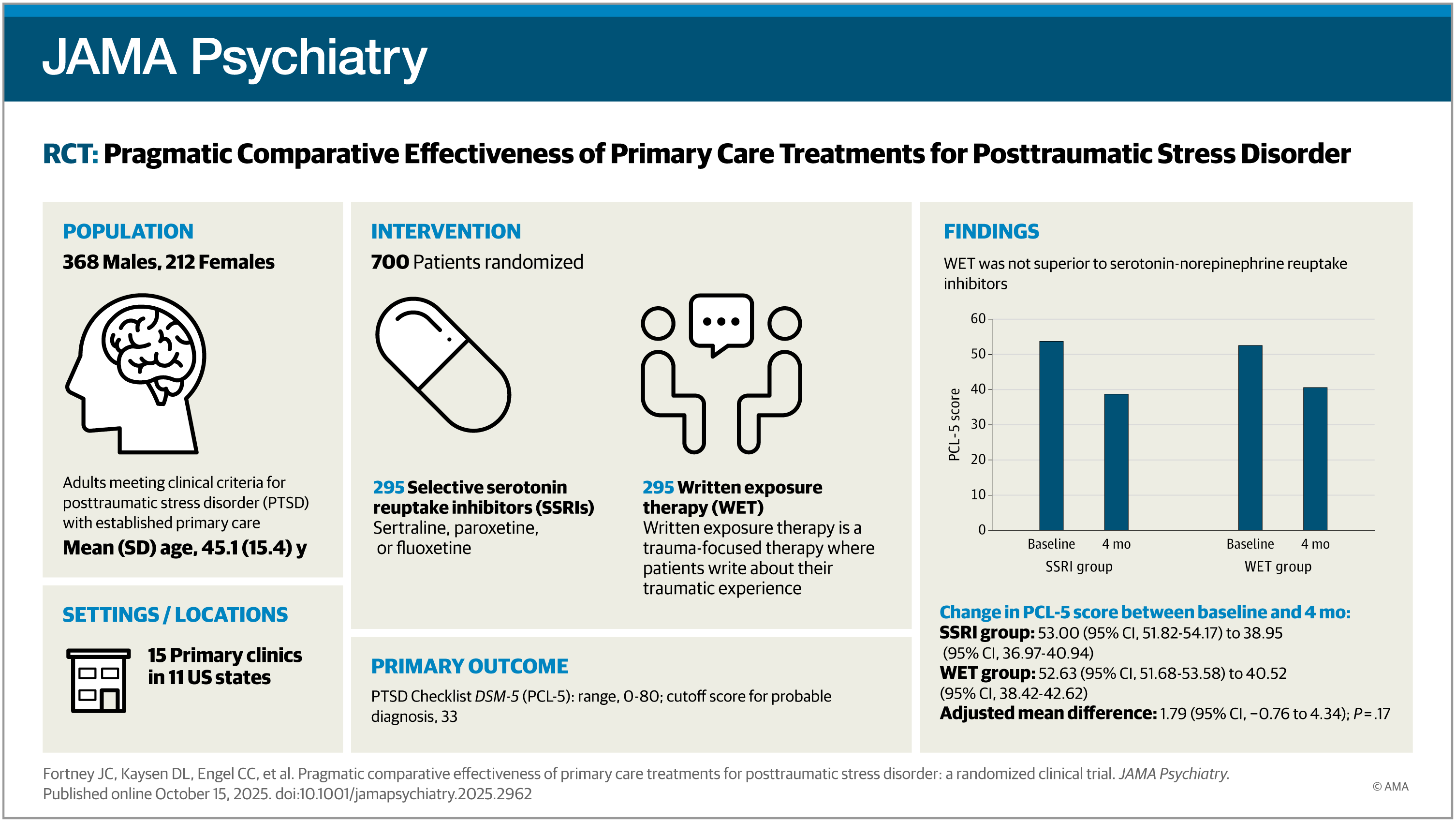
Negative side-effects of SSRIs are not included. Written Exposure Therapy is a kind of psycholinguistic engagement and seems to work OK. If people with PTSD can find a way to do FIML, I am confident many will be helped. The biggest obstacle for most people to doing FIML is having a good partner who can and will engage. That right there is the cause for most emotional disorders. If you are reasonably intelligent and have a good partner, do FIML. You both will benefit enormously. ABN
This article argues that the human brain saves energy by predicting or imagining “reality” more than actually perceiving it: Do Thrifty Brains Make Better Minds? The article argues that this way of using our brains allows us to work more efficiently with complex data or in complex situations.
I think this general premise is pretty well known and agreed on, but the linked article puts it in a new way. The following sentence caught my eye: This… underlines the surprising extent to which the structure of our expectations (both conscious and non-conscious) may quite literally be determining much of what we see, hear and feel.
The article uses visual perception as an example, but the idea applies just as well, and maybe more so, to what we hear in the speech of others. FIML practice works by inserting a new mental skill between the first arising of a (stored) interpretation and its full-blown acceptance as “reality”.
Signal networks should be conceived of as dynamic patterns that change over time.
A psychological example of this might be a short exchange between two people during which one person interprets a small signal coming from the other.
The signal might be a fleeting expression. The person who sees this signal is likely to interpret it and remember (weakly or strongly, for some period of time) what that interpretation is.
As something held in memory—short or long term—that interpretation of the fleeting expression has become both itself a signal and part of a signal network that is changing over time, changing in part due to that new signal.
Of great importance psychologically for both persons described above is the fact that neither knows how the other interpreted the fleeting expression or if it was interpreted or sent or received. Or remembered or for how long. And almost never do they know how to get that information.
This is a micro example of human communication as it happens in time.
If this micro signaling network is held in the mind and analyzed correctly by the two persons described above, much will be revealed to both of them about how their psychologies actually function in real life and real-time.
Most Buddhist practitioners will immediately understand and agree with the results of a study that shows that people feel better when they tell fewer lies. The study (Telling fewer lies linked to better health and relationships) is modest but worth considering.
Notice that the improvements found in the study come from refraining from lying.
“We found that the participants could purposefully and dramatically reduce their everyday lies, and that in turn was associated with significantly improved health,” says lead author Anita Kelly. (Same link as above.)
A good deal of Buddhist practice involves refraining from unwholesome thoughts and behaviors and ultimately eliminating them. Refraining from lying, or “false speech,” is the fourth of the Five Precepts, which are the basis of Buddhist morality. Lies cloud the mind and hinder clear thinking.
Buddhist mindfulness gets us to slow down and question how sure we are of our thoughts, feelings, and judgements. It helps us refrain from willfully lying, and it can help us refrain from unconsciously lying if we have the help of a trusted partner.
Another term for unconscious lying is self-deception. Self-deception may make us feel good for awhile in some circumstances, but in the long-run it is much the same as any other kind of lying. It’s not true. It constitutes inner false speech and causes serious intellectual and emotional contradictions that will almost certainly lead to wrong thoughts, behaviors, and interpretations.
Michael S. Gazzaniga in an online essay has this to say:
The view in neuroscience today is that consciousness does not constitute a single, generalized process. It involves a multitude of widely distributed specialized systems and disunited processes, the products of which are integrated by the interpreter module….Our conscious experience is assembled on the fly as our brains respond to constantly changing inputs, calculate potential courses of action, and execute responses like a streetwise kid. (source)
It is our “interpreter module,” to use Gazzaniga’s words, that can and does unconsciously lie to us or allow us to engage in self-deception.
In the same essay, Gazzaniga also says:
In truth, when we set out to explain our actions, they are all post hoc explanations using post hoc observations with no access to nonconscious processing….The reality is, listening to people’s explanations of their actions is interesting—and in the case of politicians, entertaining—but often a waste of time. (Source: same as above)
FIML practice may not be capable of giving us access to “nonconscious processing,” but it will give us access to what is/was in our working memories while showing us that what we said or heard may have been vague, ambiguous, muddled, or wrong.
With the aid of a trusted partner, FIML helps us catch our minds on the fly. Partners are encouraged to refrain from long explanations and just stick to what they remember having been in their minds during the few seconds in question. This forestalls long, self-deceiving explanations.
Beginning FIML partners will likely be amazed at how often their interpretation of what their partner said is completely wrong.
FIML emphasizes using trivial incidents because partners will be much less likely to self-deceive when the incident is minor. A minor mistake is easier to change than a major one. If partners keep working with minor mistakes and clear them up as soon as they arise, how can major misunderstandings even develop?
In the future, we may have brain scans that can help us separate fact from fiction in our minds, but for now, I know of no better way to do it than with a trusted partner in FIML practice. Your partner will help you see the minutiae of your mind as it actually works and impacts them. This leads to a large reduction in lying and self-deception and an increase in feelings of well-being and mutual understanding.
When we see a human behavior as a “sign of something else” we begin magnifying it.
When we live in a culture where people normally do this, we tend to think it is right to do this even to ourselves.
People often feel relieved when their “signs of something else” have been analyzed—either professionally or by self-administered questionnaires—to reveal what that “something else” is.
Once analyzed and categorized, the “something else” itself becomes a sign, or a meta-sign, a diagnosis that explains behavior while directing us to a cure based on whatever that “something else” is.
The DSM reads like a Ptolemaic system of circles and spheres. In it signs are identified, quantified, and classified to indicate what they stand for, what their “something else” is.
Professionals are needed to do this work of course, and though the manual rests on “scientific” tests and other measurements, it changes every few years and very few people are getting better because of it. Moreover there is very little consensus among thoughtful people, including psychologists, about what the classifications of “mental illness” or “personality disorder” actually mean.
This is a sure sign that something is wrong.
I submit that what is wrong is our systems of classification of mental disorder do not describe the actual disorders because these descriptions exist on a different level from the disorders themselves.
It is widely observed that many disorders as currently classified blend into each other, share attributes, are co-morbid. It is also widely known that when disorders are extreme, sufferers can exhibit symptoms of all of them.
This indicates that the human mind is a complex system that becomes disordered by over-emphasizing or under-emphasizing parts of its system.
And this may be why drugs, psychedelics, shock therapy, or shamanic rituals sometimes help. Because they reset the entire system.
If you don’t want to use drugs, can’t get psychedelics, don’t want to undergo shock therapy or shamanic ritual, I suggest you try FIML practice. If you have a good partner, are fairly intelligent, and want to truly optimize your psychology (not just terminate your ambiguous disorder), FIML will probably do this for you. In fact, even if you can get psychedelics, FIML is better.
A disorder is unique to its system and though we can speak of some generalities that may apply to it, these generalities exist at a different level from the disorder itself and cannot provide a cure.
To cure a disorder the disorder must be experienced as it is happening by the sufferer. If too much of the disorder is revealed at once or the sufferer is simply confronted with its classification, more harm than good may result. If small bits of the disorder are revealed over a longish period of time, however, the sufferer will be much more likely to gain beneficial insight into the disorder.
In my view, all people everywhere are deeply disordered and thus all people everywhere would benefit from FIML practice. People who may not benefit from FIML include, among others, those who cannot self-observe, who are severely alcoholic, whose disorder prohibits self-analysis (narcissism, for example) and, sadly, those who cannot find an honest partner.
Computational psychiatry is a fairly new field that
…seeks to characterize mental dysfunction in terms of aberrant computations over multiple scales….
….Aberrant decision-making is central to the majority of psychiatric conditions and this provides a unique opportunity for progress. It is the computational revolution in cognitive neuroscience that underpins this opportunity and argues strongly for the application of computational approaches to psychiatry. This is the basis of computational psychiatry. (source)
One important computation that I believe is missing from our current understanding of human cognition is the high rate of interpersonal communication error.
Interpersonal communication error is especially significant psychologically because so much of human psychology is based on and grows out of interpersonal communication.
If we are making a lot of mistakes when we communicate with friends, family, spouses, and so forth, it follows that our psychological make-up will be burdened with errors that contribute to mental illness and poor functionality overall.
My considered opinion is that most people make several serious mistakes in speaking or listening every hour.
In normal interpersonal conversation, most people mishear, misspeak, misinterpret, or misunderstand several times per hour.
These mistakes can be very serious. Often they snowball to produce strong emotional reactions that have no basis in fact.
The day will surely come when we will have technology that measures mistakes in communication. Before then, we have to use special techniques to find and correct communication mistakes.
Firstly, we have to recognize that such mistakes are common. Secondly, we have to understand that even a single small mistake can cause big problems. Thirdly, we need a technique to find and correct our mistakes.
FIMLis the technique we have available today. FIML is based on the idea that communication mistakes are common, serious, and have very significant psychological ramifications.
Over time, FIML practice completely changes the way we view communication, self, and other.
An autocatalytic system is a system that can “catalyze its own production”. Autocatalytic systems are usually called “autocatalytic sets”, but for our purposes using the word system may make the concept clearer.
FIML is an autocatalytic system that allows partners to reestablish the terms of their relationship, their psychologies, and their comprehension of the world around them. Strictly speaking, FIML is a non-autonomous autocatalytic set because FIML uses an abundance of language and ideas that come from outside of itself.
FIML is a small set of precise behaviors that allow partners to communicate with great clarity and without interpersonal ambiguity. Interpersonal ambiguity is the cause of much suffering. FIML does not tell partners what to think or what to believe. It simply provides them with a set of tools that gives them the means to develop in ways that seem best to them.
FIML is primarily a communication technique, but the discoveries it leads to will cause partners to remake their understandings of who they are and how they understand themselves. Once partners have learned the system, they will find that it autocatalyzes, causing them to remake themselves with a freedom that had not been possible before.
FIML differs greatly from mainstream psychology because mainstream psychology is not autocatalytic. It is analytical, theoretical, or medical. The individual sufferer seeks a professional who diagnoses their “problem” based on a static standard and then prescribes medication or some kind of therapy that will also be provided by an expert. In contrast, FIML teaches partners how to communicate with sufficient clarity to comprehend themselves. As it autocatalyzes, FIML quite naturally leads partners to make beneficial changes in themselves as they discover new meanings in each other and the world around them.
I am sure I have taken a few liberties with my application of this theory, but went ahead with these ideas anyway because one of the key features of FIML practice is it “auto-generates” or autocatalyzes itself. Once you get going and see how to do it, FIML practice almost runs by itself, allowing partners near infinite freedom to pursue whatever they want with it.
Proprioception means “one’s own” or “ones’ individual” (Latin proprius) “perception.”
We normally use this word to refer to our physical position in the world—whether we are standing or sitting, how we are moving, and how much energy we are using.
When we dream, our capacity for physical movement, with rare exceptions, is paralyzed. But we still do a sort of proprioception in dreams—a semiotic proprioception, or proprioception within the semiology of the dream.
In dreams, we grope through semiotic associations and respond, gropingly, to them. People and things often look smaller in dreams, or distorted, because we do not have either the need or the capacity to calibrate our physical proprioception as we do in waking life.
Dreams move from one semiotic proprioception to another via our individual four-dimensional (3D plus time) groping/associative function. In one short segment of a dream we are at home, then we go through a door only to find ourselves on a boat in the ocean. Our 4D semiotic proprioception within dreams readily accepts groping, associative shifts like this.
Much of what we perceive when we are awake is memory. We glance at a room we know well and call up our memory of it rather than actually look closely at the room.
I am fairly sure that the memories we call up to aid perception while we are awake are much the same as the groping proprioception we experience in dreams. A major difference is when we are awake we can and do check our waking proprioception with the people and objects around us, while in dreams the associative function has a much freer range.
Notice how dreams move from scene to scene rather slowly. Things can go quickly, but normally dreams grope somewhat slowly along the 4D path of semiotic proprioception.
In waking life, our dreamy use of memory and association to aid perception of the world happens constantly.
When we speak with another person, we use this function to make groping associations concerning what we think they are saying. We grope and respond to them as in a dream while at the same time searching for clues that indicate we are both in the same dream.
These clues that two people may sort of “agree on” while speaking are normally standard public semiotics that belong to whatever culture(s) they share. By “agreeing” on them, we form a sort of agreeable camaraderie with whomever we are speaking, and this can be satisfying, but if we only get this, it can also become deeply unsatisfying.
The four dimensional groping/dreamy function of our mind is far richer than any standard collection of public semiotics. In our public lives—professional, commercial, based on organizations, etc.—we have, at present, little recourse but to accept normal public semiotics, to agree with them and manifest agreement.
We can express some deviation from them and sometimes make jokes about them, but we are generally fairly bound to the semiotics of the culture or organization that generates the context of our speaking. Consider how people in the same church or school are bound by the semiotics of those institutions.
In our intimate relations, however, we do have recourse to investigate and understand how our groping, 4D semiotic proprioception works. This is what FIML does. It allows partners to observe, analyze, and understand the semiotic proprioceptions of their minds as they are actually functioning during interpersonal communication.
If you constantly avoid FIML types of investigations, you will be stuck with a mix of dimly shared public/private semiotics that will tend to become highly ambiguous, even volatile, or very shallow.
Short-term memory is where the rubber of human psychology meets the road.
It is the active part of human psychology as it functions in real-time.
New research indicates that the thalamus, which relays almost all sensory information, is central to the operation of short-term memory. Without the thalamus, short-term memory does not occur.
Short-term memory is a changeable “program” that deals with and responds to the world quickly. It is the main determinant of how “you” are in the moment.
Short-term memory maintains persistent activity (in the brain/body) by relaying its components through the thalamus in response to real-time conditions.
If we discover a mistake in our short-term memory, it is typically very easy to change. For example, if you realize you forgot to set your clocks ahead, your short-term memory will quickly adjust. You might feel a little dumb for a moment, but usually it is no big deal.
This example shows how our short-term memory is connected to long-term memories, to planning, expectation, and our general sense of the world around us and what we are doing in it.
FIML is an effective form of psychotherapy largely because it focuses on the short-term memory.
By targeting short-term memory loads, FIML helps partners discover how their psychologies are actually functioning in real-time during real-world situations.
Correcting mistakes in short-term memory immediately changes how we function.
Changing the same mistake several times very often removes it entirely from the long-term memory, from the overall functioning of the individual.
Buddhist mindfulness practice focuses a lot on short-term memory.
In this respect, FIML is a kind of shared mindfulness between two people, both keeping themselves and each other honest and on the same page.
FIML may feel intense for beginners because this kind of focus with this kind of intention has probably never been engaged in before.
With practice, FIML becomes relaxed and pleasant, creating an in-the-zone feeling like you are playing a fun game or doing something important and interesting together.
When done regularly, FIML generates a very sturdy kind of mutual self-respect. ABN
I say something that sounds bad to you. You query me and I tell you what I meant. You realize that what I meant was not bad at all but actually quite nice. That’s one wrong that you discovered. Then you tell me what you thought you had heard and I realize that the tone I used could all too easily be misinterpreted. That’s one wrong that I discovered. For a total of two wrongs. What we made right is how we understand each other. Since both of us learned something valuable about ourselves and each other, we have actually made more than one right. So two wrongs can make even more than one right.
This is one reason it is good to see how and why you are wrong when doing FIML. You help your partner and you help yourself, and going forward you make it easier to communicate with your partner clearly and with great detail. If we face our wrongs in the right way by using FIML practice, we will learn to take pleasure in being wrong because being wrong about communication hurts both partners, while fixing what was wrong helps both of them.
In the example above, if when you heard the tone of voice that sounded bad to you and you did not make a FIML query, you would have essentially accepted a mistaken interpretation of your partner. In a short time, you would probably forget the incident that led to your forming that mistaken interpretation but the emotions generated by it and the stimulation of deeper associations due to it would now be a thing in your mind. You would have started forming a mistaken impression of your partner. If you had made other prior mistakes about your partner, this one would be added to them. Even though none of your impressions had been correct, they still would snowball in you mind. In contrast, if you had made a FIML query as soon as you heard the tone that sounded bad, you would have seen your mistake and prevented it from snowballing. Thus, you should feel happy to learn you were wrong.
From your partner’s point of view, they too should feel happy because your query has stopped you from misunderstanding them while at the same time showing them that maybe that habitual tone of voice isn’t as good as they thought it was. Additionally, both of you will be able to trust each other even more because you now know you can do that. You can fix small mistakes in real-time as they arise. This skill will allow you to take on many new subjects that may have seemed too complex in the past. And that should make you happy too.
When FIML practice relieves us of mistakes, we can and should feel happy. Many wrongs can lead to many rights if we have the right technique.
Long-term practice of FIML generates deep change in the human psyche.
Social relations, habitual traits and attitudes, as well as ingrained emotional responses may all be subject to profound transformation.
The reason this happens is the basic FIML technique provides consistently good counter-evidence to habitual mental and emotional reactions. In addition, the technique itself teaches the practitioner’s mind–or shows it by example–to apply similar kinds of reasoning to many other situations that are not open to FIML dialog.
The basic FIML technique is a deceptively simple stop-and-query technique designed for use in conversations between close friends or partners. In our How to do FIML post, we have described the basic technique as clearly and simply as we could. This description should work as an effective model for beginning FIML practitioners, but it is a bit like describing in words how to hit a baseball or dive into a pond. The experience of actually doing FIML in a real-life, dynamic, emotionally-charged conversation will draw on a wide variety of skills and emotions from both partners. These aspects of FIML cannot be well-described in words because they will be different for different people and in different situations.
FIML does not tell anyone what to think or feel, but rather provides a method for clarifying thought and feeling as they occur in real life.
FIML practice allows partners to expand their senses of who they are and access these areas through speech. Correctly done, FIML will keep partners from becoming lost in side-issues or emotional traps. FIML gives partners access to a shared meta-perspective that will help them gradually rediscover or redesign how they think of themselves and each other, and how they react in many different kinds of situations.
FIML is like yoga in that it uses no props. Yoga uses the body to exercise the body. FIML uses two minds working together on the basis of shared rules. With practice, FIML partners will find that they are able to leverage or gain access to many areas of themselves that cannot be reached by other means. After several years of practice, partners will discover that they have gained levels of mental and emotional strength and freedom that had been barely imaginable before.
The basic FIML technique depends on partners clearly remembering everything that is/was in their mind(s) at the moment a phrase in question was spoken and/or heard. By honestly comparing the contents of their minds under these circumstances, partners will gain access to the rich realm of secondary and tertiary meanings that accompany all utterances. At the same time, they will free themselves from habitual mistaken interpretations whenever they arise.
Their minds, thus, will gradually gain freedom from error (mental and psychological) while broadening the range of subject matter they are capable of entertaining. And this will have a far-reaching influence on both behavior and perception in many other areas.
Once partners are skilled in the basic FIML technique, they will find that it need not always be done immediately upon noticing an emotional or judgmental reaction. After a few months of successful FIML practice, partners will probably find that they can bring up events from hours before and both will still have a reasonably accurate memory of what was said and heard.
It is important not to jump to this level too quickly, though, because if the basic technique has not been mastered, partners will lose sight of the meta-perspective, without which deep understanding and transformation will not be possible. Experienced partners will know when they have good data and can proceed with a FIML dialog and when they don’t. If you don’t have good data (both partners remember exactly what was said and what they were thinking), don’t do a FIML dialog. Just drop the subject. Though retain the general sense of something having happened because the subject will almost certainly come up again. When that happens, try to get good data you both agree on and then proceed with a FIML dialog.
Signals sent between people are almost never simple, single entities devoid of ambiguity.
Indeed, even very clear communicative signals, especially in interpersonal communication, are often fraught with subliminal associations. These “extra” associations are a primary cause of interpersonal error and ambiguity, and deriving from that, of individual, personal discomfort or neurosis.
We have mentioned this general problem many times and claimed that FIML practice is probably the only way to successfully remove the bulk of dangerous ambiguity and misunderstanding that inevitably accrues in almost all interpersonal relationships.
A study on visual perception from the University of Arizona—Your Brain Sees Things You Don’t—reasonably confirms these statements for visual perception. I would argue that many other brain functions work in similar ways, including listening, speaking, and our overall perceptions of human behavior and what it “means.”
The study found that participants subconsciously perceive “meaning” in visual images flashed quickly before them. It took about 400 milliseconds for this perception of “meaning” to show on an fMRI machine.
I have put the word “meaning” in quotes because this word could also be understood as “contextualize,” “associate with,” “frame,” or even “anticipate.” When we listen to someone with any care, our minds are always roving slightly as we adjust, readjust, and anticipate what the speaker means, meant, and is meaning. Listening is a dynamic process that draws heavily—even completely—on semiotic associations that hover and come into view as our sense of what the speaker is saying unfolds.
The UA study provides pretty good evidence that we do something similar visually and that it happens quickly.
Mary Peterson, an adviser on the study, said of it
This is a window into what the brain is doing all the time. It’s always sifting through a variety of possibilities and finding the best interpretation for what’s out there. And the best interpretation may vary with the situation.
Pay close attention to that word best.
Firstly, I completely agree with Peterson’s statement. And secondly, I see a massive problem in interpersonal communication lurking just beneath that word “best.”
Whose best? During interpersonal communication, if the listener does not have the habit of directly asking the speaker what is meant, then the listener’s brain will decide the issue on its own based on its own autocthonous “best” sense of what the speaker “means.”
How often can anyone be right under those conditions? This is why FIML practice micromanages some aspects of communication by requiring quick interventions to be sure the deep meaning is being transmitted correctly. If partners do not do FIML, they will be forced to do all of the following—make many wrong assumptions about what is being communicated to them, rely on general rules of listening (the bane of authentic individuality), rely on statistical assumptions about how the speaker “generally” more or less “is.” That is a formula for interpersonal disaster and likely a major factor in the very high incidence mental illness in industrialized societies.
FIML demands some effort and it takes some time, but I prefer it any day of the week over the static role-playing and error-prone guessing that is the only other alternative.
Another way of saying all of the above is this: when we communicate we often send and receive ambiguous messages. Our minds handle ambiguity (often subconsciously) by choosing what they perceive as the “best” interpretation. But this “best” interpretation happens very quickly and is frequently wrong. Nonetheless, this “best” interpretation if accepted, which it often is, will get fed back immediately into the communicative exchange, quickly (or gradually) distorting everything that is happening.
Unemotional visual perceptions, such as those used in the linked study, will not be problematical for the participants. But similar brain functions will be and are problematical in all of their interpersonal relationships. There is simply no way around the fact that we rapidly perceive and misperceive “best” interpretations, especially since we are accepting them based on subconscious processes.
The human brain is characterized by semiotic networks that are held together through a variety of associations between the “nodes,” or individual signs, that comprise them. We use these networks to understand everything and they are remarkable beautiful, even if fraught with danger when employed (as they always are) during acts of communication with people we care about.
Social groups can be defined in many ways. In this post we will loosely call something a group if it has some effect on the individual member. Comments will relate to Buddhism, human psychology, and how these relate to FIML practice.
One person
A “one person” group is one of the ideals of Buddhist practice. Milarepa is an example of a single person who lived alone for years until he became enlightened. The Buddha himself also spent years in solitary pursuit of enlightenment. Some monks and some recluses today live in one person groups. From a FIML point of view, a single-person group can work only insofar as the person doing it is able to reflect on FIML interactions they have done before or if they are unusually self-aware and honest. The problem with one person doing FIML alone is they do not have a second source of information; there is no one to check their work, and so they can easily delude themselves.
A single person working alone on anything will still have some sort of relationship with the semiotics of a larger group–be it Buddhism, some other religion, science, literature, music, etc.
Two people
Two people are the ideal number for FIML practice. Two people can still delude themselves, but this is far less likely than a single person practicing alone. Two people who care about each other and who care about what is true will have the flexibility and focus needed for successful FIML practice.
Two people will also be exposed differently to the semiotics of the larger culture(s) in which they live, providing a sort of parallax view of the society beyond them. This gives each of them a second pair of eyes and ears and a second opinion on what they encounter.
In the Buddha’s day monks generally traveled in pairs and gathered in large groups during the summer. Why did the Buddha have them travel in pairs? Is it not because this small unit is best for profound interpersonal communication and sharing?
A few people
Three or even four people could do FIML together, but in most cases it would probably be more difficult than just two people because it would take more time and be more difficult to balance all views.
Many people (all of whom know each other)
A group of many people who all know each other is becoming rare in the industrialized world, though it has probably been the most important group size in human evolution and history. Bands of hunter-gatherers all knew everyone in the group, as did (and do) peasants in small villages across the world. Small religious groups or communes in an industrialized society today might be able to do FIML very well if they divided into working pairs or small groups of a few people. These small divisions could easily share information with the whole group formally at meetings or informally as conditions allow. I would think that a commune or small Buddhist temple of 80 people or less might do very well with FIML practice.
Many people (many of whom do not know each other)
This is how most people in the industrialized world live today–within a huge group of people, most of whom are not known to us. Some examples of groups of this type are nations, religions, large religious groups, political groups, unions, professions, etc. People in groups like this can have varying degrees of attachment to the semiotics of their group. TV, news and social media create an illusion of group cohesion that can be, and often is, manipulated by the small groups that control these media. Economic, ethnic, and religious interests also determine the semiotics of many large groups. I don’t think that any large group would be likely to undertake FIML practice today. The day may come when FIML, or something like it, is taught in schools, but for now it is hard to imagine how any nation or large organization would decide to have their members all take up FIML practice.
Buddhism as a coherent tradition is a large group with many millions of members, most of whom do not know each other. This should tell us that all we can expect to get from “Buddhism” is its basic, or general, semiotics. The same will hold true for the large Buddhist traditions that are sub-groups of Buddhism. We can learn a good deal from Chinese, Tibetan, Theravada, or American Buddhism, but will always be limited at those levels to abstract semiotics. When and if we interact with smaller groups of Buddhists, the story changes to be roughly in line with what has been said above about smaller groups. It would be quite possible, and I think highly desirable, for a small Buddhist group to undertake FIML practice by breaking into smaller working groups of two or three people and discussing the findings of these groups as conditions permit. FIML is grounded in Buddhist ideas, and my guess is that partners would quickly begin to see many of those ideas in a new light. Emptiness, attachment, delusion, Buddhist ethics, and so on will take on new meaning when grasped with the dynamic tools of FIML.
New groups based on new definitions
The Internet has spawned a good many new groups that many people seem to be able to identify with in a way that was not possible in the past. Some of these groups with which members identify most strongly seem to be those that are based on medical diagnoses. There are many online groups centered around the diagnoses of autism, Asperger’s, ADHD, cancer, etc. To join a group like this you need the diagnosis or at least a strong suspicion that you have one of these conditions. Since these groups are pretty new, I don’t know enough about them to say how one of them might approach FIML practice. Personally, I tend to think these sorts of groups are a good thing. It is quite natural for people who perceive themselves as somehow different from the mainstream to want to band together and share their experiences. Notice how profoundly different group allegiance is in an online group formed around a medical diagnosis compared to a traditional ethnic, regional, or religious group. This comparison can tell us a great deal about the semiotics of all groups, how group identification happens, what it is based on, what loyalty to the group entails, etc.
Conclusion
From this short outline, I hope readers will see that as individuals we can understand and gain a good deal of control over how group semiotics influence our lives. If you are living in a huge anonymous group (a nation state, say), notice how much of your semiotics comes from TV and the news media. If you work in a large company, notice how much of your semiotics comes from the company. If you feel a strong allegiance to an ethnic group, notice how your group understands its own history and defines group traits. If you are a Buddhist, how do you see yourself as part of that group? How do you understand Buddhist semiotics? The ideal way to deeply understand all of your group attachments is to probe them with your FIML partner(s). FIML partners have the tools to grasp and discuss semiotics in ways that non-FIML couples do not.
Note: One reason I did this post is I want to show that some aspects of FIML practice are that way because that’s how people, language, and groups are. We form groups. One of the best group sizes for rapid and profound interpersonal interactions is two people. This condition can be used by larger groups to good effect if the large group is broken into smaller groups of two (or three) people. A very large group is not likely to undertake FIML practice. A single person living alone is unlikely to make rapid progress in FIML because they have no way to check what they are doing with someone else.

 American Buddhist Net