MAJOR BREAKING: International actors are involved in the State Department led color revolution 🚨🚨
This is not speculation; it’s straight from a recorded call.
Ex-USAID employees describe how, before January 20, they moved internal groups off government systems and into encrypted Signal chats, then quickly linked with foreign partners and NGOs after the inauguration. This attempt at creating a color revolution isn’t new news; this part was already reported in NOTUS earlier this year.
But what’s not reported is the international aspect. One participant explicitly frames it as “a global anti-authoritarian movement,” connecting U.S. officials with “colleagues from around the world who have dealt with this directly.”
They reference coordination with Johns Hopkins, “international democracy and conflict mitigation spaces,” and efforts to mobilize across borders against what they perceive as domestic authoritarianism.
At what point does this become treason?
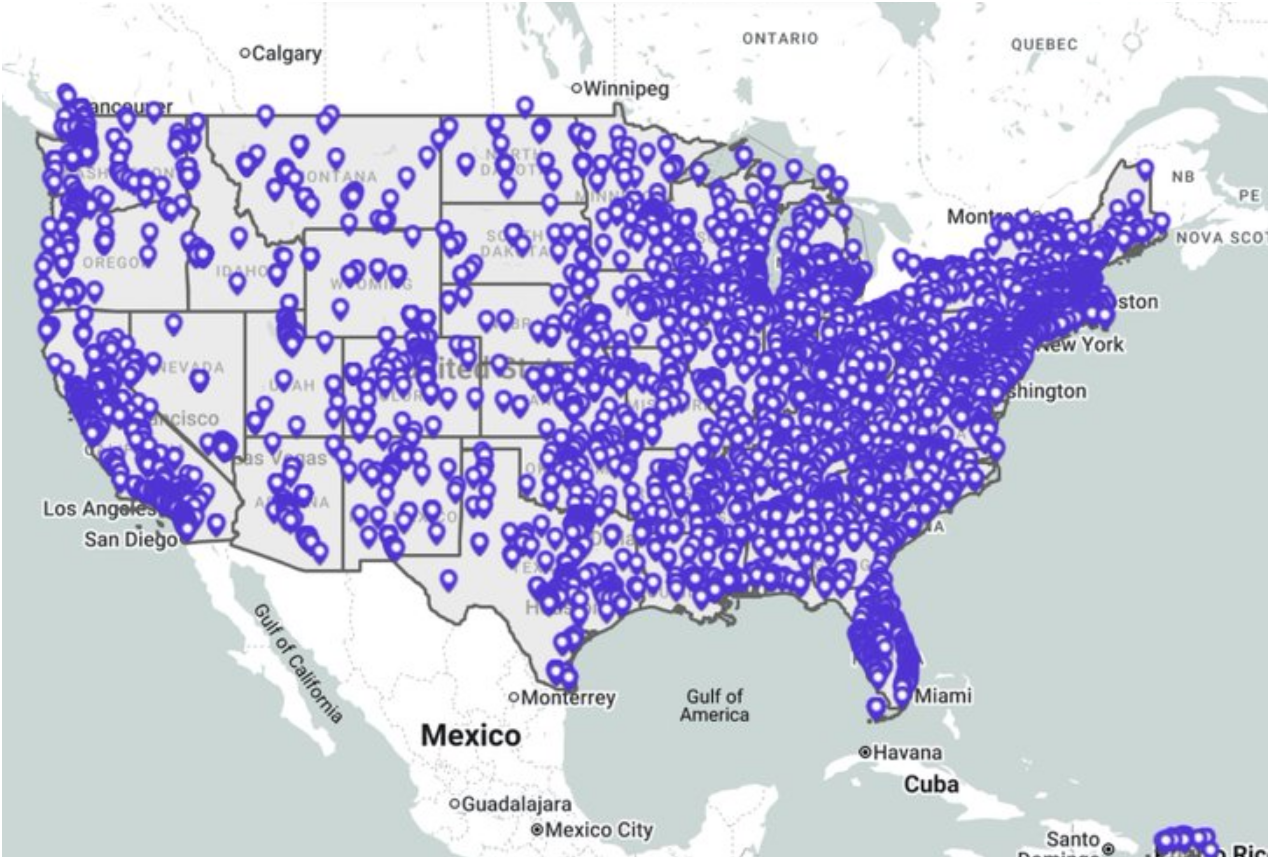
Hard to appreciate the scale of this effort. Every blue dot is a NGO.
In this case, the interviewer is deliberately using psycholinguistics to insinuate an insidious undertone, which Owens disambiguates deftly.
Deliberately misusing words in this fashion is a very common political and journalistic trick.
Words and psychology are always intertwined and thus words are always susceptible to being used maliciously; they can provide an appearance of plausible deniability.
In the past week or so we have seen numerous Jewish Supremists, closeted or not, employ these techniques in addition to their typical name-calling and screaming while denying the obvious.
In this context, it is worth noting that misuse of language can happen in friendly, intimate conversation between good friends nearly as often as it does in political dialog.
It is common for psycholinguistic misunderstandings to happen for completely innocent reasons, with profoundly sad effects for all parties involved, which often snowball.
FIML practice will show all practitioners how insidious the misuse or mishearing of words can be and how to prevent it.
One of the reasons I like Owens is she has a very good understanding of language and psychology and generally uses words very well, with nuance, humor and accuracy. ABN
Because the situation is considered safe and Syria needs manpower for post-war reconstruction, the German government has urged 1.3 million Syrian refugees to return. German Chancellor Friedrich Merz hopes that the majority of Syrian refugees will return to their homeland voluntarily or be deported in the near future.
“There is no longer a humanitarian reason to stay in Germany because Syria is at peace. We can also begin repatriating them (refugees),” Merz said, as quoted by The Guardian on Tuesday (November 4, 2025).
Refugees who refuse to return to Syria, Merz said, could be deported in the near future.
Trump’s “50-year mortgage at 2%” sounds like a gift to regular people.
It’s not.
It’s a trillion-dollar bailout for Wall Street dressed up as a tax cut.
Banks and hedge funds are drowning from the millions of old mortgages bought when the rates were 2-3%.
Now rates are 6-7%, so those old loans are worth only at like 50-60 cents on the dollar.
They’re sitting on $1-2 trillion in losses that would wipe out bonuses and maybe even some banks.
Trump’s plan is a magic eraser for those losses.
Every homeowner refinanced into a 50-year loan at 2% suddenly means those trash loans become gold again.
BlackRock, PIMCO, and the big banks instantly make hundreds of billions with zero work.
You pay interest for 50 years (your kids will still be paying when they’re grandparents).
2% sounds low, but factor in inflation and it’s actually negative real rate, so you lose purchasing power every year.
You can never move or change jobs easily because breaking a 50-year loan costs a fortune.
Your house doesn’t get cheaper.
Prices stay sky-high because banks can now lend huge amounts again (50 years = bigger loans). First-time buyers still get crushed.
Blackrock & wall street will undergo bailout paid by main st.
Mortgage companies will collect 50 years of servicing fees. Trump looks like a hero while delivering the biggest wealth transfer from regular Americans to billionaires in history.
Revolutions are funny things. They start out almost imperceptible. The final straw itself may be as inconsequential as a single voice in the crowd whose words unleash a tidal wave that sweeps aside the seemingly intractable old order forever.
Even as the cracks in the Eastern Bloc began to materialize in 1989, starting in June in Hungary, Nicolae and Elena Ceausescu’s Romania seemed impervious to the winds of change. They maintained a cult-like grip on power aided by the notorious and ubiquitous Securitate, the secret police.
On 21 December 1989 Ceausescu decided that the best way to quell a bubbling cauldron of unrest in Transylvania over the past several weeks was to appear, himself, with his wife Elena, above Bucharest’s Palace Square. Workers were bussed in and given red banners to wave in support of the regime. It was to be a show of force that would solidify the existing order.
After all, no one would dare challenge Ceausescu to his face.
As he confidently approached the microphone from the balcony and began mechanically repeating the tired old slogans of communism, suddenly a voice broke through with a high pitched scream, followed by an increasing din. The discordant sounds of protest rendered Ceausescu speechless and confused.
That second, when the false edifice of his rule was punctured and the impossibility of his position exposed, communist rule died in Romania.
Something like America’s ‘Ceausescu Moment’ is definitely happening.
I am not so sure the query pictured above is that ‘moment’. But at some point recently, the tide has turned, deeply and cannot be called back.
Many of us have been hoping to live during this moment, some of us for many decades.
Many smaller tides have contributed to this momentous tide — the collapse of the climate hoax, the covid hoax, the vax hoax, the woke hoax, the MAGA failure to avoid entanglement in the Gaza slaughter and more.
The mind-control machine has broken.
Tucker Carlson, Candace Owens and Nick Fuentes are the immediate manifestation of the broken machine.
But many tens of millions stand with them and behind them. The lies cannot continue and many of us know this.
Time will tell how matters develop from here.
The people and their voices are always the bottom line, which even the ruling elite cannot ignore. ABN
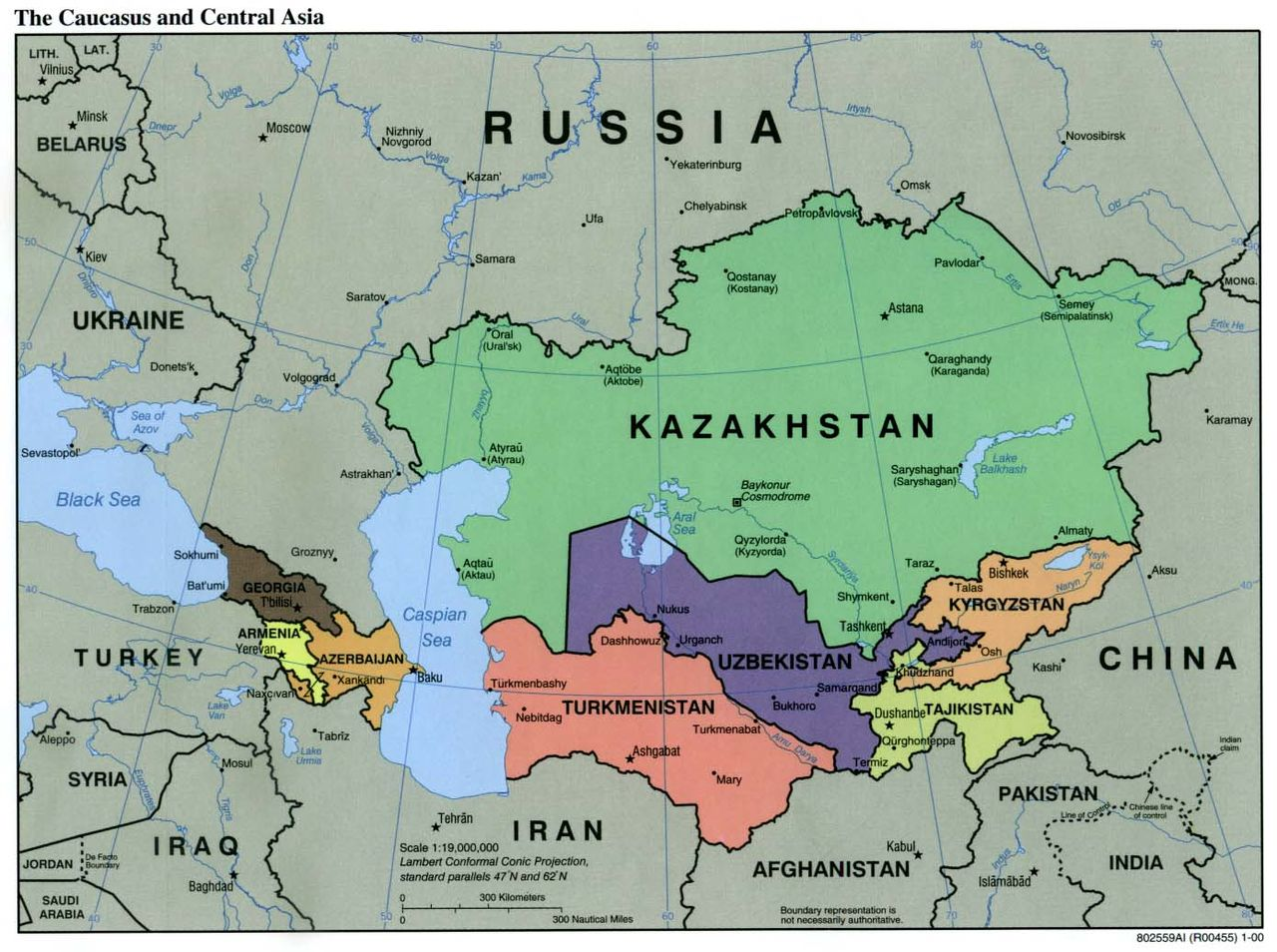
Secretary of State Marco Rubio hosts Kazakhstan Foreign Minister Yermek Kosherbayev, Kyrgyz Republic Foreign Minister Jeenbek Kulubaev, Tajikistan Foreign Minister Sirojiddin Muhriddin, Turkmenistan Foreign Minister Rashid Meredov, and Uzbekistan Foreign Minister Bakhtiyor Saidov for the C5+1 welcome reception at the Department of State, on November 5, 2025.
Rubio enters at 12:10 min
Central Asia is an important area historically and in the present. It was the home of the ancient Scythians, one of whom became the Buddha. In recent decades it was and maybe still is, conceptually, a major part of Zbigniew Brzezinski’s ‘Grand Chessboard’. ABN
A computer program that compared the bomb suspect’s gait to that of Shauni Kerkhoff produced a 94% match.
Aforensic analysis of a female former U.S. Capitol Police officer’s gait is a 94%-98% match to the unique stride of the long-sought Jan. 6 pipe-bomb suspect, according to a Blaze News investigation confirmed by several intelligence sources.
A source close to a congressional investigation of Jan. 6 additionally told Blaze News evidence has emerged recently that pointed toward law enforcement possibly being involved in the planting of the pipe bombs.
A software algorithm that analyzes walking parameters including flexion (knee bend), hip extension, speed, step length, cadence, and variance rated Shauni Rae Kerkhoff, 31, of Alexandria, Va., as a 94% match to the bomb suspect shown on video from Jan. 5, 2021. The veteran analyst who ran the analysis for Blaze News said that based on visual observations the program can struggle with, he personally pegged the match at closer to 98%.
Former Capitol Police Officer Shauni Rae Kerkhoff is a forensic match to the long-sought Jan. 6 pipe bomber. Photos by FBI, Capitol Police, Temple University
The possible solution to the pipe-bomb mystery could have far-reaching reverberations.
Several officials familiar with the government’s investigative efforts said a new work is urgently needed to determine whether there were co-conspirators who aided and abetted the crimes, and to learn if federal agencies or employees knew who was involved in the bomb hoax and participated in a nearly five-year cover-up.
The FBI has faced questions over its failure to make meaningful investigative progress despite offering a $490,000 reward with the ATF, along with a $10,000 reward from the Metropolitan Police Department. Former FBI Director Christopher Wray claimed the bureau conducted an exhaustive investigation.
We are under sanctions, financial sanctions of European Union because we don’t let the illegal migrations to come to Hungary and to the European Union as well.
So we have to pay, just to inform you, we have to pay every day one million euro as a punishment to the Brazilian budget, because we stopped the migrants. This is the absurd world we are living now in Europe.
The German Federal Audit Office (Bundesrechnungshof) has dismantled the government’s hydrogen strategy. Neither on the supply side nor on the demand side do the results even remotely align with the ambitious political targets. Germany faces yet another subsidy ruin.
Berlin is in a state of hangover. The ongoing economic crisis is mercilessly exposing the delusions of the so-called green transformation. After the collapse of battery production – think of subsidy ruins like Northvolt – the retreat of industry from “green steel,” and the failure of the energy transition under the weight of wind and solar, which have become bottomless subsidy pits, the next major project is now under heavy attack: the hydrogen strategy.
Audit Office Steps Out of the Shadows
In a recent report, the Federal Audit Office examined the German hydrogen economy – political art at its finest. Since 2020, the sector has been flooded with subsidies. For 2024 and 2025 alone, more than €7 billion in funding has been allocated. Plenty of lubricant for an engine that has been sputtering from day one and still refuses to start.
Private investors, enticed by guarantees and state-backed prices, add more than €3 billion annually. And what’s the result after five years of constant funding? Devastating. Current production of green hydrogen stands at a mere 0.16 gigawatts. Another 0.2 gigawatts are under construction.
In other words: a market that practically doesn’t exist is already consuming around €8 billion every year—public and private – like a black hole.
I am recommending to Senate Republicans that the Hundreds of Billions of Dollars currently being sent to money sucking Insurance Companies in order to save the bad Healthcare provided by ObamaCare, BE SENT DIRECTLY TO THE PEOPLE SO THAT THEY CAN PURCHASE THEIR OWN, MUCH BETTER, HEALTHCARE, and have money left over. In other words, take from the BIG, BAD Insurance Companies, give it to the people, and terminate, per Dollar spent, the worst Healthcare anywhere in the World, ObamaCare. Unrelated, we must still terminate the Filibuster!







 American Buddhist Net