Do your best. Speak the truth.

Tim Ballard, a former DHS agent and the founder of Operation Underground Railroad, known for his portrayal in the anti-trafficking film Sound of Freedom, addressed Congress on Wednesday, expressing deep concerns about the Biden administration’s approach to the crisis at the US border, which he likened to a “child-trafficking delivery service.”
“One case in particular, a young woman was brought across the border in an area where no barrier protection existed. Once in the US, she was sold and raped for money up to 30 to 40 times a day for five years before eventually escaping herself. She shared with me the tragic conclusion that had her captors been forced to attempt a crossing into our country at the port of entry just like the little boys in [Sound of Freedom], she would have had a better chance to rescue.”

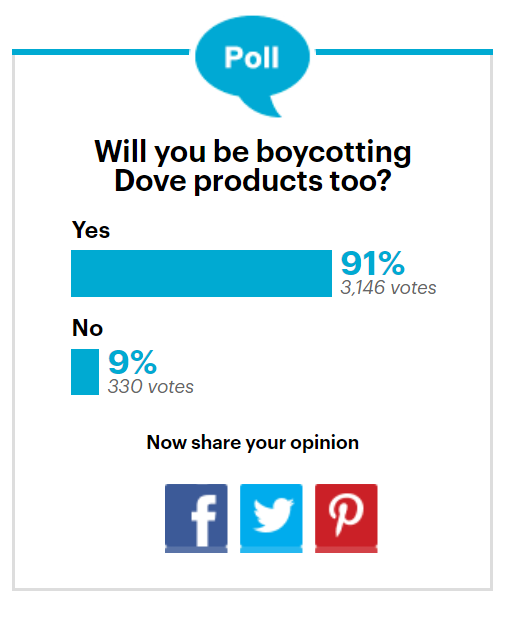
Boycotting, noncompliance, spreading the word, some sort of group solidarity against the madness are the best means we have to actually save world civilization, and that is not an overstatement. Woke-coercion, mind-control, censorship, bad science, and lying news media are destroying the world’s chance to thrive. There are more of us than them as the poll above and other noncompliance polls show. ABN
This speech is a garbage pile of censorial cliches, logical fallacies, red-herrings, appeals to ignorance, and excuses for yet more authoritarian aggrandizement at the UN. I challenge readers to watch the whole thing. I did and found it alarming. My guess is Fleming is naively sincere in her desire to censor the world and comfortable with the belief that her totalitarian inclinations are good. She speaks the lingo of globalist bureaucrats, soldiers of unreason, who are bent on destroying civilization in their own image. ABN

Viewing nature as a signaling network shows its advantage with this question.
Instead of asking where our moral sense comes from, we ask instead what makes for a good signaling network?
The answer is “good organization.”
By “good,” I mean efficient, well-made, good use of resources, easy to maintain, rational, etc.
You are a signaling network.
A well-organized you will probably tend to be morally pretty good and wanting to get better at it, depending on your conditions.
Of course some people view “morality” as whatever is in their best interests. And that is a type of moral thinking. When it is found out, though, most other people, very reasonably, do not like it.
If we view nature as the evolution of signals and signaling networks rather than as the evolution of matter, we will see that changes in signal organization are fundamental to the evolutionary process.
In this sense, it is the most ordinary thing in the world that you, a complex signaling system that is conscious, would consciously seek good organization and/or want to adapt your organizing principles, both objective and subjective, to conditions that impact you.
Conditions that impact you are signals being perceived by the signaling network you think of as yourself.
Your adaptations, both small and large, will encompass many moral considerations and choices.
Morality can be viewed as a kind of organization. The networks that make up your being must organize their relations with the world around them and other sentient beings. We make many moral decisions when we do this. These decisions are an integral part of how we are organized.
Last night I heard a drunk swearing at his friend from the street. “You fucking bastard…” etc. Not well-organized, but still he was yelling a local version of morality and this was fundamental to his networks and behavior.
People being revived after near-death experiences could still have memories and understand what’s happening around them up to an hour after their hearts stopped, a study suggests.
The first-of-its-kind study, which followed cardiac arrest survivors, found that nearly 40 percent of people undergoing CPR had memories, dreamlike experiences, or some perception of what’s happening around them.
Researchers have long been working to understand what happens after death. This study provides insight into the little-understood world of near-death experiences.
These processes may open access to ‘new dimensions of reality,’ the researchers wrote, and ‘opens the door to a systematic exploration of what happens when a person dies.’
Additionally, the findings could inspire new treatments for restarting the heart and preventing brain injuries.
Dr Sam Parnia, senior study author and critical care physician at NYU Langone in New York City, said: ‘Although doctors have long thought that the brain suffers permanent damage about 10 minutes after the heart stops supplying it with oxygen, our work found that the brain can show signs of electrical recovery long into ongoing CPR.’
‘This is the first large study to show that these recollections and brain wave changes may be signs of universal, shared elements of so-called near-death experiences.’
Mind-control. ABN
UPDATE: This is one incident in a very big push to completely takeover and stifle the internet. And this effort will reach into the DNS. If you do a search on Google, you will find many results but they will all be slanted if the topic is political or contentious. Go through a few pages and you will see mainly the same slant and before long, nothing. So a great deal of censorship and disappearing sites and points of view has already happened. People that want to censor and control information never have good motives. These powerful moves to control all information and thought are totalitarian in the extreme. Even if they had good motives (they do not), the next group in total control will not. Information is power. If they seize this power, they will never give it back. We can only fight back by being aware and not complying whenever possible. It’s pathetic but our best group response is Bud Light. This is pathetic because our civilization(s) are not advancing human knowledge and goodness or health and happiness. We are going backward because a bunch of rich twits want it that way. ABN
The advantage of seeing humans as networks is we can say interesting things about them parsimoniously.
A network is an organization of parts that are all connected.
Humans are networks of language. It is quite easy to see that language is a kind of network. Words connect in many ways and any word can be added to an existing network without difficulty. One word is defined by other words and we understand how it is used by how it functions among other words.
Humans are networks of semiotics. Semiotics function and are networked much like words, though a single semiotic may require many words to describe.
Meaning or what things mean is another network that is a fundamental part of being human. Meaning can be expressed in words, it can be apprehended through semiotic analyses, and it very often has a strong emotional component.
Emotions are another network that is fundamental to humanness. Emotions are often not as easily analyzed as the other networks since they can be vague, changeable, and based on complexities that are difficult to see while the emotion is happening. I am pretty sure that most, if not all, complex emotions are socially determined. Since semiotics are by definition communicative, the emotional aspect of all semiotics is a major aspect of both the semiotic and emotional networks. For this reason, emotions are often best analyzed through their accompanying semiotics.
Humans also have biological networks, perceptual networks, chemical and electrical networks.
All of these networks are hooked up with each other and all of them send signals internally and to the other networks.
If we conceive of a single human being as being a vast network that includes all of the above mentioned networks and others that have not been mentioned (aesthetic, gustatory, sexual, etc.), we can see that that vast network that is all of the other networks must have a basic need to be unified.
The biology must cohere and be healthy and the mind and feelings that exist together with that biology must be unconfused enough to guide the biology toward what it needs to maintain itself.
The cognitive networks (language, semiotics, feeling, reason, etc.) must have a strong tendency to forming basic conclusions about the world around them.
For example, all humans live in fundamentally uncertain circumstances. We don’t know when we will die, what happens after we die, how stable our social lives are, our economics, our biology, and so forth. To function, our cognitive network(s) must have a basic answer to the question of uncertainty. Here are some ways that people answer or respond to the fundamentally uncertain nature of human existence:
I am sure that readers can add many more examples of how humans deal with fundamental existential uncertainty. What I find most interesting in thinking in this way is you don’t need to imagine a person’s ego or wonder too much about how or why their emotions developed as they did. You really just need to ask them how they deal with uncertainty and they will tell you.
The vast cognitive and biological networks of individual humans often can be understood as being based on a simple answer to a simple question like that.
Since psychological explanations are the coin of the realm today, many people will confuse themselves and others by further adding long stories about the development of their personality or how their parents treated them. These factors can be interesting and are real, to a point, but it is much simpler and more profitable to focus directly at the answer/response to the basic question of life’s uncertainty. A major bias or unifying principle of the human network can be found in a straightforward answer to that question.
Beyond this basic question discussed above, there are many other questions we can ask about a particular human network. Is the network closed or is it open? Is it complex or simple? Is it independent of social definitions/constraints or dependent on them? How well does it see itself, understand itself? Does it perceive other networks or does it see other people as two-dimensional aspects of its own network? Is it willing to interface with other human networks in complex ways or only in simple conventional or established ways? Is it secretive? Does it see the vastness of the networks outside and beyond itself? Does it see how it is connected to them?
The advantage of analyzing humans as networks is it avoids many of the ambiguities of psychological analysis. Rather than focus on such dubious concepts as personality, ego, the subconscious, or self, a network analysis simply asks how is the network functioning. From a network point of view, a personality or self is little more than a focal point, a unifying principle that provides an illusion of certainty where there need not be one and cannot really be one. A human can function perfectly well without an ego, self, or well-defined personality. Indeed, there is greater stability in seeing yourself as a complex network that is always open to analysis and always willing to add or remove parts as they show themselves to be either good or bad.
After basic network questions have been asked and answered, I think the best starting point for a more detailed analysis is an examination of semiotics and how they are functioning in the individual’s life, and especially in their communications with others. This is best done through FIML practice.
In this context, as in so many, it is important to remember that humans are entry-level conscious semiotic animals. As such, we are prone to processing semiotics with the abrupt and often violent instincts of animals. A network approach provides specificity (what semiotic are we talking about), malleability (oh, I didn’t mean that), an appreciation for the functionality of network nodes, what they are doing and how or why. Since FIML partners have a prior agreement to do analyses of this sort, it is fairly easy for them to segue from ordinary conversation to analysis of that conversation and then back to the ordinary conversation.
As mask mandates are contrary to the fundamental medical principle of informed consent, all masking mandates currently in place must be rescinded, and no future mandates should be imposed.
Furthermore, since mask mandates for viral illnesses provide no clear benefits, while creating potential for harm, individuals should be empowered to choose to not observe such mandates that are either currently in existence or that may be imposed in the future.
source, with evidence and the reasoning behind the above statement
 American Buddhist Net