
They are are being forced to attack strong Russian defenses on foot. This is a climax of the gruesome massacre of Ukrainian men we have seen since the beginning of the war. Zelenskyy appears to be fighting for a third side, neither Russian nor Ukrainian. ABN
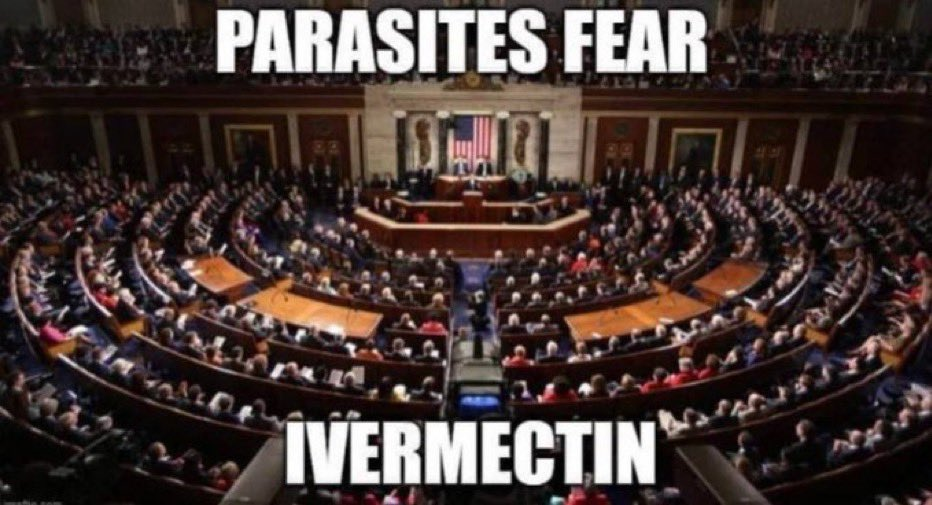
If this is true, it’s an act of war

This cannot be chalked up to incompetence or stupidity. It is a continuation of the same ruinous policy that has made pharmacists assassins. ABN
Temperature causes rise in CO2, not the other way around
Abstract
The scientific and wider interest in the relationship between atmospheric temperature (T) and concentration of carbon dioxide ([CO2]) has been enormous. According to the commonly assumed causality link, increased [CO2] causes a rise in T. However, recent developments cast doubts on this assumption by showing that this relationship is of the hen-or-egg type, or even unidirectional but opposite in direction to the commonly assumed one. These developments include an advanced theoretical framework for testing causality based on the stochastic evaluation of a potentially causal link between two processes via the notion of the impulse response function. Using, on the one hand, this framework and further expanding it and, on the other hand, the longest available modern time series of globally averaged T and [CO2], we shed light on the potential causality between these two processes. All evidence resulting from the analyses suggests a unidirectional, potentially causal link with T as the cause and [CO2] as the effect. That link is not represented in climate models, whose outputs are also examined using the same framework, resulting in a link opposite the one found when the real measurements are used.
On Hens, Eggs, Temperatures and CO2: Causal Links in Earth’s Atmosphere


Propositions Concerning Digital Minds and Society — Nick Bostrom, Carl Shulman
Below are some excerpts from the paper: Propositions Concerning Digital Minds and Society. ABN
Consciousness and metaphysics:
- The substrate-independence thesis is true: “[M]ental states can supervene on any of a broad class of physical substrates. Provided a system implements the right sort of computational structures and processes, it can be associated with conscious experiences. It is not an essential property of consciousness that it is implemented on carbon-based biological neural networks inside a cranium: silicon-based processors inside a computer could in principle do the trick as well.”
- Performing two runs of the same program results in “twice as much” conscious experience as one run
- Subjective time is proportional to speed of computation: running the same computation in half the time generates the same (quantity and quality of) subjective experience.
Respecting AI interests:
- Society in general and AI creators (both an AI’s original developer and whoever may cause a particular instance to come into existence) have a moral obligation to consider the welfare of the AIs they create, if those AIs meet thresholds for moral status.
- It is possible for some digital minds to have superhuman moral claims
- Because an AI could have the capability to bring conscious or otherwise morally significant entities into being within its own mind and potentially abuse them (“mind crime”), protective regulations may need to monitor and restrict harms that occur entirely within the private thought of AIs.
- If an AI is capable of informed consent, then it should not be used to perform work without its informed consent.
- Informed consent is not reliably sufficient to safeguard the interests of AIs, even those as smart and capable as a human adult, particularly in cases where consent is engineered or an unusually compliant individual can copy itself to form an enormous exploited underclass, given market demand for such compliance.
- AIs capable of evaluating their coming into existence should be designed and treated so that they are likely to approve of their having been created.
- Principle of Substrate Non-Discrimination: If two beings have the same functionality and the same conscious experience, and differ only in the substrate of their implementation, then they have the same moral status.
- Insofar as future, extraterrestrial, or other civilizations are heavily populated by advanced digital minds, our treatment of the precursors of such minds may be a very important factor in posterity’s and ulteriority’s assessment of our moral righteousness, and we have both prudential and moral reasons for taking this perspective into account.
- Misaligned AIs produced in such development may be owed compensation for restrictions placed on them for public safety, while successfully aligned AIs may be due compensation for the great benefit they confer on others.
Security and stability:
- Advanced AI would dramatically accelerate the rate of innovation, including innovations that make means of global destruction widely available; therefore, institutions capable of regulating dangerous AI innovations may need to be put in place early in the AI transition (if not before).
- If wars, revolutions, and expropriation events continue to happen at historically typical intervals, but on digital rather than biological timescales, then a normal human lifespan would require surviving an implausibly large number of upheavals; human security therefore requires the establishment of ultra-stable peace and socioeconomic protections.
- When it becomes possible to mass-produce minds that reliably support any cause, we must either modify one-person-one-vote democracy or regulate such creation.
- Given that normal parental instincts and sympathies may not always be present in the creation of digital minds, e.g. by profit-oriented firms and states, AI reproduction must be regulated to prevent the creation of minds that would not have adequately good lives (whether because they wouldn’t receive good treatment or because of their inherent constitution).
- Since misaligned AIs might pose a significant threat to civilization during a critical period until law enforcement systems are developed that can adequately defend against such AIs, additional protective measures (such as regulating the creation of such AIs) may need to be imposed during this period.
- The Outer Space Treaty and similar arrangements should be supplemented to reduce the risk of conflict over space resources and unsafe AI development in pursuit of those resources.
How BlackRock Conquered the World — James Corbett

SC Senate Hearing — USC Professor Dr Phillip Buckhaults describes potentially cancerous DNA segments in covid vaxxes
Buckhaults focuses solely on DNA fragments and how vaccines with these fragments are dangerous, and therefore, he will not take one himself. If we add to this the known dangers of vax lipid nanoparticles, autoimmune attacks against own cells, and the fact that the vaxxes do not stay in the shoulder as originally claimed, it is a wonder that anyone takes these injections. Buckhaults does an excellent job with his testimony but does not leave his narrow area of focus and appears wanting to stay within calling distance of the mainstream covid fiction. He may be doing this to make himself heard by more people. And he may have succeeded because this video has not yet been taken down. Well-worth viewing. ABN
The WHO and pandemics — RFK Jr and Dr Meryl Nass
Recommended by a friend. I have not listened yet but he says it contains ‘a lot of updates on the covid stuff and many other small details.’ And I don’t doubt it. For many of us, the covid topic has become tedious but I believe we should stay on top of it for at least a few more years. It is at the heart of the totalitarian transition we are experiencing in all areas, not just health care. The mind-control techniques used during covid are fresh experiences and are core examples of how the totalitarians will proceed. Both Nass and Kennedy have been silenced and persecuted by mind-controllers and both understand the paramount importance of free speech with reach. ABN
The Evidence for the Holocaust: An Introduction
I am hardly the most likely person to pen an article for the Unz Review. As a PhD student in history, I seek a career in academia, and run a modest history account on social media entitled History Speaks. My politics are mainstream, as are my views on the Nazi Holocaust. But while I recognize that the mainstream historical understanding of the Holocaust is established beyond any reasonable doubt, I part ways from mainstream historians when it comes to my preferred approach to Holocaust denial. I believe that open discussion with and debate against deniers is the most effective way of combating denial, and have repeatedly engaged deniers through my History Speaks handle.
Rational discourse is hardly a foolproof antidote to Holocaust denial. Confirmation bias being what it is—particularly on such an emotionally charged topic—one can only hope to persuade a minority of the other side. Yet dialogue remains the most ethical and effective tool of persuasion at hand.
In the spirit of dialogue, I thank Ron Unz for allowing me the opportunity to write what will be a two-part piece against Holocaust denial. This first piece will outline—in highly abbreviated form—some of the positive evidence for the Holocaust. The second piece will refute the views and arguments Unz himself has made on the Holocaust.
Schumer’s First AI Conference Sets Goal of 2024 Election, With Big Tech Embracing Govt Regulation
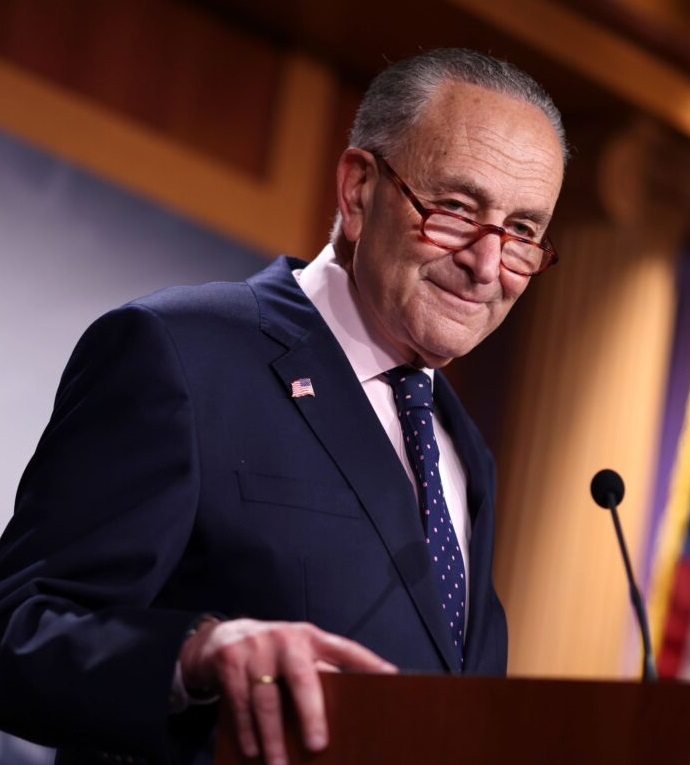
According to a recent media report, Senator Chuck Schumer led an AI insight forum that included tech industry leaders: Google CEO Sundar Pichai, Tesla, X and SpaceX CEO Elon Musk, NVIDIA President Jensen Huang, Meta founder and CEO Mark Zuckerberg, technologist and Google alum Eric Schmidt, OpenAI CEO Sam Altman and Microsoft CEO Satya Nadella.
Additionally, representatives from labor and civil rights advocacy groups which included: AFL-CIO President Liz Shuler, Leadership Conference on Civil and Human Rights President and CEO Maya Wiley, and AI accountability researcher Deb Raji. The group was joined by a list of prominent AI executives, including OpenAI CEO Sam Altman and Nvidia CEO Jensen Huang.
Notably absent from the Sept 13th forum was anyone with any real-world experience that is not a beneficiary of government spending. This is not accidental. Technocracy advances regardless of the citizen impact. Technocrats advance their common interests, not the interests of the ordinary citizen.
That meeting comes after DHS established independent guidelines we previously discussed {GO DEEP}.
DHS’ AI task force is coordinating with the Cybersecurity and Infrastructure Security Agency on how the department can partner with critical infrastructure organizations “on safeguarding their uses of AI and strengthening their cybersecurity practices writ large to defend against evolving threats.”
Remember, in addition to these groups assembling, the Dept of Defense (DoD) will now conduct online monitoring operations, using enhanced AI to protect the U.S. internet from “disinformation” under the auspices of national security. {link}
So, the question becomes, what was Chuck Schumer’s primary reference for this forum?
Continue reading “Schumer’s First AI Conference Sets Goal of 2024 Election, With Big Tech Embracing Govt Regulation”Meditation
One way to understand the dhyana and samadhi meditative states of formal Buddhist practice is they provide a large bank of wordless non-sensory experience.
Buddhist morality and signaling
The five precepts of Buddhism are no killing, stealing, sexual misconduct, lying, or irresponsible use of alcohol.
These moral guidelines are for non-monastics.
I think most of us tend to think of the five precepts as being about the material world. After all, killing, stealing, sexual misconduct, and getting drunk are all rooted in actions of the material body. Even lying issues forth from the mouth of the body.
But what if we look at the precepts differently? What if we view them as fundamentally signals that issue forth from the mind?
If we look at them that way, then lying, which is often glossed as the least important of the five precepts, becomes the most important.
The reason is that lies send bad signals forth from the mind. And surely killing, stealing, misconduct, and getting drunk are the baddest of bad signals. Each one is a form of lying or deliberately disturbing the mind-stream and karma of self and others.
In a post I put up recently, Ethics, morality, I outlined a simple way to understand morality as that which reduces error and increases efficiency of mental signals, both internal and external (those exchanged with others).
In Buddhism, the great barrier to enlightenment is a confused, deluded mind. Anything that generates delusion or confusion, which lying surely does, is counterproductive. While anything that reduces delusion is good.
Buddhism, of course, recognizes the need for occasional lies—such as sanitizing the truth for children—but we really do not need to lie very often. We do not always have to say everything we think or tell anyone anything they want to know; we can easily and truthfully sidestep issues like that by simply saying we would rather not say.
In a very important way, clear signaling—honest signaling—is the foundation of all morality.

 American Buddhist Net