I sympathize deeply but all creators of anything are being plagiarized by AI, which ‘trains’ on our work. To date, there is no authority or law to stop companies from doing that. This case appears to involve a single artist, so she may have some leverage, but they could just mix material plagiarized from her with a few other artists to conceal it. Big Brother has become Big Robot.
PS: In following up, I just read that the company in question (Vidia?) has withdrawn all of its copyright claims on her music. ABN
American livestreamer Johnny Somali, who caused outrage in South Korea by kissing a statue representing World War Two sex slaves, has been sentenced to six months in jail.
Seoul authorities charged him for public nuisance in November 2024 after he posted a clip of himself kissing and performing lap dances on the statue while visiting South Korea. He has been barred from leaving the country since then.
The 25-year-old, whose real name is Ismael Ramsey Khalid, is known for his provocative content which has led to him being banned from several streaming platforms.
He has also been accused of harassing people while travelling in Japan and Israel.American livestreamer Johnny Somali, who caused outrage in South Korea by kissing a statue representing World War Two sex slaves, has been sentenced to six months in jail.
Seoul authorities charged him for public nuisance in November 2024 after he posted a clip of himself kissing and performing lap dances on the statue while visiting South Korea. He has been barred from leaving the country since then.
The 25-year-old, whose real name is Ismael Ramsey Khalid, is known for his provocative content which has led to him being banned from several streaming platforms.
He has also been accused of harassing people while travelling in Japan and Israel.
…In the final accounting, Charles Bronfman is not merely a man of wealth, but a pillar of a shadow-governance structure that has rendered the traditional legislative bodies obsolete. Our elected officials have been reduced to mere stage actors, reciting lines written by an unelected inner circle of organized Jewish interests that treat sovereign nations like proprietary assets. As the Epstein files continue to strip away the veneer of legitimacy from the elite, we are forced to confront an undeniable reality: the levers of state have been seized by a cohesive Jewish network whose loyalties reside solely within their tribe. Recognizing this hostile architecture is the prerequisite for the struggle ahead—a definitive political confrontation, Gentile versus Jew, that is the only path to reclaiming our country.
…The Founding of the Mega Group
In 1991, Charles Bronfman and Leslie Wexner, founder of The Limited and Victoria’s Secret, co-founded what they called the “Study Group.” The innocuous name concealed something far more significant. This was an invitation-only club of approximately 20 of the wealthiest and most influential Jewish businesspeople in America, a number that would eventually swell to nearly 50 by 2001.
The group became publicly known as the Mega Group after a Wall Street Journal investigative report in May 1998, headlined “Titans of Industry Join Forces To Work for Jewish Philanthropy,” pulled back the curtain on its existence. Annual dues reportedly ran approximately $30,000. Members met twice a year for two-day seminars on philanthropy and Jewish identity. But the guest list alone suggested this was no ordinary study circle.
Members included Les Wexner, Charles Bronfman, Edgar Bronfman Sr., Max Fisher, Michael Steinhardt, Leonard Abramson, Harvey Meyerhoff, Laurence Tisch, Charles Schusterman, Lester Crown, Ronald Lauder, Marvin Lender, and Hollywood director Steven Spielberg. These were men who controlled billions in personal wealth and sat on the boards of the most powerful Jewish organizations in America.
Bronfman’s 1998 Wall Street Journal comment, “From the beginning, we didn’t want to be seen as a threat to anybody… We don’t want to be seen as the Sanhedrin,” functioned as a classic tactical admission. By explicitly citing the ancient Jewish governing body as the image he sought to avoid, he inadvertently confirmed that such a structure of Jewish influence was indeed the functional reality he managed.
The clip just below has lousy sound and I do not know how to make a better clip. If you have these skills, please make a better clip from roughly where the video below starts at 41:29 to the end of Wolfram talking about computational irreducibility which goes to 42:51, and ends with ‘little things you can say’.
I would like to have a clip I can upload to this site. The reason for this is this segment illustrates an important point but the YT video keeps changing, so using YT timing does not work well. Thanks. ABN
I betray my poor education by admitting that I had never heard of W. V. Quine’s “indeterminacy of translation” until last week1. My ignorance is especially egregious as I have worked as a professional translator for many years.
Maybe I had heard about it but had forgotten. I am being self-reflective because FIML practice is deeply, fundamentally concerned with the “indeterminacy” of translating one person’s thoughts into another person’s head.
Quine’s thesis is not just about translating from one language to another, though there is that. It is much more about the fundamental impossibility of determining what anything means well enough to “translate” it into another context, a next sentence, into another person’s mind, or even “translating” your own speech from the past into the context of your mind today.
If I had known about Quine, I probably never would have thought of FIML because his ideas and the slews of papers written on “indeterminacy of translation” surely would have made me believe that the subject had been worked through.
As it was, I have plodded along in a delightful state of ignorance and, due to that, maybe added something practical to the subject.
In the first place, I wholeheartedly believe that speech is filled with indeterminacy, which I have generally called ambiguity or uncertainty. In the second place, I have confined my FIML-related investigations mainly to interpersonal speech between partners who care about each other. I see no solution to the more general problem of indeterminacy within groups, subcultures, or linguistic communities. Until brain scans get much better, large groups will be forced to resort to hierarchical “determinacy” to exist or function at all.
For individuals, though, there is much we can do. FIML practice does not remove all “indeterminacy.” Rather, it removes much more than most people are aware is possible, even remotely aware is possible. My guess is FIML communication provides a level of detail and resolution that is an order of magnitude or two better than non-FIML.
That is a huge improvement. It is life-changing on many levels and extremely satisfying.
FIML does not fix everything—and philosophical or “artistic” differences between partners are still possible—but it does fix a great deal. By clearing up interpersonal micro-indeterminacy again and again, FIML practice frees partners from the inevitable macro-problems that micro-ambiguity inevitably causes.
Moreover, this freedom, in turn, frees partners from a great deal of subconscious adhesion to the hierarchical “determinacy” of whichever culture they are part of. Rather than trapping themselves in a state of helpless acceptance of predefined hierarchical “meaning,” FIML partners have the capacity to sort through existential semiotics and make of them what they will with far less “indeterminacy,” or ambiguity, than had been possible without FIML practice.
UPDATE: Both indeterminacy of translation and FIML fit with Buddhism very well. The core Buddhist concepts of impermanence, emptiness, and no-self (or intrinsic self-nature) are in the same philosophical region as indeterminacy of translation and FIML. Indeterminacy provides a philosophical grounding for the emptiness, impermanence, and no-intrinsic-self nature of anything within the human realm. FIML addresses this overall area of indeterminacy/ emptiness with a technique which greatly improves resolution of what is indeterminable. As empty humans we are agglomerations of indeterminable thought and action, more or less floating in a thick Bayesian mist of probabilities which are likewise indeterminable, impermanent, and empty of intrinsic self-nature. ABN
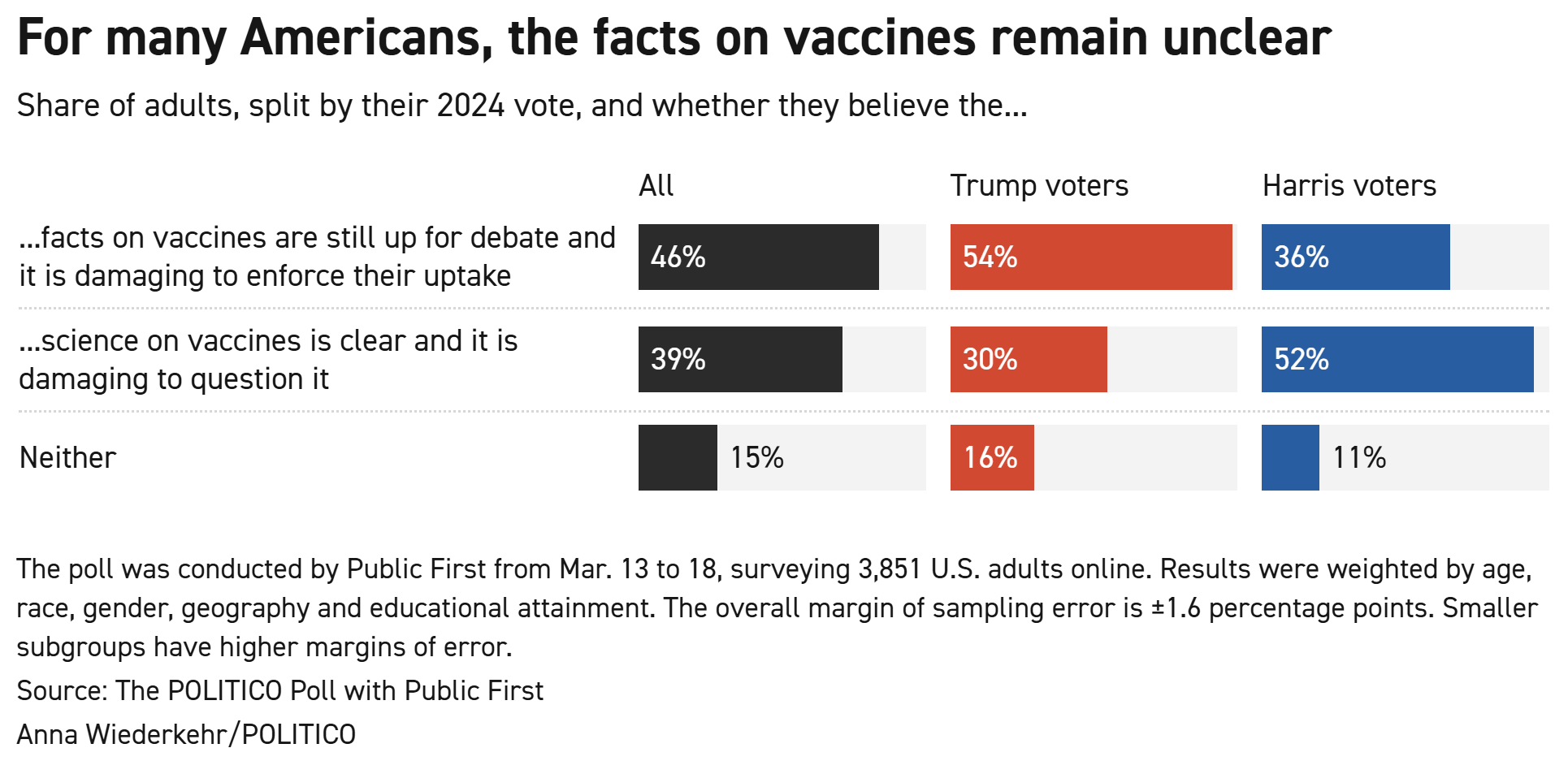
Results from the March poll of 3,851 U.S. adults conducted by Public First show that a plurality of Americans question the safety of vaccines, support reducing the number administered and believe that people’s right to decide what they put in their bodies is more important than preventing the spread of disease.
God’s heart is torn apart by wars, violence, injustice and lies. But our Father’s heart is not with the wicked, the arrogant, or the proud. God’s heart is with the little ones and the humble, and with them He builds up His Kingdom of love and peace day by day. Wherever there is love and service, God is there.
How can a human being make this claim? I assume ‘God’s heart’ is a metaphor. But how does a man know where God’s heart is or what tears it apart or what causes God to be somewhere or not somewhere? I ask these questions respectfully. Pragmatically and spiritually, I largely support Christians and the flourishing of Christianity. A good Christian is a good person. But what theology allows Christians, including the Pope, to claim they know what God wants? ABN
UPDATE: Candace has been doing some of the best journalism available today. I feel a bit sorry for people who have not been following her Charlie Kirk story. It is complex, but you can jump in with this episode and gradually figure out what the stakes are and why the story is so important. Candace uses copious crowd-sourcing information to back up very serious allegations. Within months she destroyed the FBI narrative. ABN
Mushroom networks fire voltage spikes that travel consistently in one direction.
Scrambling the timing destroys the pattern, proving it’s biological, not noise.
The same signalling logic that brains rely on may be over a billion years old.
A neuron fires in milliseconds. A fungal thread takes three minutes to pass the same kind of message across two centimeters of wood shavings. The difference in speed is staggering, roughly 40 million-fold. But the underlying principle is the same: an electrical signal starts at one point and travels, directionally, to another. If that sounds like a coincidence, consider the timeline. Fungi and animals share a common ancestor that lived over a billion years ago, long before anything resembling a brain existed. The question isn’t whether neurons are impressive. They are. The question is whether they invented directional electrical signalling, or inherited it.
A new study by Andrew Adamatzky, a researcher at UWE Bristol, published in Scientific Reports, offers evidence for the inheritance theory. Adamatzky spent fifteen days recording the electrical activity of oyster mushrooms, Pleurotus ostreatus, the common edible variety you’d find in a grocery store. What he discovered is that fungi electrical signals don’t just flicker randomly. They propagate through the fungal network in one consistent direction, at a measurable speed, with a structure that disappears when you scramble the biological timing.
Fungi now join plants and slime molds in a growing catalogue of brainless organisms that can send electrical messages across their bodies. And because fungi split from the animal lineage so long ago, the capacity for this kind of signalling may be something life figured out well before it figured out nerves.
Adamatzky describes the mycelium as “a spatially extended excitable medium in which electrical signals propagate as ionic waves.”
The speed is telling. At 40 centimeters per hour, fungal propagation sits in the same range as ionic and calcium waves in plants and slime molds. All of these are incomparably slower than nerve conduction. But they share the same functional architecture: a signal that starts somewhere, moves directionally, and arrives somewhere else with a predictable delay. “Information is not encoded in fast all-or-none impulses but in the timing, duration, and spatial progression of slow electrical events.” writes Adamatzky.
Buddhism and Christianity meet at junctures like this. Buddhism is 100% about truth or as close to it as we humans can get. All Buddhist philosophy and practice falls into three categories: 1) morality and ethics; 2) mindfulness and samadhi; 3) wisdom or clear thinking, truthful thinking. The West is very strong in many areas, but weak in mindfulness and samadhi. Mindfulness and samadhi are fundamentally the experiential part of Buddhism, the experience of truth. For a Buddhist, a Christian who experiences spiritual truth is having a real experience. The Buddha used the word nirvana to describe ultimate spiritual experience, but if you want to call it grace or God’s love or some other word, that’s fine. Doesn’t matter how you get there either. A good Christian is as good as a good Buddhist. Buddhism is a living tradition based on a very deep Buddhist tenet — if something is true it is good Buddhism whether a Buddha said it or not. If something is not true, it is not good Buddhism, even if a Buddha said it. Buddhism is a living tradition because, based on sound evidence and experience, Buddhist practice and philosophy can and do change as the world changes; as our vocabularies change, as experiences and truth endeavors change, as new discoveries are made. On a personal note, I love these brave Christians. They do so much good. ABN



 American Buddhist Net