Former Norwegian Prime Minister Thorbjørn Jagland, who also chaired the Norwegian Nobel Committee and served as Secretary General of the Council of Europe, was reportedly hospitalised following an alleged suicide attempt amid corruption charges linked to his connections with the late financier Jeffrey Epstein.
The development came days after Jagland was formally charged with aggravated corruption, which carries a potential 10-year prison term.
He has denied wrongdoing, describing his ties to Epstein as “unwise” or “poor judgement” and pledging full cooperation with the investigation.
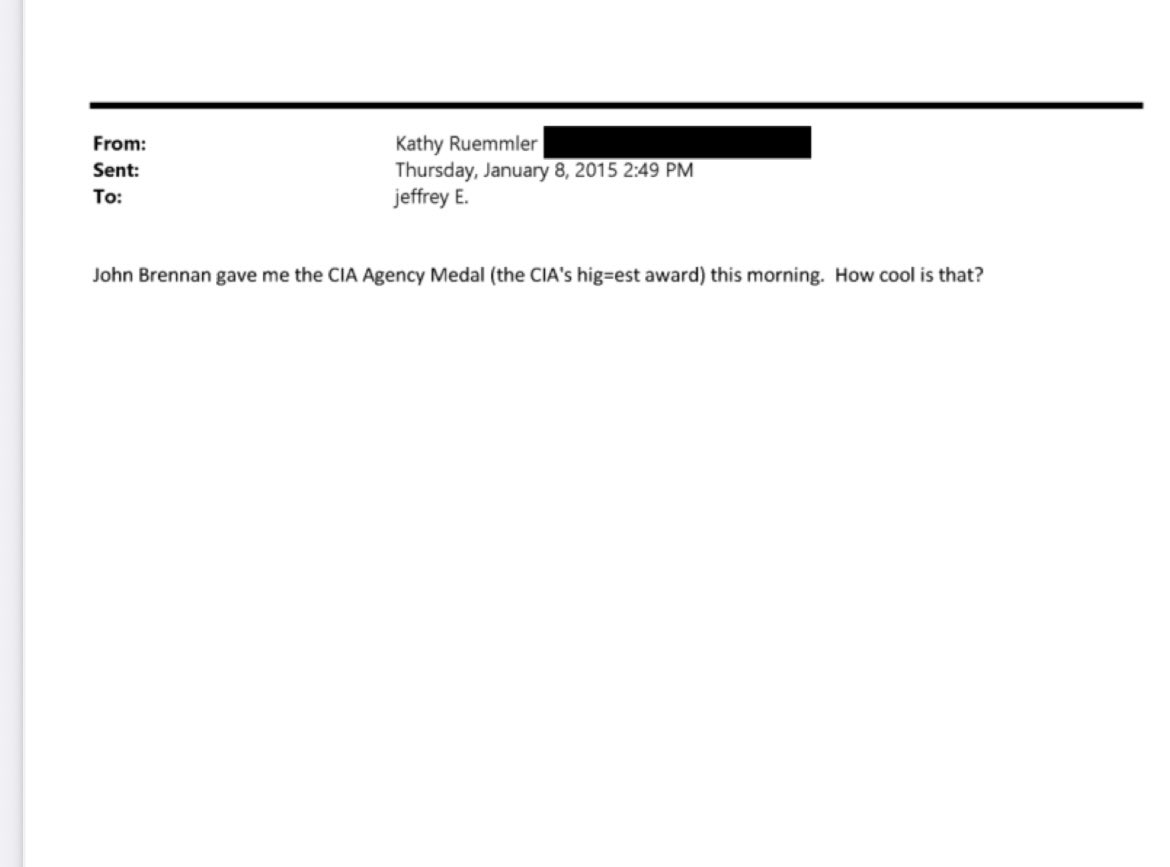
Thorbjørn Jagland, former Norwegian Prime Minister and chair of the Norwegian Nobel Committee from 2009 to 2015, was directly involved in awarding Barack Obama the Nobel Peace Prize in 2009. As the committee’s chairman at the time, he oversaw the decision to grant the prize to Obama, a move that drew significant international attention and criticism due to Obama being less than nine months into his presidency and during ongoing wars in Afghanistan and Iraq.
_________
The West is dying because our general sense of right and wrong is far too abstract and out of touch with the extremely vast majority of human cultures in the world today and throughout history. I can respect people who kill themselves over personal moral issues. But it appears Jagland was remiss on the morality of global and national politics as well. He is emblematic of of the deep failure of Westerners to live up to their own ideals while also failing to protect their own people. Notice, Epstein trafficked and sexually abused zero Jewish victims. He was as low as they come, but still. First Noble Truth — the human realm is characterized by suffering which arises out of clinging to delusion. ABN
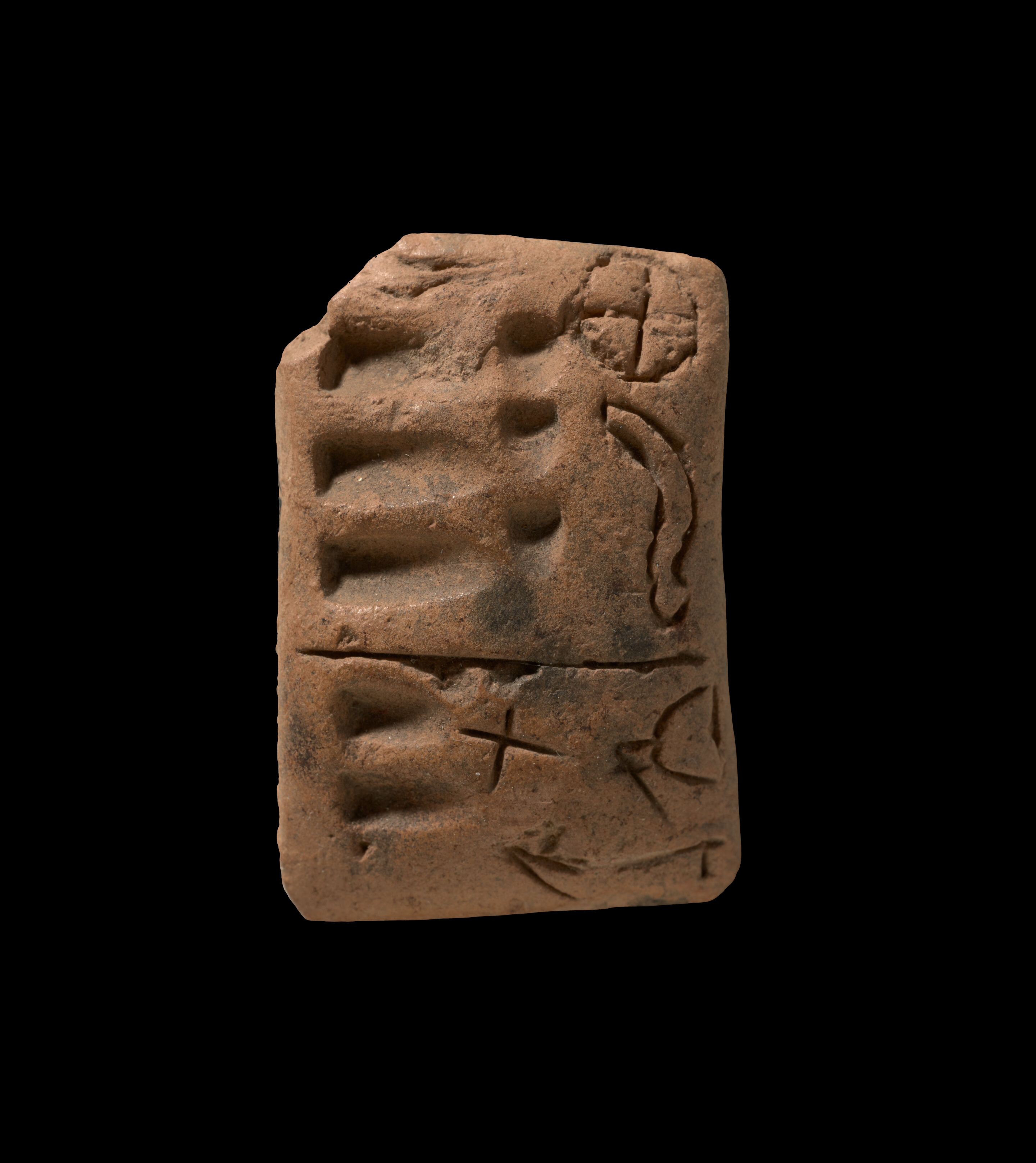
Over 40,000 years ago, our early ancestors were already carving signs into tools and sculptures. According to a new analysis by linguist Christian Bentz at Saarland University and archaeologist Ewa Dutkiewicz at the Museum für Vor- und Frühgeschichte (Museum of Prehistory and Early History) in Berlin, these sign sequences have the same level of complexity and information density as the earliest proto-cuneiform script that emerged tens of thousands of years later, around 3,000 B.C.E.
Using a computational approach, the team examined over 3,000 signs found on 260 objects to reveal insights into the origins of writing. Their findings, which have been published in the journal PNAS, were clear—and surprised even the researchers.
Paleolithic objects dating back between 34,000 and 45,000 years bear mysterious sign sequences—often repeated lines, notches, dots and crosses. Many of these artifacts were discovered in caves in the Swabian Jura, such as a small mammoth found in the Vogelherd Cave in Lone Valley in southwestern Germany.
A Stone Age human carved the mammoth figurine out of a mammoth tusk and carefully engraved it with rows of crosses and dots. Other artifacts found in the Swabian Jura are also etched with signs.
Proto-cuneiform tablet of the Uruk IV period (VAT 14774). This so-called numero-ideographic tablet features number signs on the left-hand side and more diverse ideographs on the right-hand side. This tablet is additionally partitioned by a horizontal line. Credit: Staatliche Museen zu Berlin, Vorderasiatisches Museum / Olaf M. Tesmer, CC-BY-SA 4.0
Our perception is continuously biased toward the past to help stabilize the chaotic world we live in.
Watch the video below (1 min, 32 sec) to see this illusion in real-time:
This video illustrates how our brains ignore change or incorporate it into our perceptions somewhat slowly through a “continuity field,” as described below:
Our brains are constantly uploading rich, visual stimuli. But instead of seeing the latest image in real time, we actually see earlier versions because our brain’s refresh time is about 15 seconds, according to new UC Berkeley research.
The findings, appearing in the journal Science Advances, add to a growing body of research about the mechanism behind the “continuity field,” a function of perception in which our brain merges what we see on a constant basis to give us a sense of visual stability.
“If our brains were always updating in real time, the world would be a jittery place with constant fluctuations in shadow, light and movement, and we’d feel like we were hallucinating all the time,” said study senior author David Whitney, a UC Berkeley professor of psychology, neuroscience and vision science.
Despite a noisy and ever-changing visual world, our perceptual experience seems stable over time. How does our visual system achieve this apparent stability? Here, we introduce a previously unknown visual illusion that shows direct evidence for a mechanism continuously smoothing our percepts over time.
As a result, a continuously seen physically changing object can be misperceived as unchanging.
In the video above, you can notice two things: 1) the slowness and blurriness of our perceptual change as we watch the video, and 2) that we can and do accept that change the moment it is shown to us in comparative stills.
If vision behaves this way, it is fair to assume our psychologies or, more precisely, our psychological memories do something similar on both points.
I was intrigued to see that the authors of the study calculated a time-span of 15 seconds:
We find that online object appearance is captured by past visual experience up to 15 seconds ago.
This is roughly the ‘speed’ or duration of our working memories.
FIML works most of all with the working memory because when we correct a mistake in our working memory or upgrade the data in our working memory while it is still present, we are able to make large changes in our psychologies almost effortlessly.
FIML leverages the working memory to make large changes in our whole brain memories.
It works well because changing your working memory to fit the obvious reality staring you in the face is easy.
In contrast changing whole brain memories and psychologies through rumination and recollection typically only entrenches them further and deeper.
While it is easy to see how this happens visually as in the video above, it may be difficult to see how to do this with our complex psychologies as they are functioning in real-time.
FIML completely solves this problem and yet it may be hard to see how and why.
It works like this:
The how is done by pausing real-life in real-time so you can compare your own mind’s percept with your partner’s percept of the same thing and make corrections as warranted.
The why is psychologically analogous to correcting the illusions produced by our brains “continuously smoothing our percepts over time.” This “continuously smoothing over time” prevents wholesome, realistic change. It lies at the heart of many psychological problems.
I don’t blame them. Apparently, they remember the USS Liberty and do not want to be sacrificed to start another war for Israel. I am expecting Trump will not attack Iran. A false-flag attack against any American ship could start WW3 if Trump doesn’t figure out what is happening. ABN
Jeffrey Epstein‘s sprawling Zorro Ranch has long been reported to have served as one of his private playgrounds for sexual abuse and trafficking.
From looking to carry out human experiments, create a super-race breeding facility using his DNA, and even allegedly burying the bodies of girls who had been strangled to death during ‘rough, fetish sex’, victims have long said the property in New Mexico has been overlooked by authorities.
The 7,500-acre estate, also referred to as the Playboy Ranch, has come under intense recent scrutiny after it made thousands of appearances in the disturbing Epstein files, released by the US Department of Justice on January 30.
Investigators previously searched Epstein’s New York and Palm Beach homes, his island, and even his Paris apartment. But no formal raid is believed to have ever taken place at Zorro Ranch.
This is despite allegations that the paedophile had planned to seed the human race with his DNA by impregnating women at the ranch and had three computer rooms the ‘size of houses’ where he would spy on his famous guests.
On multiple occasions beginning in the early 2000s, Epstein allegedly told scientists and businessmen about his ambitions to use the enormous property as a base where women would be inseminated with his sperm and give birth to his babies.
It was also alleged that Epstein’s disturbing goal was to have 20 women at a time impregnated at Zorro Ranch.
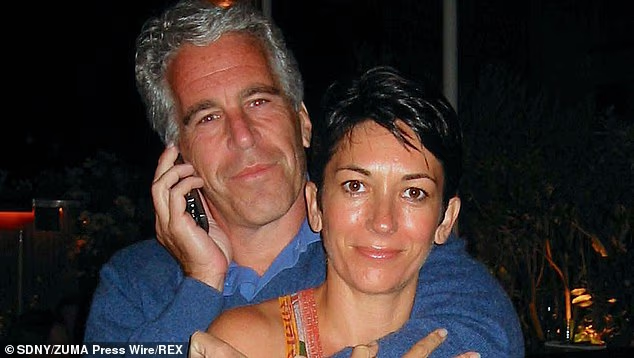
The person who sent the email alleged the girls were buried on the orders of Epstein and ‘Madam G’, believed to be Ghislaine Maxwell
The email, sent on November 21, 2019 to Eddy Aragon, was forward to the FBI
More signs of a planned gradual release of evidence and, one hopes, many other crimes and infiltrations related to Epstein. How high it goes, we shall see. Linked article above is a decent overview of Zorro Ranch. ABN






 American Buddhist Net