
German economist Richard Werner explains ‘mountain of evidence’ proving USA caused the Japanese crash and recession in the 1990s
Trump’s ‘real’ plan for ending war in Ukraine ‘revealed’: $300 BILLION boost to America and joint space missions with Russia to Mars
A report in The Wall Street Journal details how Trump’s team – including his son-in-law Jared Kushner and special envoy Steve Witkoff – have been negotiating with Russia on how to ‘bring their $2 trillion economy in from the cold’.
Witkoff reportedly hosted Kirill Dmitriev – Putin’s ‘handpicked’ negotiator – and Kushner at a waterfront Miami Beach estate to draw up a plan to end the war, while also ensuring American businesses beat their European counterparts to making money once the conflict ended.
Dmitriev is said to have pushed for the $300 billion of Russian central bank assets frozen in Europe to be used for joint US-Russian investment projects, and a ‘US-led reconstruction’ of Ukraine.
There were also reportedly talks of pursuing a joint mission between Elon Musk‘s SpaceX and Russia to reach Mars, a far cry from the ‘space race’ of the 20th century.
Russia’s strategy, according to the report, is to convince the Trump administration that they are a ‘land of opportunity’ – and not a threat.
The Kremlin reportedly hopes to ‘reshape the economic map of Europe’, while also creating friction between the US and its allies on the continent and beyond, potentially giving Putin the last laugh in negotiations.
Russia, USA and Europe should all be very close allies. Period. ABN
Short-term memory is key to psychological understanding
Short-term memory is where the rubber of human psychology meets the road.
It is the active part of human psychology as it functions in real-time.
New research indicates that the thalamus, which relays almost all sensory information, is central to the operation of short-term memory. Without the thalamus, short-term memory does not occur.
See Maintenance of persistent activity in a frontal thalamocortical loop and New research: short-term memory depends on the thalamus for background.
Short-term memory is a changeable “program” that deals with and responds to the world quickly. It is the main determinant of how “you” are in the moment.
Short-term memory maintains persistent activity (in the brain/body) by relaying its components through the thalamus in response to real-time conditions.
If we discover a mistake in our short-term memory, it is typically very easy to change. For example, if you realize you forgot to set your clocks ahead, your short-term memory will quickly adjust. You might feel a little dumb for a moment, but usually it is no big deal.
This example shows how our short-term memory is connected to long-term memories, to planning, expectation, and our general sense of the world around us and what we are doing in it.
FIML is an effective form of psychotherapy largely because it focuses on the short-term memory.
By targeting short-term memory loads, FIML helps partners discover how their psychologies are actually functioning in real-time during real-world situations.
Correcting mistakes in short-term memory immediately changes how we function.
Changing the same mistake several times very often removes it entirely from the long-term memory, from the overall functioning of the individual.
Buddhist mindfulness practice focuses a lot on short-term memory.
In this respect, FIML is a kind of shared mindfulness between two people, both keeping themselves and each other honest and on the same page.
FIML may feel intense for beginners because this kind of focus with this kind of intention has probably never been engaged in before.
With practice, FIML becomes relaxed and pleasant, creating an in-the-zone feeling like you are playing a fun game or doing something important and interesting together.
When done regularly, FIML generates a very sturdy kind of mutual self-respect. ABN
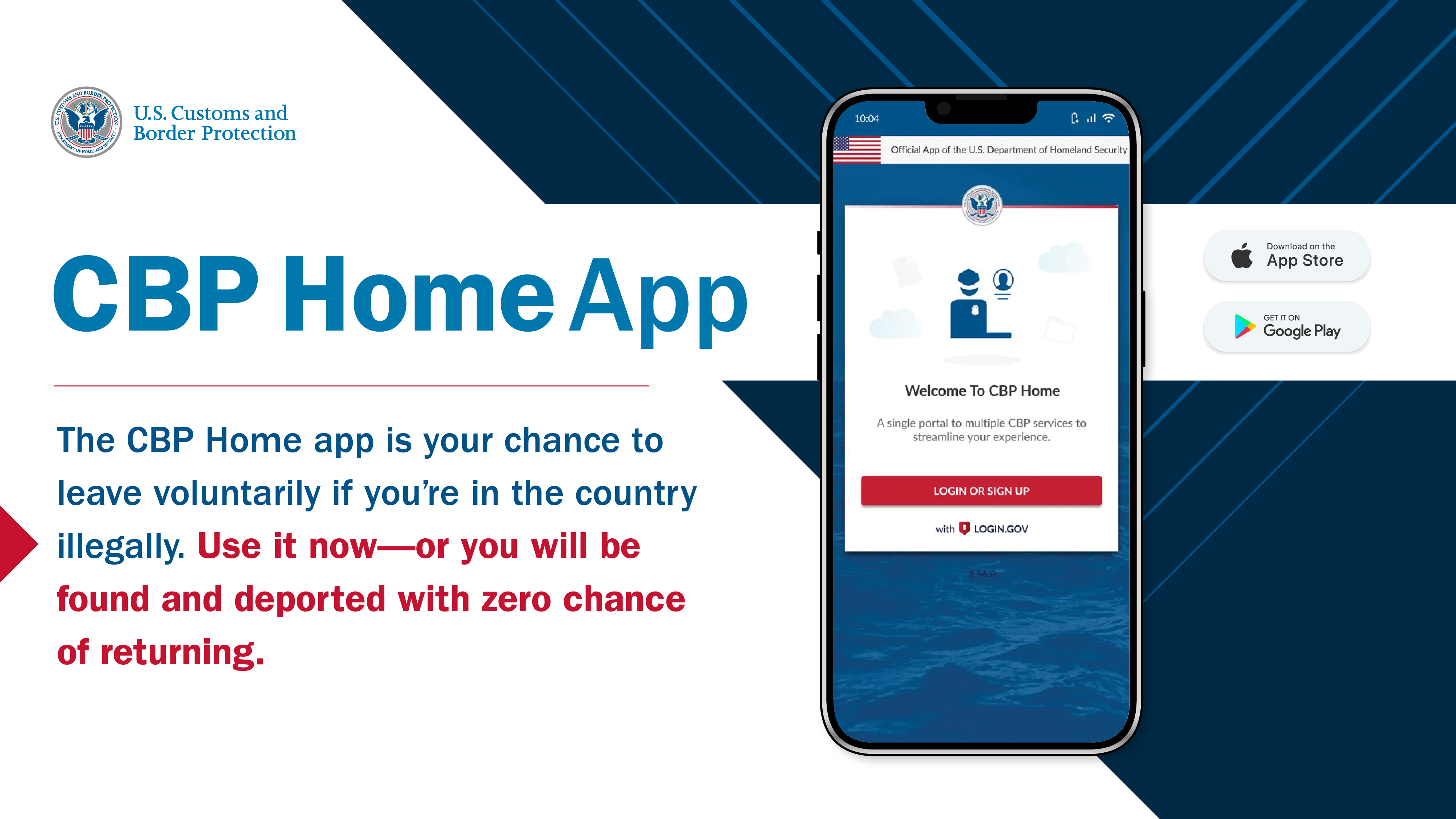
CIA recruitment video aimed at Chinese speakers
I am posting this as information only. ABN
Trump revokes every single Biden executive order signed by autopen… but his pardon of son Hunter will be exempt
Donald Trump has revoked every executive order Joe Biden signed with an autopen – escalating the battle over the legitimacy of the ailing ex-president’s administration.
‘I am hereby canceling all executive orders, and anything else that was not directly signed by Crooked Joe Biden, because the people who operated the autopen did so illegally,’ Trump wrote on Truth Social on Friday.
‘Joe Biden was not involved in the autopen process and, if he says he was, he will be brought up on charges of perjury.’
Presidents may legally undo executive orders signed by their predecessors, including pardons, however there is no legal mechanism to retract clemency after it is granted.
Biden signed 162 executive orders during his tenure.
Among the most controversial were the autopen-signed pardons of Dr. Anthony Fauci, General Mark Milley, and members of the January 6 committee.
The Democrat’s only hand-signed pardon during his final months in office was also his most pivotal – the order signed for his recovering cocaine-addict son, Hunter.
Important to remember that the powers of the president were usurped by those who used Biden’s autopen illegally. ABN
America has been invaded by criminals and predators. We need YOU to get them out — ICE

Remigration now — DHS
FinCEN Issues Alert on Cross-Border Funds Transfers Involving Illegal Aliens
Immediate Release
November 28, 2025
WASHINGTON —Today, the U.S. Department of the Treasury’s Financial Crimes Enforcement Network (FinCEN) is issuing an Alert as part of Treasury’s effort to prevent the exploitation of the U.S. financial system by illegal aliens in the United States seeking to move illicitly obtained funds. Annually over the past several years, the United States has witnessed a significant volume of cross-border funds transfers, including remittances from individuals located in the United States, and has taken multiple steps this year to highlight risks presented by cross-border financial activity.
“Money services businesses should be vigilant in identifying suspicious financial activity involving illegal aliens who present significant threats to national security and public safety,” said Under Secretary for Terrorism and Financial Intelligence John K. Hurley. “At Treasury, we will continue to protect the American people by faithfully upholding the laws of the United States.”
This Alert is consistent with Executive Order 14159, Protecting the American People Against Invasion. Money services businesses (MSBs) are generally required to file a suspicious activity report for a transaction that involves at least $2,000 and that the MSBs know, suspect, or have reason to suspect is relevant to a possible violation of law or regulation. This includes the cross-border transfer of funds derived from unlawful employment or otherwise derived from funds the MSB knows, suspects, or has reason to suspect were illicitly obtained in the United States.
The full Alert is available at: https://www.fincen.gov/system/files/FinCEN_Alert_Cross_Border_FINAL508.pdf
Trump ENDS temporary protective status of Somalis in Minnesota
Eva Vlaardingerbroek
Many prominent people in the West have benefitted from decades of clandestine culling of the Western herd. Talented and strong individuals have been poisoned or killed, while weak beta-cucks have been promoted. Eva is clearly one of the few real talents who was not destroyed, probably because most attacks have been against boys and young men. I hope more Westerners will come to understand that we are not being destroyed by ideas alone, our own naive values or the nepotism of our enemies, but by their violence as well. ABN
When two wrongs make a right
I say something that sounds bad to you. You query me and I tell you what I meant. You realize that what I meant was not bad at all but actually quite nice. That’s one wrong that you discovered. Then you tell me what you thought you had heard and I realize that the tone I used could all too easily be misinterpreted. That’s one wrong that I discovered. For a total of two wrongs. What we made right is how we understand each other. Since both of us learned something valuable about ourselves and each other, we have actually made more than one right. So two wrongs can make even more than one right.
This is one reason it is good to see how and why you are wrong when doing FIML. You help your partner and you help yourself, and going forward you make it easier to communicate with your partner clearly and with great detail. If we face our wrongs in the right way by using FIML practice, we will learn to take pleasure in being wrong because being wrong about communication hurts both partners, while fixing what was wrong helps both of them.
In the example above, if when you heard the tone of voice that sounded bad to you and you did not make a FIML query, you would have essentially accepted a mistaken interpretation of your partner. In a short time, you would probably forget the incident that led to your forming that mistaken interpretation but the emotions generated by it and the stimulation of deeper associations due to it would now be a thing in your mind. You would have started forming a mistaken impression of your partner. If you had made other prior mistakes about your partner, this one would be added to them. Even though none of your impressions had been correct, they still would snowball in you mind. In contrast, if you had made a FIML query as soon as you heard the tone that sounded bad, you would have seen your mistake and prevented it from snowballing. Thus, you should feel happy to learn you were wrong.
From your partner’s point of view, they too should feel happy because your query has stopped you from misunderstanding them while at the same time showing them that maybe that habitual tone of voice isn’t as good as they thought it was. Additionally, both of you will be able to trust each other even more because you now know you can do that. You can fix small mistakes in real-time as they arise. This skill will allow you to take on many new subjects that may have seemed too complex in the past. And that should make you happy too.
When FIML practice relieves us of mistakes, we can and should feel happy. Many wrongs can lead to many rights if we have the right technique.
Any document signed by Sleepy Joe Biden with the Autopen, which was approximately 92% of them, is hereby terminated, and of no further force or effect — Trump

Any document signed by Sleepy Joe Biden with the Autopen, which was approximately 92% of them, is hereby terminated, and of no further force or effect. The Autopen is not allowed to be used if approval is not specifically given by the President of the United States. The Radical Left Lunatics circling Biden around the beautiful Resolute Desk in the Oval Office took the Presidency away from him. I am hereby cancelling all Executive Orders, and anything else that was not directly signed by Crooked Joe Biden, because the people who operated the Autopen did so illegally. Joe Biden was not involved in the Autopen process and, if he says he was, he will be brought up on charges of perjury. Thank you for your attention to this matter!
__________
This could become very interesting. I see Trump consistently moving forward despite roadblocks. He often plays his cards when he has public approval. For example, he has moved deliberately but not as swiftly as many wanted on the migration invasion… until the DC terror attack made it possible for him to move very hard against anti-American migrants. As always, he has far more than one iron in the fire. ABN
John Brennan still in charge of CIA — Emerald Robinson

 American Buddhist Net