Lisa Feldman Barrett, “How Emotions Are Made”

One sentence I liked a lot in this vid is: “The experiences you cultivate today become the predictions your brain uses tomorrow.”

FIML practice cultivates in real-time the experience of changing your real-time interpretation, emotion, perspective, or understanding. Once you have done this many times with a partner, you will find that you will also be able do it with unwanted mental states when alone.

Basic FIML practice can be compared to musical scales or basic sports skills. Once these have been mastered, more complex skills become available. For this reason, FIML is a uniquely effective form of interpersonal psychotherapy.

Major mental illnesses unexpectedly share brain gene activity

…a large-scale analysis of postmortem brains is revealing distinctive molecular traces in people with mental illness. This week, an international team of researchers reports that five major psychiatric disorders have patterns of gene activity that often overlap but also vary in disease-specific—and sometimes counterintuitive—ways. The findings, they say, might someday lead to diagnostic tests and novel therapies, and one has already inspired a clinical trial of a new way to treat overactive brain cells in autism. (Source)

Study: Shared molecular neuropathology across major psychiatric disorders parallels polygenic overlap

Consciousness, Big Data, and FIML

Modern neuroscience does not see humans as having a discrete consciousness located in a specific part of the brain. Rather, as Michael S. Gazzaniga says:

The view in neuroscience today is that consciousness does not constitute a single, generalized process. It involves a multitude of widely distributed specialized systems and disunited processes, the products of which are integrated by the interpreter module. (Source)

Computer and Big Data-driven sociology sees something similar. According to Alex Pentland:

While it may be useful to reason about the averages, social phenomena are really made up of millions of small transactions between individuals. There are patterns in those individual transactions that are not just averages, they’re the things that are responsible for the flash crash and the Arab spring. You need to get down into these new patterns, these micro-patterns, because they don’t just average out to the classical way of understanding society. We’re entering a new era of social physics, where it’s the details of all the particles—the you and me—that actually determine the outcome.  (Source)

Buddhists may recognize in these insights close similarities to core teachings of the Buddha—that we do not have a self; that all things arise out of complex conditions that are impermanent and changeable; that the lion’s share of “reality” for any individual lies in being attentive to the moment.

Notice how similar Pentland’s insights are to Gazzaniga’s—the whole, or the common generalities (of society), can be far better understood if we can account for the details that comprise them. Is an individual mind a fractal of society? Do these complex systems—societies and minds—both use similar organizational processes?

I am not completely sure how to answer those questions, but I am certain that most people are using similar sorts of “average” or general semiotics to communicate and think about both minds and societies. If we stick with general averages, we won’t see very much. Class, self, markets, personalities don’t give us information as sophisticated as the detailed analyses proposed by Gazzaniga and Pentland.

Well then, how can individuals cognize Gazzaniga’s “multitude of widely distributed specialized systems and disunited processes” in their minds? And how can they understand how “the products” of those processes are actually “integrated” into a functional “interpreter module”?

And if individuals can cognize the “disunited processes” that “integrate” into a conscious “interpreter,” how will they understand traditional psychological analyses of the self, personality, identity, biography, behavior?

I would maintain that our understanding of what it is to be a human will change deeply if we can learn to observe with reliable clarity the “disunited processes” that “integrate” into a conscious “interpreter.” That is, we will arrive at a completely new understanding of being that will replace the “self” that truly does not exist in the ways most societies (and people) understand it.

FIML practice shows partners how to observe with great clarity the “disunited processes” that “integrate” into a conscious “interpreter.” Once these process are observed in detail and for a long enough period of time, partners will realize that it is no longer necessary to understand themselves in the “average” terms of self, personality, identity, biography, behavior, and so on.

Partners will come to understand that these terms denote only a more detailed version of a naive, static view of what a person is. Most psychology is largely a more detailed version of a naive, static view of what a person is.

We see this in Gazzaniga and Pentland’s findings that are derived from complex analyses of what is actually happening in the brain or in the multitude of real transactions that actually comprise a society. We can also see very similar insights in the Buddha’s teachings.

It is my contention that FIML practice will show partners the same things—that their actual minds and actual interactions are much more complex (and interesting) than the general semiotic averages we normally use to understand them.

From a Buddhist point of view, when we “liberate” ourselves from “attachment” to “delusive” semiotic generalities and averages and are truly “mindful” of the “thusness” of the ways our minds actually work, we will free ourselves from “suffering,” from the “ignorance” that characterizes the First Noble Truth.

_____________________

First published 09/01/12

Study reveals why we trust some strangers and not others

“…Now researchers have revealed that strangers are more likely to be trusted if they look like someone who has earned your trust before – and more likely to be distrusted if they resemble someone who has betrayed your faith in them.” (Source)

Antonio Espín, a behavioural economist from Middlesex University, London, said the study’s implications could be wide-ranging. “Interestingly, since the main reason for facial similarity is shared genes, the study not only advances our understanding of why we trust or distrust specific strangers but also has broader implications, for example for ethnic or racial discrimination and in the evolutionary arena of partner selection.” (Ibid.)

Study here: Stimulus generalization as a mechanism for learning to trust

You aren’t at the mercy of your emotions — your brain creates them

Tunnel vision and mental illness

For a period of my life someone poisoned me with drugs that affected my brain and thought processes. I don’t know what the drug was but I definitely know it happened.

That experience is the basis for the following speculation: a lot of mental illness is fundamentally characterized by tunnel vision or what I might rather call “bright room” vision.

At the time I could not see it but looking back after the poisoning stopped I can see that my brain compensated for the poison’s toxic effects by ignoring large areas of information. This was not a conscious decision. It was just what my brain did to survive.

In this sense, my brain was in a tunnel or a bright room outside of which I could see virtually nothing. I think of the tunnel as fairly bright. That part of my world was clear enough to me. What was missing was the much larger world outside of the tunnel.

If you have ever been in an underground train station with lit tunnels going to various trains (like Grand Central Station in NYC), that is a good example of this metaphor.

Now, think about people you have known who are suffering mental illness, especially those who are not aware of their plight. Do you notice that for many of them what they see is like that tunnel? It’s bright and the way is sort of clear, but the larger environment around them is highly reduced. For me, it was more like a bright room with a fair amount of stuff in it and people and things going on, but all I could see was the inside of that room and almost nothing beyond. Outside the windows everything was dark.

I was not fantasizing the room or actively deluded by it as much as confined to it, unable to be aware of what was outside it. My brain was ignoring large sections of reality to hang on to whatever I could.

Consider a long-term alcoholic, a victim of self-poisoning, whose eyes still glow. I think what people like that see is a bright room or tunnel and not much else. How else can someone who has been addicted to alcohol for fifty years still deny it? It’s because that larger awareness is not inside their bright room.

Consider a narcissist in roughly the same way. I would maintain that they really cannot see what they are doing in the wider context of all the people they are harming because they only see the bright room around them, the bright tunnel before them.

Borderline, neuroticism, and bipolar, especially in the manic stage, are much the same.

I am not saying that all mental problems have this bright room/dark world aspect but I believe many of them do.

Incidentally, all psychologists and medical professionals should always consider poison as a significantly probable etiology for all mental illness.

Fourth wave cognitive behavior therapy

The third wave of cognitive behavior therapy is a general term for a group of psychotherapies that arose in the 1980s, inspired by acceptance and commitment therapy (ACT).

To me, third wave therapies seem more realistic than older therapies because they accept emotions as they are and pay close attention to how they function in the moment.

The link above is well-worth reading. The frames of these therapies are also well-worth considering.

FIML, which I am calling a “fourth wave cognitive behavior therapy,” differs from third wave therapies in that FIML does not use a professional therapist. Instead, partners become their own therapists.

Moreover, how FIML partners frame their psychologies or generalize their behaviors is entirely up to them. Similarly, their psychological goals and definitions are entirely in their own hands.

At its most basic, FIML “removes wrong interpretations of interpersonal signs and symbols from the brain’s semiotic networks.”

This process of removal, in turn, shows partners how their minds function in real-time real-world situations. And this in turn provides the tools and perspectives to reorganize their psychologies in whichever ways they like.

FIML is based on semiotics because semiotics are specific and with practice can be clearly identified and understood. They give partners “solid ground” to stand on. Words, tone of voice, gestures, and facial expressions are some of the major semiotics partners analyze.

Using real-world semiotics as an analytical basis frees FIML from predetermined frameworks about personality or what human psychology even is. With the FIML tool, partners are free to discover whatever they can about how their minds communicate interpersonally (and internally) and do whatever they like with that.

Next-level metacognitive control

Experienced FIML practitioners enjoy levels of metacognitive control ordinary humans cannot even dream of.

This control comes after years of diligent FIML practice. It happens because the skills acquired through FIML combined with its metacognitive results allow practitioners to practice FIML on themselves.

FIML practice gradually removes virtually all communication error between partners. This error-removal process is ongoing because all living systems must continually remove waste and error to function optimally.

Successful FIML results in two major achievements:

  • very clear, optimally functioning cognition and metacognition
  • the skill-set needed to attain the above

When these achievements have been realized, FIML practitioners will find they are able to rather easily apply them to their own introspection, their own subjective states while alone.

Ordinary people cannot do this because they have not experienced the metacognitive states brought about by FIML nor have they acquired the skills to quickly remove error from their thoughts.

The FIML skills of quickly removing error from our thoughts cannot be acquired overnight. It must be built upon diligent practice and experience. You cannot imagine it into being.

Once these skills and experiences have become established in the mind as reliable functions, they can be applied to mental states while alone.

Real-life illusions

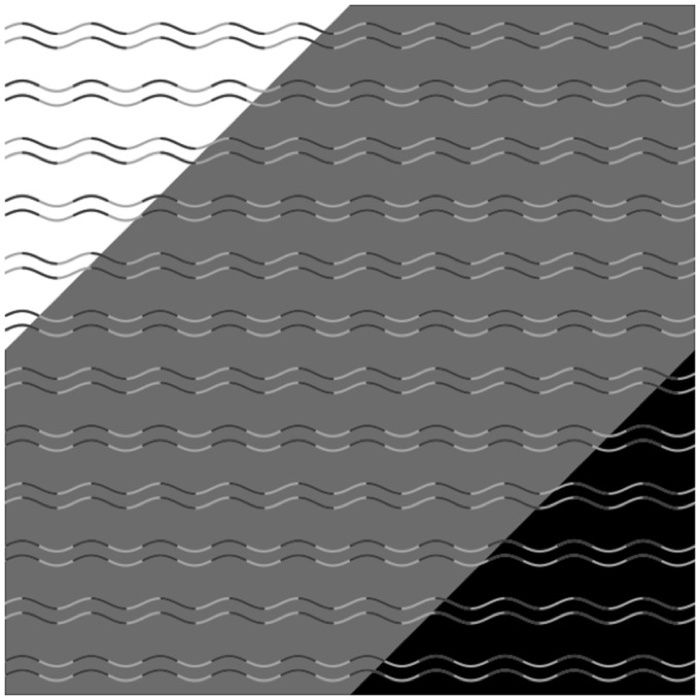
A new optical illusion has been discovered.

All of those lines are the same except for their colors. Most people see zigzags and curves. The zigzags are an illusion.

You can read more about this illusion here: This Crazy New Optical Illusion Shows if You Have ‘Curvature Blindness’.

Vision is our most trusted sense and yet it can be illusory. How much more then can our emotions and even our psychologies be illusory?

This is why FIML practice is essential.


Psychology is warped by too much reliance on patterns and types rather than how people actually function

You will never figure yourself out by answering questionnaires or trying to match yourself with a psychological metric or type.

Beyond that, you will absolutely never optimize your psychology and life using those methods.

The right way to grasp and optimize your psychology is to understand how it functions in real-time real-life situations.

To do this you have to take control of your own life and use a technique like FIML that allows you to observe yourself in real-time real-life situations.

I honestly do not think there is any other way.

Poor precision in communication distorts motives

And distorted motives warp human interactions, which in turn degrade individual psychology.

There is no way around it—the ways almost all people communicate are much cruder than their brains are capable of.

And that is the cause of most of what we now call (non-biological) “mental health” problems.

Here is an example: I want to say something very complex to my primary care doctor. I can give her the gist in a minute or two but I do not want to have that go on my medical record.

So I ask her if I can start a discussion that she will promise to keep off my record.

She says, “I’ll think about it.”

A week later I get a letter from her nurse saying she is not willing to do what I asked.

No reason why was given. Do rules prevent her from doing that? I have heard of doctors allowing patients to keep some concerns off the record, but who knows what the reality is? Do you?

If I insist, will that go on my record? Did what I asked in the first place go on my record? My doctor is trapped within or is voluntarily following some guideline that is most decidedly not in my best interests.

This same sort of thing can happen interpersonally. If I raise a topic that is psychologically important to me with even a close friend, I have to wonder will they understand? Will they allow me to expand the subject over a few weeks or months or longer? Will my initial statements change our friendship?

The basic problem is how do you discuss complex psychological subjects with others?

One of my friends works in alternative health care. She knows what I want to bring up with my doctor and admits that even in her professional setting where patients have an hour to open up, there is not enough time.

Back to my primary care doctor. I saw her again a year later and she asked if I remembered her. I said, “Of course I remember you.” She said no more and neither of us raised the off-the-record topic. An intern was with her.

I wonder what she thinks of me. Did she interpret my slightly nervous behavior when I first asked as a “sign” of something? Does she think I am volatile or bipolar or just nuts? (I am not.)

I am 100% sure that she cannot possibly know what I wanted to bring up with her. In this case, I have all of the information and I want to give it to her but she cannot or will not allow that unless my initial fumblings toward a complex subject are made public.

Even a  close friend could find themselves in a similar position. And I wonder if I have done that myself to someone. Most people most of the time are not able to scale those walls that divide us.

On either side of the wall is a complex person capable of complex understanding, but one or both persons cannot scale the wall. My doctor is smart enough to have become an MD and yet I cannot tell her about a complex medical condition that is of great importance to me.

I know that I do not want to open the subject and risk a shallow public label (a common hindrance to many potential communications). I honestly do not know what my doctor is thinking. Maybe I will try again the next time I see her.

EDIT 12/16/2020: I didn’t try again. After much thought, I decided to switch doctors. And I will not bring this subject up with my new doctor. It’s a sad reality that trying at all ruined (in my mind) my relationship with my first doctor and convinced me that the topic is not one I can discuss with any medical professional in a professional setting and maybe in any setting.

Meaningfulness or emotional valence of semiotic cues

A new study on post traumatic stress disorder shows that PTSD sufferers actually perceive meaning or emotional valence within fractions of a second.

This study bolsters the FIML claim that “psychological morphemes” (the smallest psychological unit) arise at discrete moments and that they affect whatever is perceived or thought about afterward.

The study has profound implications for all people (and I am sure animals, too) because all of us to some degree have experienced many small and some large traumas. These traumas induce a wide variety idiosyncratic “meaning and emotional valence” that affects how we perceive events happening around us, how we react to them, and how we think about them.

The study in question—Soldiers with Posttraumatic Stress Disorder See a World Full of Threat: Magnetoencephalography Reveals Enhanced Tuning to Combat-Related Cues—is especially interesting because it compares combat veterans without PTSD to combat veterans with PTSD.

It is thus based on a clearly defined pool of people with “similar” extreme experiences and finds that:

…attentional biases in PTSD are [suggestively] linked to deficits in very rapid regulatory activation observed in healthy control subjects. Thus, sufferers with PTSD may literally see a world more populated by traumatic cues, contributing to a positive feedback loop that perpetuates the effects of trauma.

Of course all people are “traumatized” to some degree. And thus all people see “a world populated by traumatic cues, contributing to a positive feedback loop that perpetuates the effects of trauma.”

If we expand the word trauma to include “conditioned responses,” “learned responses,”  “idiosyncratic responses,” or simply “training” or “experience” and then consider the aggregate all of those responses in any particular individual, we will have a fairly good picture of what an idiosyncratic individual (all of us are that) looks like, and how an idiosyncratic individual actually functions and responds to the world.

FIML theory claims that idiosyncratic responses happen very quickly (less than a second) and that these responses can be observed, analyzed, and extirpated (if they are detrimental) by doing FIML practice. Observing and analyzing idiosyncratic responses whether they are detrimental or not serves to optimize communication between partners by greatly enhancing partners’ ranges of emotion and understanding.

In an article about the linked study (whose main author is Rebecca Todd), Alva Noë says:

…Todd’s work shows that soldiers with PTSD “process” cues associated with their combat experience differently even than other combat veterans. But what seems to be driving the process that Todd and team uncovered is the meaningfulness or emotional valence of the cues themselves. Whether they are presented in very rapid serial display or in some other way, what matters is that those who have been badly traumatized think and feel. And surely we can modify how we think and feel through conversation?

Indeed, what makes this work so significant is the way it shows that we can only really make sense of the neural phenomena by setting them in the context of the perceptual-cognitive situation of the animal and, vice-versa, that the full-import of what perceivers say and do depends on what is going on in their heads. (Source)

I fully agree with the general sense of Noë’s words, but want to ask what is your technique for “modifying how we think and feel through conversation?” And does your technique comport well with your claim, which I also agree with, that “we can only really make sense of the neural phenomena by setting them in the context of the perceptual-cognitive situation of the animal”?

I would contend that you cannot make very good “sense of neural phenomena” by just talking about them in general ways or analyzing them based on general formulas. Some progress can be made, but it is slow and not so reliable because general ways of talking always fail to capture the idiosyncrasy of the “neural phenomenon” as it is actually functioning in real-time during a real “perceptual-cognitive situation of the animal.”

The FIML technique can capture “neural phenomena” in real-time and it can capture them during real “perceptual-cognitive situations.” It is precisely this that allows FIML practice to quickly extirpate unwholesome responses, both small and large, if desired.

Since all of us are complex individuals with a multitude of interconnected sensibilities, perceptions, and responses, FIML practice does not seek to “just” remove a single post traumatic response but rather to extirpate all unwholesome responses.

Since our complex responses and perceptions can be observed most clearly as they manifest in semiotics, the FIML “conversational” technique focuses on the signs and symbols of communication, the semiotics that comprise psychological morphemes.

FIML practice is not suited for everyone and a good partner must be found for it to work. But I would expect that combat veterans with PTSD who are able to do FIML and who do it regularly with a good partner will experience a gradual reduction in PTSD symptoms leading to eventual extirpation.

The same can be said for the rest of us with our myriad and various traumas and experiences. FIML done with a good partner will find and extirpate what you don’t want knocking around in your head anymore.

___________________________

First potsed on July 9, 2015

FIML and sociotics

The term idiotics means “the idiosyncratic agglomeration of the semiotics of a single individual.”

An individual’s idiotics indicates the agglomeration of public and private semiotics that comprise the unique signaling system of their mind; this signaling system is what we normally call a person’s mind.

Each individual brain has an idiotics that is unique to it. The signaling system that employs and organizes this unique idiotics works internally within the individual and externally as a system that signals to other people.

Problems in signaling—both internal and external problems—occur when the signaling systems of two (or more) people are not in good accord. That is, when two (or more) people misunderstand the signals they are sending to each other or the signals being sent to them. Obviously, mistakes in signaling can and frequently do compound, or snowball, leading to very large errors.

To control for error, human beings have probably evolved master semiotics that provide general ways for people to comprehend (pretty badly or well-enough, depending on your perspective) the signaling of other people.

Let’s call these general semiotic categories that allow for crude comprehension between people sociotics.

Sociotics is a compound of the words sociology and semiotics. It means the “public semiotics,” or socially agreed upon and accepted semiotics, of just about any group you can think of.

Most sociotics is emotional. A good deal of it is very emotional. The beliefs of a religion, the stories of an ethnic group, the values of a community can be extremely emotional.

In this respect, a great deal of sociotics binds very deeply with human emotion to form an intoxicating blend of meaning and feeling.

Most people do not see any choice but to adopt a sociotics. Without one, they feel lost, empty, undefined. Even the sociotics of science can be very emotional, to say nothing of the sociotics of political, gender, or ethnic identities.

FIML partners will surely find that their idiotics have strong sociotic components. Rather than accept their inherited and often mindless and emotional sociotics, partners would do well to analyze them and transfer their emotional allegiance away from them and toward rational bonding with each other based on FIML principles.

FIML has much greater power to organize the sociotics and idiotics of FIML partners than does any other traditional communication system. This is so because FIML practice provides a means for partners to understand each other without resorting to thoughtless extrinsic sociotic categories for mutual definition. FIML practice helps partners form wholesome bonds with each other without becoming entangled in the emotional and irrational sociotics of large groups.

Another way to say this is FIML is a sort of “operating system” for the mind/brain, while sociotics are broadly shared public references that are fairly static and not too complex.

Ideally, good scientific practice is also an operating system rather than a static sociotic. The scientific method deeply informs FIML practice, but since FIML is an interpersonal operating system, it cannot be the same as science. FIML can be investigated by the scientific method and it can be confirmed or falsified by the scientific method, but this is not strictly (in the sense of formal science) the job of FIML partners. FIML partners, however, if they are doing FIML correctly, are engaged in a practice that is fundamentally rational and objective and that removes mistakes from partners’ signaling systems, including sociotic mistakes.

___________________________

First posted April 24, 2013 ~ ABN

Three essentials of good communication

The three essentials of any sentient communication system are:

  1. its rules
  2. awareness of those rules
  3. meta-awareness of how those rules are working

Culture is fundamentally a communication system.

Individual sentient beings require communication within themselves (the bodily system, individual subjectivity).

Humans also require communication with other sentient beings, especially humans. This could be called the instinct to be in or to form a culture.

We see this instinct in its rawest form in children as they learn language and behavior.

We also see it in raw form in adolescents and young adults as they seek out communication systems in art, political ideology, religion, ethnicity, career and community alliances, and so on.

Psychologically, humans are most fulfilled when they:

  1. are in a culture with good communication rules
  2. are aware of those rules
  3. are able to achieve metacognition of those rules; that is, how they are working within themselves and in relation to other humans

This satisfies the instinct to be in or form a culture.

The instinct to be in or form a culture can be super-satisfied if the culture has:

  1. really good rules
  2. same as #2 above
  3. metacognition of those rules has great explanatory power and is gratifying psychologically

Related: Buddhist practice can be divided into Three Trainings:

  1. Sila or ethics, morality
  2. Samdhi or concentration
  3. Prajna or wisdom

To me these Three Trainings look very much like the three points made in several ways above.

Until very recently, I had never thought of this but FIML practice can also be understood in terms of these three basic approaches to cultural and psychological communication.

FIML practice:

  1. fulfills our instinct to form or be in a culture
  2. harmonizes our psychologies
  3. provides a metacognitive vantage that explains (or enlightens us to) many things.

Since FIML rules are simple and open to infinite input, partners are able to form a super-satisfying culture based on their own needs and desires.