Jesse shot 35 innocent people yesterday including his mother, sister, a teacher & young children.
10 are dead & many are fighting for their lives.
The Government decided that instead of supporting Jesse’s mental health & helping a disturbed child that they would tell Jesse that he was a girl & pump him full of cross sex hormones & SSRI’s instead.
The Government, its institutions & agencies KNEW that Jesse was a mentally unwell, disturbed individual, that he was a danger to himself & others but allowed him to remain out in the community & continued encouraging his delusions & they intentionally poisoned his mind & body.
All across the West we are surrounded by mentally ill people that are dangerous to society, we are surrounded by violent criminals & predators.
Since 2000, women and minorities, who make up less than 10% of all pilots, were factors in 66% of crashes caused by pilot error.
Despite the disparity, major airlines are continuing to hire on the basis of identity rather than merit.
In January 2025, Delta CLO Peter Carter said the airline is “steadfast” in its DEI commitments and called them “critical to our business,” while United’s training academy maintains a goal that 50% of its graduates be women or minorities. Southwest likewise continues to pledge that it will “recruit, hire, and retain a diverse and inclusive workforce.”
During a press conference on Wednesday, a Providence-area radio host, Chas Calenda, directly confronted Brown University officials and law enforcement with information he has received about the school intentionally disabling surveillance systems due to DEI concerns.
The response from university officials and the Providence Mayor indicate Mr. Chas Calenda’s informed accusation and question is directly on target.
In addition to information we previously shared {GO DEEP} reflecting requests from various “civil rights” and “humanitarian” groups who demanded Brown University disable their surveillance system, additional information about the issue comes via the Rhode Island ACLU making the same demand in October of this year [SEE HERE].
Brown University was under pressure from far-left groups as an outcome of concern the CCTV and school security system would be used by federal authorities to (a) identify radical leftists expressing antisemitic sentiments, and (b) identify the immigration status of persons on campus. It is not just isolated to Brown University.
Multiple municipal governments, private and municipal agencies have received the same demand in an ongoing effort to block Immigration and Customs Enforcement operations. The mass shooting on Brown University is leading to a larger public awareness of an issue that has been spreading rapidly in the last several months.
Brown University and Providence police have $8 billion liability reasons to be less than honest with the alarmed public. The political ramifications of the story are also complicating the issue for Brown University, as well as local and national figures.
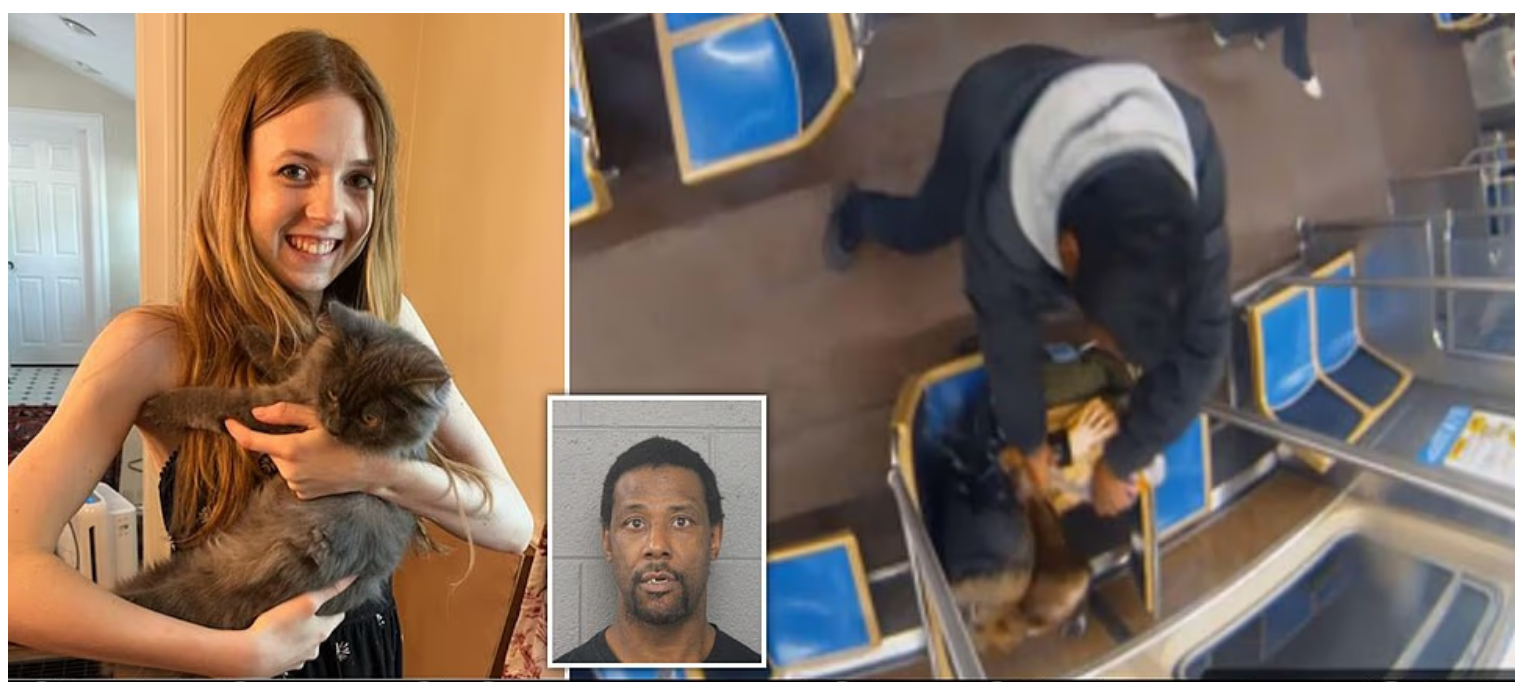
The woman set alight by a lunatic on a Chicago metro train is a 26-year-old analyst for Caterpillar who suffered burns to 60 percent of her body.
Bethany MaGee, 26, was doused in gasoline and set alight on the city’s Blue Line on Monday night, but managed to flee the train and survive.
MaGee, from Upland in Indiana, works as a business research analyst at Caterpillar after graduating with a bachelors of science at Purdue’s Polytechnic Institute.
Her Facebook profile photos revealed that she is an animal lover and churchgoer, who is close to her parents Emily and Gregory, and two brothers Mark and John.
MaGee’s father Dr Gregory MaGee is a professor of Biblical studies at Taylor University, a Christian college in Indiana.
The man police named as her attacker, 50-year-old Lawrence Reed, is a serial criminal with 72 prior arrests freed months earlier by a judge after he allegedly attacked a social worker.
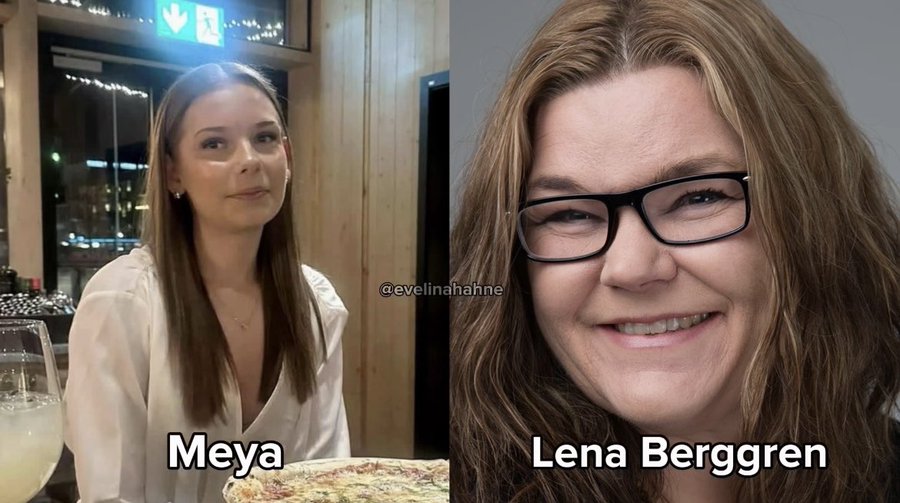
Meya, 16yo, was raped by Eritrean Mohamed. The Swedish court did not sentence him to deportation because the rape did not last long enough.
One of the lay judges who decided the sentence, Lena Berggren, is a representative of the extreme left party in Sweden. She works as a historian who conducts research on ”racism” and nationalism.
The extreme leftists always take the side of immigrant men and willingly sacrifice innocent girls and women.
I have been seeing a lot of stuff about microaggression recently.
The term interests me because FIML is all about micro impressions.
When done with a caring partner, FIML is designed to correct mistaken impressions or interpretations that often derive from micro impressions and/or manifest as micro expressions.
Anyone who has done FIML for more than a few months surely must be aware that we create wrong impressions of even our most trusted partners frequently.
A wrong impression often snowballs, leading to a wrong interpretation that after festering can be much harder to correct than the original micro impression.
So between friends, and especially FIML partners, the perception of micro aggression can and should be noticed and dealt with immediately or as soon as possible. It is basic to FIML practice that even a single uncorrected wrong impression can lead to serious divisions between people.
In this sense, I heartily accept the idea of microaggression being a thing. In fact, I believe it is such a thing that it happens all the time, especially if you mean micro mis-impressions and not just microaggression.
But the term microaggression means something different from the above, though the central concepts are related. Wikipedia has this short definition of microaggression:
…the use of known social norms of behavior and/or expression that, while without conscious choice of the user, has the same effect as conscious, intended discrimination.
The main difference is “without conscious choice of the user.” FIML is all about being conscious. Both parties being conscious.
If I perceive something in your speech, demeanor, or behavior that makes me think that maybe you are disrespecting me or mad at me or or suspicious of me or something like that, then if you are my FIML partner I am basically required to ask you about it if there is time.
In FIML, the asking is done without prejudgement. I simply ask “what was in your mind when you made that expression or said those words or did that thing.” Your answer must be honest. If you don’t trust your partner to be honest, you can’t do FIML (though you can start trying and see if either or both of you changes).
If your partner answers honestly and you do not perceive an iota of what you thought was in their mind, that part of the event is finished. If when the person spoke or acted they had no nothing about doing what you thought they might be doing, you are done with it. You no longer have any right to further impute your thing onto them.
You can if you want, and this is encouraged, continue to discuss the matter. For example, you might say: “From your response, I can tell that you were not disrespecting me and I am delighted to find that out. That’s a huge relief for me because I have spent much of my life reacting to people who do that as if they were disrespecting me. It’s weird to hear that I am wrong in this case and it makes me wonder if I have been wrong in other cases.”
Then the two of you can discuss that. I know one person who frequently reacts to educated northeast American accents as being “imperious” or “arrogant” when they are not. (Don’t get me started on all the many phrases and attitudes in culture that wrongly limit speech and thus culture itself—“condescending,” “know-it-all,” “argumentative,” “imperious,” etc.)
So, if two friends are having problems between themselves with microaggression, they are prime candidates for FIML practice. Of course, any two friends who are having any problems with micro impressions (all friends all the time) are prime candidates for FIML. (You cannot but have these problems.)
But microaggression as the word is being used today is not something FIML can deal with directly because it is
…the use of known social norms of behavior and/or expression that, while without conscious choice of the user, has the same effect as conscious, intended discrimination.
The important words here are “known social norms,” “without conscious choice” leading to “discrimination.”
I don’t know how to unpack that. From a FIML point of view, my guess is behaviors that could potentially be identified as “microaggression” according to that definition would be in the range of dozens per day per every person in the world. Maybe more.
An example many readers will remember is Michelle Obama reacting to a customer in Target asking her to hand them something they could not reach.
I tell this story – I mean, even as the first lady – during that wonderfully publicized trip I took to Target, not highly disguised, the only person who came up to me in the store was a woman who asked me to help her take something off a shelf.
If even the president’s wife can get something so ordinary so wrong, you can see the scope of the problem. In the same interview, the president himself mentioned being “mistaken for a waiter.”
Both later downplayed their comments because they had to. Microaggression is an inherently super-ambiguous term open to a multitude of interpretations every time it is used.
In FIML, we find that micro-mistakes are real and dangerous. They are not ignored but addressed immediately because they can be so serious. Relevantly, in my experience with FIML a great many micro-impressions that I form are simply dead wrong. Most of them are wrong. I can’t enter that as evidence because the world does not have enough FIML practitioners for me to do a study on it. However, I do suspect that a great many micro-impressions of or impressions of microaggression are wrong.
Many of us laughed or thought it was ridiculous for Michelle Obama to bristle at having a short person ask her for help because we all have been on one side or the other of an exchange like that and thought nothing of it. I have been mistaken for a store employee or construction worker more than once and never thought anything of it, except maybe to feel slightly flattered that someone thought I looked like I knew what I was doing.
Another problem with the notion of politicizing microaggression (because that is what the term is about) is whose microaggression against whom?
I have strabismus, lazy eye. Even though the condition has been surgically corrected, I still cannot maintain a direct friendly gaze for long periods of time. This means that many people are led to misinterpreting my micro expressions (I start to look down) as me being bored, tired, or not friendly when all that is happening is my eye is so tired it starts to blur and needs to look away.
I know this from years of experience and because some people tell me what they are thinking. One in twenty or twenty-five people have strabismus. Add in other eye conditions with similar problems and you will get much higher percentages. Add hearing problems, attention-deficit problems, autism problems, and so on and you can include most people in the world having difficulties with micro-expressions and how they are being interpreted by others.
If someone from a different culture or race or neighborhood interprets my strabismus as microaggression (boredom with them or condescension toward them rather than simple fatigue), they will get it all wrong. And there is little or nothing I can do about it.
I even tell people about strabismus sometimes. I explain what it does. They say they understand, but very few of them really do. Only very close friends or people who have similar eye problems understand well enough that it stops being an issue with them.
Moreover, strabismus and other eye problems can lead to problems with facial recognition. So the person in the store that asked Michelle Obama for help may have also had facial recognition problems. I have that problem, too, and I seriously doubt that I would recognize Michelle Obama if I saw her in Target.
So, sorry, I don’t have any really good answer to how to understand microaggression or deal with it. On a personal level with friends or FIML partners, micro-impressions are what we want to work with as much as we can. On a societal level, you can hardly do anything about it. A super-smart person might be able to become aware of a good many of the difficulties faced by people in the world, but even that person will miss many of them or misinterpret what they perceive even if they “know” the right thing to do.
At the abstract heart of the problem there is probably a measurement or resolution problem. Simply stated, no person can ever possibly do perfect microanalyses all the time in all situations with all people. Far from it. Thus, it is a sort of “reverse microaggression” to demand or expect that they can or will or should.
I suppose we can and should become more aware of how complex people are and how difficult it is to know even one other person well, or even to know yourself well. But nothing that I can think of will ever relieve us of the difficulty of dealing with the immense number of micro-impressions we all give and receive every minute of every day.
UPDATE 3/24/21: Since I first posted this, the notion of reacting strongly to “systemic microaggression” has gained in popularity. Guys, that is a downward spiral into Hell. Misunderstanding micro impressions that way is to turn almost everything into “fighting words.”
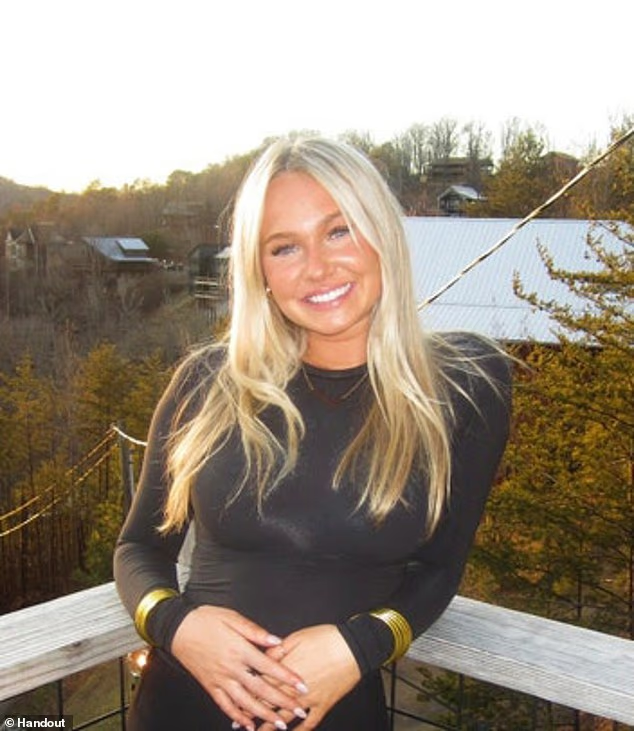
Logan, 22, was a massive Taylor Swift fan and an aspiring teacher
South Carolina congresswoman Nancy Mace has called for the Justice Department to step in to investigate and prosecute the murder of an aspiring teacher.
Logan Haley Federico, 22, an avid Taylor Swift fan, was killed while sleeping in a fraternity house during a visit to her boyfriend at the University of South Carolina on May 3.
Alexander Dickey, 30, a repeat offender with a long criminal rap sheet, was arrested and charged in her slaying.
Prosecutors say Dickey crept into her bedroom, startled Logan awake and forced her to her knees while she was naked and begging for help.
He is accused of shooting her in the chest with a stolen 12-gauge shotgun. Prosecutors say he then fled in a stolen vehicle. He has not entered a plea in the case.
Logan’s father Stephen Federico has demanded Dickey face the death penalty and accused South Carolina prosecutors of not pushing hard enough for the ultimate punishment.
Republican lawmakers have now joined his cause and are urging the Trump administration to take up the case.
Mace told Daily Mail this week that state law enforcement has shown ‘unforgivable weakness’ in handling the investigation.
The various mug shots of career criminal Alexander Dickey
An ex-educator claiming the de Blasio administration knowingly permitted “racial harassment” against white staffers in the public school system — during anti-bias training sessions and in the workplace — can sue NYC, a federal appellate court ruled this week.
The bombshell decision on Thursday overturned a lower-court’s dismissal of a 2019 lawsuit by Leslie Chislett, a veteran administrator who led the Advanced Placement for All initiative in the city Department of Education. It paves the way for a trial or financial settlement with the city.
“She presented evidence that would allow a reasonable juror to find that the DOE consistently ignored racial harassment of Caucasian employees during ‘implicit bias’ trainings and workplace interactions,” the three-judge panel of the US 2nd Circuit Court of Appeals found.



 American Buddhist Net