Jews are coming out in full force against Tucker Carlson. But we’ve been here before. In the 1990s, America First patriot Patrick Buchanan declared Congress to be “Israeli occupied territory” and then he ran for president to confront it head-on.
Instead of respecting his right to free speech, hateful Israel First jews who posed as “conservatives” did what they still do today: they tried to censor and defame him. They ended up rushing the stage at one of Buchanan’s speaking engagements in an attempt to disrupt him. They held signs calling him a “racist,” which was a career-ending allegation at the time. Their goal was to get conservative voters to disavow Buchanan, much like jews today are trying to turn conservatives against Nick and Tucker.
Unmoved and undaunted, Buchanan defended himself by hurling the jew off the stage. The force behind Buchanan’s push was enough to send the jew’s body flying in mid-air.
As the jew crashed down to the ground, the audience erupted in applause. The jew likely curled up on the floor pretending to be a victim at that point, but it didn’t work. Buchanan calmly regained control of the mic and proclaimed, “Nothing is going to stop us from moving forward to a new era of American Greatness!” The audience went wild.
This was at a time, however, when Americans didn’t have social media. Fearing that the footage of Buchanan’s bravery would inspire millions of other patriots, the jewish-controlled media suppressed it.
Today, if a political candidate were to remove toxic Israel First jews from a stage in self-defense, the footage would go viral. The candidate would gain the support of the entire nation.
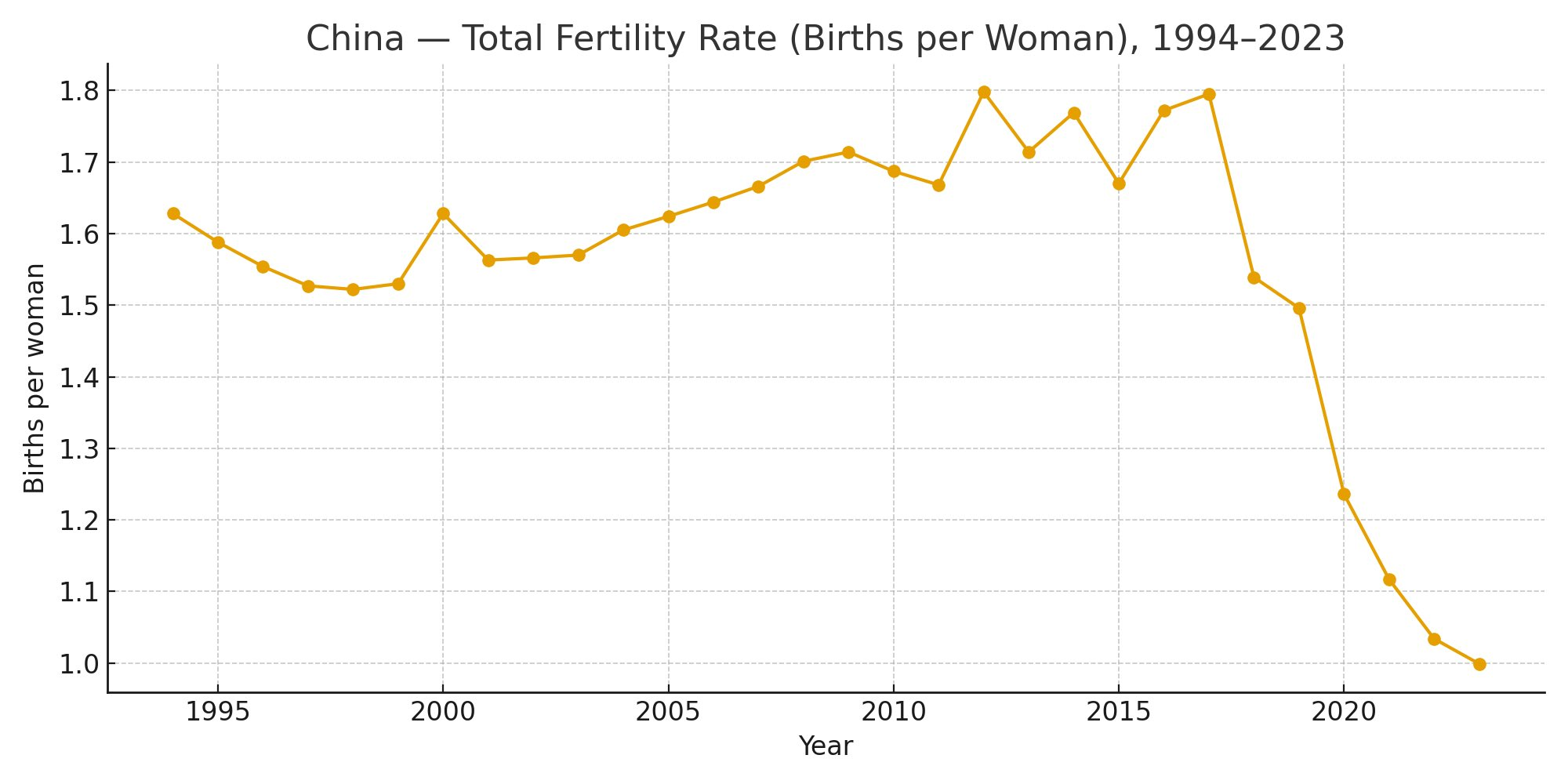
This graph describes why digital babies appear to be humanity’s best hope for a peaceful and successful future.
Call the process genetic engineering or genetic enhancement or whatever you like, through voluntary selection of better genes, parents will be able to improve their stock, perhaps orders of magnitude above what they have received randomly through Darwinian evolution.
Properly done, human-controlled, conscious evolution will be welcomed by many and will transform human life on earth.
Some planning and moral oversight might be good, but basic Darwinian forces channeled through inevitable human technology and choice will probably suffice to do the job very well.
The limit of human biological IQ is estimated to be around 300.
In a handful of generations it may be possible to boost average global IQs to the 120-150 range.
In my view, that would be wonderful.
From a Buddhist POV, there is zero moral problem with doing this wisely and ethically.
From a technological point of view, this transformation is inevitable.
Once it has been shown to work well and produce healthy and intelligent offspring, almost everyone will want it.
Holdouts must be left free to do as they please.
They will have to answer only to their children and grandchildren, many of whom may not follow in their footsteps. ABN
The microcosm of the individual human is made of the same stuff as the macrocosm of the society to which it belongs. The two are a fractal set displaying similar patterns.
This makes sense since both individuals and their societies use the same networks of semiotics to communicate.
In many ways, societies are less complex than individuals. In the sense that a society is an assemblage of many individuals, society is more complex. But in the sense that a society is held together by a network of communicable ideas, or semiotics, society is frequently less complex than many of the individuals living within it.
For example, most societies have very simple “biographies” (their always slanted histories), while many individuals have nuanced biographies that encompass change, growth, and contradiction.
A recent study of people’s attitudes towards atrocities points to this truth by showing that “…the way people’s memories are shaped by selective discussions of atrocities depends on group-membership status.” (Source)
In-groups forget bad things they have done—or “morally disengage” from them—while clearly remembering bad things that out-groups have done. This is a major element of all group stories.
I bet you cannot name a single society that has anything even approaching a fully nuanced view of itself on almost any matter, let alone its history. Individuals often “morally disengage” from their past acts, but it is not common for them to do so to the same extent as the societies they live in.
It hardly matters, though, if the social story is about atrocities or trivia. I have actually witnessed fairly heated arguments over who first invented pasta, the Chinese or the Italians. And another one on who first invented dumplings, Poles, Jews, or Chinese. The origin of beer is another subject that can get people going.
It makes sense that societies’ stories about themselves be as simple as they are false because they serve as lowest-common-denominator social bonds. Indeed, it probably even helps that these stories be knowingly false as the bond will then require an even deeper level of commitment.
Of course, some of the energy for falsification and simplification comes from one group’s story needing to counter another group’s story. Yes, we did that to you, but you did this to us first.
In that, societies further resemble individuals because that’s what we do as individuals, too. Only individuals who are very well disposed toward each other and who try hard ever overcome the need for false stories between them.
FIML practice provides individuals with a means to observe the smallest fractal details of their individual stories and correct them where they are wrong. FIML partners would do well to take what they have learned as individuals and apply it to the stories told by the society in which they live. You will surely find a macrocosm of yourself in the absurdities of whichever group you “identify” with.
Maybe people in the future will be better able to see how ridiculous our stories are and better able to deal with the complexities that lie beyond them. For now, maybe we can at least start getting a fuller, truer view of what is happening in and around us.
I doubt we can do this on a societal level any time soon because the LCD stories will always reassert, but as individuals with a good partner I believe we can. This is probably a main reason that monastic and reclusive traditions have been practiced all over the world. Groups are ignorant, violent, stifling, and crazy. Individuals simply have a better chance at going beyond their simple patterns by acting on their own.
The fractal of the individual is generated by society but it is prone to being trapped by it as well.
_______________
Edit 6/13: When good people do bad things. We all know that people in groups can behave badly. This article is about a study that uses a plausible fMRI method to measure some of the basic processes underlying immoral behavior. In my view, the situation is not much different when the group is a large culture, rather than a small number of participants in a laboratory experiment. Cultures not only permit bad behavior toward out-groups, but they also numb us to what our in-group is doing.
Eastern Europeans are deeply aware of what being conquered entails and still have living memories of it.
In today’s Europe and West, we should look up to Eastern Europeans in areas such as cultural preservation, the importance of ethnic cohesion, the importance of expanding ethnic cohesion to include all Whites and anyone else who truly supports the preservation and development of the West.
There hasn’t been a single positive aspect to mass immigration. Zero. None.
All it has brought Europe was cultural decay, impoverishment and insecurity. And if nothing changes, we will soon become a minority in our own homelands.
US President Donald Trump is reportedly considering a major overhaul of the country’s refugee system, and it may forever change the way people seek and are given refuge on American soil.
Documents obtained by The New York Times suggest the changes would give preference to specific groups, including English speakers, white South Africans, and Europeans who oppose migration.
Earlier this month, Trump planned to slash US refugee admissions from a target of 125,000 last year under the Biden administration to as few as 7,500 in the upcoming fiscal year, according to ABC News.
The proposed changes to the US refugee programme would focus on how well applicants can fit into American society. Refugees might also be asked to take classes on US history, values, and cultural norms.
“The sharp increase in diversity has reduced the level of social trust essential for the functioning of a democratic polity. The administration should only welcome refugees who can be fully and appropriately assimilated and are aligned with the president’s objectives,” according to one of the documents.
I have been seeing a lot of stuff about microaggression recently.
The term interests me because FIML is all about micro impressions.
When done with a caring partner, FIML is designed to correct mistaken impressions or interpretations that often derive from micro impressions and/or manifest as micro expressions.
Anyone who has done FIML for more than a few months surely must be aware that we create wrong impressions of even our most trusted partners frequently.
A wrong impression often snowballs, leading to a wrong interpretation that after festering can be much harder to correct than the original micro impression.
So between friends, and especially FIML partners, the perception of micro aggression can and should be noticed and dealt with immediately or as soon as possible. It is basic to FIML practice that even a single uncorrected wrong impression can lead to serious divisions between people.
In this sense, I heartily accept the idea of microaggression being a thing. In fact, I believe it is such a thing that it happens all the time, especially if you mean micro mis-impressions and not just microaggression.
But the term microaggression means something different from the above, though the central concepts are related. Wikipedia has this short definition of microaggression:
…the use of known social norms of behavior and/or expression that, while without conscious choice of the user, has the same effect as conscious, intended discrimination.
The main difference is “without conscious choice of the user.” FIML is all about being conscious. Both parties being conscious.
If I perceive something in your speech, demeanor, or behavior that makes me think that maybe you are disrespecting me or mad at me or or suspicious of me or something like that, then if you are my FIML partner I am basically required to ask you about it if there is time.
In FIML, the asking is done without prejudgement. I simply ask “what was in your mind when you made that expression or said those words or did that thing.” Your answer must be honest. If you don’t trust your partner to be honest, you can’t do FIML (though you can start trying and see if either or both of you changes).
If your partner answers honestly and you do not perceive an iota of what you thought was in their mind, that part of the event is finished. If when the person spoke or acted they had no nothing about doing what you thought they might be doing, you are done with it. You no longer have any right to further impute your thing onto them.
You can if you want, and this is encouraged, continue to discuss the matter. For example, you might say: “From your response, I can tell that you were not disrespecting me and I am delighted to find that out. That’s a huge relief for me because I have spent much of my life reacting to people who do that as if they were disrespecting me. It’s weird to hear that I am wrong in this case and it makes me wonder if I have been wrong in other cases.”
Then the two of you can discuss that. I know one person who frequently reacts to educated northeast American accents as being “imperious” or “arrogant” when they are not. (Don’t get me started on all the many phrases and attitudes in culture that wrongly limit speech and thus culture itself—“condescending,” “know-it-all,” “argumentative,” “imperious,” etc.)
So, if two friends are having problems between themselves with microaggression, they are prime candidates for FIML practice. Of course, any two friends who are having any problems with micro impressions (all friends all the time) are prime candidates for FIML. (You cannot but have these problems.)
But microaggression as the word is being used today is not something FIML can deal with directly because it is
…the use of known social norms of behavior and/or expression that, while without conscious choice of the user, has the same effect as conscious, intended discrimination.
The important words here are “known social norms,” “without conscious choice” leading to “discrimination.”
I don’t know how to unpack that. From a FIML point of view, my guess is behaviors that could potentially be identified as “microaggression” according to that definition would be in the range of dozens per day per every person in the world. Maybe more.
An example many readers will remember is Michelle Obama reacting to a customer in Target asking her to hand them something they could not reach.
I tell this story – I mean, even as the first lady – during that wonderfully publicized trip I took to Target, not highly disguised, the only person who came up to me in the store was a woman who asked me to help her take something off a shelf.
If even the president’s wife can get something so ordinary so wrong, you can see the scope of the problem. In the same interview, the president himself mentioned being “mistaken for a waiter.”
Both later downplayed their comments because they had to. Microaggression is an inherently super-ambiguous term open to a multitude of interpretations every time it is used.
In FIML, we find that micro-mistakes are real and dangerous. They are not ignored but addressed immediately because they can be so serious. Relevantly, in my experience with FIML a great many micro-impressions that I form are simply dead wrong. Most of them are wrong. I can’t enter that as evidence because the world does not have enough FIML practitioners for me to do a study on it. However, I do suspect that a great many micro-impressions of or impressions of microaggression are wrong.
Many of us laughed or thought it was ridiculous for Michelle Obama to bristle at having a short person ask her for help because we all have been on one side or the other of an exchange like that and thought nothing of it. I have been mistaken for a store employee or construction worker more than once and never thought anything of it, except maybe to feel slightly flattered that someone thought I looked like I knew what I was doing.
Another problem with the notion of politicizing microaggression (because that is what the term is about) is whose microaggression against whom?
I have strabismus, lazy eye. Even though the condition has been surgically corrected, I still cannot maintain a direct friendly gaze for long periods of time. This means that many people are led to misinterpreting my micro expressions (I start to look down) as me being bored, tired, or not friendly when all that is happening is my eye is so tired it starts to blur and needs to look away.
I know this from years of experience and because some people tell me what they are thinking. One in twenty or twenty-five people have strabismus. Add in other eye conditions with similar problems and you will get much higher percentages. Add hearing problems, attention-deficit problems, autism problems, and so on and you can include most people in the world having difficulties with micro-expressions and how they are being interpreted by others.
If someone from a different culture or race or neighborhood interprets my strabismus as microaggression (boredom with them or condescension toward them rather than simple fatigue), they will get it all wrong. And there is little or nothing I can do about it.
I even tell people about strabismus sometimes. I explain what it does. They say they understand, but very few of them really do. Only very close friends or people who have similar eye problems understand well enough that it stops being an issue with them.
Moreover, strabismus and other eye problems can lead to problems with facial recognition. So the person in the store that asked Michelle Obama for help may have also had facial recognition problems. I have that problem, too, and I seriously doubt that I would recognize Michelle Obama if I saw her in Target.
So, sorry, I don’t have any really good answer to how to understand microaggression or deal with it. On a personal level with friends or FIML partners, micro-impressions are what we want to work with as much as we can. On a societal level, you can hardly do anything about it. A super-smart person might be able to become aware of a good many of the difficulties faced by people in the world, but even that person will miss many of them or misinterpret what they perceive even if they “know” the right thing to do.
At the abstract heart of the problem there is probably a measurement or resolution problem. Simply stated, no person can ever possibly do perfect microanalyses all the time in all situations with all people. Far from it. Thus, it is a sort of “reverse microaggression” to demand or expect that they can or will or should.
I suppose we can and should become more aware of how complex people are and how difficult it is to know even one other person well, or even to know yourself well. But nothing that I can think of will ever relieve us of the difficulty of dealing with the immense number of micro-impressions we all give and receive every minute of every day.
UPDATE 3/24/21: Since I first posted this, the notion of reacting strongly to “systemic microaggression” has gained in popularity. Guys, that is a downward spiral into Hell. Misunderstanding micro impressions that way is to turn almost everything into “fighting words.”
In order to safeguard national security and interests, in accordance with the relevant provisions of the Export Control Law of the People’s Republic of China, the Regulations of the People’s Republic of China on Export Control of Dual-Use Items and other laws and regulations, and with the approval of the State Council of China, it was decided to adopt the following export control measures
1. Overseas organizations and individuals “hereinafter referred to as ”overseas specific export operators must obtain a dual-use item export license issued by the Ministry of Commerce of China before exporting the following items to other countries and regions other than China:
(1) Containing, integrating or mixing items listed in Part 1 of Annex 1 to this Announcement originating in China and manufactured overseas, and the items listed in Part 1 of Annex 1 to this Announcement account for 0.1% of the value of the items listed in Part 2 of Annex 1 manufactured overseas and above;
(2) Items listed in Annex 1 of this announcement produced overseas using technologies related to rare earth mining, smelting and separation, metal smelting, magnetic material manufacturing, and rare earth secondary resource recycling originating in China;
(3) Items listed in Annex 1 of this announcement originating in China.
I will be surprised if USA has not already established a plan to overcome this by mining our own rare earth minerals in our own country.
I have no doubt USA has caused China many problems covertly and overtly and China sees itself as fighting back (while also sobbing over their ‘Century of Humiliation’ which USA had little to do with).
China’s entire modernization has come mainly from USA and the West. Same for the entire rest of the world.
I do not expect anyone to kiss our asses and our elite parasites did make huge fortunes selling out our technology to China.
But it would be better if China behaved better than this, and same goes for most of the rest of the world.
Western men created the modern world. And everyone is benefitting from it.
Western-style modernization is without doubt the most significant human achievement in world history. ABN
(Also, USA defeated Japan in WW2, not China which did next to nothing but wait for the end to then seize power and bogus credit.)



 American Buddhist Net