(1) Upon reelection President Trump told all U.S. energy providers to “drill baby drill” and maximize energy production. Trump then deregulated the industry for maximum efficiency: Secretaries Burgum (Interior), Wright (Energy) and Zeldin (EPA).
(2) Trump then meets with Putin in Alaska Aug 15, 2025. Three days later, Aug 18, 2025, Putin restarts Russia’s flagship Arctic project, the LNG export facility via the Northern Route to Asia.
(3) President Trump then signs contracts with Finland for the urgent start of Arctic icebreaking ship manufacturing in the USA and emphasizes the prior conversation about taking over Greenland which infuriates the Dutch and EU.
(4) President Trump then triggers the Venezuela operation, captures Nicholas Maduro and -in addition to other benefits- forms a new strategic oil development relationship with the interim Venezuela government. Russia stays silent.
(5) President Trump then triggers Operation Epic Fury against Iran; completely changing the geopolitical landscape that surrounds energy partnerships. Energy flows through the Gulf of Oman are impacted.
(6) President Trump then removes specific sanctions against Russia permitting Russian oil and LNG to be sold (in petrodollars) into the Asian market. Meanwhile, the European Union is forced to increase LNG purchases from the United States.
Sure, it could all be just coincidence… or not. One thing is certain, the FIVE-EYES opposition do not think all of this downstream benefit that flows to Russia and the USA is coincidental. The FIVE-EYES opposition see all of this as a strategic realignment between the USA and Russia, and they are going to do everything in their power to stop it.
The author of the above appears to be in favor of USA/Israel attacking Iran, which I am not, but he otherwise makes a good point. From a pragmatic POV, his insight should be taken in; he’s probably largely right. From what I can see, good relations with Russia are of paramount importance for all northern—Top of the World—nations, including Europe, Japan, Korea, as much of Central Asia as wants in, Canada and the Western-derived nations NZ and OZ. Good can usually be found in all situations and this may be a good side of what is happening in Iran, something I personally find revolting and grossly laden with pseudo-Christian nonsense along with Jewish Supremacist madness. It’s basic Buddhism to recognize the human realm is characterized by craziness and delusion. Politically, we always have to work with what we have and no one ever gets everything they want or need. ABN
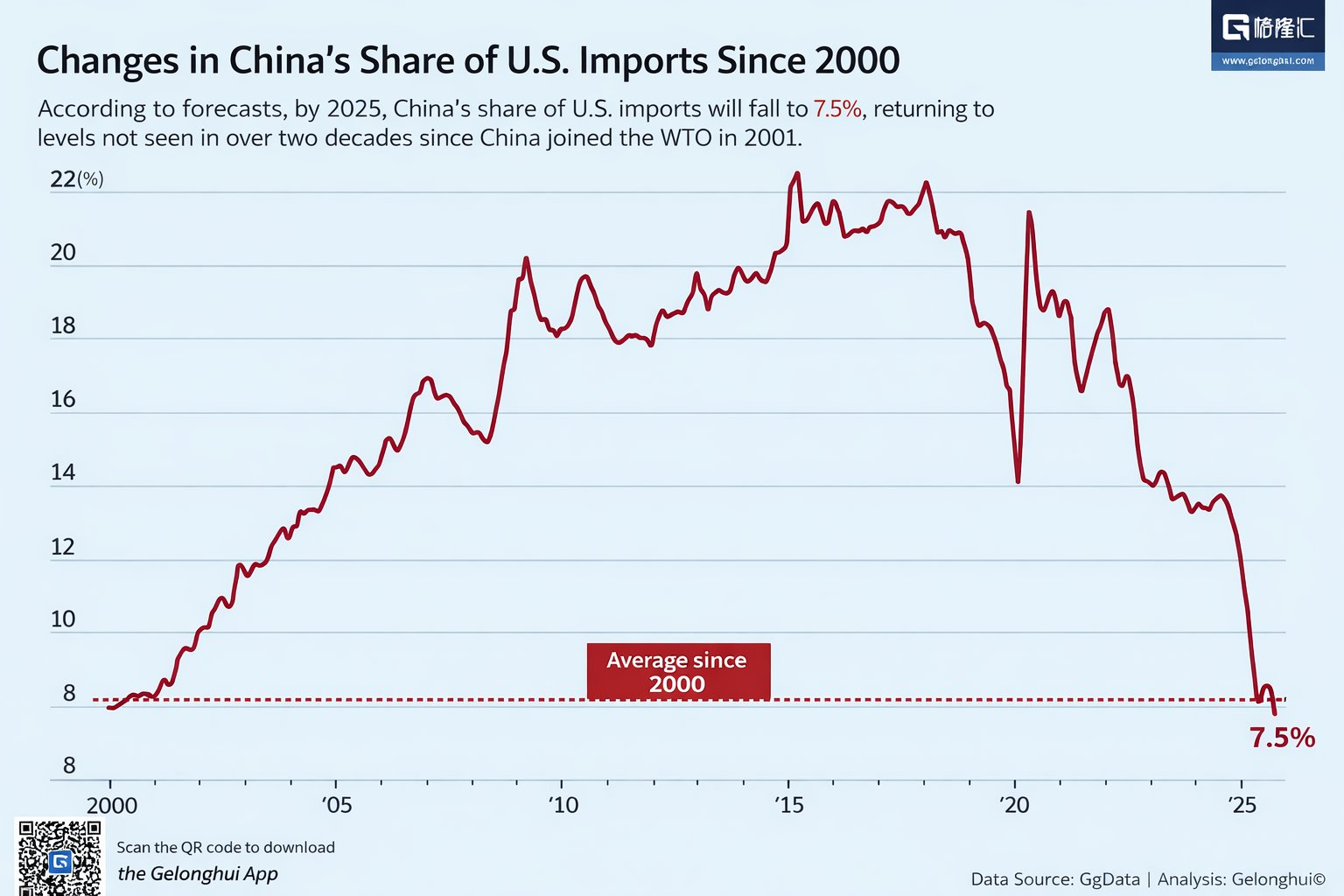
Consider the severe economic body blows to China in the past 14 months.
♦ First blow, the Trump tariffs hit Beijing hardest. ♦ Second blow, the Beijing tentacle on the Panama Canal is severed. ♦ Third blow, global tariff threats changed the risk dynamic for southeast Asia countries who acted as transnational shippers for China. ♦ Fourth blow, cheap sanctioned oil from Venezuela was cut-off. ♦ Now, the fifth blow; cheap, sanctioned Iranian oil is disrupted.
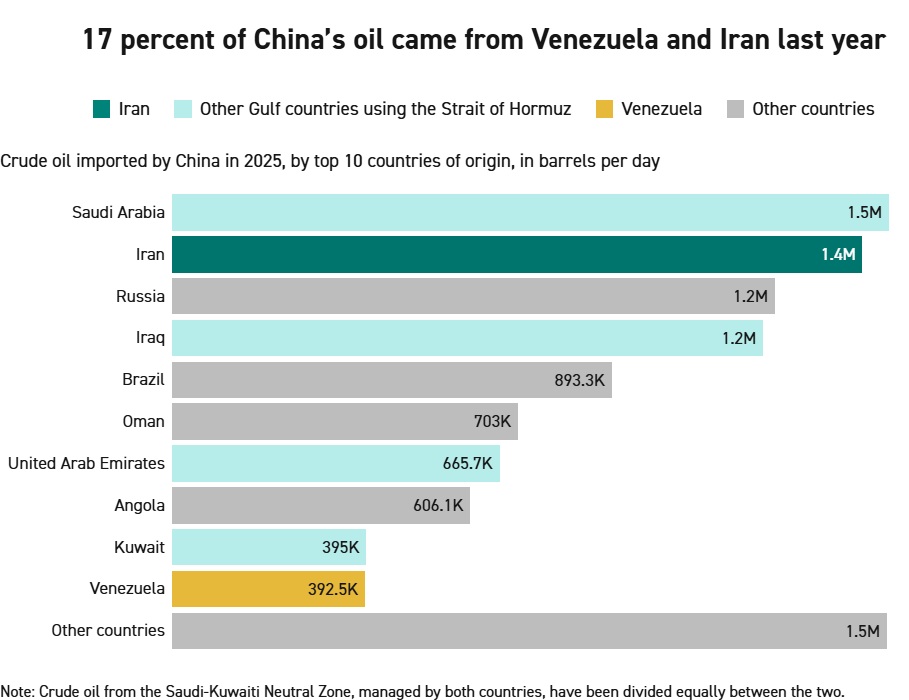
It’s not just a factor of oil flow, but also the price that China will ultimately end up having to pay. Beijing was buying oil from Venezuela, Iran and Russia at steep discounts because their purchases were skirting western sanctions.
With Iranian oil production now no longer a market option, China will seek to replace their needs with more Russian alternative. However, that diversion means the oil India was purchasing from Russia will come at a higher price, and the refined final product that was exported by India will arrive to the European Union carrying an additional cost.
Simultaneously, Vladimir Putin was asked about Russia’s lack of military support to Iran in response to the U.S. military action, to wit the Russian president noted the technical terms of their joint military agreements did not include Russia’s immediate involvement. In shorthand, Russia is busy and is not getting involved.
Russia was/is partially dependent on receiving military supplies from Iran in exchange for oil transfers. The military component is reported to include drones from Iran for use in the Ukraine conflict. Now that exchange profile is shuttered.
Taking Iran’s malign influence off the geopolitical chessboard is beginning to surface in major challenges to the BRICS assembly (Brazil, Russia, India, China, South Africa). Russia, China and India are impacted directly.
The BRICS nations were skirting western oil sanctions by trading the commodity outside the petrodollar structure. However, President Trump now controls the flow of oil from Venezuela, and his administration controls the currency in which it is sold.
With Iranian oil removed from the non-petro supply chain, the only remaining non-petro oil producer is Russia – who is simultaneously hit with a loss in military hardware support. China may end up as a larger oil customer to Russia, but at what price and in what payment structure.
With global oil supplies in a state of flux, and with the USA in control of the oil flow from Venezuela, North America is certainly in the best position for minimal energy disruption.
Asia is heavily dependent on oil flows through the Strait of Hormuz, and the majority of Europe has already shut themselves off from Russian oil production, putting themselves in a position of dependency to the global markets. The short-term ramifications of this oil disruption hit China, Southeast Asia, Japan and Europe particularly hard.
Around 90% of Iran’s oil exports go to China. Why? It’s cheap and it can be settled in RMB, bypassing the U.S. dollar system entirely.
Iran gets yuan, then spends most of it buying Chinese machinery, electronics, and industrial goods. The money flows right back to Beijing.
Much of that Iranian crude even enters China labeled as “Malaysian blended oil.” On paper, it’s Malaysia. In reality, it’s Iran.
To dodge U.S. sanctions, China keeps its major banks away from the deals. Instead, transactions are routed through smaller institutions like Kunlun Bank — controlled by CNPC and based in Xinjiang.
It’s a sanctions workaround, a currency experiment, and a geopolitical lifeline all rolled into one.
Part Two reportedly has a couple of AI images, so the entire vid is banned in some countries. I have no way to assess this series and do not know who the speaker is, but information provided is interesting and seems well thought out. ABN
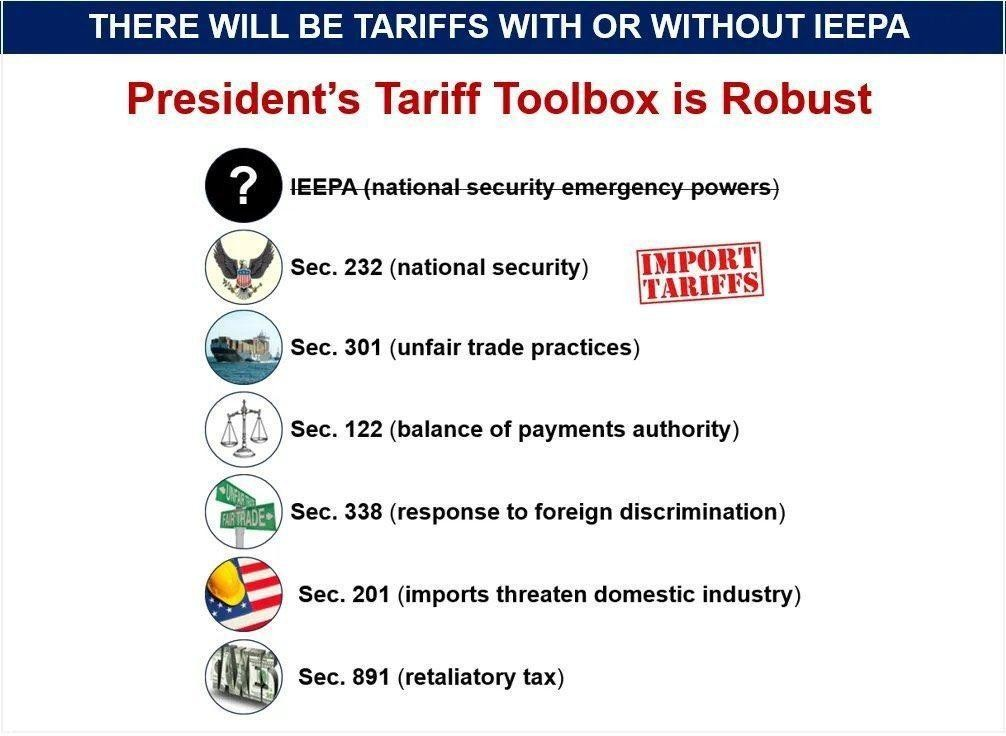
…Three lone voices of sanity, Justices Kavanaugh, Thomas, and Alito, issued a blistering dissent, warning that this decision creates a “mess” of biblical proportions for the U.S. Treasury and leaves our national security vulnerable to foreign threats.
These justices called out the decision as a dangerous power grab by the judiciary, ignoring historical precedents and the clear intent of Congress to empower the President in times of emergency.
President Trump, shortly after reclaiming the White House in 2025, declared national emergencies over the “public health crisis” caused by illegal drugs pouring in from Canada, Mexico, and China, and the “hollowing out” of American manufacturing due to massive trade deficits.
Using IEEPA, a law passed in 1977 to give presidents tools to fight foreign threats, he slapped tariffs on imports: 25% on most Canadian and Mexican goods, 10% on Chinese products for the drug war, and at least 10% on ALL imports from trading partners to fix the trade imbalance.
Small businesses and deep-state allies sued, and today the Court sided with them, claiming IEEPA’s language to “regulate… importation” doesn’t include tariffs because it’s not “clear congressional authorization.”
If USA and the West had fair and honest elections, we would have seen this same response decades ago. Apparently, Japan had real elections and Takaichi won in a landslide. Poll the West and no one but woke idiots and some (subversive) immigrants want open borders or believe any of the excuses corrupt politicians and writers make for them. In Japan, FAFO. You will be ‘sushi wrapped’ and deported without delay. That’s what those wise people want and that is what their duly elected government is giving them. ABN
More than $30 billion in taxpayer-funded welfare money intended to help America’s poorest families has instead beeen used as a ‘slush fund’ – diverted into programs ranging from college scholarships to government budget backfills.
The Temporary Assistance for Needy Families program, known as TANF, was created nearly three decades ago to provide direct financial support and services to struggling families.
Today, the program distributes about $16.5 billion annually in federal funds, supplemented by roughly $15 billion in state contributions.
But federal auditors and analysts say the program’s structure, which gives states broad control over spending with limited reporting requirements, has made it difficult to track how billions of dollars are ultimately used.
States often use TANF money to finance programs with only indirect connections to helping poor families, said Hayden Dublois of the Foundation for Government Accountability. He described the system’s lack of oversight as ‘fraud by design.’
The flight logs. The visitor records. The names that confirm what people suspected for years about certain islands and certain planes and certain parties where the guest list was curated for maximum leverage.
That’s what everyone’s combing through.
But there’s another list. It’s in the same three million files . It’s not hidden. It’s just less interesting to people who came looking for scandal.
The proposals.
The Edge Foundation was John Brockman’s intellectual salon. Annual gatherings of the world’s most influential scientific minds. Dinner parties where Nobel laureates met tech billionaires. Richard Dawkins. Lawrence Krauss. Steven Pinker. A contact sheet for people who shape the future without ever running for office.
Epstein funded Edge. But Edge wasn’t the operation.
Edge was the talent show.
You host dinners. You watch who’s brilliant. You note who’s ambitious, who’s frustrated by institutional constraints, who talks about what they’d do if funding weren’t an issue. Then you invite the interesting ones somewhere more private.
A jet. An island. A ranch in New Mexico.
The emails in the new files aren’t dinner invitations. They’re pitches.
August 2018 . A Bitcoin developer named Bryan Bishop writes to Epstein about “garage biology”. His plan to create the first human designer baby and possibly a human clone within five years. He outlines mouse testing at a lab in Ukraine, amateur human sperm work in Mississippi. He asks for one to three million dollars. He notes that once the first birth happens, “everything changes and the world will never be the same.”
Bishop discusses secrecy requirements. Anonymity about the babies would be essential. Identifying them publicly “would brand the child as a freak for life in the media.”
This wasn’t a grant application to the NIH.
December 2018. Robert Trivers, Harvard evolutionary biologist, writes to Epstein about hormone intervention in children. The subject line is “Trans.” The email discusses blocking testosterone receptors, increasing estrogen production. Trivers notes they’re “pushing the intervention earlier” and mentions identifying “trans tendencies” in children as young as three years old.
“I would be frightened to do that,” Trivers writes. “But who knows?”
December 2015. Epstein emails about designing a pig with non-cloven hoofs to make kosher bacon. Gene editing as intellectual amusement.
These aren’t academic discussions. They’re project updates sent to a man with funding, facilities, and reasons to keep everyone quiet.
The pattern emerges when you stop looking for the salacious details.
Wine and dine to identify the talent. Private invitations sorted who was willing to work outside institutional oversight. The islands and ranches and jets provided venues where proposals could be discussed without record. And the compromising situations that happened in those venues, the ones everyone’s reading about now, those weren’t the product.
They were the insurance policy.
You don’t fund off-books research with people who can walk away.





 American Buddhist Net