Tag: environment
The quantity of metal required to make just one generation of renewable tech units to replace fossil fuels is very large. Current mining production of these metals is not even close to meeting demand: Simon Michaux
Why nuclear power is better than solar: Next gen nuclear power is clean, efficient, and environmentally friendly. Most of the waste products can be recycled over and over and the remaining part is short lived
The best alternative for energy generation is next generation nuclear power (fast-reactors). They combine safety, efficiency, and a small land footprint into an ideal power system.
These next generation reactors, such as the sodium-cooled integral fast reactor (IFR), are extremely safe because if the cooling goes bad, the reactor safely shuts down based on the laws of physics. These reactors also recycle their own waste on site so the nuclear material can be used over and over again (a method known as pyroprocessing). There is a very small amount of “waste” product but it can be safely stored and becomes “safe” after less than 100 years (and we know how to store things safely on those time frames vs. thousands of years required for traditional nuclear waste).
link
Asian Giant Hornet probably eradicated in USA
Murder hornets may have been eradicated from the United States as Washington recorded no sightings so far this year.
Called Northern giant hornets, or Asian giant hornets, the insects are the largest species of hornet in the world. They are native to Asia, and an invasive species in the U.S. that poses a great risk to the native ecosystem. Scientists are not sure how the species entered the country, though some suspect they may have come from an illegal importation.
The species were first detected in Blaine, Washington in December 2019, according to the Washington State Department of Agriculture, (WSDA), as well as in British Columbia.
link
Ian Plimer – Australian geologist discusses science of climate change
Why Are My Oak Trees Dying? | Oak Wilt: What is it and How to Manage its Spread
Climate Bombshell: Greenland Ice Sheet Recovers as Scientists Say Earlier Loss was Due to Natural Warming Not CO2 Emissions
A popular scare story running in the media is that the Greenland ice sheet is about to slip its moorings under ferocious and unprecedented Arctic heat and arrive in the reader’s front room any day now (I exaggerate, but not much). Meanwhile back in the scientific world, scientists are scrambling to understand what natural causes lie behind the sudden slow-down in Greenland’s summer warming and ice loss dating back to 2010. The recovery of Arctic summer sea ice has been spectacular of late, with the U.S.-based National Snow and Ice Data Center reporting that this year’s September minimum was 1.28 million square kilometres higher than the 2012 low point of 3.39 million square kilometres.
Three Japanese climatologists have recently published a paper noting that “frequent occurrence of central Pacific El Niño events has played a key role in the [abrupt] slow-down of Greenland warming and possibly Arctic sea ice loss”. Of course such findings play havoc with the simplistic ‘settled’ science notion that carbon dioxide produced by humans burning fossil fuel is the main, if not only, driver of global temperature warming or cooling – a notion that leads many green activists to claim that the climate will stop changing if society signs on to a ‘Net Zero’ CO2 emissions agenda.
link
Lead exposure in childhood can result in meaner, crankier adults, global UT study finds
Sucking on a silvery chunk of lead as a kid can, decades later, cause you to be mean and self-centered.
While it might sound like a prophecy from a witch, this bizarre fact was the primary finding of a massive University of Texas study examining the effects of lead exposure on people’s personalities.
The study, published last week in the Proceedings of the National Academy of Sciences, investigated the impact of lead on more than 1.5 million people in the United States and Europe. It found that lead exposure was linked to being less agreeable and less considerate as well as other personality issues.
link
The Dramatic Fall from King of Fish to the “Most Toxic Food in the World”
FARMED SALMON
The Dramatic Fall from King of Fish to the “Most Toxic Food in the World”
A thread 👑 🐟
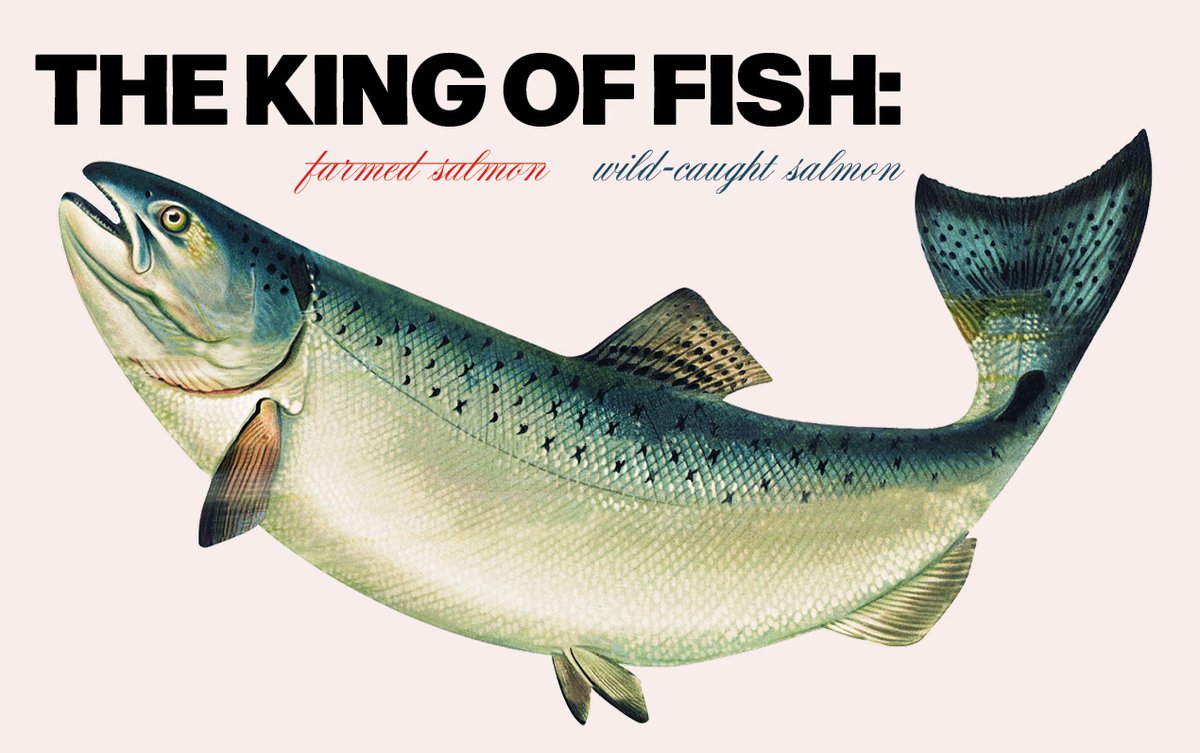
Just look at these guys. Savages. Braving against harsh currents for their bloodline.
No wonder they're crowned Kings of Fish. Shiny Steel. Unlimited Courage.
Continue reading “The Dramatic Fall from King of Fish to the “Most Toxic Food in the World””
Time-lapse video of Fort Meyers hurricane devastation
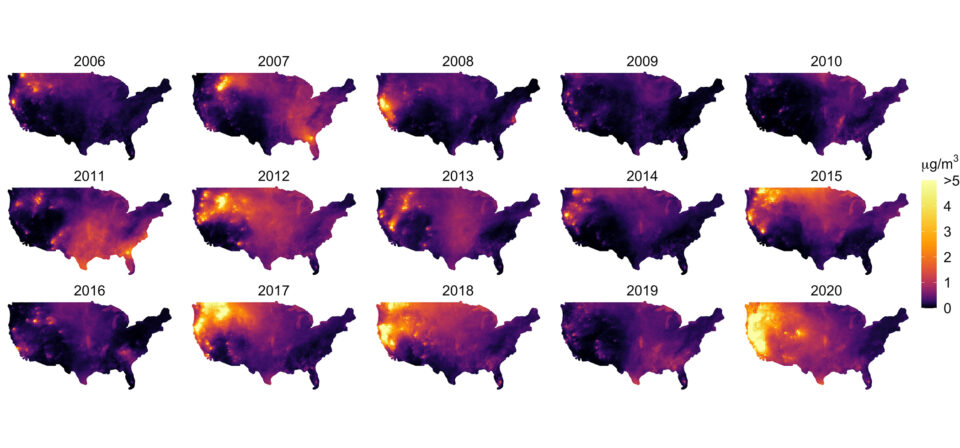
Stanford researchers find wildfire smoke is unraveling decades of air quality gains, exposing millions of Americans to extreme pollution levels
Wildfire smoke now exposes millions of Americans each year to dangerous levels of fine particulate matter, lofting enough soot across parts of the West in recent years to erase much of the air quality gains made over the last two decades.
Those are among the findings of a new Stanford University study published Sept. 22 in Environmental Science & Technology that focuses on a type of particle pollution known as PM2.5, which can lodge deep in our lungs and even get into our bloodstream.
Using statistical modeling and artificial intelligence techniques, the researchers estimated concentrations of PM2.5 specifically from wildfire smoke in sharp enough detail to reveal variations within individual counties and individual smoke events from coast to coast from 2006 to 2020.
link
CANADA: Environmental Agents in Hazmat Suits caught Poisoning Fish in New Brunswick River | Sept 8th 2022
The agents did not explain their actions, almost certainly indicating something bad and wrong is happening. In today’s world, government must be presumed guilty and deemed innocent only when full proof is provided. Why would they dump poison into a river and not explain themselves thoroughly? Don’t forget, the world’s human population was poisoned with covid. ABN
REVEALED: Devastating pictures of the rape of America’s century-old hardwood forests… stripped bare to provide wood pellets for European energy plants – in a deluded bid to meet climate goals
link
- Historic forests stretching from Texas to Virginia are under threat
- More than two dozen pellet mills are devouring trees across the North American Coastal Plain
- Wood pellet firm chiefs say they use waste wood, create jobs and benefit the U.S. southeast
- But really, majestic century-old trees are being logged, environmentalists say
- The E.U. this week started cutting the subsidies that make the trade possible
- Campaigners say ‘loopholes’ will help pellet firms keep on ripping up the forests

 American Buddhist Net