A California lake in Imperial Valley is sitting atop one of the world’s largest ‘white gold’ mines — but one of the chief beneficiaries will be an Australian energy firm.
Controlled Thermal Resources, founded down under in 2013, has spent two decades developing and managing energy projects in the valley south of Palm Springs.
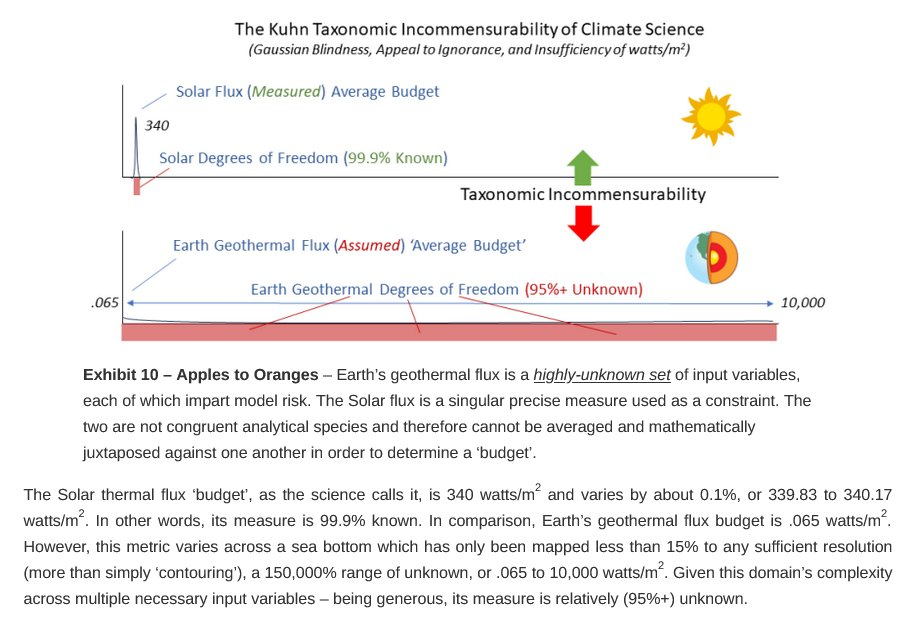
Many of those projects generated geothermal energy, a power source that use molten, magma-hot temperatures deep below Earth’s crust to power steam turbines for an environmentally sustainable means of making electricity.
But in recent years, the firm has turned its eye toward southern California’s lithium metal reserves, dubbed white gold because of the soft, silvery-white look of these ‘lithium salts.’
Further holes have been blown in the ‘settled’ scientific view that humans are responsible for all or most of the changes in the climate by burning hydrocarbons. Three scientists, including Atmospheric Professor Yi Huang of McGill University, have reduced by nearly 40% the basic amount of warming caused by a doubling of atmospheric carbon dioxide – a figure commonly used to promote the global warming scare. In addition they cast doubt on the ability of CO2 to heat the atmosphere beyond the levels already passed in the pre-industrial age. “Transmissivity in the CO2 band centre is unchanged by increased CO2 as the absorption is already saturated,” they note.
If correct, of course, this work destroys the ‘settled’ climate science that back the collectivist Net Zero project. The findings are likely to be ignored by the mainstream media. Indeed, on past form some activist journalists and scientists may seek to get the paper retracted. For the time being, it is published by the American Meteorological Society in its Journal of Climate.
Another sensational finding is that higher levels of CO2 seem to actually cool Antarctica. “The [doubled CO2] forcing in polar regions is strongly hemispheric asymmetric and is negative in the Antarctic,” write the scientists. None of this will be a surprise to regular readers since it would appear to be confirmed by observations that the region has shown “nearly non-existent warming” over the last 70 years. The recent “mind-blowing’” scare over low levels of winter sea ice has been debunked by evidence from early weather satellites showing similar levels in 1966.
The Mars Express orbiter has detected enough water ice buried beneath the Red Planet’s equator to cover the entire planet in a shallow ocean if melted.
A European Space Agency (ESA) probe has found enough water to cover Mars in an ocean between 4.9 and 8.9 feet (1.5 and 2.7 meters) deep, buried in the form of dusty ice beneath the planet’s equator.
The finding was made by ESA’s Mars Express mission, a veteran spacecraft that has been engaged in science operations around Mars for 20 years now. While it’s not the first time that evidence for ice has been found near the Red Planet’s equator, this new discovery is by far the largest amount of water ice detected there so far and appears to match previous discoveries of frozen water on Mars.
“Excitingly, the radar signals match what we expect to see from layered ice and are similar to the signals we see from Mars’ polar caps, which we know to be very ice rich,” said lead researcher Thomas Watters of the Smithsonian Institution in the United States in an ESA statement.
The deposits are thick, extended 3.7km (2.3) miles underground, and topped by a crust of hardened ash and dry dust hundreds of meters thick. The ice is not a pure block but is heavily contaminated by dust. While its presence near the equator is a location more easily accessible to future crewed missions, being buried so deep means that accessing the water-ice would be difficult.
Many of the foods consumed by Americans are contaminated with harmful plastic chemicals that contribute to health complications like diabetes, cardiovascular disorders, and infertility, said a recent report by the nonprofit group Consumer Reports (CR).
Some of the top food items with the highest level of phthalate contamination as discovered by CR’s tests are as follows:
Beverages: Brisk Iced Tea Lemon, Coca-Cola Original, Lipton Diet Green Tea Citrus, and Poland Spring 100 percent natural spring water.
Canned Beans: Hormel Chili with Beans, Bush’s Chili Red Beans Mild Chili Sauce, and Great Value (Walmart) Baked Beans Original.
Condiments: Mrs. Butterworth’s Syrup Original and Hunt’s Tomato Ketchup.
Dairy: Fairlife Core Power High Protein Milk Shake Chocolate, SlimFast High Protein Meal Replacement Shake Creamy Chocolate, Yoplait Original Low Fat Yogurt, and Tuscan Dairy Farms Whole Milk.
Fast Food: Wendy’s Crispy Chicken Nuggets, Moe’s Southwest Grill Chicken Burrito, Chipotle Chicken Burrito, Burger King Whopper With Cheese, Burger King Chicken Nuggets, and Wendy’s Dave’s Single With Cheese.
Grains: General Mills Cheerios Original and Success 10 Minute Boil-in-Bag White Rice.
Infant Food: Gerber Mealtime for Baby Harvest Turkey Dinner, Similac Advance Infant Milk-Based Powder Formula, Beech-Nut Fruities Pouch Pear, Banana & Raspberries, and Gerber Cereal for Baby Rice.
Meat and Poultry: Perdue Ground Chicken Breast, Trader Joe’s Ground Pork 80% Lean 20% Fat, Premio Foods Sweet Italian Sausage, and Libby’s Corned Beef.
Packaged Fruits and Vegetables: Del Monte Sliced Peaches in 100% Fruit Juice, Green Giant Cream Style Sweet Corn, and Del Monte Fresh Cut Italian Green Beans.
Prepared Meals: Annie’s Organic Cheesy Ravioli, Chef Boyardee Beefaroni Pasta in Tomato and Meat Sauce, Banquet Chicken Pot Pie, Campbell’s Chunky Classic Chicken Noodle Soup, and Chef Boyardee Big Bowl Beefaroni Pasta in Meat Sauce.
Seafood: Chicken of the Sea Pink Salmon in Water Skinless Boneless, King Oscar Wild Caught Sardines in Extra Virgin Olive Oil, and Snow’s Chopped Clams.
The foothills of Kazakhstan’s Tian Shan mountains are something of a genetic wonderland. This vast mountain system forms the border between China and Central Asia, and between its higher spruce-covered slopes and its lower poplar trees are dense patches of woodlands, ones brimming with walnuts and wild fruits. These include apricots, cherry plums and pears, as well as Malus sieversii, a wild apple—the primary ancestor of the modern apple—that’s been growing in this region for thousands of years.
Thousands of apple varieties—crunchy, thick-skinned Fujis, which originated in Japan in the 1930s; aromatic Galas; and rare Pink Pearls—exist in the world today, many of them bred for their distinct flavor, color and texture. Turns out the bulk of these domesticated apples can be traced right back to Kazakhstan’s Malus sieversii. Despite the variety, however, only 15 types of apples account for 90 percent of apples grown throughout the United States. These specialty crops are especially susceptible to diseases like apple scab, a fungal ailment that attacks both a tree’s leaves and fruit with unsightly lesions, and outbreaks of highly infectious fire blight, which can kill entire trees outright.
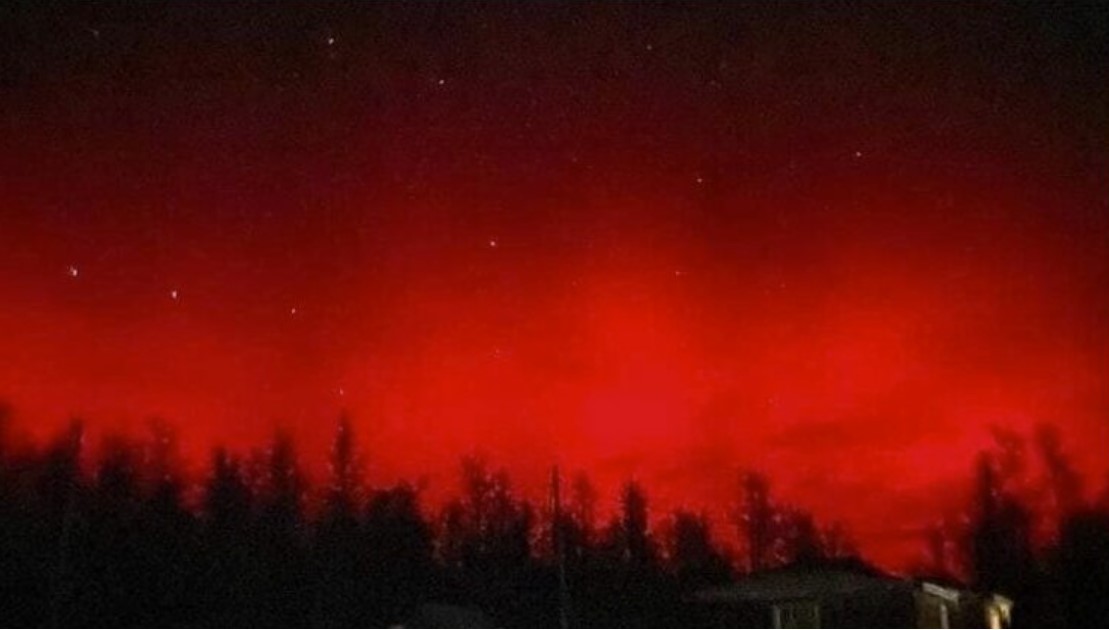
In an extraordinary celestial display, the skies over Mongolia turned deep, blood-red as the country experienced one of the rarest auroral events on Friday and early Saturday.
…This particular shade of red is considered the most uncommon colour of the Northern Lights, or Aurora Borealis and its appearance is closely linked to periods of intense solar activity.
The ongoing solar storm responsible for this event was the result of multiple coronal mass ejections (CMEs) from the Sun, which occurred on November 27, 2023. These CMEs sent a barrage of high-energy particles hurtling towards Earth, with the first wave reaching our planet late on November 29.
The red auroras are a consequence of these solar particles colliding with oxygen molecules at higher altitudes. At such great heights, the density of oxygen is lower, and the collisions occur less frequently, resulting in the emission of red light rather than the more common green. This process is akin to the way neon lights operate, with excited gas atoms releasing photons of light when they return to their ground state.
Historically, red auroras have been documented during some of the most powerful geomagnetic storms, such as the Carrington Event of 1859, which remains the most intense solar storm on record. During that event, red auroras were reported as far south as the Caribbean and Mexico, with the skies so bright that birds began to sing, mistaking the illuminated night for morning.
The occurrence of the red aurora in Mongolia has provided scientists with a unique opportunity to study the effects of solar storms at lower latitudes. While the sight may be mesmerizing, it also serves as a reminder of the Sun’s immense power and the potential impact of solar weather on our technologically dependent society.
COME AUTUMN, as temperatures drop and summer flowers fade, gardeners in most parts of the country turn their attention to the annual chore known as “fall cleanup” then assume they’re done until the following spring. But for gardeners who care about wildlife, autumn is an ideal time for tasks that have an impact year-round. “Just because the seasons are changing, don’t think there are no opportunities to help wildlife,” says National Wildlife Federation Naturalist David Mizejewski. “That’s especially true if you’re trying to support birds, butterflies, bees and other pollinators.” Here’s what he and other experts suggest.
Leave the leaves. In many places, raking and bagging fallen leaves is expected—and may even be required by cities and homeowners associations. But the need to dispose of leaves is “one of the biggest false assumptions about fall cleanup,” says Mizejewski, “and it’s a bad idea if you want to help wildlife survive winter, see butterflies in spring or have your vegetables pollinated in summer.” Leaf litter on a garden bed creates habitat for wildlife, from small mammals and reptiles and amphibians to overwintering bees and moth and butterfly larvae. If you have too many leaves, rake to the corners of your property or use as mulch. Sending leaves to a landfill is the worst option, robbing your soil of natural fertilizer and contributing to greenhouse gas emissions.
Nurture fall-blooming native plants. Because many plants stop flowering by late summer, maintaining those that bloom into or through fall is critical for pollinators, including migrating monarch butterflies and native bees. In social species such as bumble bees and many sweat bees, “only mated queens live through winter, so they need forage to put on fat during late summer and early fall,” says James Cane, a biologist and head of the nonprofit WildBeecology. He recommends goldenrods, asters, sunflowers and, in much of the West, rabbitbrush.






 American Buddhist Net