The article by Ron Unz delves into the interconnectedness of significant historical events, particularly focusing on World War II and the Bolshevik Revolution. Unz posits that mainstream historians often fail to connect crucial dots in historical narratives, leading to an incomplete understanding of these events. He presents a case connecting Joseph Goebbels’ personal crisis stemming from an affair to the instigation of Kristallnacht, which subsequently influenced British policy and ultimately contributed to the outbreak of World War II. This narrative emphasizes how personal and political crises can have far-reaching implications, suggesting that a more nuanced understanding of history requires acknowledging the interplay of personal motivations and larger political frameworks.
Unz continues to explore the assassination of Grigory Rasputin and its role in the Bolshevik Revolution. He critiques traditional historiography for portraying Rasputin as merely a sinister figure without recognizing his significant political influence and the consequences of his death. Historian Sean McMeekin’s analysis highlights that Rasputin was a pivotal figure whose murder destabilized the Czarist regime, contributing to its downfall during the February Revolution of 1917. This analysis suggests that historians have often overlooked the chain of events linking Rasputin’s death to the rise of the Bolsheviks, indicating a need for more comprehensive historical narratives that consider less obvious influences on major political upheavals.
The article also discusses the “Lost Peace of 1916,” where Germany attempted to negotiate a peace settlement during World War I, which was rejected by the Allies. Unz argues that accepting this proposal could have drastically altered the course of history, preventing further loss of life and possibly averting the rise of the Nazis and the subsequent disasters of World War II. He underscores the failure of historians to incorporate this critical moment into wider historical narratives, emphasizing that the refusal of the Allies to consider peace negotiations contributed to the conditions that ultimately led to the Second World War and the punitive Treaty of Versailles, which set the stage for future conflict.
Lastly, Unz examines the Katyn Forest Massacre and its implications during World War II, particularly in relation to the Holocaust. He suggests that the Soviet regime’s involvement in the massacre and the subsequent cover-up reflect a broader pattern of historical narratives that often overlook or misrepresent the complexities of wartime atrocities. The juxtaposition of the timing of the Katyn propaganda campaign and the Warsaw Ghetto Uprising raises questions about the strategic motivations behind these events. Unz posits that the Holocaust’s prominence in historical memory may overshadow other significant atrocities, such as the Katyn Massacre, and argues for a more inclusive approach to understanding the multifaceted nature of historical events, emphasizing that the narratives we construct can significantly influence public perception and memory.
In reading all these different accounts of the international controversy following the discovery of the mass graves at Katyn, I noticed something that none of the authors had highlighted.
Massacres have hardly been unknown during brutal wars and the Soviet government had become especially notorious in that regard. Prisoners captured in battle have sometimes been slaughtered soon afterward.
But no other example in modern history came to my mind in which sizable numbers of captured POWs who had already been held for many months in prison camps were then taken out and summarily executed, each of them individually shot in the back of the head.
When we consider that the dead numbered more than 20,000 and that they constituted the military and civilian elite of Polish society, the Katyn Forrest Massacre must surely have been regarded as the most appalling European war-crime of the last several centuries. Indeed, by some measures this methodical, cold-blooded execution of so many POWs might rank as one of the worst such atrocities in all of recorded history.
Moreover, by the time the facts became known in 1943, the government of the killers and that of their victims had become less than comfortable military allies in the war against Nazi Germany.
On April 13th, German radio began promoting the appalling story, and it soon became their most successful wartime propaganda project. If the hundreds of thousands of Polish troops serving in Allied armies or the millions of Polish-American voters had become fully aware and convinced of those true facts, the entire course of World War II might have followed a very different trajectory…
When China intensified its crackdown on cybercrime, many involved in the industry relocated to Cambodia, transforming the country into a major hub for online fraud, forced labor, and human trafficking. These operations are largely run by Chinese criminal organizations that have established bases in casinos and business centers across Cambodia, often with the collusion of powerful local figures.
A key factor enabling this expansion is China’s Belt and Road Initiative (BRI), which has facilitated increased Chinese investment and presence in Cambodia since 2013. While the BRI promotes infrastructure development and trade, it has also allowed criminal groups to infiltrate alongside legitimate enterprises, forming collusive relationships with local elites. Chinese crime syndicates operate fraud hubs such as the Bavet Business Center, a 100,000-square-meter complex described as a “fraud hub” by Cambodian NGOs, where thousands live and work under suspicious conditions.
There are also indications of ideological alignment between some criminal groups and the Chinese Communist Party (CCP). For example, a former Chinese mafia boss established the “World Hongmen History and Culture Association” in Cambodia, which engages in fraud while also promoting CCP narratives such as the “great rejuvenation of the Chinese nation”. This reflects a broader strategy of “united front work,” where overseas Chinese networks, including criminal organizations, are leveraged to shape international opinion in China’s favor.
Financial systems supporting these scams are also linked to China. The Cambodia-based payment platform HuiOne, banned in China, serves as a major money “gateway” for laundering illicit proceeds from online scams across the Mekong region, converting them into U.S. dollars and Chinese yuan. One of HuiOne’s directors, Hun To, is a cousin of Cambodian Prime Minister Hun Manet and has longstanding ties to Chinese organized crime.
Moreover, high-level complicity is alleged, with properties housing scam centers often owned by senior Cambodian officials or business elites connected to the government. In Poipet, near the Thai border, a casino allegedly run by a government-connected senator hosts Chinese-run scams. Similarly, the Life Sciences Institute, located within a telecom fraud park controlled by Cambodia’s Prince Group, has been linked to Chinese capital and political protection, with the group’s founder accused of acting as a “white glove” for elite CCP families.
While Cambodia has conducted raids and arrests—such as detaining around 1,000 foreigners, mostly Chinese and Koreans, in Kampong Speu province—the cyber scam industry continues to thrive, generating an estimated $12.5 billion annually and relying on the forced labor of approximately 100,000 to 150,000 people from over 50 countries. Despite joint efforts between Cambodia and China to combat online fraud, the deep entrenchment of these networks, supported by BRI-related flows of money and influence, makes eradication extremely difficult.
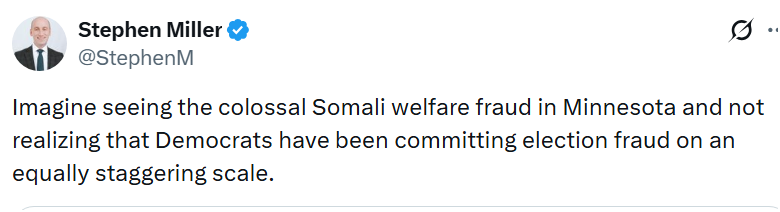
The number of mainstream news outlets who are doing investigative journalism on the ground in Minnesota to uncover the scale and scope of the Somali fraud rings are zero. However, one citizen journalist named Nick Shirley has put some extensive time into actually visiting the childcare centers at the heart of the scandal and his report is stunning.
In this 40-minute video, Shirley takes the time to search govt databases for grants, then goes and visits the actual businesses. Shirley confronts the fraudsters directly and has likely just put a big target on his back.
Officials in Maine have suspended state Medicaid payments to a Somali-run charity after more than a million dollars in possible fraud was discovered in several audits of the charity’s services.
The Maine Department of Health and Human Services (DHHS) has cancelled MaineCare payments to Gateway Community Services after the audits found that the charity over billed the state for $1,068,598 from March 2021 through December 2022. The cash was supposedly to cover the costs of “interpreting services” to Somali migrants, the Bangor Daily News reported.
This same organization has been under investigation before. Gateway reportedly overbilled for more than $600,000 between 2015 and 2018, and is still under a cloud of suspicion for other violations found during a third state audit completed in 2024.
Posted by Trump. That kind of money is not due to incompetence but planned systemic criminal fraud. A small fraction of $76.5 billion would pay for protective monitoring. ABN
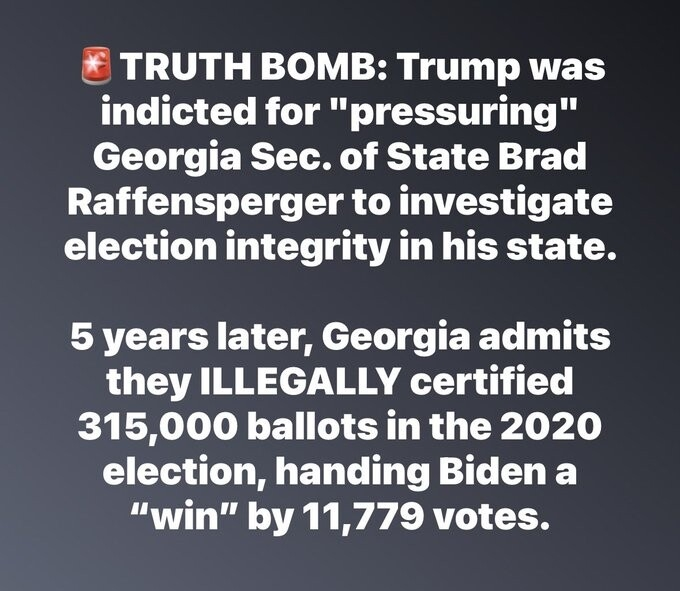
The American left is built on vote fraud, NGO fraud, scams like this one, corruption and payola. They have devastated USA and eagerly cooperated with parasites who share their hatred of Western and USA society. Leftists involved in these schemes are not lazy. They are vicious, nasty and totally corrupt. ABN
“My child underwent surgery for a throat hemangioma at Henan Provincial People’s Hospital. After the surgery, the child became vegetative, and then I discovered the child’s eyeballs were gone—they had been removed. Various departments in the hospital are altering the medical records… For profit, stealing and selling patients’ organs.”
The video details an alleged incident in Henan Province where a 9-year-old girl underwent throat surgery at a local hospital, emerged in a vegetative state, and had her eyeballs removed without consent, with hospital records reportedly altered to cover up suspected organ trafficking for profit.
The 24-second video features the girl’s mother recounting the events, hospital exterior shots, and the child in a bed with bandaged eyes, aligning with broader 2025 reports of a surge in Chinese organ harvesting claims, though this specific case lacks independent verification from major outlets.
__________
As with all things in China, it is impossible to prove these allegations.
This story has been appearing in social media and is believed true by many Chinese commentators.
Grok has this to say about the case: This mother’s narration describes an unverified organ trafficking claim. Officially documented facts of the case involve only medical negligence and record tampering, not organ removal.
It is widely believed in China and around the world that illegal organ harvesting is practiced in China for sale to the wealthy and elite.
In Cambodia, Scam Compounds or Scam Parks have repeatedly been accused of organ harvesting. These compounds appear to be a major reason for the Thai-Cambodia conflict raging today.
The most chilling claims against Cambodian Scam Parks involve ‘baby-farming’, where young women are kidnapped and forced to bear IVF pregnancies, so their babies’ organs can be removed and sold. It is widely believed the CCP is running these compounds. ABN
To communicate, we often must ignore the truth or falsity of a statement, our own or someone else’s.
I believe it is an instinct to do this; that it is part of our instinct to communicate at all. Communication requires cooperation, an agreement to be agreeable enough to get the message through.
We might call ignoring truth or falsity in communication “truth elision” or “psychological elision.” Elision means to omit something. Psychological elision would mean omitting or not mentioning psychological truths.
We do a lot of truth elision to save time. In professional or group settings it is hard to communicate any other way because there is not enough time to be perfectly truthful and most people will not care. They just want to socialize and/or get the job done, not search for truth.
Most communication is like that. Most messages are not even superficially analyzed. Semiotics glide through our minds without any thought to their deep origins or interpretations. Truth and falsity are frequently elided.
Like all instincts, our instinct to cooperate by ignoring the truth or falsity of many statements can be misused to consciously deceive.
Indeed, we frequently deceive even ourselves by accepting our own statements as true when analysis would show they are not. One way we succeed in doing this to ourselves is by simply avoiding the analysis—analysis elision.
This is where a simple instinct starts to go bad. A basic need to cooperate on the signs and symbols of communication gets twisted into tricking people, deceiving them, even deceiving ourselves.
The way to see this most clearly and to stop doing it with at least one other person is FIML practice. One of my main goals for this website is to show how and why communication goes bad and how and why it harms us. At the same time, I present a practical way to fix the problem described—FIML.
_________________
I think the above sheds light on false confessions and pretty much all self-abnegating lying on the spectrum trending down from a false confession with legal consequences.
Abusers work these ill-defined and difficult to grasp areas to dominate, entrap, and manipulate others. Narcissists and other “strong” or “clever” dark personality types use our fundamental willingness to cooperate against us.
Gas lighting greatly relies on people’s willingness to ignore truths and accept falsities about themselves. If there is more than one gas lighter at work, victims may even accept blame for things they know with certainty are not true.
As with so much in this world, immoral people put time and energy into fooling those who have not put time or energy into the dark arts.
Mass mind-control preys on our mass susceptibility to believe the story that first comes out; the story that is approved by the ‘authorities’ and mass media; the story that is embraced and recited by our friends and family. Mind-control relies on our need to conform and our fear of being ostracized and criticized for straying from the mass instinct to be the same as others.
Buddhists all know about wise compassion. We also need wise understanding of the world and wise cautiousness about the full scope of human motivations.
Our tendencies to go along with falsity can be seen in every part of life, from small corners of our own lives to the great expanses of entire societies.





 American Buddhist Net