
Signals are fundamental to everything that exists. There can be no physical realm without signals and certainly no life.
What is a signal? Anything that transmits any effect to anything else is a signal. In this sense, all signals “mean” something, including the smallest signal anyone can think of.
The advantage of basing a model of psychology (not just human psychology) on signals is our fundamental unit of analysis is universal, including everything we can know and think about.
Our bodies do an enormous amount of signalling—both internal and external—without our being conscious of most of it. Many living and non-living systems maintain homeostasis through signalling that is non-conscious (or so we now believe). The laws of physics describe signals that explain, for example, how our solar system came to be the way it is and why it remains in homeostasis.
Signals also explain how non-conscious life-forms—viruses, bacteria, plants, your blood, etc.—have arisen and how they maintain their dynamic homeostasis vis–à–vis the ever changing environment that surrounds them and signals to them constantly.
Consciousness itself almost certainly emerges out of a network of signals. Conscious beings read signals in the environment while frequently signaling each other. Cats and birds use conscious signals extensively. Even life-forms that we believe to be non-conscious, such as worms and plants, send and receive signals constantly to each other, while also signalling internally and with their environment.
Draw the line between conscious and non-conscious signalling wherever you like. Then let’s jump to human psychology.
Humans are different from cats and other animals in that we specialize in signals. Birds are specialists of the air, fish of the water, and humans of signals.
Humans signal each other constantly with signs that can employ any of our senses—sight, hearing, touch, taste, and so on. Our preeminent signalling system is, of course, language. With language humans are capable of remembering complex groupings of signals. We are also capable of thinking about these signals and transmitting our understanding of them to others.
Right now, as you read, you are receiving a complex signal from me.
Consciousness is arguably our most precious quality. Human consciousness is filled with and based upon signals. For our psychological well-being—the well-being of our consciousness—the signals we send and receive to and from other human beings are of fundamental importance.
To say it another way, humans are profoundly interactive signalling systems and the quality of the signals sent between us and other human systems are of primary importance to our sense of well-being, our psychological health, our conscious sense of who we are and how we are doing.
When our consciousness is filled with or marked by clear, truthful, and ethically sound signals, we feel good. In those moments we do not suffer confusion, neurosis, or pain. When consciousness is filled with or marked by confusion, lies, and ethically unsound signals, we feel bad. In those moments, we suffer, often greatly. (Of course, there are exceptions to these statements. Injury and truth, to name two, can cause us pain and confusion. But the basic distinction made here works well enough.)
It makes sense, thus, to focus on human signalling if we want to figure out what makes us tick.
The science of human signalling is often called semiotics, which can be roughly defined as the study of signs and their meanings. Semiotics can and does also include non-human signs and signals, but for now let’s limit ourselves to human signalling. There are other sciences that describe human signalling, but semiotics, which emphasizes signs and their interpretation, will serve us well enough that we can temporarily ignore other ways of understanding human meaning—game theory, traditional psychology, anthropology, etc. Semiotics works well because semiotic analyses can be reduced to single signals; they have a distinct and clearly defined basic unit—the signal or the sign.
Why do we focus so much of our inquiry into human psychology on emotion? Emotion is inchoate, often even unfelt, until it is defined or given meaning as a signal or sign.
Emotions are real, but they are massively subject to cultural interpretation, to definitions that have arisen outside of the individual experiencing them. Culture is little more than a system of signs and symbols shared among a group of people. Human cultures have great variety because the signs and signals and the meanings of those signs and signals develop differently in different places and under different conditions. This fact alone should suffice to show that the meanings of human signs often are arbitrary.
As long as a bunch of people believe that the sun is a chariot driven by a god, that meaning of the sun will work as a cultural standard, or cultural element with varying interpretations. If most people in a community think the sun is the center of the universe, that will also work until a better idea comes along. If enough people believe that human hearts have to be sacrificed to keep the sun moving across the sky, that will also work well-enough to hold that society together. Wherever you look, you will find great cultural variety, much of it based on arbitrary decisions that have long been forgotten by the people adhering to that system of meaning,.
In this context, isn’t it clear that focusing our inquiries into human psychology on emotion is going to provide us with many tautological results?
Similar statements can be made about many other elements of our traditional understanding of human psychology, including such elements as personality, neurosis, mental health, what being normal means, what our goals and desires are, and so on. The emotions and/or “psychological states” that these areas of inquiry deal with are vague and almost entirely changeable over time and place.
What is not vague are signals. When we ask what signals are and what their quality is we can get much better answers based on much better data compared to the answers we get when we ask only how someone feels and where those feelings came from.
How do we do that? More precisely, in the context of what we call human psychology, how do we analyze our signalling?
Is it valuable to compare my assessment of my internal signalling with “data” taken from “surveys” of other people who speak my language and live in a society which is sort of maybe the “same” or similar to my own? Yes, you can get something from that data but you will also make many mistakes because it is very crude, or general, data and will never fully apply to any individual or even come close to actually describing anything of significant value to most people. Such data will contain so many mistakes, it should be handled with great caution, if it is used at all. (You most certainly can fool people with that data. But that happens because many people will believe the data is scientific and provides an accurate metric that describes who they are. And that is an example of how a cultural semiotic can and does impose “meaning” on individuals; not hugely different from believing you have to sacrifice human hearts to make the sun go round.)
You can’t really get at the important signalling people do by using general surveys because your data is is coming from a tautological loop based on surveys that are generally put together on the basis of other surveys involving stuff like common words or feelings.
For psychology, for human mental health, the most important signalling people do is interpersonal signalling with significant other people.
When we try to figure ourselves out by remembering (a dubious exercise in so many cases) what our parents did or said or made us feel, we can get some useful information, but it is not that reliable and suffers from the same sort of misinterpretation as personality studies or studies of human emotion do. You can read whatever you want into it and/or be subject to the vagaries of chance interpretations.
The only significant interpersonal signalling data we can really know with significant certainty are data noticed, remembered, and agreed upon by two (or more in some cases) people engaged in significant interpersonal communication (signalling).
A mere observer (much less a surveyor) of this communication will never be able to know or analyze the data with anything approaching the accuracy or validity of the two people involved if those two people have a reliable method for gathering that data. Even if an observer has a video record of the exchange, they will never be able to know or analyze it with the accuracy of the individuals directly involved if those two people have a reliable method for gathering that data.
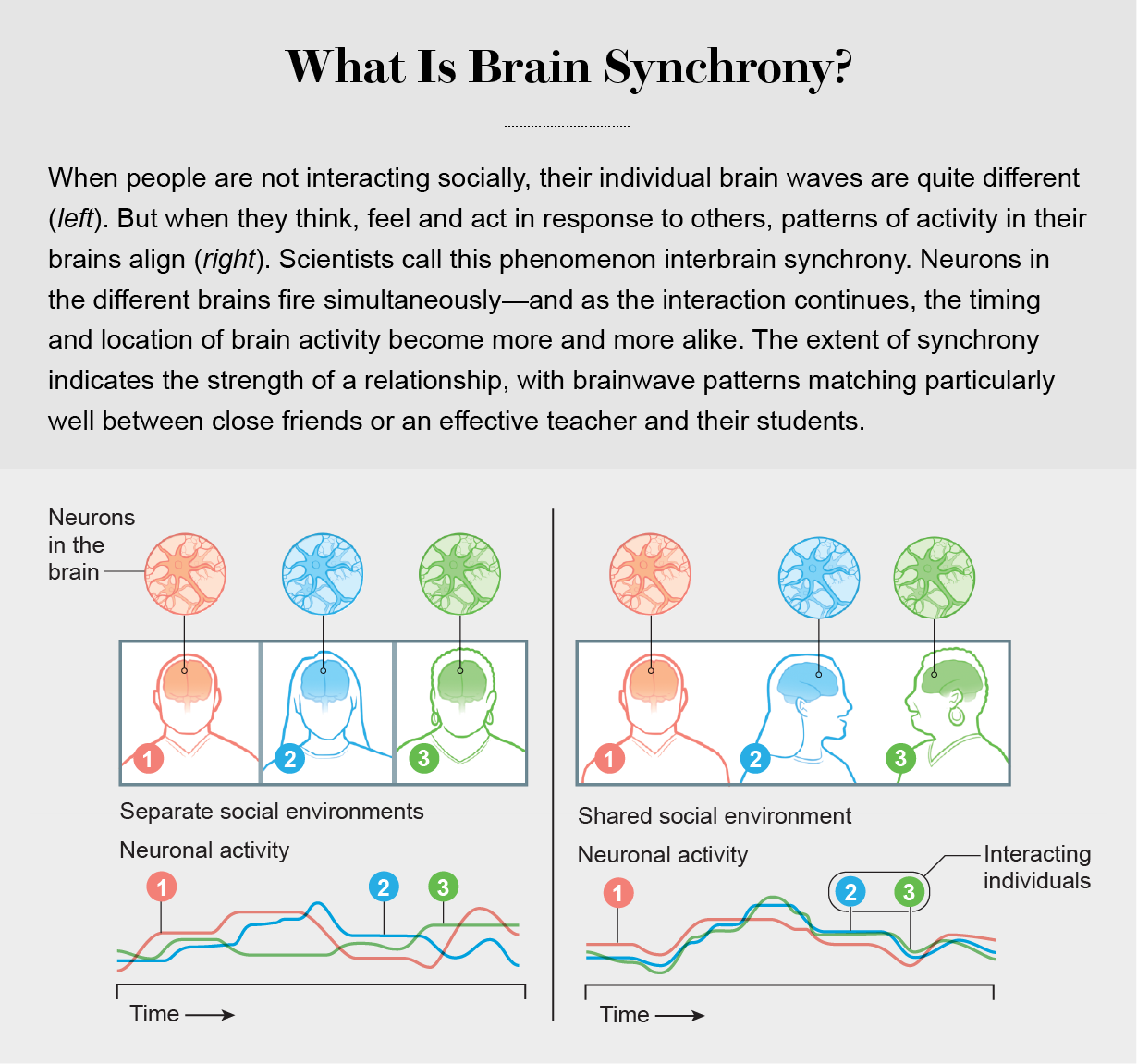
The day may come when brain scans can provide us with real-time data of that sort, but for now all we have is FIML practice, or something very much like it.
A signal-based model of psychology: part one
A signal-based model of psychology: part two
 American Buddhist Net