U.S. officials say RCMP stonewalling on the Chinese-precursor-supplied Falkland superlab — described by DEA chief Derek Maltz as a “major disaster” — among the reasons behind Trump’s punitive tariffs
WASHINGTON — Canada’s federal police refused to investigate or cooperate with the United States Drug Enforcement Administration on a British Columbia fentanyl superlab probe tied to chemical-precursor shipments from China into Vancouver in late 2022, according to senior U.S. officials. More than a year later — only after the U.S. Treasury sanctioned Iranian-Canadian businessman Bahman Djebelibak and his Health Canada–licensed company Valerian Labs, naming them as part of a Chinese fentanyl trafficking syndicate that Washington sought to disrupt — did the RCMP finally open a siloed investigation. The force continued to refuse coordination or information sharing with the American agents who had initiated the case. In an exclusive interview, Derek Maltz, DEA Acting Administrator in 2025 with oversight of the matter, called the B.C. superlab case a “major disaster.”
This explosive information, confirmed to The Bureau by current and former senior U.S. officials, has never before been reported in the Falkland, B.C., superlab case, which was covered internationally by outlets including The New York Times. It amounts to a rare public rebuke that elevates the matter from a Canadian policing failure into a high-consequence geopolitical dispute.
It also helps explain Washington’s decision on July 31 to impose 35 percent tariffs on Canada, reinforcing President Donald Trump’s claim that senior officials had warned him Ottawa failed to cooperate or devote sufficient resources to interdictions against Chinese- and Mexican-linked drug trafficking networks blamed for killing hundreds of thousands of North Americans.
What people thought America could be – a beacon of democracy – was the last thing it became. In reality, it’s a corporate machine that has given rise to the Transnational Private Sector (TPS).
The TPS is a coalition of corporate giants, led by the Financial-Industrial Complex (FIC) with firms like JPMorgan, Goldman, and BlackRock, alongside the Military-Industrial Complex (MIC), Consumer-Industrial Complex (CIC), and Techno-Industrial Complex (TIC).
This collective force operates beyond borders, transcends nationality, and prioritizes profit over public welfare.
When Jamie Dimon, JPMorgan’s CEO, warned in October 2024 that wars in Ukraine and the Middle East could destabilize the global economy, he wasn’t just forecasting. He was asserting the TPS’s dominance over policy.
To understand this power, you have to examine the game theory driving the TPS’s clash with nations.
This concept that I have developed deliberately sets aside the idea of good, evil, right, or wrong. Geopolitical dynamics are examined through the lens of incentives, power, and measurable outcomes, not moral judgments. The focus is the strategic interplay of actors, stripped of ethical narratives.
___
Game theory provides a framework for understanding geopolitical strategies by analyzing the incentives that drive actors’ decisions.
There are two distinct game types: finite and infinite. Both these games shape global interactions. Finite games are zero-sum with defined endpoints, and clear winners and losers. It’s akin to a corporate quarter where profit maximization is the sole objective.
One player wins, the other loses.
Infinite games, conversely, lack a conclusion, have no end, prioritizing sustained participation through long-term stability, akin to a nation’s multi-generational survival strategy.
States operate within infinite games.
They do not expire. They do not tap out.
Their permanence compels them to prioritize enduring stability over immediate gains. For instance, China’s $1 trillion Belt and Road Initiative, spanning decades, secures global trade networks to ensure long-term economic influence. BRICS nations, through $10 billion in yuan-based trade, foster mutual economic resilience for mutual prosperity.
This cooperative approach engenders a form of morality rooted in reciprocity: mutual support today ensures mutual survival tomorrow. Such strategies reflect a commitment to societal development and stability, as states must maintain legitimacy and resources for their populations over time.
The TPS operates as a corporate entity, fundamentally detached from societal obligations. Unlike states, the TPS bears no responsibility to citizens, public welfare, or long-term development. Its imperative is profit maximization within finite time horizons, driven by shareholder demands and market cycles.
In an extraordinary display of spiritual diplomacy and international gratitude, 70,000 Cambodian Buddhist monks have rallied behind Prime Minister Hun Manet’s historic nomination of President Donald Trump for the Nobel Peace Prize, marking one of the most significant religious endorsements in modern Southeast Asian politics.
The unprecedented support comes following Trump’s decisive diplomatic intervention that successfully ended a dangerous five-day border conflict between Cambodia and Thailand in July 2025, preventing what military analysts warned could have escalated into a devastating regional war.
The Bush family, whose neoconservative war-hawk policies dragged America into catastrophic Middle East quagmires costing trillions and countless lives, is plotting a brazen political comeback, even as voters from all sides have rejected their reckless globalist agenda.
Despite George P. Bush’s humiliating 2022 defeat in the Texas attorney general GOP primary, Jonathan, a former health care executive, is testing the waters with an exploratory committee and a new nonprofit, “Maine for Keeps,” aimed at tackling the state’s economic and housing woes. The Bangor Daily News reported that George W. Bush and former Florida Governor Jeb Bush rolled out the red carpet for their cousin at a swanky Kennebunkport fundraiser this week.
Jonathan S Bush
According to Brandon Rottinghouse, a University of Houston political science professor, Bush-style politics are “like the anti-MAGA” and that the “tone and issue profile of most modern Republicans are different from the Bush family politics,” adding “Republican primary audiences are now conditioned to a more aggressive breed of conservatism, one district from the Bush family political legacy.”
Meanwhile, Ronald Schmidt, professor of political science at the University of Southern Maine, told Newsweek that there are still Republicans in the state who would support a Bush.
The face of yet another elite faction vying for American power.
I would not be at all surprised if this faction were behind the assassination attempt on Trump, or closely associated with whomever did it.
I do see the notion that the assassination was political theater made to help Trump, but believe the odds of that are low.
There are many elite factions who bear on USA — European royal families, Jewish Supremists, the Bushes, often aligned with the Clintons. We also have Thiel, Musk, and the tech bros; the CCP and more.
This list is long depending how far down the power structure you go or how widely you cast your net. ABN
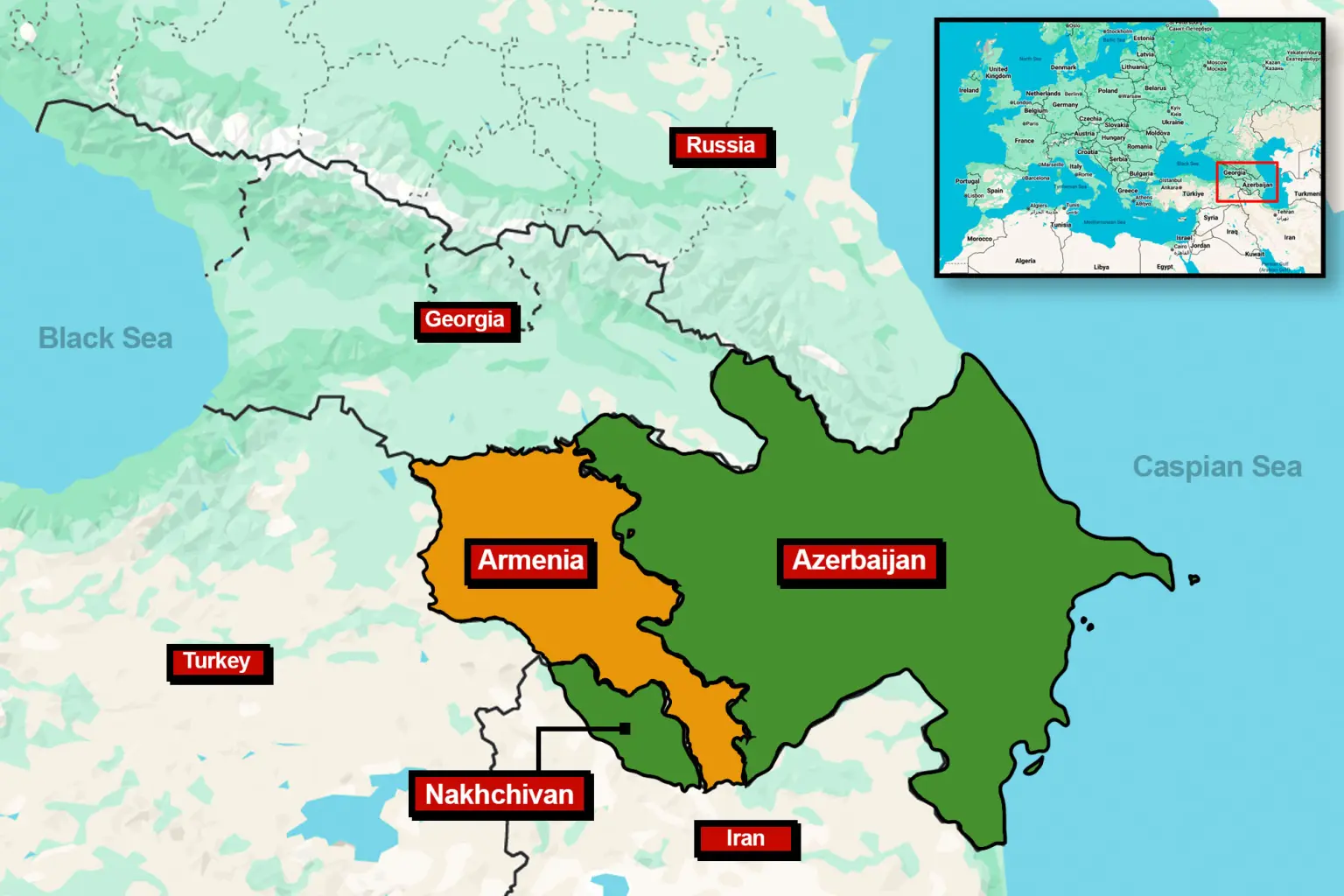
The deal calls for the creation of a 20-mile transit corridor, modestly labeled the “Trump Route for International Peace and Prosperity,” that will allow Azerbaijanis direct access to their country’s westernmost region, explained Hudson Institute senior fellow Luke Coffey.
“If you look at a map of Azerbaijan, it’s in two chunks — you have Azerbaijan proper and then there’s Nakhchivan, which is an enclave,” Coffey said. “Think of it like the United States and Alaska, but instead of having Canada in between, you have Armenia.”
President Donald Trump announced on Friday that he will meet with Russian President Vladimir Putin next week in Alaska.
Trump shared the ground-breaking statement via his Truth Social social media platform where he described the meeting as ‘highly anticipated,’ though few details were provided.
The summit would be the first face-to-face meeting between the two world leaders since Russia invaded neighboring Ukraine in 2022 under President Joe Biden.
‘The highly anticipated meeting between myself, as President of the United States of America, and President Vladimir Putin, of Russia, will take place next Friday, August 15, 2025, in the Great State of Alaska,’ Trump wrote.
‘Further details to follow. Thank you for your attention to this matter!’
The German Defence Ministry is planing to place several large defence orders intended to transform the capabilities of its ground forces, according to a new report by Reuters, with this including the acquisition of up to 3,000 Boxer armoured personnel carriers and up to 3,500 Patria infantry fighting vehicles.
The report follows the new Chancellor Friedrich Merz’s constitutional reform that paved them way to a tremendous increase in defence spending.
The German Army currently fields only approximately 700 armoured personnel carriers and infantry fighting vehicles, with the procurement of 6500 more vehicles expected to increase the size of the fleet more than tenfold.
The Army currently fields approximately 350 Boxers, a design which first entered service in 2011 and has been donated to the Ukrainain Army in significant numbers.
Germany is by far the largest operator of the class, and has already ordered 551 of the vehicles.
I am reposting this so it can get more views. I had time last night and this morning to watch the entire video. It’s well-worth the time as it will provide a very convincing way of understanding global and national economics, war and geopolitics. ABN
UPDATE: Central banks are the single greatest control mechanism of human behavior. Their power extends well beyond their relations with other banks. It determines a lot of what happens in your country. And they are not under the control of voters. So its an extrademocratic institution which happens to be the most powerful[~2:04].
The above is Carlson’s paraphrase of a major point made by Werner, who then continues by saying, ‘the founding of the bank of England, which is a private company, a central bank, was done in order to wage war. Central banking and warfare are very closely linked’.
The US Federal Reserve is no different; it is also a central bank and was founded at roughly the same time as the Bank of England in order to prepare for WW1.
Moreover, both countries established the income tax at this time. The income tax ‘allows’ government to borrow money from the central banks.
Werner presents the strongest and clearest argument I have heard that central banks start wars and profit from them; and that central banks cause asset bubbles (e.g. real estate, equities) in order to bust small banks and consolidate power.
You can jump to the ~2:04 time stamp to hear this, and if that’s all the time you have, definitely do it.
Best is to listen to the entire interview as Werner provides a great deal of important background with many other insights into money, banking, credit and how to do all of that much better than allow a central bank to have secretive, authoritative control over your country. ABN
UPDATE: Central banks are the single greatest control mechanism of human behavior. Their power extends well beyond their relations with other banks. It determines a lot of what happens in your country. And they are not under the control of voters. So its an extrademocratic institution which happens to be the most powerful[~2:04].
The above is Carlson’s paraphrase of a major point made by Werner, who then continues by saying, ‘the founding of the bank of England, which is a private company, a central bank, was done in order to wage war. Central banking and warfare are very closely linked’.
The US Federal Reserve is no different; it is also a central bank and was founded at roughly the same time as the Bank of England in order to prepare for WW1.
Moreover, both countries established the income tax at this time. The income tax ‘allows’ government to borrow money from the central banks.
Werner presents the strongest and clearest argument I have heard that central banks start wars and profit from them; and that central banks cause asset bubbles (e.g. real estate, equities) in order to bust small banks and consolidate power.
You can jump to the ~2:04 time stamp to hear this, and if that’s all the time you have, definitely do it.
Best is to listen to the entire interview as Werner provides a great deal of important background with many other insights into money, banking, credit and how to do all of that much better than allow a central bank to have secretive, authoritative control over your country. ABN
The insane level of cope since Sunday’s EU Trade deal announcement has been hilarious to watch… from the US haters who believed their own bullshit about American weakness as well as from the Europhiles who somehow really did think the US needs the EU to prosper.
It seems the counter narrative that has been hastily ginned up is, “This will never pass the EU Parliament…so it’s all bullshit from Trump,” however is the absolute worst.
Because, let’s think this through shall we…
1) Von der Satan just barely passed a vote of No Confidence earlier in the month. She’s already damaged goods.
2) Trump has the goods on EU and UK malfeasance involving the 2016, 2020 and 2022 US elections, and he sent @DNIGabbard over to London before dropping the bombs on them. What was presented is likely a lot bigger than just rigging our elections, think Pfizer shots, biolabs, NGO money laundering in Ukraine and more.
3) If the EU parliament goes against Von der Fuhrer over this deal, then that weakens the EU even further as countries who can get a better deal from Trump individually will do so.
4) Parliament will be a mess as an aftershock. Old coalitions held together through blackmail, arm-twisting, threats to withhold funding, etc. will splinter.
5) Chaos in Brussels will be met with across the board selling of EU debt as the only hope the market has right now is the promise of them spending “trillions” on defense. This is why the DAX is up 21% in 2025, and trading at near all-time-highs both in nominal and valuation terms (P/E ~19).
For these reasons (and more), the whole talking point about parliament is a non-starter. None of the feckless Eurocrats who hold marginal power in that chamber will do anything other than froth at the mouth like @guyverhofstadt.
But, they will always, in the end, vote for more of what got them here.
Now, if you want to talk why this deal may have a silver lining for the EU, it would be this… that Trump used their desperation for 1) a deal, 2) his support for their insane war in Ukraine and 3) to collapse their economy to consolidate power in Brussels to get everything he wanted…
He can then do what he did today, issue a stronger message to Russia to end the conflict on less than perfect terms for them while he guts their biggest threat (the EU) through reversing the capital flow back to the US.
There may still have to be a NATO attempt in Ukraine which will be bloody for everyone if it happens. But it may be the only way for the people in Europe to be shocked out of their complacency.
First Trump crushes their EU leadership, then add in a couple hundred thousand dead in Ukraine… that’ll leave a mark politically.
The German government has submitted a formal Letter of Request to the United States to procure the Typhon mobile missile system, as confirmed by German Defence Minister Boris Pistorius during an official visit to Washington.
“The range of these weapons systems is significantly greater than what we currently have in Europe,” the minister stated, adding that “with them, Germany can increase its own defence capabilities and significantly improve its deterrent capability – but also that of Europe.”
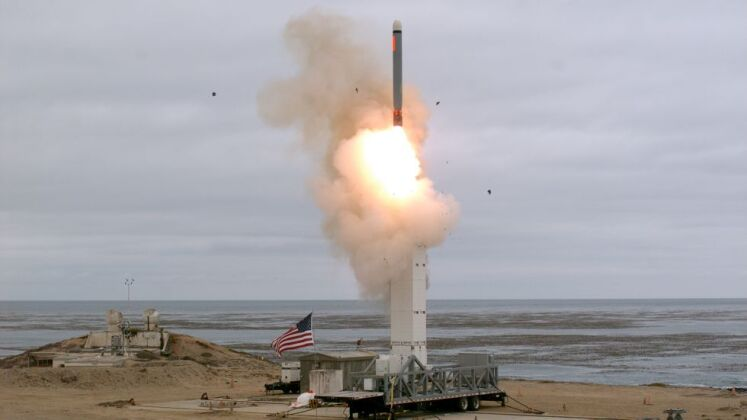
The planned procurement of the systems occurs at a time when Germany has played an increasingly assertive role within NATO both in Eastern Europe and beyond in the Pacific and the Middle East, while investing far more heavily in its armed forces. The Typhon system can employ both the Tomahawk cruise missile, which has a 1600 kilometre range, and the SM-6 multi-purpose missile which can be used for both ballistic missile defence and for medium-range anti shipping.
The German Defence Ministry is reportedly primarily interest in the long range strike capabilities provided by the Tomahawk.
The Tomahawk Block IV cruise missile’s 1600 kilometre range allows Typhon units to strike targets in the Russian capital Moscow from German territory, with Russia considered the primary target of such a procurement plan.
Germany’s offensive options against Russia have been expanded considerably, with the German Army on May 22 having inaugurated the 45th Armoured Brigade stationed in Vilnius, Lithuania. The unit is expected to provide an elite forward deployed mechanised warfare capability on the territory of the former USSR, located just 150 kilometres from the Belarusian capital Minsk, and less than 800 kilometres from Moscow.



 American Buddhist Net
