Russia’s Orthodox Church on Tuesday condemned a vote by Ukrainian lawmakers to ban the Ukrainian Orthodox Church, which many believe to be aligned with Moscow.
“This is an unlawful act that is the grossest violation of the basic principles of freedom of conscience and human rights,” Russian Orthodox Church spokesman Vladimir Legoida wrote on Telegram.
On Tuesday, Ukraine’s Verkhovna Rada passed a bill outlawing religious organizations with links to Russia. That ban would include the Ukrainian Orthodox Church, which lawmakers accuse of maintaining links with Moscow.
Legoida said the bill creates “a legal basis for the total liquidation of the parishes of the canonical Ukrainian Orthodox Church — the religious community that unites the majority of Ukrainians.”
The state of Maine’s new laws barring government officials from using or purchasing Chinese hardware and other technologies is officially in effect.
The new requirements from the State of Maine Office of Information Technology (Maine IT), passed this year with bipartisan support from the state legislature, went into effect last week.
The office published the first version of a list of information technology products, companies, and websites originating in foreign adversary nations, such as China, from which Maine will no purchase goods or services.
Prohibited Technologies List:
Dahua Technology Company
Huawei Technologies Company
Hangzhou Hikvision Digital Technology Company
Hytera Communications Corporation
SZ DJI Technology Company
ZTE Corporation
China Mobile International USA Inc.
China Telecom (Americas) Corp.
Pacific Networks Corp and its wholly-owned subsidiary ComNet (USA) LLC
China Unicom (Americas) Operations Limited
AO Kaspersky LabKaspersky Lab, Inc.
TikTok, or any successor application or service developed or provided by ByteDance Limited, or an entity owned by ByteDance Limited
Three days ago, in the aftermath of the WSJ report seeking to radically shift the narrative over the Nordstream sabotage, where instead of the CIA being blamed for the explosion of the critical gas pipeline from Russia to Europe, unnamed “intelligence” sources forged on with a hilarious script according to which a top Ukraine general (operating initially under the instructions of Zelensky but then going rogue wen Z got “cold feet”) was responsible for coordinating the sabotage using a handful of rank amateurs who somehow managed to sneak to the bottom of the Baltic sea and conduct an unprecedented military operation, we said that – no matter the laughable veracity of the report – relations between Germany and Ukraine are “about to turn ugly”, and we asked why this story is coming out just now?
We didn’t have long to wait to get the answer: as German media reports, this U-turn in the narrative (which according to some meant that NATO should now unleash its full military power against…. Ukraine, which had single-handedly attacked German assets by blowing up the Nordstream) was meant to soften the blow from Germany’s decision to finally cut off Ukraine’s – and Zelensky’s – unprecedented grift.
According to a Saturday report in the Frankfurter Allgemeine Zeitung (FAZ), the German government will stop new military aid to Ukraine as part of the ruling coalition’s plan to reduce spending. The report, which cited non-public documents and emails as well as discussions with unnamed sources, goes on to note that the moratorium on new assistance – which is already in effect – will affect new requests for funding, not previously approved aid.
Dozens of Israeli settlers surged into a Palestinian village in the West Bank yesterday, burning cars and killing at least one person, Israeli authorities admitted yesterday.
The Palestinian health ministry said one 23-year-old man was killed and another suffered a critical gunshot wound in the chest when Israeli settlers opened fire in the village of Jit, the latest in a series of attacks by violent settlers in the West Bank.
Shocking footage circulated on social media showed houses and cars smouldering after being set alight by Molotov cocktails thrown by the Israeli settlers.
The fatal attacks came hours after an Israeli airstrike in the West Bank killed two other young Palestinians.
More than 600 Palestinians in the West Bank have been killed since October 7, most of whom died as a result of incursions by Israeli settlers.
Given that 10/7 was a MIHOP attack, what we have been seeing ever since is Israeli tribalism, the cleanest moral explanation for which is it is based on their need to honor Israelis killed by the IDF both directly and indirectly on 10/7. Less clean is their perceived need to stick together and/or avoid the embarrassment of openly admitting the truth. There was a short pause after 10/7 as the tribe processed the event and absorbed its moral options. Then the savagery doubled and redoubled into wholesale slaughter and banishment of all Palestinians, while also provoking a regional war, even WW3. This illustrates the moral agony of being human. And also the moral agony of tribalism. Westerners who cannot see this with clarity should reflect on how much they have lost touch with human origins, which are manifestly tribal. Israelis or Jews are just one tribe in this world. Almost the entire rest of the world is tribal except the West. Digital babies, if we make it that far, will maybe work the tribal embolism out of human civilization, but the urge is so strong even that may fail and make it worse. ABN
‘Zelensky signed a law that allows Ukrainians to remove organs without the consent of the deceased. Zelensky signed this law. Ukrainian soldiers are literally more profitable dead than alive for the Zelensky government, because they can sell these organs and make a lot of money on soldiers. Because on the black market, organs are very expensive.’
Moreover, Ukraine has been denuded of one-half of its population. Most of its farmland is now owned by large Western investment funds, which will also fund the rebuilding of Ukrainian cities and infrastructure. Before that happens, at some point during or after the looming major war in the Middle East, if not WW3, Israelis will leave Israel and move to Ukraine under one pretext or another. What percentage of Ukrainian organs now being pilfered from deceased military are going to Israel? Why is anyone in Europe supporting the Ukraine War while also clamoring to do the same to Russia? This is not in European or American interests. It is in the interests only of globalists seeking control of, first, the entire West, then the world. What we are seeing in Ukraine (and Gaza) today will happen not only to Russia but also Europe if the globalists have their way. ABN
Roughly 40 percent of Ukraine’s electricity imports pass through the Ukrainian-Hungarian border, which means Hungary is not entirely powerless in the face of a Ukrainian blockade on oil supplies. In fact, Hungary may be forced to cut electricity to its neighbor if push comes to shove.
Olivér Hortay, head of Századvég’s climate and energy policy department, noted that Ukraine’s biggest energy problem is the electricity system. Since the start of the war, the country has lost three-quarters of its own electricity generation capacity, leading to Ukrainians having to deal with prolonged blackouts and cuts to production due to a lack of electricity.
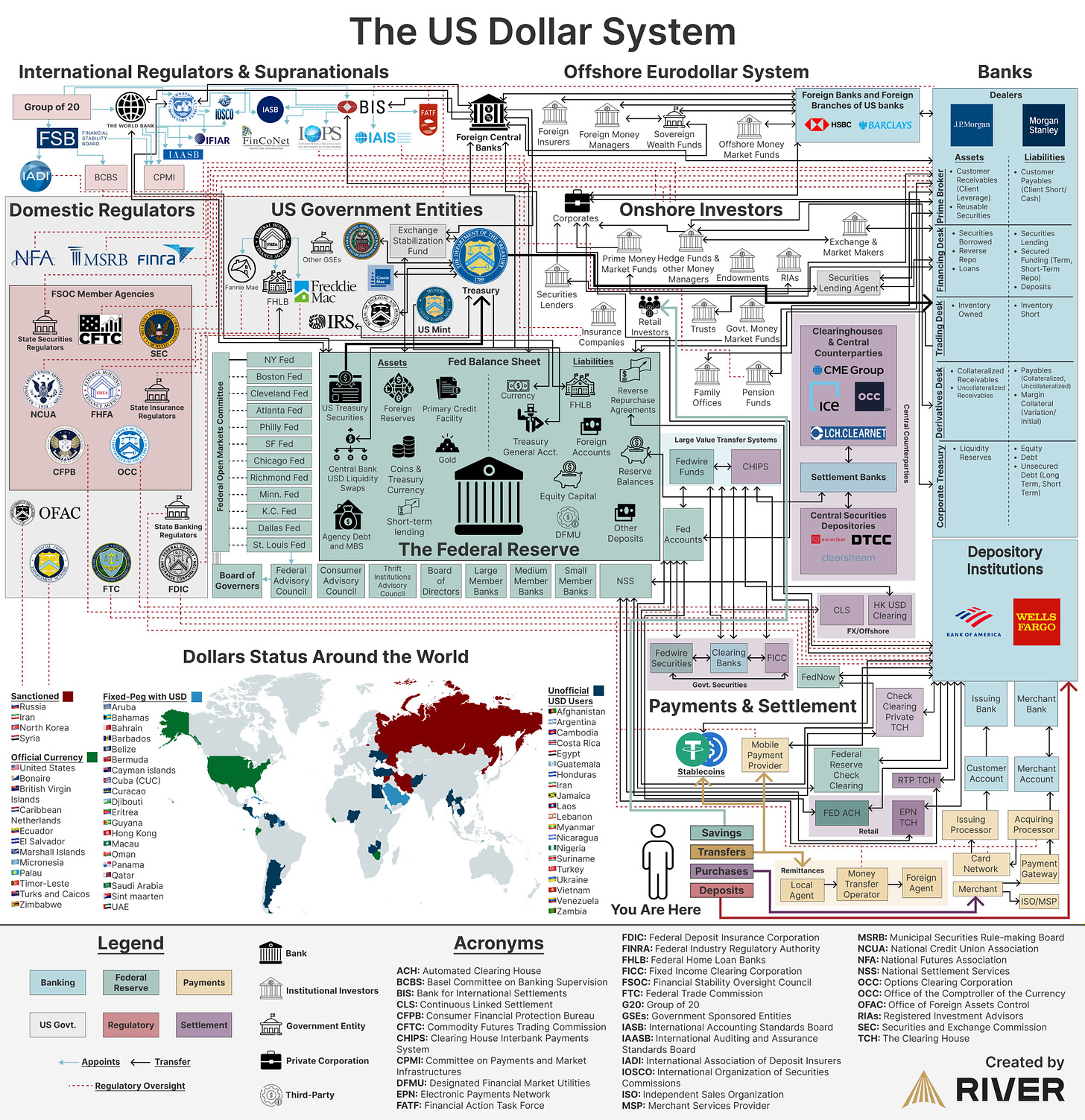
In any alternative media space, you are sure to find much talk about US dollar dominance, as well as optimistic forecasts of its imminent decline. This is also true in the radical right, where nationalists pine after an end to US imperial hegemony and the rise of a more multipolar world.
Often though, this hope is little more than wishful thinking, with unlikely challengers to US power much overhyped. This is especially true concerning US dollar hegemony, a topic that is ripe for misunderstanding at the best of times.
It’s important to keep in mind that people have been forecasting the decline of the dollar ever since it attained its status as global reserve currency. As far back as 1960, the economist Robert Triffin was warning of an “imminent threat to the once-mighty US dollar”. Understanding the reason for Triffin’s pessimism, and why it turned out to be misguided, is crucial to understanding today’s global monetary system and the enduring dominance of the dollar.
Triffin’s concerns were more informed than most: his “Triffin dilemma”, as it came to be known, highlighted an inherent problem with a country’s national currency also serving as the reserve currency of choice for the international system. The country supplying the world with the reserve currency has to produce a surplus of money, thereby creating a trade deficit. In other words, the supplier country needs to be continually losing money to fill up the reserves of other countries and make the currency a low-risk option to hold as a reserve. But if the supplier country becomes too indebted to the rest of the world in this scenario, then its currency ceases to be such a low-risk asset, and that’s the dilemma.
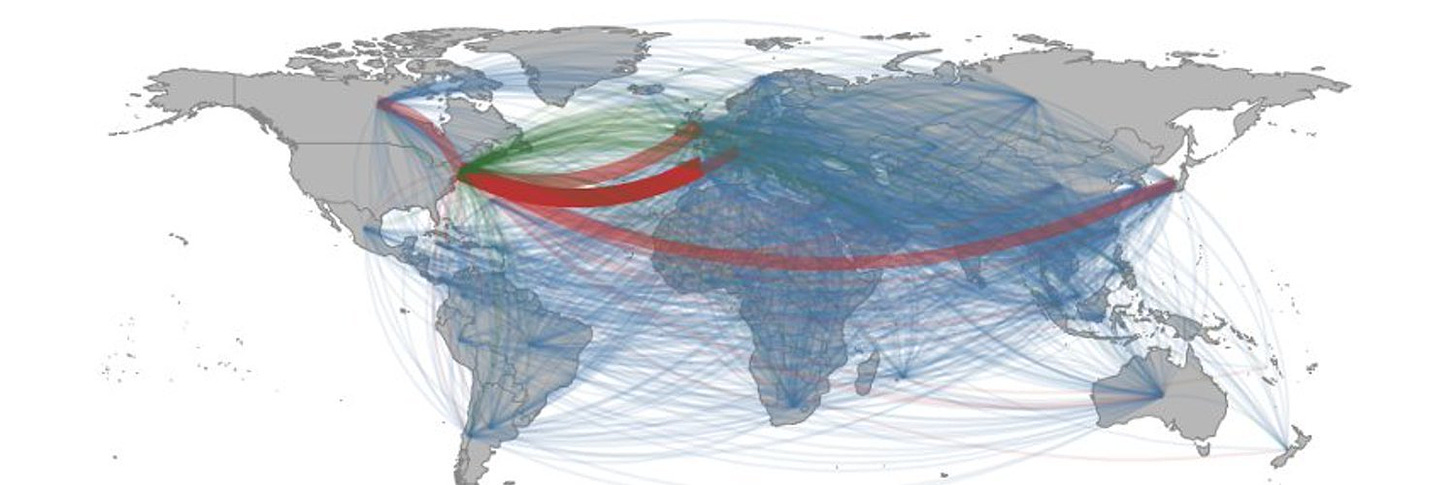
…For all the scare-mongering from libertarians about “Fed money-printing”, it is international bankers — outside the regulations of the US Federal Reserve — who are the ones in control of creating the US dollar supply on international markets. Big commercial banks create Eurodollars using the offshore system without the backing of the Federal Reserve. This is done through fractional lending, where dollar deposits are used as collateral to loan out a higher amount of dollars.
China is constructing a secret military base in Tajikistan, satellite images reveal, as it seizes on the rising threat to security posed by Taliban-ruled Afghanistan.
Beijing has been building the base in one of the most remote corners of the world for almost a decade. China signed a security pact with Tajikistan in 2016.
The facility, carved out of mountains that rise 13,000ft high, has look-out towers and troops from both countries, which now hold regular joint military drills shown on Chinese state media.
Neither government has publicly acknowledged the existence of the base, which extends a former Soviet outpost. But the images show a steady pace of construction, including access roads to the base.
Concern is rising that Beijing plans to do the same in neighbouring nations, as it boosts relations with Tajikistan at a time when Russia, its usual economic and security partner, is embroiled in its invasion of Ukraine.
On July 4, president Xi Jinping cemented growing ties with Tajikistan in his third state visit.
“The situation is that of a vacuum, and the vacuum is filled by China,” said Parviz Mollojonov, a political scientist and acting country director for International Alert, a UK-based NGO that promotes peace.
“Since the deterioration of the situation in Afghanistan, China uses the concern of the Tajik government to build in the security sector.”
Central policy and money laundering have created networks that aid traffickers.
A mixture of unintended consequences and indifference has left China playing a significant role in America’s fentanyl crisis. This has become a point of heated contention between Beijing and Washington. U.S. politicians accuse China of deliberately stoking the U.S. drug crisis; China responds that it has done its part and the United States is scapegoating.
But the actual story of Chinese regulation is far more complex and messy—and shows how powerful the profit motive is and how regulatory effects can have unintended consequences. The Chinese government regulates the production and distribution of fentanyl and its precursor chemicals, but stopping the trade is a challenge. Policies aimed at boosting China’s chemical and pharmaceutical development and exports have instead created a vast cottage industry of hundreds of thousands of small chemical plants and active pharmaceutical ingredient (API) manufacturers—and with it, a vast money laundering industry that takes advantage of the advanced real-time settlement capabilities of China’s banking system.
A U.S. Customs and Border Protection (CBP) officer finds pills in a parcel at John F. Kennedy Airport’s postal service facility in New York on June 24, 2019. Dozens of law enforcement officers sift through packages, looking for fentanyl. JOHANNES EISELE/AFP VIA GETTY IMAGES
Understanding how to control fentanyl requires understanding how to make it. Fentanyl has many variants with similar sounding names that are chemically distinct but cause similar reactions in the body; the variants are merely different icing on the same cake.
Since its creation in 1959, researchers have developed at least three different manufacturing methods for fentanyl, each relying on different precursor chemicals as part of the process. Criminals have continued to adapt these processes to use a broader set of more readily available precursor chemicals—like using margarine because you’re all out of butter. The potential manufacturing methods are limitless. Criminals seeking to profit from fentanyl and governments seeking to control its supply are locked in a never-ending competition, with each new countermeasure spurring further innovation to circumvent it.
For many years, Chinese regulators attempting to uphold the country’s traditionally strict anti-drug policies faced a challenge as new variants of fentanyl emerged faster than they could be administratively added to the list of controlled substances. Between 2012 and 2015, only six new fentanyl variants emerged, but there were 63 new variants in 2016 alone. In response, the Chinese government placed all variants of fentanyl on the controlled substances list as of May 2019.
As the AI market matures, there is a stark realization in public sectors elsewhere that this is America’s AI world.
You can just picture Sam, Elon, Satya, and Jensen in a Silicon Valley karaoke joint somewhere belting out that ‘80s classic: We are the world.
While governments try to wrap their heads around how to legislate for the Brave New World the US tech industry has thrust upon them, they’re also jostling to grow domestic AI industries. As the AI market matures, there is a stark realization in public sectors elsewhere that this is America’s AI world — the rest of us just live here.
If You Can’t Beat ‘Em, Incentivize ‘Em
Reining in Big Tech means different things in different countries, of course. In China, the Great Firewall is being maintained, more or less. Starting July 9, developer access to ChatGPT will be cut off in China, and domestic rivals are flocking to fill the Sam Altman vacuum. Slightly further down the sliding scale of governmental control is the European Union, which passed the AI Act in March and recently told Meta to stop scraping people’s Facebook data (oh, Meta!) to train its large language models. But EU member states are keen to set themselves up as an AI hub — especially France, which CNBC reports is vying with ex-EU member the UK to attract AI investment.
North Korea has pledged to send military personnel to Ukraine within a month to support Putin‘s war-weary forces as both sides struggle to make a decisive breakthrough.
Pyongyang will take an unprecedented step in sending construction and engineering forces to occupied territories of Ukraine as early as July to assist in rebuilding work, South Korea‘s TV Chosun reported earlier, citing a government official.
The rare vow of foreign support follows president Vladimir Putin’s official state visit to North Korea earlier this month – the first in almost a quarter of a century – which culminated in the signing of a so-called defence pact on June 19.
The treaty binds its signatories to providing ‘military and other assistance with all means in its possession without delay’ should either find itself ‘put in a state of war by an armed invasion’.
North Korea is believed to have already supplied Russia with about 1.6mn artillery shells between August and January as Moscow continues to hammer populated areas of Ukraine and tries to make decisive gains in the north.
As polarisation hardens, Pyongyang officials criticised the United States on Monday for its expanding military assistance to Ukraine and dispatch of an aircraft carrier to South Korea, warning it could provoke a ‘new world war’, according to state media.
WASHINGTON — Gen. Eric Smith, commandant of the U.S. Marine Corps, told Nikkei on Friday that a new unit established in November on the Japanese island of Okinawa is designed to “counter PRC [the People’s Republic of China] aggression” in order to protect Japan and others in geopolitically sensitive areas.
The U.S. military has reorganized its forces stationed in Japan, creating a new unit called the Marine Littoral Regiment (MLR), which is meant to come to the defense of remote islands quickly in the event of an attack.
“It’s designed to provide long-range sensing and long-range fire, using mobile missile batteries that are capable of striking adversaries’ ships in the strategic sea lines of communication,” Smith said in an interview in Washington, adding the unit’s purpose is “to protect the Japanese home islands, in order to protect the Philippines, in order to protect [South] Korea.”
The world is on the brink of a catastrophe, UN Secretary General Antonio Guterres said on Friday, pointing to the risks of a potential devastating conflict between Israel and Hezbollah.
The head of the Shia militia, Hassan Nasrallah, warned on Wednesday that Hezbollah is prepared for a full-scale conflict with Israel and could invade the Jewish state’s northern territories in case of further escalation.
The statement came after one of the group’s senior commanders, Hajj Sami Taleb Abdullah, was killed in an Israeli strike on southern Lebanon last week.
“One rash move – one miscalculation – could trigger a catastrophe that goes far beyond the border, and frankly, beyond imagination,” the UN secretary general told reporters at a press conference, adding that “the world cannot afford Lebanon to become another Gaza.” He called on both sides to “urgently recommit” to peace.


 American Buddhist Net