Everyone is reading the Supreme Court’s Roundup decision as a fight about glyphosate. Much of MAHA called it a betrayal. The more I studied the opinion, the more I concluded it is not really about glyphosate at all.
The justices did not weigh epidemiology. They did not rule on whether glyphosate causes cancer. They did not pick IARC or EPA as the better science. They answered a narrow legal question with enormous consequences.
The question: when EPA approves a pesticide label under FIFRA, can a state jury later decide the manufacturer should have warned more strongly? The Court’s answer was largely no. EPA-approved labels now preempt most state failure-to-warn claims.
Why does that reach beyond Roundup? State failure-to-warn lawsuits have been one of the few mechanisms that surface emerging risk. Tobacco. Asbestos. Lead paint. PFAS. Discovery forced disclosure. Experts testified under oath. Regulators defended their conclusions in open court.
That pathway just narrowed dramatically. When an EPA label preempts the claim, EPA becomes the gatekeeper for deciding when evolving science justifies a new warning. That authority no longer rests with juries hearing new evidence. It rests with one federal agency.
So here is the real question, and it is a constitutional one: Can Congress create a system in which a single federal agency becomes the exclusive gatekeeper for whether evolving scientific evidence ever reaches an American jury?
This is hard to square with two decisions constitutional conservatives celebrated. Dobbs returned power to the states. Loper Bright said courts, not agencies, interpret statutes. Here, an agency’s determination became the basis for closing the courthouse door.
Note who stood where. The Biden administration did not embrace the broad preemption argument. The Trump administration did. Ironically, the Biden position sat closer to conservative legal principles: preserve juries, respect state common law, do not expand the administrative state.
The decision assumes EPA will revisit labels as science evolves. Look at the record. Glyphosate entered review in 2009. EPA reaffirmed “not likely carcinogenic” in 2020. The Ninth Circuit faulted that analysis. EPA withdrew it. More than fifteen years in, still no final determination.
Meanwhile the science moved past cancer. Researchers are now studying endocrine disruption, the gut microbiome, metabolic disease, reproductive and developmental toxicity, neuroinflammation, and cumulative exposure to many chemicals at once. The questions themselves have changed.
Freeze the courts to EPA’s pace and you freeze more than yesterday’s conclusions. You freeze yesterday’s understanding of which questions even deserve investigation. That is a dangerous place for science and for public health.
One more point. If EPA’s science now forecloses jury claims, EPA’s independence is no longer just a regulatory issue. It is a civil-justice issue. The FDA has faced years of scrutiny over capture and the revolving door. EPA has largely escaped it. This decision should end that.
This case is not really about glyphosate. It is about who decides when science has changed, and whether Americans keep access to the courts when new evidence emerges.
In a nutshell, the court’s decision puts all power to regulate (more than just) glyphosate in one agency — the EPA. This obviously risks the EPA becoming yet another captured agency. ABN
As DMSO’s therapeutic properties address the root causes of a wide range of diseases, in addition to them alleviating challenging neurological disorders, they also address many challenging disorders of the reproductive tract faced by both men and women, that, once again, medicine consistently falls short in addressing, and since publishing this series, I’ve received an astonishing number of stories from readers whose issues resolved thanks to DMSO which match what’s reported in the literature (e.g., infertility, menstrual issues including cramps or longstanding complications from childbirth). Recently, I finished compiling all of the studies and reader reports (that can be read here), which shows DMSO heals:
•Prostate issues such as BPH (which many readers reported improving), prostate stones, prostatitis (including many cases that did not respond to conventional therapies), and prostate cancer—particularly when used in conjunction with another off-patent therapy (along with mitigating complications from cancer).
•Testicular injuries (e.g., protecting them from radiation or blood loss due to torsions), epididymitis improving fertility (and providing a means to create a safe reversible male birth control) and scrotal injuries.
•Erectile dysfunction, genital infections (e.g., warts or herpes), Peyronie’s disease, priapisms (blood stuck in the penis producing erections over 4 hours, which, after 24 hours often permanently damage the penis), pelvic floor dysfunction, and sexual dysfunction resulting from other genitourinary issues (e.g., prostatitis).
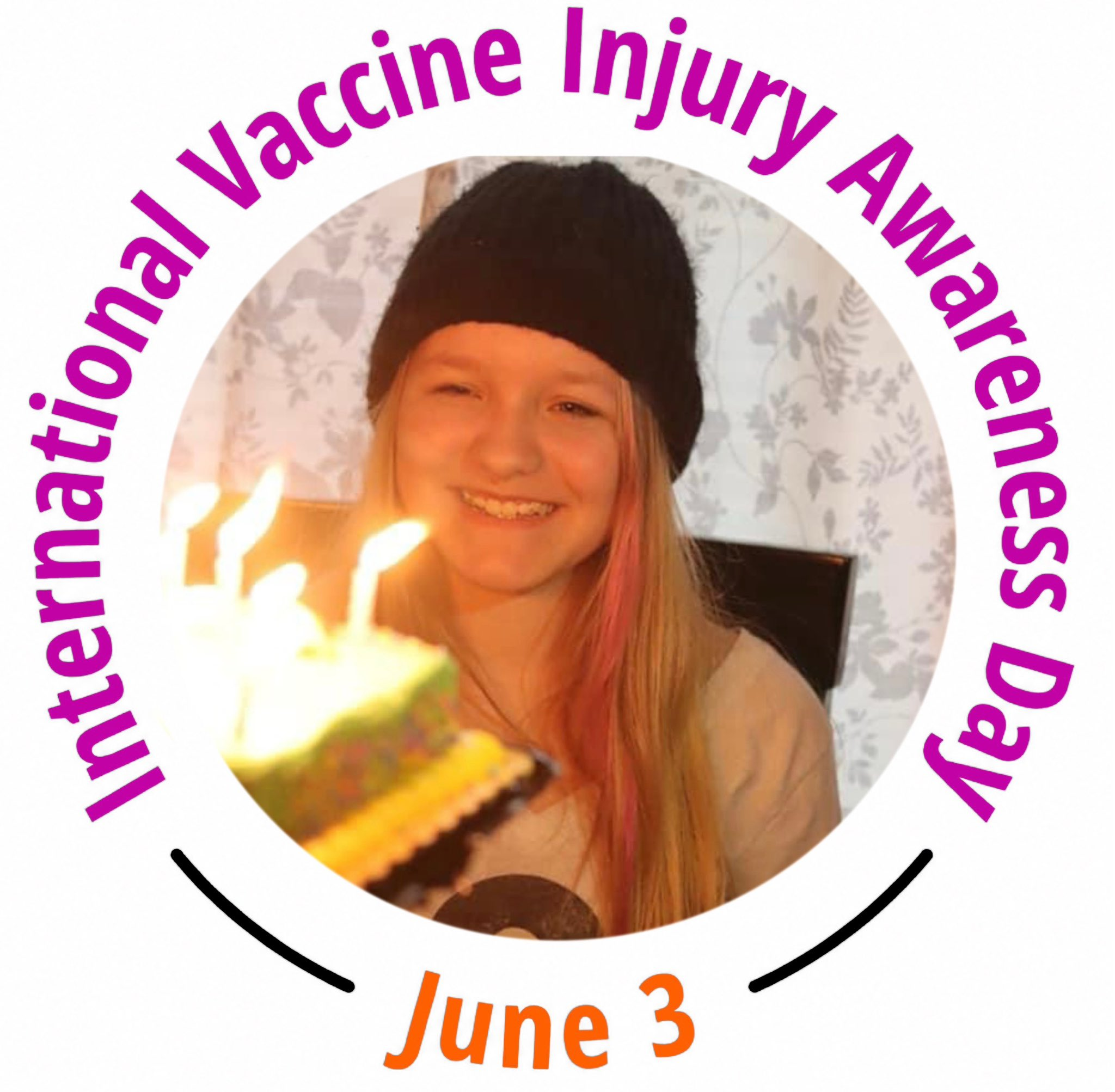
Merck & Co. has reached an agreement to pay $50 million to settle hundreds of Gardasil lawsuits, which raise allegations that the controversial HPV vaccine’s side effects left young adults with serious neurological and other adverse health problems.
The Gardasil settlement was reported by Bloomberg News on June 4, indicating that the deal was confirmed in an emailed statement from Merck officials. Following years of litigation, Merck claims that the payouts should resolve all lawsuits over the HPV vaccine, except for one remaining case.
First introduced in 2006, Gardasil is a widely used vaccine administered to young girls and boys for the prevention of human papillomavirus, or HPV, infections, which can cause cervical cancer and other forms of cancer. HPV is sexually transmitted, and the vaccine has been promoted as an important tool for preventing HPV-related cancers later in life.
In 2022, the New England Journal of Medicine published the results of the NordICC trial — the first randomised controlled study of colonoscopy screening ever conducted. Over 84,000 people were followed for ten years. The trial found an 18% reduction in cancer incidence and no significant reduction in cancer deaths. To prevent a single case of colorectal cancer, 455 people had to be invited for screening. To prevent a single death, the numbers were statistically indistinguishable from zero.¹
This is the pattern.
Across the major screening programmes — mammography, PSA, Pap, colonoscopy, lung CT — when the question is whether the screened population actually outlives the unscreened population, the benefit largely disappears.² The statistic the programmes advertise is disease-specific mortality: deaths from the disease the test is looking for. The statistic they bury is all-cause mortality: whether the screened group, taken as a whole, lives longer. The two numbers are not the same. You can reduce deaths from one disease while total deaths remain flat — because treatment has killed as many people as the disease prevented, or because the disease you found was never going to kill anyone.²
The screened do not live longer than the unscreened. They are more likely to spend their remaining years monitored, biopsied, cut, and medicated for conditions that would not have harmed them. This essay catalogues twelve tests that produce that conversion, organised by the four mechanisms through which it is achieved.
…While dementia, which affects 7 million Americans, worsens over time, doctors in Brazil, where the woman lives, sought to find out if the hallucinogen psilocybin – found in ‘magic mushrooms’ – could stall her decline.
Doctors writing in a medical journal said the woman was given 5g of psilocybin – a large dose sometimes nicknamed a ‘heroic dose’ – in a supervised session, which triggered profuse sweating and a drop in body temperature before she entered a long sleep-like state.
But after about 19 hours, the woman began having conversations on her own, which lasted several hours.
Over the next few days, she was also able to control her bladder, dress and walk by herself and hold eye contact and smile at her loved ones.
A month later, the woman was given a second 3g dose of psilocybin. Instead of falling asleep, she was reportedly conversational and expressive the whole time, describing emotional scenes like surfing with her son on a peaceful island.
The woman also spontaneously told her healthcare team, ‘It is pleasant to come here.’
‘Facial expressivity, emotional reciprocity, spontaneous humor, and gait agility appeared markedly improved,’ doctors from the University of Sao Paulo in Brazil wrote in the journal Frontiers in Neuroscience.
There were no adverse effects, which can include agitation and cardiovascular instability, such as a high heart rate or blood pressure.
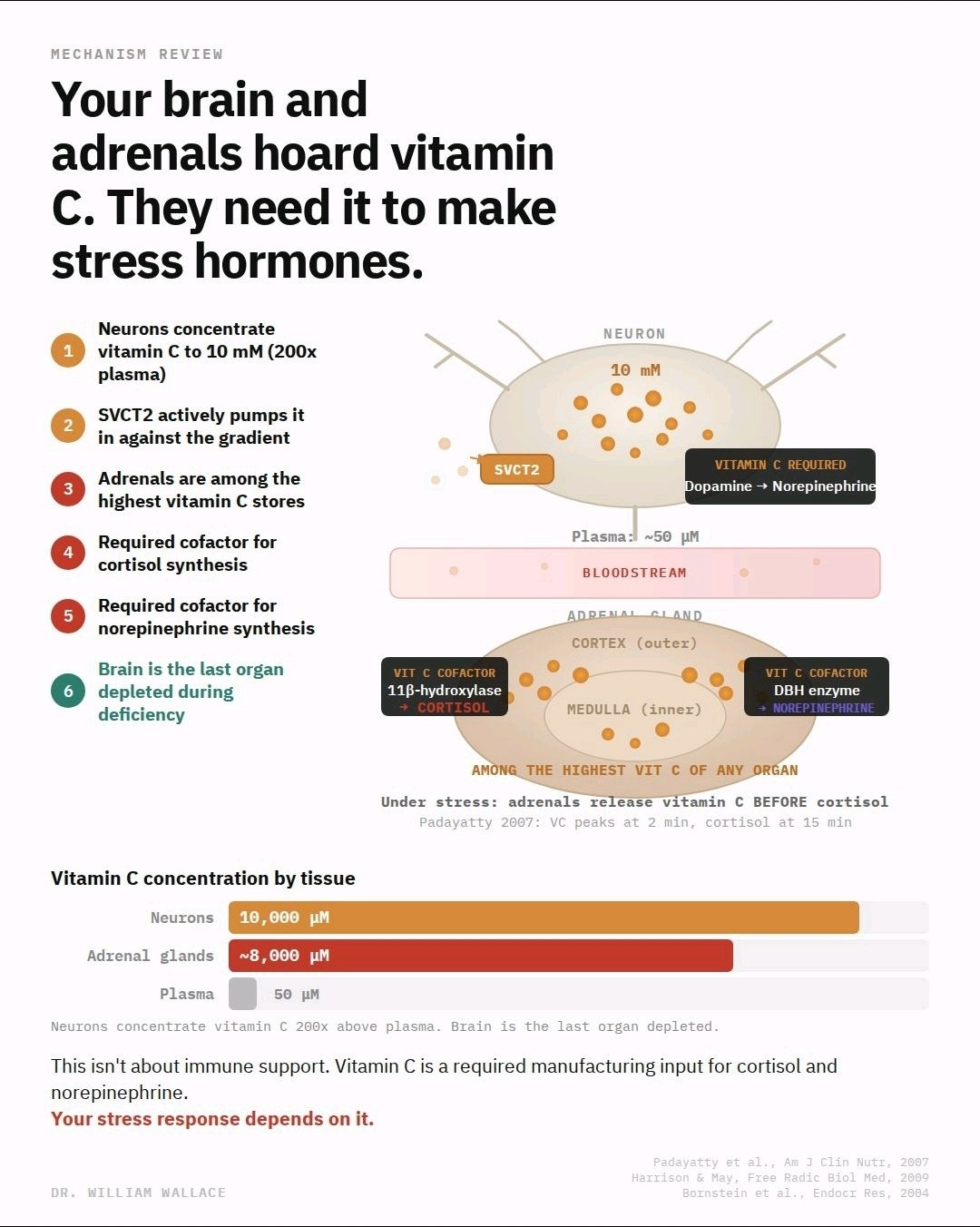
Neurons accumulate vitamin C to approximately 10 mM intracellularly, roughly 200 times the concentration found in plasma. This gradient is maintained by SVCT2, a sodium-dependent transporter expressed almost exclusively in neurons in vivo. The brain is also the last organ to be depleted during deficiency. In guinea pigs (which, like humans, cannot synthesize vitamin C), the brain retained 24% of its vitamin C stores after 14 days of zero intake, while the adrenal glands dropped to 4% and the spleen to 3%. The body prioritizes the brain above everything else.
The adrenal glands are the other major site of accumulation. Vitamin C is a required cofactor for two enzymes central to the stress response: 11β-hydroxylase, which catalyzes the final step of cortisol synthesis in the adrenal cortex, and dopamine β-hydroxylase, which converts dopamine to norepinephrine in the adrenal medulla.
Padayatty et al. (2007) measured this directly in 26 human patients. After ACTH administration, adrenal vein vitamin C concentration surged from 39 to 162 μmol/L within 2 minutes, while cortisol did not peak until 15 minutes. The adrenals released vitamin C before they released cortisol. This sequence suggests ascorbate must be mobilized for steroidogenesis to proceed.
This doesn’t mean mega-dosing vitamin C will improve your stress response. Most of this work describes what happens during deficiency or acute demand, not supplementation above adequate intake. But it does reframe what vitamin C actually does in your body: it’s not primarily an antioxidant or immune molecule. It’s a required manufacturing input for cortisol and catecholamines, concentrated exactly where those hormones are made.
Harrison & May, Free Radic Biol Med, 2009. Padayatty et al., Am J Clin Nutr, 2007. Bornstein et al., Endocrine Research, 2004.
Trump just signed an executive order to shrink the U.S. hyper-vaccination schedule by ~55 doses.
A new study indicates that this could prevent ~35,000 autism cases per year.
Across 12 countries, the study found: −1% infant vaccine load → −0.47% autism rate.
The U.S. is stuck in the CRITICAL RISK ZONE with Canada, Australia, Japan, South Korea, and Singapore—the highest vaccine loads and highest autism rates.
We should be in the PROTECTIVE ZONE with countries like Norway, Finland, Denmark, and Sweden — lower infant vaccine intensity and far lower autism rates.
HHS had already begun shrinking the childhood vaccine schedule months ago — but rogue Judge Brian Murphy blocked the changes.
This new executive order should help put the vaccine overhaul back on track despite radical judges standing in the way.
AUGUSTA, Maine – Tickborne illnesses are rising sharply across Maine and much of the United States, with state health officials reporting record numbers of Lyme disease, anaplasmosis and babesiosis cases as residents face increasing exposure close to home.
The Maine Center for Disease Control and Prevention reported 4,257 cases of Lyme disease in 2025, up from 3,218 cases in 2024. The increase represents a jump of more than 1,000 reported cases, or approximately 32 percent, in a single year.
Other tickborne illnesses also reached record levels in Maine last year. Reported cases of anaplasmosis rose from 1,284 in 2024 to 1,604 in 2025, an increase of nearly 25 percent. Babesiosis cases increased from 309 to 352, a rise of nearly 14 percent.
Choline is one of the few nutrients where the US population is genuinely under-consuming by intake. NHANES data show only 6.6% of US adults aged 19 and above meet the Adequate Intake (Wallace and Fulgoni, J Am Coll Nutr 2016). The shortfall is even larger in adolescents.
That matters because choline is not optional metabolism. It is the precursor for phosphatidylcholine (the major phospholipid in every cell membrane and the carrier that packages VLDL out of the liver), for the acetylcholine that runs cholinergic neurotransmission, and for betaine, a methyl donor that backstops the folate-dependent methylation system.
The trolls went mental over this section. I even made a video to counter their nonsense. They even tried to argue that breastmilk isn’t really all that good for babies. Lol. — Suzanne Humphries
…One of the most widely recognized side effects of vaccination is neurological damage (particularly to the cranial nerves and brain), and prior to the censorship which took over our medical journals, as I showed in this article, reports of vaccine brain and nerve injuries (e.g., encephalitis) were extensively reported throughout the medical literature—including many identical to what are seen in modern day autism.
In turn, what many do not know, is that it used to be widely recognized that vaccines could make you “mentally retarded” or “severely retarded.”



 American Buddhist Net