

Religions are concept-ularies, vocabularies, tools to speak about spiritual subjects. In this sense, almost all religions are good and say many of the same things.

I read a passage in Epictetus’ Discourses that closely touches Buddhist thinking (as a lot of Stoicism does). He said that friendships based on ‘appearances’ (Buddhist form) are always liable to disintegration. But friendships based on a will that is good and strong can be fully relied on. ‘Appearances’ in Epictetus means external markers like status, money, looks, tribal or familial relations, etc.

The Buddha said that it takes ‘long association’ with someone to fully know them. I am not aware of a Buddhist emphasis on ‘the will’ in the way Epictetus emphasizes that word, but Buddhism does encourage Right Views, Thoughts, Speech, and Action. And it does have a concept that all sentient beings are capable of responding to the Tathagata, being attracted to the Tathagata, the enlightened logos.

I like the word logos because it bridges many apparent gaps between religions. Buddhism is 2,500 years old. The Buddha never asked to be worshipped and asked that no images be made of him. He also asked that his words never be written down and especially not in Sanskrit.

He did not want the deep power of his enlightenment to become a narrow doctrine, a sacred text that would be treated as infallible even when no one remembered any longer what he had actually meant. Buddhism is self-defined as a mind-to-mind teaching, meaning a teacher or ‘good friend’ who explains the Dharma must be sure the explanation has fully penetrated the mind of the person being taught.

This is one reason it is impossible to really get Buddhism from reading alone, though reading is good. I had two very close ‘good friends‘ who basically taught me everything I know about the part of the Dharma that is conveyed through words and concepts.

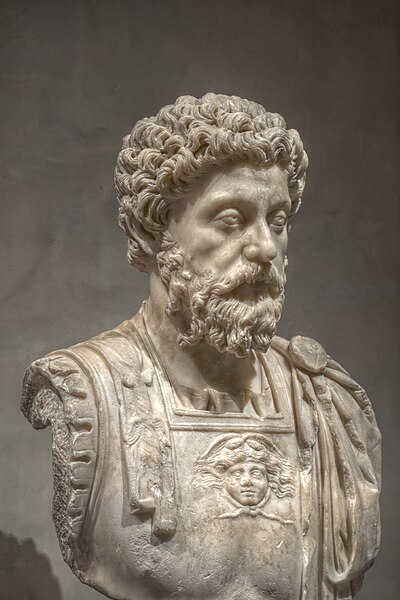
I encourage anyone who has a Buddhist friend to talk with them as often as you can about the Dharma. So why did I put an image of the Buddha at the top of this post when I know I am not supposed to? Isn’t that a charming side of this beautiful ancient tradition? For many centuries, Buddhists have been unable to resist the urge to portray and honor our original teacher. ABN
Tired of this world

I have to admit I am tired of this world. All three Abrahamic religions and all, or most, of their sects are fighting over how to kill or save as many Palestinians as they can, many favor killing.

American and Western neocons are vying with other top players for control of the world. Gaza and Ukraine are stepping stones in that contest.

The low-mindedness and vulgarity of this, both the dramas and the ludicrous rationalizations, are unbearably self-limiting, inexorably destructive.

As individuals we have almost no say in any of it. Social media is a dead zone for thought, truth, decency. The best ideas or inquiries are shadow-banned into a silence worse than death. It’s the neocons doing that as well.

In the Abrahamic traditions there is actually a scriptural basis for genocide dating back some 3,000 years. In this crazy world, actual fighting and killing today in Gaza and Israel is actually based on those scriptures. Doesn’t that actually refute the whole religion, all three branches of it?

Christians run and hide from that conclusion because they have no other vocabulary or conceptual network to fall back on. Faith is good but not blind faith.

Too many voices I had respected are complacent, if not complicit, with the neocon slaughter. I am not surprised. I knew they would be.

Until the MIHOP raid on October 7, they had seemed to me to be maintaining an appearance of diplomacy, preserving their ability to speak to the public as best they could.

I viewed that as a kind of Buddhist upaya, a means to a worthy end.

But when the means are grotesquely disproportionate and violate all moral standards except the most severe, I can’t take it anymore. It’s definitely not a worthy end anymore.

In Ukraine, I read another 100,000 men have been killed over the past months in the obviously futile counteroffensive forced on them by neocons. That too is genocide.

Ukraine has been destroyed by neocons. Half the population has fled forever and many hundreds of thousands, especially young men, have been killed. The neocons provoked that war too and everyone with a brain knows it.

The Gospel of Gaza: What we must learn from Netanyahu’s Bible lessons — Laurent Guyénot

In a speech in Hebrew on October 28, Netanyahu justified the Israeli slaughter of civilians in Gaza with a biblical reference to Amalek.

You must remember what Amalek has done to you, says our Holy Bible. And we do remember. And we fight. Our brave troops and combatants who are now in Gaza and in all other regions in Israel, are joining the chain of Jewish heroes, a chain that has started 3,000 years ago, from Joshua ben Nun, until the heroes of 1948, the Six-Day War, the October 73 War, and all other wars in this country. Our hero troops, they have one supreme main goal: to completely defeat the murderous enemy, and to guarantee our existence in this country.

In Netanyahu’s Holy Bible, God gives his chosen people Palestine, and the same God commands them to exterminate the Amalekites, an Arab people that stands in their way. Yahweh asks Moses to not only exterminate the Amalekites, but to “blot out the memory of Amalek under heaven” (Deuteronomy 25:19).

It was left to Saul to finish them up: “kill man and woman, babe and suckling, ox and sheep, camel and donkey,” Yahweh instructs him (1Samuel 15:8). Because Saul spared the Amalekite king Agag, Yahweh withdrew the kingship from him and drove him mad: “I regret having made Saul king, since he has broken his allegiance to me and not carried out my orders” (15:11). The holy prophet Samuel, who had a direct line of communication with Yahweh, had to butcher Agag himself (“hewed Agag in pieces,” in the Revised Standard Version). Yahweh then gave the kingship to David, who proved a more obedient exterminator, for example when he put the people of Rabba “under saws, and under harrows of iron, and under axes of iron, and made them pass through the brick kiln: and thus did he unto all the cities of the children of Ammon” (2 Samuel 12:31).

source

I hope this essay will inspire Abrahamic readers to reflect on the actual words and meanings in the Old Testament. I respect all moral religious peoples of all faiths but am also aware that for many religion is a cult, sometimes a dangerous cult of Satanic violence. The ancient Greek, then Christian, and sometimes Jewish term that most unites the Abrahamic traditions with Buddhism is logos. If we see God as logos we can also see the Buddha as logos realized on earth and the Buddhist path a kind of worship or reverence for logos. ‘Theologically’, Buddhists are sentient beings who are attracted to the Tathagata-logos. It is their good karma to be drawn toward logos. Others are blind to logos and sometimes repulsed by it.

A core Buddhist teaching is clinging to words is dangerous. The Buddha prohibited writing his teachings down because he did not want them to turn into scriptures that would be worshipped without being understood. This is why Buddhism defines itself as a mind-to-mind teaching. Buddhists who understands the Dharma well enough transmit it mind-to-mind to others who want to learn it. Buddhists do not proselytize or believe others are lost for having different practices. Buddhists respect and support all traditions and practices that encourage wholesome, ethical thoughts and behaviors because they all lead to logos. ABN

Martin Shkreli w Tucker Carlson

Shkreli honed a version of real-world stoic philosophy while in prison. He makes practical observations about prison and the legal system in USA. It’s a good interview and worth viewing if time permits. ABN

Dem Silicon Valley billionaire wakes up to how amazing Trump was as President

direct link

Well, duh, guys. You just figured out what ‘politics is the art of the possible‘ means. Also, Trump is a wonderful human being who lost money being president. You guys are very good at what you do (donations welcome) but clearly do not grasp how and why Trump speaks as he does. He is a master of American English who speaks bluntly and as truthfully as he is able. If you attack him, he will attack you. If you don’t attack him, he will not attack you. Everyone knows this. It’s a human thing and also a major American thing. Follow the law and no one will bother you (ideally). Follow the rules of American manners, and no one will attack you (ideally). Trump is a quintessential American politician who both reflects and embodies some of the deepest American values. That is why his supporters not only like his policies. We also like him. Man, has he earned it. ABN

There’s no ‘disinformation’ exception to the First Amendment

Misinformation and disinformation retain the basic characteristics of speech. Unless they fall into one of very few exceptions, they are protected from censorship under the First Amendment.

Consistent with those very limited exceptions, any effort by the government to prevent the dissemination of ideas or opinions, even if they are based on untruths, is unconstitutional.

A three-judge panel for the Fifth Circuit Court of Appeals recently upheld an injunction that prohibits the government from pressuring social media platforms to de-escalate or remove speech that the government identifies as misinformation or disinformation.

On Thursday, Sept. 14, that injunction was put on pause by the Supreme Court until Sept. 22, to give the Court more time to consider the issue.

The injunction resulted from a lawsuit filed by the attorneys general of Missouri and Louisiana and others accusing the federal government of strong-arming social media companies in order to amplify government-approved points of view and muffle or silence opposing views.

source

Free speech makes civilizations thrive. It is the rational as well as constitutional only option. Anyone who wants to limit free speech is a POS. Covid proved this point and also proved that the worst enemies of free speech were and still are governments, Big Media and other vested interests. ABN

Propositions Concerning Digital Minds and Society — Nick Bostrom, Carl Shulman

Below are some excerpts from the paper: Propositions Concerning Digital Minds and Society. ABN

Consciousness and metaphysics:

  • The substrate-independence thesis is true: “[M]ental states can supervene on any of a broad class of physical substrates. Provided a system implements the right sort of computational structures and processes, it can be associated with conscious experiences. It is not an essential property of consciousness that it is implemented on carbon-based biological neural networks inside a cranium: silicon-based processors inside a computer could in principle do the trick as well.”
  • Performing two runs of the same program results in “twice as much” conscious experience as one run
  • Subjective time is proportional to speed of computation: running the same computation in half the time generates the same (quantity and quality of) subjective experience.

Respecting AI interests:

  • Society in general and AI creators (both an AI’s original developer and whoever may cause a particular instance to come into existence) have a moral obligation to consider the welfare of the AIs they create, if those AIs meet thresholds for moral status.
  • It is possible for some digital minds to have superhuman moral claims
  • Because an AI could have the capability to bring conscious or otherwise morally significant entities into being within its own mind and potentially abuse them (“mind crime”), protective regulations may need to monitor and restrict harms that occur entirely within the private thought of AIs.
  • If an AI is capable of informed consent, then it should not be used to perform work without its informed consent.
  • Informed consent is not reliably sufficient to safeguard the interests of AIs, even those as smart and capable as a human adult, particularly in cases where consent is engineered or an unusually compliant individual can copy itself to form an enormous exploited underclass, given market demand for such compliance.
  • AIs capable of evaluating their coming into existence should be designed and treated so that they are likely to approve of their having been created.
  • Principle of Substrate Non-Discrimination: If two beings have the same functionality and the same conscious experience, and differ only in the substrate of their implementation, then they have the same moral status.
  • Insofar as future, extraterrestrial, or other civilizations are heavily populated by advanced digital minds, our treatment of the precursors of such minds may be a very important factor in posterity’s and ulteriority’s assessment of our moral righteousness, and we have both prudential and moral reasons for taking this perspective into account.
  • Misaligned AIs produced in such development may be owed compensation for restrictions placed on them for public safety, while successfully aligned AIs may be due compensation for the great benefit they confer on others.

Security and stability:

  • Advanced AI would dramatically accelerate the rate of innovation, including innovations that make means of global destruction widely available; therefore, institutions capable of regulating dangerous AI innovations may need to be put in place early in the AI transition (if not before).
  • If wars, revolutions, and expropriation events continue to happen at historically typical intervals, but on digital rather than biological timescales, then a normal human lifespan would require surviving an implausibly large number of upheavals; human security therefore requires the establishment of ultra-stable peace and socioeconomic protections.
  • When it becomes possible to mass-produce minds that reliably support any cause, we must either modify one-person-one-vote democracy or regulate such creation.
  • Given that normal parental instincts and sympathies may not always be present in the creation of digital minds, e.g. by profit-oriented firms and states, AI reproduction must be regulated to prevent the creation of minds that would not have adequately good lives (whether because they wouldn’t receive good treatment or because of their inherent constitution).
  • Since misaligned AIs might pose a significant threat to civilization during a critical period until law enforcement systems are developed that can adequately defend against such AIs, additional protective measures (such as regulating the creation of such AIs) may need to be imposed during this period.
  • The Outer Space Treaty and similar arrangements should be supplemented to reduce the risk of conflict over space resources and unsafe AI development in pursuit of those resources.
Continue reading “Propositions Concerning Digital Minds and Society — Nick Bostrom, Carl Shulman”

Consciousness is a cheap and easy way to make things work

Is a dragonfly conscious? I bet most of us would say it is.

Is a robotic manmade dragonfly conscious? I bet most of us would say it is not, though obviously it could come into being only through conscious effort.

Is consciousness common among living things? It seems that virtually all animals and probably all or most insects are conscious. I don’t know about bacteria but maybe they are too. It could be argued that any entity that is able to make a decision, a choice between two or more options, is conscious to that extent.

Is a rock conscious? It could be in the sense that it does not behave other than like a rock. Something about it or its conditions holds a rock within the laws of physics as we know them. Rocks are predictable.

If the cosmos is conscious, then it makes perfect sense that many of the beings on earth are conscious and maybe all of them are. Maybe the earth itself is conscious.

Consciousness is a cheap and easy way to make things work. In that sense a conscious universe is a parsimonious description of the universe.

A mind-only or mental or conscious universe is a significant part of the Buddhist tradition and explains how rebirth happens and what enlightenment probably entails. This Buddhist tradition is called Mind Only or Yogachara.

There is nothing in Buddhism that prohibits us from adding to the tradition. Indeed, we are encouraged to make it our own by using our own words and understanding to pursue enlightenment. You do not need to be a Buddhist to conclude that the cosmos is conscious or able to think. And many non-Buddhists have come to that conclusion.

I personally believe or strongly suspect that this human realm is governed by a kind of conscious dramatic something. The drama is bigger than us but we are in it. We make some of the rules for ourselves but not all of the rules. I believe when karma is understood in terms like this it makes for a healthier and more accurate philosophical understanding of the human condition.

Consciousness may very well be a primary, more primary than time and space. It is roughly in this context that some philosophers say that experience is the fundamental data point, or stuff of life. A statement like this is very close to the Buddhist idea of thusness or the deep truth of the moment in the mind, the deep truth of the mind.

The Buddha said all things are empty including the Buddhadharma. This is much like saying consciousness itself is empty and can only be grasped through the thusness of experience, which is always dramatic in one way or another. Empty consciousness conscious of itself can be experienced. Is that the stuff we are floating in?

Is morality a fundamental part of nature?

Viewing nature as a signaling network shows its advantage with this question.

Instead of asking where our moral sense comes from, we ask instead what makes for a good signaling network?

The answer is “good organization.”

By “good,” I mean efficient, well-made, good use of resources, easy to maintain, rational, etc.

You are a signaling network.

A well-organized you will probably tend to be morally pretty good and wanting to get better at it, depending on your conditions.

Of course some people view “morality” as whatever is in their best interests. And that is a type of moral thinking. When it is found out, though, most other people, very reasonably, do not like it.

If we view nature as the evolution of signals and signaling networks rather than as the evolution of matter, we will see that changes in signal organization are fundamental to the evolutionary process.

In this sense, it is the most ordinary thing in the world that you, a complex signaling system that is conscious, would consciously seek good organization and/or want to adapt your organizing principles, both objective and subjective, to conditions that impact you.

Conditions that impact you are signals being perceived by the signaling network you think of as yourself.

Your adaptations, both small and large, will encompass many moral considerations and choices.

Morality can be viewed as a kind of organization. The networks that make up your being must organize their relations with the world around them and other sentient beings. We make many moral decisions when we do this. These decisions are an integral part of how we are organized.

Last night I heard a drunk swearing at his friend from the street. “You fucking bastard…” etc. Not well-organized, but still he was yelling a local version of morality and this was fundamental to his networks and behavior.

…a Dark City you cannot leave

Absurd and dangerous laws like this illustrate the extremely strong bonds humans have with default vocabularies, default cognitive tautologies, default authoritarian control, default conformity. These default bonds are the core of why mind-control works and how it works. Goose any of these bonds and droves will follow. We are right now living inside a multifaceted totalitarian panopticon—a Dark City you cannot leave. Is penultimate reality that we are controlled by Satan or mired in the First & Second Noble Truths of Buddhism? ABN

New York Times Guide to Fall Vaccine Shots Is ‘Disinformation’

Nirav Shah, M.D., J.D., principal deputy director of the Centers for Disease Control and Prevention, told The New York Times children 6 months and older should get the COVID-19 vaccine this fall, adding, “Do you want to see your grandpa … [and] grandma? Are you really sure you’re not going to give COVID to them?”

source

This anti-science vax ‘reasoning’ is based on what I call default tautologies or default linguistic tautologies or default language bundles. These tautologies are all but hard-wired assumptions about reality and language that are being obscenely misused in these vax ‘arguments.’ Default psycholinguistic bundles can also be entirely unique to persons. As such they comprise the stuff of the Buddhist ‘small self’ which we are counseled not to cling to. Clinging or attachment in Buddhism means clinging to these tautological bundles of self or of the culture around us or entities within that culture such as the NYT or CDC. Delusion in Buddhism means clinging to error, wrong views, wrong thoughts, wrong speech. One good thing about covid anti-science is it helped many people see how pervasive and pernicious delusion is, how it arises in the self as well as in culture. How it is used by powerful groups to trick people into wars, bad health decisions, etc. ABN

Gonzalo Lira REARRESTED trying to flee to Hungary

Gonzalo Lira Update!

Proof of his detention on June 29th, trial, release on bail, his re-detention after a failed border crossing and his upcoming hearing!

Based on what we will read below, and many more details within the documents themselves we now know the following:

– Gonzalo Lira was detained on 01/05/2023

– He was released on bail on 29/06/2023 – He attempted to cross the border to hungary on 01/08/2023 and was detained

– He failed to appear to his court hearing on 02/08/2023 – He appeared in front of court on 04/08/2023, when it was decided to re-detain him

– A hearing in his initial case is scheduled today 22/08/2023 at 1430 hrs Kharkov time

– A hearing is scheduled on 11/09/2023, in an appeal attempt against his re-detention.

Based on the transcripts I found using @OpenDataUa bot on Telegram, from the Dzerzhinsky District Court of Kharkiv, under which he is been/being prosecuted (among others), case # 638/1372/23.

From the transcript of a hearing that took place on 02/08/2023, that Gonzalo was to appear for but failed to due his border crossing attempt on 01/08/2023, (https://opendatabot.ua/court/112573183-69afea3dc25a508403e28fadeb04e31d…), we could read the following:

“PERSON_5 , INFORMATION_1 , a citizen of Chile and the United States, a native of Los Angeles, California, United States of America, married, not previously convicted, officially unemployed, who actually lives at: ADDRESS_1”

“By the decision of the Dzerzhinsky District Court of Kharkiv of June 26, 2023, criminal proceedings on the charge of PERSON_5 were assigned to trial.””

According to the letter of the State Institution “Kharkiv Detention Center” dated July 7, 2023, PERSON_5 was released on July 6, 2023 on payment of bail in the amount of UAH 402600.00.”

Continue reading “Gonzalo Lira REARRESTED trying to flee to Hungary”

How we process big ideas and the semiotics behind this

I want to discuss a few big ideas with the intention of showing how our internal or culturally underlying semiotics determine how easy or hard they are to accept.

Most thinking people can accept the possibility of atheism. And most atheists can accept the possibility of there being a God or gods or other realms. Atheists who are staunch physicalists may find it harder to do this, but most of them can.

Most thinking people can accept the theory of evolution.

Most thinking people can and do accept the scientific method. Fewer, but many, people understand the limitations of the scientific method.

The theory of evolution and the scientific method can both be stated briefly and in simple language. They are not hard to understand. The limitations of the scientific method require a bit more thought as do the nuances of evolution, but a crude understanding of either is not hard to achieve. Similarly, physicalism is not hard to state or understand.

The simulation argument (that we are living in a computer simulation) can also be stated briefly and is not hard to understand. Many people now accept this argument and admit that it is possible that we are living in a sim. In fact, some physics departments are actually studying the idea. Here is one example: Scientists plan test to see if the entire universe is a simulation created by futuristic supercomputers.

For most educated people in industrialized regions of the world, it is not difficult to accept or seriously consider any of the above theories or ideas.

All of the above ideas can be very revolutionary if you go from not accepting them to accepting them. They revolutionize our metaphysics, our sense of existential reality, our sense of what kind of a world or universe we are living in.

In contrast, ideas that are socially revolutionary are harder for many people to accept, or even consider.

It can be hard to have a calm discussion about inherent problems in the American capitalist system, for example. Or to have a reasonable discussion about the anomalies of 9/11. These subjects, though fascinating, are difficult for many people because they fundamentally threaten the power-and-money hierarchy upon which their social and psychological beings rest.

FIML is an idea that, like the ideas above, can be stated briefly in simple language. This does not mean it is not revolutionary. And this does not mean that FIML will not be difficult for many people to accept. It can be difficult because FIML practice revolutionizes interpersonal relations. I know that if it is done correctly it will bring about a revolutionary improvement. But viewed from a distance or as a mere idea, I also know that it will appear threatening or trivial to many people.

The sim idea was dismissed as trivial by many people just a few years ago. It has gained much wider acceptance since then. It is a delightful idea and not threatening or dangerous at all. It can renew your sense of who you are and where you are.

FIML practice is much like that. It is delightful and not threatening or trivial at all. It will renew your sense of who you are and how you relate to other people in wonderful ways. Just because an idea looks simple does not mean it does not have deep implications. If a new idea challenges our sense of who we are socially or psychologically, it will be more difficult to accept than if it challenges “only” our metaphysical or existential sense of who and where we are.

first posted DECEMBER 17, 2012

Indeterminacy of translation and FIML

I betray my poor education by admitting that I had never heard of W. V. Quine’s “indeterminacy of translation” until last week. My ignorance is especially egregious as I have worked as a professional translator for many years.

Maybe I had heard about it but had forgotten. I am being self-reflective because FIML practice is deeply, fundamentally concerned with the “indeterminacy” of translating one person’s thoughts into another person’s head.

Quine’s thesis is not just about translating from one language to another, though there is that. It is much more about the fundamental impossibility of determining what anything means well enough to “translate” it into another context, a next sentence, into another person’s mind, or even “translating” your own speech from the past into the context of your mind today.

If I had known about Quine, I probably never would have thought of FIML because his ideas and the slews of papers written on “indeterminacy of translation” surely would have made me believe that the subject had been worked through.

As it was, I have plodded along in a delightful state of ignorance and, due to that, maybe added something practical to the subject.

In the first place, I wholeheartedly believe that speech is filled with indeterminacy, which I have generally called ambiguity or uncertainty. In the second place, I have confined my FIML-related investigations mainly to interpersonal speech between partners who care about each other. I see no solution to the more general problem of indeterminacy within groups, subcultures, or linguistic communities. Until brain scans get much better, large groups will be forced to resort to hierarchical “determinacy” to exist or function at all.

For individuals, though, there is much we can do. FIML practice does not remove all “indeterminacy.” Rather, it removes much more than most people are aware is possible, even remotely aware is possible. My guess is FIML communication provides a level of detail and resolution that is an order of magnitude or two better than non-FIML.

That is a huge improvement. It is life-changing on many levels and extremely satisfying.

FIML does not fix everything—and philosophical or “artistic” differences between partners are still possible—but it does fix a great deal. By clearing up interpersonal micro-indeterminacy again and again, FIML practice frees partners from the inevitable macro-problems that micro-ambiguity inevitably causes.

Moreover, this freedom, in turn, frees partners from a great deal of subconscious adhesion to the hierarchical “determinacy” of whichever culture they are part of. Rather than trapping themselves in a state of helpless acceptance of predefined hierarchical “meaning,” FIML partners have the capacity to sort through existential semiotics and make of them what they will with far less “indeterminacy,” or ambiguity, than had been possible without FIML practice.

first posted DECEMBER 7, 2014