Cheer Words and Boo Words

…To sum up the process of making a word a cheer or boo word, it is essentially a matter of creating a conditioned reflex. By multiplying the word’s conceptual meanings to the point of disappearance and making its affective meaning massively predominant, the meaning maker causes us to associate its mere sound with the idea of goodness or badness, and so we feel joyful anticipation or disapproval and revulsion as the case may be. In doing these things the meaning maker follows Ivan Pavlov, who conditioned his dogs to associate the sound of a bell with the idea of being fed, which made them salivate. We end up reacting to the stimulus automatically, our thinking minds playing no part.

The case of an expression like “anti-Semitism” is slightly different in that this has a determinate conceptual meaning, which it wears on its face. As long as we ignore the fact that Arabs are Semites too, we can see that it means being against or disliking Jews. To make “anti-Semitism” a boo word it was therefore necessary to concentrate mainly on maximising its affective meaning, which is to say conditioning us to see disliking Jews as bad, in contrast to disliking the French or Germans, say, which we could continue to do with impunity. This again was accomplished by modelling, not by reason, as can be confirmed by reflecting that we have never heard an argument to say why disliking Jews is bad: that is, unless you call it an argument to suggest should this sentiment arise in us it would mean that we wanted to exterminate the race, for having misgivings about the behaviour of Jews, we have been encouraged to believe, would be equivalent to commissioning the construction of gas chambers.

Thus the media place Jews in a special class simply by acting as though they were in one, and we pick the idea up. It is the same back-to-front process as with “racism”, whereby we accept that something is bad because we see it disapproved of rather than disapproving of it because we think it is bad: a process that can occur because we accept the authority of the media or other meaning maker. Once “anti-Semitism” is established as a boo word, it is too late to enquire what Jews have done to deserve their special status. How dare one ask the question when Jews are such special people?

According to a count of all the words used in books published between 1960 and 2019, “anti-Semitism” is top dog among racial boo words, coming far ahead even of “racism”, let alone such comparatively paltry failings as xenophobia and White supremacy.[7]https://www.bitchute.com/embed/jCgn8FVzkN29/ So while racism in general is bad, this particular variety of it is gigantically bad, which might have something to do with the fact that the mass media and publishing industry are largely owned by Jews.

As the gold standard of racial badness, and indeed of all possible badness, anti-Semitism acts as the measure of other offences, so that it is asked, for example, whether anti-Zionism is anti-Semitism. People have gone on demonstrations holding placards saying that it is not. If they are mistaken, then anti-Zionism is a no-no, whereas if they are correct it is OK. What can never be doubted is that anti-Semitism is as bad as bad can be.

link

If only more of us understood how badly language normally operates. In this, Buddhists can see the utility of sunyata, emptiness. Affect with no meaning. Empty words both run and ruin our lives. ABN

Speech proscriptions and mental health

Speech proscriptions can be overt with legal ramifications.

Or they can be sort of covert, couched in ideas like good manners, respect, make no waves, maintain friendly relations, follow group norms, etc.

I believe the covert ones happen most basically because almost all people are terrible at speaking about their own subjective truths. And this leads to being terrible at hearing others’ subjective truths, even if they are well-expressed which is rare.

This problem arises from the pervasive, inherent ambiguity of language in general but especially spoken language.

Speech flies by and we are required to extract coherent meaning from bits of it. We make stories out of it and judge people, including ourselves, based on bad evidence.

Ambiguity in speech also requires us to maintain the same personas and most of the same beliefs for decades. We travel in herds of ideological banality due to it.

Staying the same is a way of projecting sort of unambiguous meaning even though we all know that deep down the whole thing is a bad game.

I used to be bothered by this, but stopped after I figured out FIML and practiced it with my partner for a few years.

After maybe five years, our speech started to become so much clearer it didn’t even feel like the same medium anymore. After ten years, it got so good it seems we may have transcended psychology as it is normally conceived.

This happened because psychology as normally conceived is massively based on speech ambiguity and the ways people react to it. Fact is, you probably should feel a bit crazy in most interpersonal situations because speech proscriptions mixed with compounding ambiguities cannot possibly allow the psychological freedom needed to be cognitively healthy.

Dr. Lisa Feldman Barrett: How to Understand Emotions | Huberman Lab Podcast

UPDATE: I highly recommend this video discussion for all Buddhists and all practitioners of FIML. Barrett describes the fundamental reality of human consciousness as it grapples with emotion, sensation, bodily feedback and general states of physical being. Her insights are 100% consonant with Buddhist philosophy and FIML practice. Both FIML and Buddhism differ from what Barrett is saying only in that in addition to the emptiness, impermanence, and vagueness of human emotional states they also see human thought, belief, interpretation, perception and comprehension in the same way. In FIML practice, these deeply important uncertainties also include language, semiotics, communicative acts, and the psychologies associated with them.

At one point, Barrett says she is not saying there is nothing there or no truth to emotional states. She is just saying they typically are not clearly definable and often mistaken. Exactly right. I would add that Barret sees a very important part of the underlying problem of human psycho-spiritual existence but she only sees that one part and offers no more than a description of it.

FIML practice provides not only a more accurate description of the problem but also a method to greatly enhance our understanding of all human states of being as they occur in real-world, real-time situations. FIML differs from traditional Buddhist practice in that it offers a robust practice for two people to use together.

To emphasize a major point: Barrett has caught a very big fish but is holding it by the tail only. Buddhism is based on the whole fish as is FIML. Both Buddhism and FIML offer deeply important ways to deal with the whole fish. FIML adds a precise practice between two people that speeds up understanding. Buddhism claims there is an ‘ultimate reality’, a Buddha mind above and beyond the ‘relative reality’ of mundane uncertainty and clinging. FIML provides deep psychological understanding and correction of the mundane problem while also allowing glimpses of Buddhist ultimate reality. Barrett, Buddhism, and FIML all are addressing the same thing from different points of view. ABN

UPDATE: This video is a delightful 2+ hours discussion, not to be missed. Buddhists will enjoy how it elucidates Buddhist teachings on the Five Skandhas and how they underlie Buddhist understanding of human psychology.

It is also an excellent description of why you must do FIML. It provides a detailed and nuanced picture of why FIML practice is essential for full optimization of human psychology, language use, semiotics, and mental functioning. FIML has no content and does zero to define you or anyone. FIML shows you how to gather information and discover for yourself.

FIML is a method that allows partners to isolate significant (or not) moments during real-time, real-world communication that can be identified and agreed upon by both partners and thus become objectively analyzable (in the sense that both partners agree on what the moment was or what it entailed). That is how language can greatly help us understand how our speech, sensations, emotions, bodily states are functioning in the real-world in real-time.

The hard part about FIML is you cannot at the inception of a FIML moment sit back, like Barrett and Huberman, and just wander around pleasantly talking about theories and ideas within a well-defined (and restricted) scientific paradigm.* The first moments of a FIML query are by definition unexplained and undescribed to both partners.

Once identified and described the unique, idiosyncratic import of those moments will be discovered. And often what is discovered will be of next-to-no importance or be some sort of mutual or one-sided mistake or trivial misinterpretation. At other times, deep and deeply interesting patterns or critical associations will be discovered. At those times, you will be able to clearly see how your habitual mind is functioning in a real-world, real-time situation.

Since FIML moments are moments, they are small enough and well-described enough for partners to mutually clearly understand and admit what has happened without reservations. This is extremely refreshing, especially when experienced scores and then hundreds of times. There is no other way to get this information and mutually understand it than FIML practice.

* I do not mean to slight or dismiss Barrett or Huberman here. They have provided a superb description of an extremely serious problem and also illustrated how science today has not solved it. Barrett mentions how serious the problem is but does not provide a solution to it. Knowing the problem is there is a good start. It’s like identifying a disease. Solving the problem as FIML does is the next step. FIML treats the disease and largely cures it. I 100% agree with Barrett when she emphasizes how serious this problem is. I see its seriousness as being even greater than she does. This problem is far worse than a few mistaken convictions in law courts or a persistent fog of interpersonal confusion. It is a constant ever-present demon in all of us and it leads to enormous suffering, sadness, violence, murder, tribalism, worse. As for science, FIML is a subjective science, possibly the realest and most important subjective science there is right now.

In Barrett’s vocabulary, basic FIML works with the very fine ‘granularity’ of emotion/ sensation/ interpretation. A next step after identifying these granular moments during FIML is to analyze/ discuss how they are related to other granularities and also less granular more abstract habits or mental states/ conditions; this is where in Barrett’s terms FIML ‘adds dimensionality’ to our worlds. What is remarkable about FIML is the dimensionality we add is based on mutually agreed objective idiosyncratic data.

Around the 1:30 mark and beyond, Barrett describes what Buddhists know as the Five Skandhas1) form/ percept/ stimulus, 2) sensation (bodily action), 3) perception (more detail and feedback), 4) activity (more detail, feedback and abstraction), 5) consciousness/ mental state (delusional, or within relative reality). The Five Skandhas, of course, are fractal, dynamic, fast-moving, multi-granular, and describe/ categorize bodily-mental states at all levels of delusional/ hallucinatory/ relative ‘reality’.

‘Get your butterflies flying in formation’. ABN

Dem Silicon Valley billionaire wakes up to how amazing Trump was as President

direct link

Well, duh, guys. You just figured out what ‘politics is the art of the possible‘ means. Also, Trump is a wonderful human being who lost money being president. You guys are very good at what you do (donations welcome) but clearly do not grasp how and why Trump speaks as he does. He is a master of American English who speaks bluntly and as truthfully as he is able. If you attack him, he will attack you. If you don’t attack him, he will not attack you. Everyone knows this. It’s a human thing and also a major American thing. Follow the law and no one will bother you (ideally). Follow the rules of American manners, and no one will attack you (ideally). Trump is a quintessential American politician who both reflects and embodies some of the deepest American values. That is why his supporters not only like his policies. We also like him. Man, has he earned it. ABN

Psychophysics gains a new law of sensory perception that also sheds light on subjective perception

Weber’s law, also called Weber-Fechner law, historically important psychological law quantifying the perception of change in a given stimulus. The law states that the change in a stimulus that will be just noticeable is a constant ratio of the original stimulus. It has been shown not to hold for extremes of stimulation. (Weber’s Law)

About 200 years ago, the German physician Ernst Heinrich Weber made a seemingly innocuous observation which led to the birth of the discipline of Psychophysics – the science relating physical stimuli in the world and the sensations they evoke in the mind of a subject. Weber asked subjects to say which of two slightly different weights was heavier. From these experiments , he discovered that the probability that a subject will make the right choice only depends on the ratio between the weights.

For instance, if a subject is correct 75% of the time when comparing a weight of 1 Kg and a weight of 1.1 Kg, then she will also be correct 75% of the time when comparing two weights of 2 and 2.2 Kg – or, in general, any pair of weights where one is 10% heavier than the other. This simple but precise rule opened the door to the quantification of behavior in terms of mathematical ‘laws’. (NEUROSCIENTISTS MAKE MAJOR BREAKTHROUGH IN 200-YEAR-OLD PUZZLE)

We investigated Weber’s law by training rats to discriminate the relative intensity of sounds at the two ears at various absolute levels. These experiments revealed the existence of a psychophysical regularity, which we term time–intensity equivalence in discrimination (TIED), describing how reaction times change as a function of absolute level. (The mechanistic foundation of Weber’s law)

Do you realize how ambiguous you are when you speak?

And how bad you are at interpreting what others say to you?

If not, you are living in a very muddled world that is probably “anchored” to nothing more than your “feelings,” your “identity,” or some form of extrinsic “belief” or “faith” in your nation, group, religion, career.

Either you are a sort of slave to a public semiotic (religion, ethnicity, career, etc.) or you are a sort of slave to your muddled interior—your volatile emotional sense of “who” you “are.”

The only way I know of to fully comprehend how badly you speak and listen is to do FIML practice.

You may understand in the abstract how wrong and ambiguous speech and listening frequently are, but if you don’t do FIML you won’t be able to see with any specificity  how wrong you are and where and why. If your understanding is only general or abstract, it will function as just another level of ambiguity, another source of mistakes.

Mildly sorry for being so blunt, but it’s true. Only FIML, or something very similar, can give you and your partner real-time access to objectively agreed upon communication mistakes being made between you. And there is no general or abstract substitute for that.

Even a single mistake can have massive consequences. But we all make dozens of mistakes every day.

Humans as networks

The human brain can process images very quickly: MIT reserachers

CAMBRIDGE (CBS) — The human brain is capable of processing images viewed through the eyes for as little as 13 milliseconds, according to research conducted by Massachusetts Institute of Technology neuroscientists.

That processing speed figure is significantly faster than the 100 milliseconds reported in earlier research, the MIT News Office reported.

The new MIT study appears in the journal Attention, Perception, and Psychophysics. In the research, investigators asked subjects to look for a particular type of image, such as “smiling couple,” as they viewed a series of as many as 12 images, each presented for between 13 and 80 milliseconds

“The fact that you can do that at these high speeds indicates to us that what vision does is find concepts. That’s what the brain is doing all day long — trying to understand what we’re looking at,” Mary Potter, an MIT professor of brain and cognitive sciences and senior author of the study, told MIT News.

Rapid-fire processing of images could serve to help direct the eyes to their next target, Potter said. “The job of the eyes is not only to get the information into the brain, but to allow the brain to think about it rapidly enough to know what you should look at next. So in general, we’re calibrating our eyes so they move around just as often as possible consistent with understanding what we’re seeing,” she said.

link

The paper is here: Detecting meaning in RSVP at 13 ms per picture.

FIML works with information rapidly entering the working memory, much of which is visual. Psycholinguistic auditory information can also be received and processed very quickly. Consider tone of voice. FIML helps partners intervene in the processing of immediate interpersonal information in order to understand its deep psychological roots. The FIML technique is fairly easy to do if it is understood that the critical focus is on information that just occurred. ABN

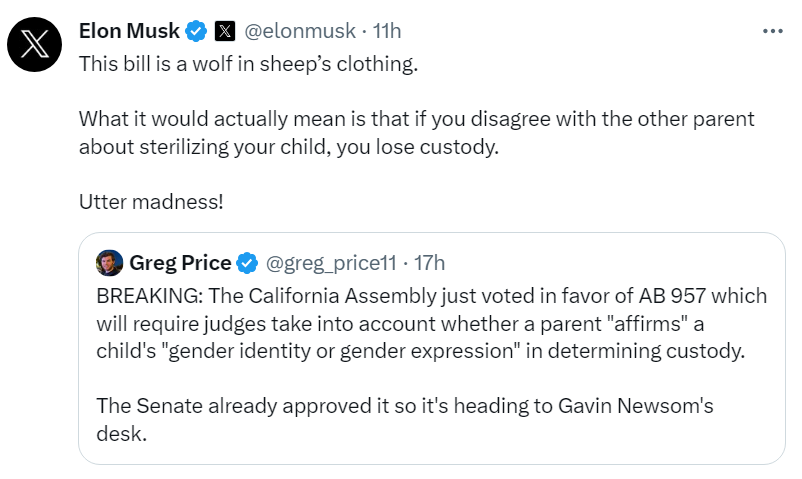
…a Dark City you cannot leave

Absurd and dangerous laws like this illustrate the extremely strong bonds humans have with default vocabularies, default cognitive tautologies, default authoritarian control, default conformity. These default bonds are the core of why mind-control works and how it works. Goose any of these bonds and droves will follow. We are right now living inside a multifaceted totalitarian panopticon—a Dark City you cannot leave. Is penultimate reality that we are controlled by Satan or mired in the First & Second Noble Truths of Buddhism? ABN

The timeline for full deployment of the modern United States internet control system, is likely around late fall and early winter this year, in advance of the 2024 U.S. election cycle

I share this information with you so that you understand what is being constructed and what is about to be deployed on a large scale throughout the U.S. internet operating system.  The U.S. internet will be different.  The social media restrictions became more prevalent and noticeable in the past several years; now it is time for DHS to expand that process to the entire U.S. internet.

The timeline for full deployment of the modern United States internet control system, is likely around late fall and early winter this year, in advance of the 2024 U.S. election cycle.

Everything will change.  Every route of online traffic including Internet Service Providers (ISP’s) to filters and rerouting on Domain Name Systems (DNS), to the Internet Protocol (IP) itself will be subject to change in the form of background shadow banning.  If the DHS partnership is successful, you will not initially notice – much like a shadow banned platform user doesn’t notice their new defined status.  The shift will become more obvious over time.

One odd outcome will be a regional targeting system.  Depending on where you are in the USA, your online experience will be different. There will also be enhancements to your internet travel based on your profile.  Good thinking users will have benefits that enhance the experience of the user and supports the interests of the national security guardians.

♦ Deployment of a Virtual Private Network (VPN) is irrelevant in this construct.  A VPN is like you renting a car without a license plate.  You travel past all the Automatic License Plate Readers, arrive at your destination, leave the keys in the ignition and just abandon the car.  Your personal travel was essentially invisible to the APLR system.  However, when the internet roads are controlled by the national security state, and there is no longer an offramp to the destination, your VPN use is irrelevant – you cannot reach your destination.  That’s part of the shift.

You will notice I use the term “definition” quite often.  That is because the root of every control mechanism is grounded upon defining things.  When you accept the terms ‘disinformation’, ‘misinformation’, and/or ‘malinformation’, you are buying into the process that permits definitions to determine your travel. Those who define both you and your destination, ultimately control your online experience.

source

If you provide content online, you probably already have noticed this happening to you. Total information control by advanced AI is a modern iteration of the First & Second Noble Truths—that we suffer because we cling to delusion. Escaping our delusional group karma will require paying wise attention to the truths of our own unique mind-streams and experiences. That has always been the case in the human realm. The good side of this is it has become so obvious today (if you look) how delusions are made and propagated. Fully understanding the First & Second Noble Truths = Enlightenment. In this context, FIML has more value than ever. ABN

Malignant narcissism and identity

Malignant narcissism is an extreme form of narcissism characterized by aggression against people who threaten the narcissist’s narcissistic supply.

A malignant narcissist sees the other person as the threat, not just what they say or do.

This makes sense in that a narcissist has at some level concluded that they as a person are the standard for all things; thus, other people are blamed and attacked far out of proportion to whatever the narcissist believes they have done.

In Christian terms, the malignant narcissist blames the sinner not the sin and thus attacks the sinner, even when the sin may be as mild as a withheld compliment or a deserved rebuke.

I think all narcissists behave in a manner similar to this, though the ordinary type, which is very common in this world, is less aggressive than the malignant type.

Since narcissism is so common, one can say that in some ways narcissists have good reason to be suspicious of others and take revenge on them. There really is a good chance that they are dealing with another narcissist, who will do the same to them if they get the chance.

In a previous post, I wrote about the vortex or tautology of identity, the tautology of basing our identity on a semiotic matrix that, by its very nature, always refers back to the same “identity.” A malignant narcissist is an extreme example of this problem.

The semiotics of malignant narcissism are such that the narcissist sees his or her identity as being the person they really are. Seeing themselves in this way, narcissists apply a similar logic to others—at their core they are people who must be opposed or attacked for even the slightest perceived offense.

A group example of extreme malignant narcissism might be North Korea. If an NK citizen makes a single mistake—even a slight verbal mistake—they run the risk of being executed and also having three generations of their family sent to prison for life. The reasoning is that the original offender is a very bad person, which can be known from what they said. And since they are very bad, they must have influenced every person in their family who is younger than them and been influenced by every person in their family who is older than them.

If that isn’t hell on earth, I don’t know what is.

It is my belief that most groups, even very cute and nice ones, tend toward narcissism and many of them tend toward and become malignantly narcissistic. This happens because groups form and maintain themselves on the basis of shared semiotics, which necessarily are formulaic or simplistic.

We can see malignant narcissism in many religious, political, nationalist, or ethnic groups. The clearest sign is a disproportionate response to criticism—banishment, murder, violence, loss of employment, etc.—but narcissistic groups can also be clever and hide these responses or delay them long enough that the connection to the “offense” is hard to see.

Just as narcissistic groups cannot bear criticism, even self-criticism from within, so individual narcissists are bad at introspection. For either one, to honestly view and assess the core value (me!) is to destroy the false identity. For either one (group or individual) this would be a wonderful thing for them and others, but it is hard to do because their semiotic matrix is a tautology and they cannot admit this, or usually even see it.

first posted JULY 31, 2013

This image has been around for some time. It clearly shows how words are manipulated not just to fool us but to force us to accept lies and absurdities. This undermines the normal thought and verbal systems that guide our use of language and concepts. Once undermined this verbal-conceptual system is fairly easily replaced with a new one, which, if it is amplified in the media, will become a new normal. Once that happens, mind-control is successful. ABN