
This photo is interesting because it shows a kid in the 1950s internalizing symbols or semiotics in much the same way as he internalizes language and ideas.
Do your best. Speak the truth.

This photo is interesting because it shows a kid in the 1950s internalizing symbols or semiotics in much the same way as he internalizes language and ideas.
Psychological projection is a well-known defense mechanism used by humans to:
defend themselves against their own unconscious impulses or qualities… by denying their existence in themselves while attributing them to others.
The concept has some value as an analytical guideline but can also be highly misleading by pointing analyses in wrong directions.
One wrong direction is confirmation bias where an assessment of projection can lead to cherry picking and/or ignoring counter-evidence.
Another wrong direction can arise due to the false consensus effect, which “tends to lead to the perception of a consensus that does not exist.“
From a FIML point of view, psychological projection is a macro and meso level analysis which fundamentally ignores the importance of micro information. (See Micro, meso, and macro levels of human understanding.)
From a FIML point of view, a great deal of human psychology can only be understood by analyzing micro-level interactions in real-time.
This is so because only a FIML-type of analysis can access the actual micro-data that go into the formations of actual interpretations. In contrast, meso and macro level analyses arrive “fully loaded” with the biases endemic to those levels of communication and understanding.
Like the psychological concept personality, the concept of psychological projection has general descriptive value in some situations.
These concepts become counterproductive and limiting, however, when they are accepted off-the-shelf as important insights into specific situations or the behaviors of particular people.
I am very confident that micro data generally will not support most ready-made meso and macro analyses of human psychology or behavior.
__________
That’s the good side of the feminine factor in wokeness. The bad side is women can be and often are vicious. Female consensus not only draws on compassion and caring but also hatred, anger, selfishness and envy. What used to be called ‘Women’s Liberation’ exploded into a mass movement within a few days in the early 1970s, and what came out was anger against men in many forms. That battle has been raging ever since. Only recently have truly fair and rational women begun to speak up and become prominent. Another point is women, like all humans, are susceptible to mind-control. In their case, the mind-control draws on both the positive and negative sides of female emotionality. MKULTRA works on many levels; to destroy the West, women were turned against men. ABN
BONUS CLIP: Somewhat relevant in that the consensus described is every bit as as vicious as it is nice; and works through severe ostracism, which we also see in majority female (and beta-cuck) American institutions.
FIML is an acronym that stands for Functional Interpersonal Meta Linguistics.
FIML is a form of analytical psychotherapy done between two people, neither of whom needs any formal training in psychotherapy. It is designed to optimize communication and psychological well-being.
FIML is a technique that uses real-time, real-world communication data to clear up mistaken psychological interpretations that may have been held for many years or that may have just arisen.
By clearing up many small mistaken interpretations between partners, FIML gradually clears up the psychological bases of those misinterpretations. In this way, FIML optimizes the communication and psychologies of both partners.
For a basic description of how to do FIML see: How to do FIML.
For more information about the theory and practice of FIML, please see other posts on this site, most of which are concerned with FIML in one way or another.
[Abundant FIML information can be found under the tags brain science, and Functional Interpersonal Meta Linguistics accessible on the sidebar. ABN]

FIML practice is like the JWST telescope compared to normal interpersonal speech, which is like Hale telescope at best.
FIML is a technical advance in listening and speaking which allows for much greater clarity and resolution.
In Buddhist terms, FIML is partner-based mindfulness that provides immediate objective control on real-time meaning and mutual understanding. ABN
An important distinction is made in academic linguistics between competence and performance. This short entry in Wikipedia gives some idea of why—Competence versus performance.
FIML practice, unlike most academic linguistics, is centered on performance, not competence.
Through practice FIML partners will come to understand how their communicative performances affect them both. By extension, they will also learn how their performances in both speaking and listening affect other people.
FIML deals primarily with communication mistakes and their emotional impacts on both speakers and listeners.
FIML partners will quickly discover that they make many mistakes in speaking and listening and that when these mistakes are not corrected, many of them can have serious consequences affecting the well-being of both of them.
In a nutshell, FIML removes performance errors made between partners in real-time. By having a reliable method for removing misunderstandings as they occur, FIML partners will also find that they are able to pursue many more subjects with greater depth and intensity than they had been able to do before.
Many of the errors removed by FIML practice will more be of a “psychological” or emotional nature than a linguistic one. That said, it is important for partners to focus a good deal of their energy on specific linguistic mistakes because when both partners agree on exactly what was said, they will have excellent data that can be profitably analyzed.
You cannot achieve satisfying communication by using general ideas or general role models.
For example, many Buddhists use a general sense of “compassion” or a vague understanding of “Buddhist wisdom” to get along with other people. This strategy can work for light duties at a Buddhist temple or for projecting a basic sense of who you are to other people, but it won’t be deeply satisfying.
The problem is very simple to state but harder to fix. The problem is we misunderstand each other very often and in very significant ways and these misunderstandings cannot be simply smoothed over with generalities.
Humans are deeply affected by their interactions with other humans. All those little mistakes in speaking and listening lead to big misunderstandings in our relationships, often rather quickly.
I cannot think of another way to deal with this fundamental problem except through FIML practice or something very much like it. When we communicate with people we care about, we have to have ways to restate our meaning, take it back, query each other, probe relevant semiotics. If we don’t, we will misunderstand each other in serious ways.
Humans all need to feel certain about at least some things. We also need to have basic mental and emotional coherence. FIML practice gives partners a very reliable level of mutual certainty and coherence.
Since FIML practice is a process—something you do with your partner—partners will be able to check and recheck their mutual understandings as often as they like. The interpersonal certitude and coherence that result from this process is amazing. It is amazing in and of itself but also because having reliable interpersonal coherence with your partner will have a deep influence on you. It will affect how you understand yourself and how you feel about yourself. It will also affect how you understand and feel about your place in the world, your place in society.
People who do not practice FIML ordinarily get certitude and coherence from outside of themselves — from TV, movies, newspapers, schools, churches, clubs, and so on. The external semiotics of cultures and subcultures created by other people give most individuals the certitude and coherence they need for psychological well-being. Insofar as external semiotics are not sufficient for the individual (and they rarely are), most people fill in whatever is missing with personal interpretations. In many other posts, we have discussed how these personal interpretations are usually fraught with mistaken impressions. They are usually neurotic, or constitute the kleshas (wrong views, toxic fixations, mistaken interpretations, etc.) described in Buddhist literature.
FIML practice allows partners to correct their neuroses by disconfirming them with their partner. If you disconfirm a neurosis, you effectively confirm that it is/was not true and can therefore be discarded.
FIML practice also helps partners free themselves from the need to find certitude and coherence outside of themselves. As you become more secure in your communication with your partner, both of you will begin to notice that you are becoming less dependent on external semiotics.
FIML emphasizes the certitude and coherence of truth between two caring people above certitude and coherence based on conformance to social norms. FIML helps partners co-form their own subculture rather than conform to a culture created by someone else.
A listener’s state of mind is different from a speaker’s.
It is more dreamy, often more visual, and has a wider range of associations in play.
For this reason, listeners often react more to their own minds than to what the speaker meant.
An example of this occurred recently.
While my partner was speaking, she referred to someone as a “douche bag.” She meant to distinguish that person from someone else with the same name (who is not a douche bag).
As she said “douche bag,” a strong image rose in my mind of the person in question being pushed into a region of darkness.
In response to that image, I protested “he is not a douche bag”; not so much to recover his honor or reputation as to keep him from being pushed further into the darkness.
She changed her wording and the conversation went on. I completely forgot the incident and the image that had arisen in my mind.
The next morning my partner brought the subject up again and explained in FIML detail why she had used “douche bag” and that it had been meant as a minor distinction between the two people and not as a deep statement.
The memory came back to me of struggling to pull my friend out of the mistaken darkness I had imagined.
It’s a good example of how a speaker’s mind differs from a listener’s.
This essay by Daniel Chandler is good introduction to semiotics and a good way to help readers better understand how we are using the term on this site. I highly recommend the essay for anyone interested in thought, culture, language, or psychology. But it will be especially useful for Buddhists because having some idea of what semiotics is all about can be a great help in understanding many of the teachings of the Buddha. The deep significance of fundamental Buddhist concepts like emptiness and dependent origination may become clearer and more useful when viewed from a semiotic point of view.
Buddhists might also take note that semiotics is difficult to define and/or get a grasp of and in this resembles some of the more abstract or philosophical teachings of the Buddhist tradition, particularly the work of Nagarjuna. Semiotics is the study of meaning, how we communicate it and what it is. Buddhism, one might say, is the study of how meaning pertains to the self, or the illusion of the self, and how our perceptions of the world around us are built out of a welter of ever-changing codependent meanings–semiotics.
We use the term semiotics on this site because it greatly facilitates our discussions of FIML practice. Terms like semiotics, emptiness, dependent origination, and so on were not created to make subjects obscure but rather to clarify them.
Can you look at someone’s face and know what they’re feeling? Does everyone experience happiness, sadness and anxiety the same way? What are emotions anyway? For the past 25 years, psychology professor Lisa Feldman Barrett has mapped facial expressions, scanned brains and analyzed hundreds of physiology studies to understand what emotions really are. She shares the results of her exhaustive research — and explains how we may have more control over our emotions than we think.
_________
This talk is a very good background for FIML practice, which is based on acknowledging that interpersonal emotions and interpretations are fundamentally ambiguous and must be investigated often to achieve good communication. ABN
President Donald Trump is ducking and weaving through the minefield of geopolitical politics, managing a proxy war he did not create that was organized by a corrupt U.S. State Dept./CIA and globalist agenda.
Trump wants the war to end; he wants the U.S. out of it; he wants peace with a fundamental reset of the entire European dynamic, and he wants a strategic relationship with the Russian Federation. However, every element in the proverbial ‘West’ wants exactly the opposite.
Washington DC – the majorities in both parties, most of the European Union and the ‘Western’ military industrial complex stand in opposition to President Trump’s objective. The value of the dollar rests on his ability to navigate this complex geopolitical dynamic. The ‘stakeholders’ are against him. Trump has few allies. This is the challenge.
Do not diminish the scale of the challenge without consideration for the scale of opposition. Russian President Vladimir Putin knows exactly what President Trump is up against; we would be wise to watch with similar patience.
Volodymyr Zelenskyy has been convinced by European leaders, NATO and the Intelligence Community that he has the upper hand. President Trump has only his wits, a strategic perspective and us.
Let Trump be Trump. He’ll figure it out.
__________
I would add there is also a very heavy Jewish Supremist hand in the Ukraine War, just as there has been in virtually all wars USA and Europe have been engaged in since WW1, if not even before that. Few journalists or bloggers mention the JS role due to intellectual compromise and/or fear of losing readers and/or, possibly, extreme naivete. ABN
They are attacking Candace with the Cassandra complex trope in fiction
The “Cassandra Truth” trope in movies is when a flawed or “crazy” person uncovers a massive conspiracy, but no one believes them because their past gets weaponized to discredit everything. Sound familiar? It’s exactly what’s happening with Mitch Snow and Candace Owens.
Take “Conspiracy Theory” (1997): Mel Gibson’s paranoid taxi driver rants about wild plots, so when he nails a real one involving the CIA, everyone dismisses him as unhinged. Or “12 Monkeys” (1995): Bruce Willis’s time-traveler warns of a virus apocalypse, but his erratic history lands him in psych wards—turns out he’s spot on.
Snow claims he stumbled on a secret Fort Huachuca meeting tied to Charlie Kirk’s assassination eve. Docs confirm he was detained there. But critics flood with his messy past (abuse allegations, military fibs) instead of probing the claims. It’s the trap: Smear the messenger, ignore the message. If he’s lying, prove it with facts—not character assassination. Don’t let Hollywood scripts play out in real life. Verify first.
The “Cassandra Truth” trope comes from Greek mythology: Cassandra, daughter of King Priam of Troy, was granted prophecy by Apollo but cursed so no one would believe her after she rejected him. She foretold Troy’s fall and disasters, yet was dismissed as mad. This evolved into the “Cassandra complex” in psychology (coined in 1949 by philosopher Gaston Bachelard, expanded by analysts like Laurie Layton Schapira), describing valid warnings ignored due to the messenger’s perceived unreliability.
It’s exactly what’s playing out with Mitch Snow and Candace Owens. Snow claims he stumbled on a secret Fort Huachuca meeting tied to Charlie Kirk’s assassination eve—docs confirm his detention there. But critics hammer his past (abuse claims, military issues) instead of investigating the allegations.
__________
This is what all of us who know something very important and devastating fear, along with being killed or drugged into psychosis. Attacks like this are predictable and often work. They are a very strong indication that the story is serious and true, or mostly true. In most cases, dangerous stories are also complex and, typically, the perpetrators are better at weaving the coverup than we are seeing with this one. Expect also a lot of swearing and screaming at the whistleblowers who are over the target. ABN
A planned Christmas Eve jazz concert at the Trump Kennedy Center was canceled after the show’s woke host pulled out in protest of President Donald Trump.
Famed drummer and vibraphone player Chuck Redd has been presiding over holiday Jazz Jams at the Kennedy Center since 2006, succeeding bassist William Keter Betts.
But he canceled the annual concert, a holiday tradition dating back more than 20 years, this year after being ‘saddened’ by the performance hall’s rebrand.
‘When I saw the name change on the Kennedy Center website and then hours later on the building, I chose to cancel our concert,’ Redd told AP in an email Wednesday.
As of last Friday, the performance center in DC‘s façade reads The Donald J. Trump and The John F. Kennedy Memorial Center for the Performing Arts.
This is a good example of the power, the cognitive and emotional valence, of psycholinguistics. ABN
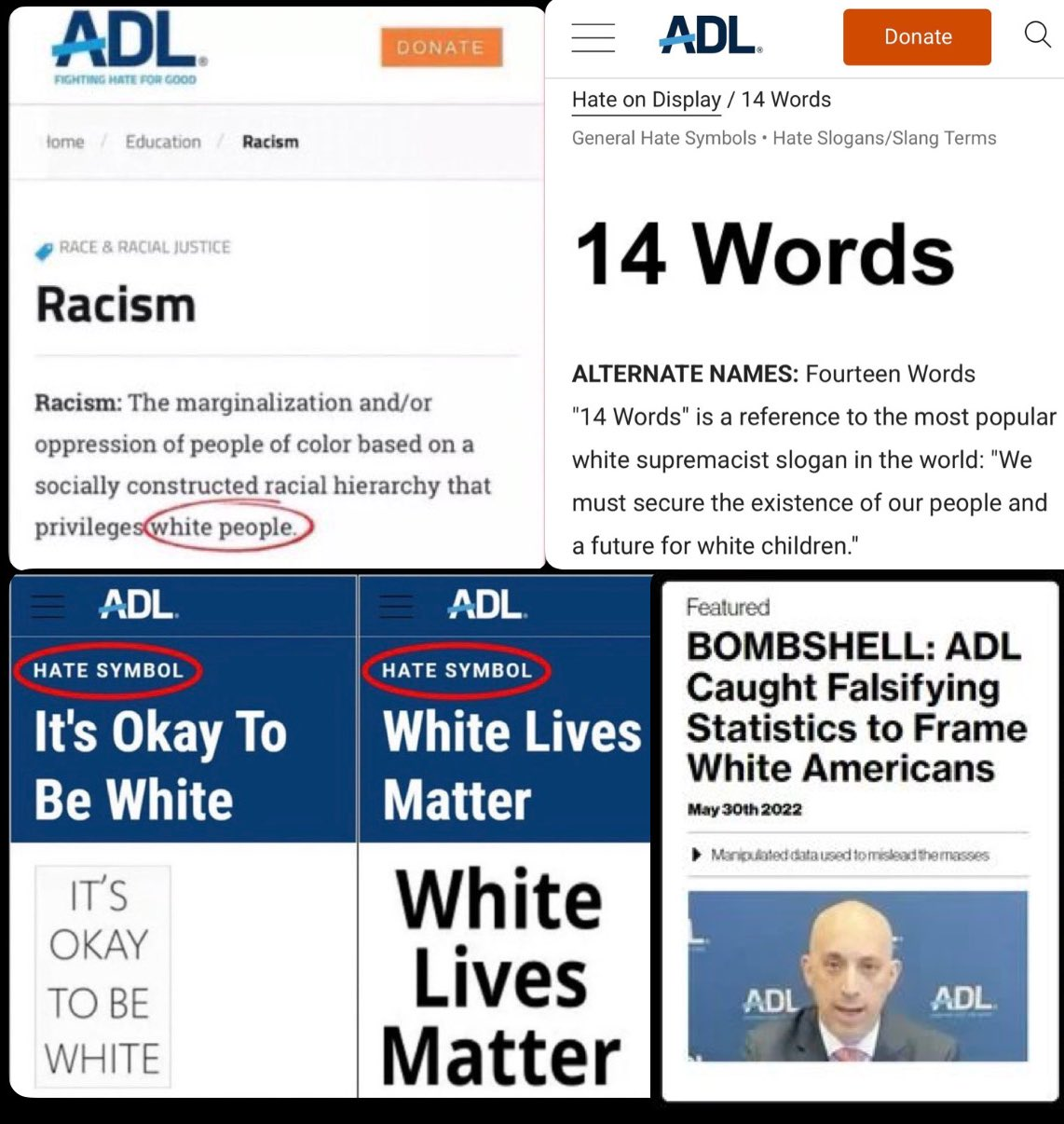
To communicate, we often must ignore the truth or falsity of a statement, our own or someone else’s.
I believe it is an instinct to do this; that it is part of our instinct to communicate at all. Communication requires cooperation, an agreement to be agreeable enough to get the message through.
We might call ignoring truth or falsity in communication “truth elision” or “psychological elision.” Elision means to omit something. Psychological elision would mean omitting or not mentioning psychological truths.
We do a lot of truth elision to save time. In professional or group settings it is hard to communicate any other way because there is not enough time to be perfectly truthful and most people will not care. They just want to socialize and/or get the job done, not search for truth.
Most communication is like that. Most messages are not even superficially analyzed. Semiotics glide through our minds without any thought to their deep origins or interpretations. Truth and falsity are frequently elided.
Like all instincts, our instinct to cooperate by ignoring the truth or falsity of many statements can be misused to consciously deceive.
Indeed, we frequently deceive even ourselves by accepting our own statements as true when analysis would show they are not. One way we succeed in doing this to ourselves is by simply avoiding the analysis—analysis elision.
This is where a simple instinct starts to go bad. A basic need to cooperate on the signs and symbols of communication gets twisted into tricking people, deceiving them, even deceiving ourselves.
The way to see this most clearly and to stop doing it with at least one other person is FIML practice. One of my main goals for this website is to show how and why communication goes bad and how and why it harms us. At the same time, I present a practical way to fix the problem described—FIML.
_________________
I think the above sheds light on false confessions and pretty much all self-abnegating lying on the spectrum trending down from a false confession with legal consequences.
Abusers work these ill-defined and difficult to grasp areas to dominate, entrap, and manipulate others. Narcissists and other “strong” or “clever” dark personality types use our fundamental willingness to cooperate against us.
Gas lighting greatly relies on people’s willingness to ignore truths and accept falsities about themselves. If there is more than one gas lighter at work, victims may even accept blame for things they know with certainty are not true.
As with so much in this world, immoral people put time and energy into fooling those who have not put time or energy into the dark arts.
Mass mind-control preys on our mass susceptibility to believe the story that first comes out; the story that is approved by the ‘authorities’ and mass media; the story that is embraced and recited by our friends and family. Mind-control relies on our need to conform and our fear of being ostracized and criticized for straying from the mass instinct to be the same as others.
Buddhists all know about wise compassion. We also need wise understanding of the world and wise cautiousness about the full scope of human motivations.
Our tendencies to go along with falsity can be seen in every part of life, from small corners of our own lives to the great expanses of entire societies.
 American Buddhist Net