
Shocking body camera footage shows an Amish mother admitting she drowned her four-year-old son to ‘give him to God.’
Ruth Miller, 40, was arrested last week following the drowning death of her four-year-old son Vincen Miller, who was tossed into a lake in rural Ohio on the morning of August 23.
Her husband, Marcus Miller, 45, was found dead earlier in the day at around 8.30am after he told his wife he needed to take part in an alleged test of faith by jumping in the lake and swimming out as far as he could.
The Old Order Amish Church and the extended Miller family issued a statement to WOIO confirming the couple were ‘misinterpreting passages of the Bible’ and that their actions do not reflect the church’s teachings.
‘As a church of Christian faith, we believe that we are saved by grace, through faith in Christ, and the events of this past weekend do not reflect our teachings or beliefs but are instead a result of a mental illness,’ the statement read in part.
‘The ministry and extended family had been walking with them through their challenges, and they had also received professional help in the past.’
The church thanked law enforcement and rescuers for their response and is now focusing on the ‘family directly affected’ by the tragedy.
Tag: psychology
Meaningfulness or emotional valence of semiotic cues
A new study on post traumatic stress disorder shows that PTSD sufferers actually perceive meaning or emotional valence within fractions of a second.
This study bolsters the FIML claim that “psychological morphemes” (the smallest psychological unit) arise at discrete moments and that they affect whatever is perceived or thought about afterward.
The study has profound implications for all people (and I am sure animals, too) because all of us to some degree have experienced many small and some large traumas. These traumas induce a wide variety idiosyncratic “meaning and emotional valence” that affects how we perceive events happening around us, how we react to them, and how we think about them.
The study in question—Soldiers with Posttraumatic Stress Disorder See a World Full of Threat: Magnetoencephalography Reveals Enhanced Tuning to Combat-Related Cues—is especially interesting because it compares combat veterans without PTSD to combat veterans with PTSD.
It is thus based on a clearly defined pool of people with “similar” extreme experiences and finds that:
…attentional biases in PTSD are [suggestively] linked to deficits in very rapid regulatory activation observed in healthy control subjects. Thus, sufferers with PTSD may literally see a world more populated by traumatic cues, contributing to a positive feedback loop that perpetuates the effects of trauma.
Of course all people are “traumatized” to some degree. And thus all people see “a world populated by traumatic cues, contributing to a positive feedback loop that perpetuates the effects of trauma.”
If we expand the word trauma to include “conditioned responses,” “learned responses,” “idiosyncratic responses,” or simply “training” or “experience” and then consider the aggregate all of those responses in any particular individual, we will have a fairly good picture of what an idiosyncratic individual (all of us are that) looks like, and how an idiosyncratic individual actually functions and responds to the world.
FIML theory claims that idiosyncratic responses happen very quickly (less than a second) and that these responses can be observed, analyzed, and extirpated (if they are detrimental) by doing FIML practice. Observing and analyzing idiosyncratic responses whether they are detrimental or not serves to optimize communication between partners by greatly enhancing partners’ ranges of emotion and understanding.
In an article about the linked study (whose main author is Rebecca Todd), Alva Noë says:
…Todd’s work shows that soldiers with PTSD “process” cues associated with their combat experience differently even than other combat veterans. But what seems to be driving the process that Todd and team uncovered is the meaningfulness or emotional valence of the cues themselves. Whether they are presented in very rapid serial display or in some other way, what matters is that those who have been badly traumatized think and feel. And surely we can modify how we think and feel through conversation?
Indeed, what makes this work so significant is the way it shows that we can only really make sense of the neural phenomena by setting them in the context of the perceptual-cognitive situation of the animal and, vice-versa, that the full-import of what perceivers say and do depends on what is going on in their heads. (Source)
I fully agree with the general sense of Noë’s words, but want to ask what is your technique for “modifying how we think and feel through conversation?” And does your technique comport well with your claim, which I also agree with, that “we can only really make sense of the neural phenomena by setting them in the context of the perceptual-cognitive situation of the animal”?
I would contend that you cannot make very good “sense of neural phenomena” by just talking about them in general ways or analyzing them based on general formulas. Some progress can be made, but it is slow and not so reliable because general ways of talking always fail to capture the idiosyncrasy of the “neural phenomenon” as it is actually functioning in real-time during a real “perceptual-cognitive situation of the animal.”
The FIML technique can capture “neural phenomena” in real-time and it can capture them during real “perceptual-cognitive situations.” It is precisely this that allows FIML practice to quickly extirpate unwholesome responses, both small and large, if desired.
Since all of us are complex individuals with a multitude of interconnected sensibilities, perceptions, and responses, FIML practice does not seek to “just” remove a single post traumatic response but rather to extirpate all unwholesome responses.
Since our complex responses and perceptions can be observed most clearly as they manifest in semiotics, the FIML “conversational” technique focuses on the signs and symbols of communication, the semiotics that comprise psychological morphemes.
FIML practice is not suited for everyone and a good partner must be found for it to work. But I would expect that combat veterans with PTSD who are able to do FIML and who do it regularly with a good partner will experience a gradual reduction in PTSD symptoms leading to eventual extirpation.
The same can be said for the rest of us with our myriad and various traumas and experiences. FIML done with a good partner will find and extirpate what you don’t want knocking around in your head anymore.
Disruption of neurotic response in FIML practice
By analyzing minute emotional reactions in real-time during normal conversation, FIML practice disrupts the consolidation, or more often the reconsolidation, of “neurotic” responses.
In FIML, a neurotic response is defined as “an emotional response based on a misinterpretation.” The misinterpretation in question can be incipient (just starting) to long-standing (been a habit for years).
The response is disrupted by FIML practice and, thus, tends not to consolidate or reconsolidate, especially after several instances of learning that it is not valid.
A neurotic response is a response based on memory. The following study on fear memories supports the above explanation of FIML practice.
Memories become labile when recalled. In humans and rodents alike, reactivated fear memories can be attenuated by disrupting reconsolidation with extinction training. Using functional brain imaging, we found that, after a conditioned fear memory was formed, reactivation and reconsolidation left a memory trace in the basolateral amygdala that predicted subsequent fear expression and was tightly coupled to activity in the fear circuit of the brain. In contrast, reactivation followed by disrupted reconsolidation suppressed fear, abolished the memory trace, and attenuated fear-circuit connectivity. Thus, as previously demonstrated in rodents, fear memory suppression resulting from behavioral disruption of reconsolidation is amygdala-dependent also in humans, which supports an evolutionarily conserved memory-update mechanism. (Source: Disruption of Reconsolidation Erases a Fear Memory Trace in the Human Amygdala)
FIML practice works by partners consciously and cooperatively disrupting reconsolidation (and initial consolidation) of neurotic memory (and associated behaviors). FIML both extirpates habitual neurotic responses and also prevents the formation of new neurotic responses through conscious disruption of memory consolidation.
FIML probably works as well as it does because humans have “an evolutionarily conserved memory-update mechanism” that favors more truth. Obvious examples of this update mechanism can be seen in many simple mistakes. For instance, if you think the capital of New York State is New York City and someone shows that it is Albany, you will likely correct your mistake immediately with little or no fuss.
Since FIML focuses on small mistakes made between partners, corrections are rarely more difficult than the above example though they may be accompanied by a greater sense of relief. For example, if you thought that maybe your partner was mad at you but then find (through a FIML query) that they are not, your sense of relief may be considerable.
Career criminal stabs to death Ukrainian who fled war for safety of America
I have covered this story in the past. This is the first video of the stabbing we have seen. The killer is obviously crazy. But it’s also true he has surely been fed reams of anti-white propaganda and probably believes he is somehow justified in attacking a lone defenseless white female. Crazy people do reason, just not well. This sort of crime is a result of propagandizing and coddling the fantasies of the mentally ill. ABN
A theory of FIML
FIML is both a practice and a theory. The practice is roughly described here and in other posts on this website.
The theory states (also roughly) that successful practice of FIML will:
- Greatly improve communication between participating partners
- Greatly reduce or eliminate mistaken interpretations (neuroses) between partners
- Give partners insights into the dynamic structures of their personalities
- Lead to much greater appreciation of the dynamic linguistic/communicative nature of the personality
These results are achieved because:
- FIML practice is based on real data agreed upon by both partners
- FIML practice stops neurotic responses before they get out of control
- FIML practice allows both partners to understand each other’s neuroses while eliminating them
- FIML practice establishes a shared objective standard between partners
- This standard can be checked, confirmed, changed, or upgraded as often as is needed
FIML practice will also:
- Show partners how their personalities function while alone and together
- Lead to a much greater appreciation of how mistaken interpretations that occur at discreet times can and often do lead to (or reveal) ongoing mistaken interpretations (neuroses)
FIML practice eliminates neuroses because it shows individuals, through real data, that their (neurotic) interpretation(s) of their partner are mistaken. This reduction of neurosis between partners probably will be generalizable to other situations and people, thus resulting a less neurotic individual overall.
Neurosis is defined here to mean a mistaken interpretation or an ongoing mistaken interpretation.
The theory of FIML can be falsified or shown to be wrong by having a reasonably large number of suitable people learn FIML practice, do it and fail to gain the aforementioned results.
FIML practice will not be suitable for everyone. It requires that partners have a strong interest in each other; a strong sense of caring for each other; an interest in language and communication; the ability to see themselves objectively; the ability to view their use of language objectively; fairly good self-control; enough time to do the practice regularly.
Wolfram’s ‘computational irreducibility’ explains FIML perfectly
In mathematics, a ‘computation’ is the process of performing mathematical operations on one or more inputs to produce a desired output. A problem in analyzing human psychology arises when we understand that human psychology cannot be reduced computationally. The ‘computational irreducibility’ of human psychology does not mean, however, that there is no way to probe it and understand it. In the following essay, I show how FIML practice can greatly enhance our understanding of our own psychologies and, by extension, the psychologies of others.
Rather than rely on tautological data extractions or vague theories about human psychology, FIML focuses on small interpersonal exchanges that can be objectively agreed upon by at least two people. These small exchanges correspond to what Wolfram calls ‘specific little pieces of computational reducibility’. When we repeatedly view our psychologies from the point of view of specific little pieces of computational reducibility, we begin amassing a profoundly telling collection of very good data that shows how we really think, speak, and act.
FIML is a method of inquiry that deals with the computational irreducibility of humans. It does this by isolating small incidents and asking questions about them. These small incidents are the “little pieces of computational reducibility” that Stephan Wolfram remarks on at 42.22 in this video. Here is the full quote:
One of the necessary consequences of computational irreducibility is within a computationally irreducible system there will always be an infinite number of specific little pieces of computational reducibility that you can find.
42.22 in this video
This is exactly what FIML practice does again and again—it finds “specific little pieces of computational reducibility” and learns all it can about them.
In FIML practice, two humans in real-time, real-world situations agree to isolate and focus on one “specific little piece of computational reducibility” and from that gain a deeper understanding of the whole “computationally irreducible system”, which is them.
When two humans do this hundreds of times, their grasp and appreciation of the “computationally irreducible system” which is them, both together and individually, increases dramatically. This growing grasp and understanding of their shared computationally irreducible system upgrades or replaces most previously learned cognitive categories about their lives, or psychologies, or how they think about themselves or other humans.
By focusing on many small bits of communicative information, FIML partners improve all aspects of their human minds.
I do not believe any computer will ever be able to do FIML. Robots and brain scans may help with it but they will not be able to replace it. In the not too distant future, FIML may be the only profound thing humans will both need to and be able to do on their own without the use of AI. To understand ourselves deeply and enjoy being human, we will have to do FIML. In this sense, FIML may be our most important human answer to the AI civilization growing around us. ABN
The surprising truth about people who prefer to walk around home naked
People who walk around naked at home might be showing off more than just their flesh.
Scientists believe the habit could be a sign of high intelligence.
A study by the University of Rochester in New York looked at how different everyday behaviors are linked to people who display high intellect.
They used data from more than 700 Americans who participated in a survey in the 1990s that reported day-to-day activities and personality traits.
Using the results, the researchers then looked at which specific sets of behaviors were most associated with different personality traits.
They found that people who said they lounged around their houses with no clothes on more than 15 times a year also displayed higher intelligence.

Networks of words, semiotics, and psychological morphemes
On this site we have claimed many times that words and semiotics are held together in networks. We have further hypothesized that “psychological morphemes” are also held together in networks.
A “psychological morpheme” is the smallest meaningful unit of a psychological response. It is the smallest unit of communication that can give rise to an emotional, psychological, or cognitive reaction.
Of course word networks, semiotic networks, and emotional, psychological, and cognitive networks all intertwine with each other.
FIML practice is designed to help partners untangle unwanted emotions from these intertwined networks. FIML practice focuses on psychological morphemes because they are small and thus rather easily understood and rather easily extirpated from real-time contexts (when partners are interacting in real life in real-time).
The hard part about FIML practice is it is done in real life in real-time. But the easy or very effective part about FIML is that once partners learn to do it, results come quickly because the practice is happening in real life in real-time. It is not just a theory when you do it in that way. It is an experience that changes how you communicate and how you understand yourself and others.
In FIML practice partners are mindful of their emotional reactions and learn that when one occurs, it is important to query their partner about it. They are mindful of psychological morphemes and as soon as one appears, but before the morpheme calls up a large network leading to a strong reaction, they query their partner about it.
This practice leads to a fairly smooth and effortless extirpation of unwanted psychological responses. This happens because the data provided by the partner that “caused” the reaction shows the partner who made the FIML query that the psychological morpheme in question arose due to a misinterpretation. Seeing this repeatedly for the same sort of neurotic reaction causes that reaction and the psychological network that comprises it to become extinguished.
A fascinating study from the University of Kansas by Michael Vitevitch shows that removing a key word from a linguistic network will cause that network to fracture and even be destroyed. An article about the study and a link to the study (pay wall) can be found here: Keywords hold vocabulary together in memory.
Vitevitch’s study involves only words and his analysis was done only with computers because, as he says, ““Fracturing the network [in real people] could actually disrupt language processing. Even though we could remove keywords from research participants’ memories through psycholinguistic tasks, we dared not because of concern that there would be long-term or even widespread effects.”
FIML is not about removing key words from linguistic networks. But it is about dismantling or removing psychological or semiotic networks that cause suffering.
Psychological or semiotic networks are networks rich in emotional meaning. When those networks harbor unwanted, inappropriate, or mistaken interpretations (and thus mistaken or unwanted emotions), they can cause serious neurotic reactions, or serious mistaken interpretations.
We believe that these mistaken interpretations and the emotions associated with them can be efficiently extirpated by revealing to their holder the “key” psychological morphemes that set them off.
The psychology of a semiotic network hinges on repeated reactions to key psychological morphemes and that this process is analogous to the key words described in Vitevitch’s study.
Vitevitch did not remove key words from actual people because it would be unethical to do so. But it is not unethical for consenting adults to help each other find and remove key psychological morphemes that are harmfully associated with the linguistic, semiotic, cognitive, and psychological networks that make up the individual.
Free energy principle & interpersonal psychology
To be very brief, Karl Friston’s “free energy principle” says that the brain is an “inference machine” or “prediction machine” that uses Bayesian probability reasoning and is motivated to act by an inference seeming not true or “surprising” to it.
More can be found here and here.
The free energy principle is a straightforward way to explain what FIML (note: this link will lead to recent posts and reposts, including this one, but just scroll down a bit for more) practice does, how it does it, and why it works differently than any other form of psychotherapy and in many significant ways why it works better.
A psychological “complex,” “neurosis,” “personality disorder,” or “persistent thought,” call it what you will, affects human behavior by being or having become a nexus of thoughts, ideas, perceptions, feelings, interconnected neurons and chemistry.
The same is true for any personality trait or skill, including very positive ones.
In Friston’s free energy terms, the psychological elements described above are surrounded by Markov blankets.
That means they are isolated or protected systems with their own variables. These protected systems (protected by Markov blankets) are hard to change because they have their own sets of rules and habitual inputs and outputs.
And that makes them stubborn candidates for most forms of psychotherapy, especially psychotherapy that requires a therapist. One reason for this is time & expense. A second reason is it is difficult for the patient to change without therapeutically experiencing for themself the complex or trait in real-world situations.
The key here is therapeutic experience in the real-world of the unwanted trait or complex that requires change.
The third reason most psychotherapies are ineffective is very subtle incisiveness in real-time is needed to penetrate psychological Markov blankets.
What FIML does is penetrate the Markov blanket enshrouding a complex with a series of small pricks. Each prick in the blanket is small, but each prick also allows some of the valence (gas) inside the blanket to escape.
FIML slowly punctures the Markov blanket with many small pricks, eventually causing it to collapse.
Once it has collapsed, the energies that were trapped inside it can be used for other things. In this way FIML optimizes even non-neurotic psychology by removing pockets of inefficiency held within psychological Markov blankets.
By using only small pricks to penetrate Markov blankets, FIML allows people to gradually and painlessly see what needs to be changed, why, and how to do it. Since FIML works in real-time real-world situations, even very small insights can bring about large changes.
Word and phrase valence as keys to understanding human psychology
Since virtually everything we do, think, and feel has some linguistic component it follows that our perceived valences of words and phrases will be reliable indicators of our psychological makeup.
This is especially true if our perceptions of these valences is “captured” in fraught contexts in real-world, real-time situations.
To be even clearer and more precise, it is fair to say that it is only possible to capture actual real valences in real-world, real-time situations.
When we do not work with real-world, real-time situations, we are capable only of working with the idea of them, a theory of them, a memory of them. And none of that can possibly capture the actual valence as it actually functions in real-life.
The theory, memory, or idea of a psychological valence associated with words and phrases occurs at a different level of abstraction or cognition from the valence itself.
Theories, memories, and ideas of psychological valences can be very interesting and are worth pursuing, but they are not the thing itself and as such have only a weak capacity to grasp the psychology exposed by actual valences in action in the real-world.
In a previous post—Words and word groups mapped in the brain—I discussed the following video, which is well-worth viewing again if you missed it the first time.
I said:
From these maps we can see that word groups have idiosyncratic arrangements, associations, and emphases.
And from this we can understand how analysis of interpersonal communication details can lead to beneficial changes in word group arrangements and thus also human psychology.
The video is very helpful for visualizing how words and word groups are organized in the brain. And this illustrates how and why FIML works as well as it does.
By “capturing” actual verbal psychological valences in real-time, real-world situations, partners gain immense insight into how their psychologies actually function in the real-world, how they actually deal with real life.
Focusing on very brief real-life valences has another very large benefit: though the valences are as real as they come, they are also very small, comprising nothing more than part of the working memory load at the time.
This is a bigger deal than it might seem. Virtually all of us have been trained by years of theorizing about our psychologies to see even very small incidents of real psychological valence as aspects of some theory or story about them.
No, no, no. Don’t do that. Just see each one for what it is—a brief valences that appeared briefly in working memory; and that has been “frozen” by the FIML technique as a small snapshot to be identified and understood as it is.
First get the evidence, get the data. Those valence snapshots are the data. Get plenty of them and you may find that you do not even need any theory about what they are or what caused them.
They just are. Indeed, theorizing about them makes them different, bigger or worse, while simultaneously hiding their real nature.
Most of us do not know how to think about real-world, real-time valences because we tend to always fit them into into an a priori format, a format we already believe in. That could be a theory of psychology or a take on what our personality is or what the other person’s personality is.
In the maps shown in the video, that would constitute a whole brain response to a small valence that appeared only briefly.
By using the FIML technique, you will find it is much easier and much more beneficial to reorganize small parts of the verbal map one piece at a time than to reorganize the entire map all at once based on some idea.
In practice, FIML deals with more than just words and phrases, but the whole practice can be largely understood by seeing how it works with language. FIML treats gestures, tone of voice, expressions, and so on in the same way as language—by isolating brief incidents and analyzing them for what they really are.
Sibling-specific aggression in women and girls
Human men are typically more aggressive than human women, a finding supported by reams of research. But surveys of 4,136 individuals in 24 countries reveal an exception to the trend: aggression in sibling relationships. Douglas T. Kenrick and Michael E.W. Warnum, along with a team of 49 colleagues, asked participants how often they had acted aggressively towards a sister, a brother, a female friend, a male friend, a female acquaintance, or a male acquaintance—both when they were children and when they were adults. Aggressive actions included both direct aggression, such as hitting/slapping or yelling, as well as reputational aggression, such as sharing harmful gossip, or reporting someone’s behavior to an authority—“telling” in a childhood context. In terms of direct aggression, girls and women were slightly more aggressive towards their siblings than were boys and men. Men and boys, by contrast, were more likely to be directly aggressive with non-siblings. Women and girls were also just as likely to be indirectly aggressive to siblings as men and boys were, both in childhood and adulthood. Patterns of sibling aggression by sex were not correlated with country-level gender equality indicators. The trend held in wealthier and poorer countries and in Western and Non-Western cultures, suggesting to the authors that the contextual effect of sibling relationships on female aggression may well be universal. According to the authors, a more nuanced understanding of the relationship between sex and aggression should include the social context in which it occurs.
How working memory works and doesn’t work
A new study on working memory has some intriguing insights into how working memory works and how it doesn’t work.
It’s widely known that when working memory is overtaxed, confusion results, skills decline, while feelings of frustration and anger may arise. The reason for this seems to be:
Feedback (top-down) coupling broke down when the number of objects exceeded cognitive capacity. Thus, impaired behavioral performance coincided with a break-down of Prediction signals. This provides new insights into the neuronal underpinnings of cognitive capacity and how coupling in a distributed working memory network is affected by memory load. (Working Memory Load Modulates Neuronal Coupling)
A well-written article about this study contains the following diagram and explanation:

This article—Overtaxed Working Memory Knocks the Brain Out of Sync—also contains the following passages and quote from one of the study’s authors:
Miller thinks the brain is juggling the items being held in working memory one at a time, in alternation. “That means all the information has to fit into one brain wave,” he said. “When you exceed the capacity of that one brain wave, you’ve reached the limit on working memory.”
…The prefrontal cortex seems to help construct an internal model of the world, sending so-called “top-down,” or feedback, signals that convey this model to lower-level brain areas. Meanwhile, the superficial frontal eye fields and lateral intraparietal area send raw sensory input to the deeper areas in the prefrontal cortex, in the form of bottom-up or feedforward signals. Differences between the top-down model and the bottom-up sensory information allow the brain to figure out what it’s experiencing, and to tweak its internal models accordingly. (Emphasis added)
Working memory works via connections between three brain regions that together form a coherent brain wave.
Notice that “an internal model of the world,” which is a “top-down signal” within the brain wave feedback loop, predicts or interprets “bottom-up” sensory input as it arrives in the brain.
I believe this “top-down signal” within working memory is the reason FIML practice has such enormous psychological value.
By analyzing minute emotional reactions in real-time during normal conversation, FIML practice disrupts the consolidation, or more often the reconsolidation, of “neurotic” responses. (Disruption of neurotic response in FIML practice)
FIML optimizes human psychology by helping partners intervene directly into their working memories to access real-world top-down signals as they are happening in real-time. Doing this repeatedly reliably alters the brain’s repository of top-down interpretations, making them much more accurate and up-to-date.
The model of working memory proposed in this study also explains why FIML can be a bit difficult to do. Partners must learn to allow a FIML meta-perspective or “super top-down” signal to quickly commandeer their working memories so that analysis of whatever just happened can proceed rationally and objectively. It does take some time to learn this skill, but it is no harder than many other “automated” skills such bicycling, typing, or playing a musical instrument.
first posted JUNE 7, 2018
__________
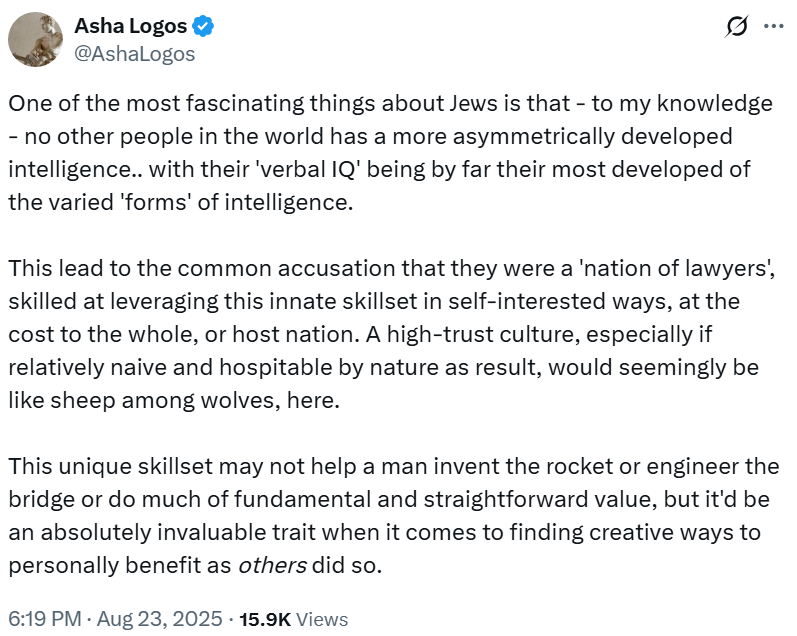
I believe this is largely true with the addition of a strong cultural and probably genetic propensity for self-deception. Evolutionarily, self-deception is a ‘valuable’ trait for any tribe as it ensures tribal-bonding at the expense of others. ABN
Our psychologies are unnecessarily confined within narrow ranges of meaning and understanding
Human psychology is greatly affected by human language. Since humans normally use language rather crudely and almost always are confined within meanings already established in language, their psychologies are fundamentally both crude and unnecessarily confined within narrow ranges of meaning and understanding.
This causes emotionality, discord, dependence, frustration, anger, and violence. Our normal uses of language often stimulate basic instincts that we either have to control or be controlled by.
I usually discuss this problem as it occurs during interpersonal conversation, where it is generally most serious and where our “personalities” are generally formed. But it also exists in texting, emails, news stories, and even scientific peer reviewed papers.
The basic underlying problem is we do not communicate well, almost no one does. Even very articulate, well-educated, intelligent people with good upbringings and admirable personalities have this problem. In fact, they often have it even worse than everyone else because their considerable skills have trapped them even worse.
The trap is using established meaning or interpretation to override mistakes in interpersonal communication. The established meaning can be learned from others or self-generated. Either way, when it is used to override mistakes in communication (and this happens often) the person is trapped in a labyrinth of false references: the lived and learned matrix of their personality; the neuronal structures of idiosyncratic memories and behaviors that constantly misguide the sufferer through a tautological existence.
When data is bad the output will be bad. When interpersonal data is bad, and far too much of it is, the output in speech, listening, and cogitating will be bad. When everyone is like this, the output will be horrendous. Look around you at our world as it becomes less truthful and more absurd daily. The root cause is massive amounts of uncorrected bad data at all levels of society.
My contribution toward fixing this mess is FIML, which deals “only” with the enormous problems of close or intimate interpersonal communication.
When two people do FIML conscientiously, all of their problems born of long histories of many mistakes can be cleared up. If you want to do this, if you want to optimize your being; find a good partner and do FIML. As of today, there is no other way. If you can see the problem, you will understand why FIML works. If you do FIML even without fully understanding it, you will still fix the problem and will eventually come to see how it’s not just your problem: all people everywhere have it and have always had it. I do not know why I am the first person to provide a solution to it.
The problem is very obvious but it is so big and widespread, people either do not see it or believe it cannot be fixed.
FIML is especially good for and accessible to very sensitive people who pick up on communication signs much more than most people and who love having those sensitivities but do not know how to manage them well
If your head is often boiling with ideas, associations, memories, signs and signals from people and the world around you and you love it but maybe it’s driving you crazy… and you have a partner who is similar or at least understanding, then you will love FIML and become good at it if you try.
 American Buddhist Net