
A useful guide to understanding what FIML is

The Ethical Skeptic (TES) has written a very good essay: The Distinction Between Comprehension and Understanding. I want to use a schema presented in his essay to describe what FIML is, how to see it and understand it. Comprehending it requires doing it and reaping its benefits.

TES provides this illustration of the layers of thought and psychology that culminate in comprehension:

I might not use a hammer to represent comprehension but since we have a hammer, it would represent FIML’s ability to smash through the dogma of psychology, our ordinary understanding of psycholinguistics, the simplicity with which we view real-time speech, and our ignorance that there exists anything profound in being able to analyze real-time, real-world speech as it is happening.

FIML is a method, a technique. It has no content save what you bring to it. FIML works with and reveals the profound subjectivity of the individual. Since basic FIML cannot be done alone but only with a partner, it also reveals the profound subjectivity of your partner. In doing this, it smashes the dogmas of psychology and virtually all public/common notions about what the human mind even is.

The difficulties of FIML are fundamentally two: 1) seeing it at all and 2) doing it. FIML is not something people normally ever do. I have been writing, reading, and thinking about FIML for many years and have never seen any reference to anything like it anywhere in the history of the world. If you know of one, please tell me. I will be delighted.

FIML is probably hard to see because all languages everywhere contain a very strong proscription against questioning anyone in the moment in order to begin a sober analysis. People just don’t do that. Getting that close and personal about something someone has just said (or did) is instinctively perceived as disrespect, argumentativeness, stupidity, rocking-the-boat, etc. FIML 100% is not that, but since no one has cultivated the habit or acquired the training to do it, no one can even see it let alone do it.

Most of us can see moments of speech and change our minds quickly if we are ordered, instructed, or want to curry favor. I guess that is a starting point, but none of that is FIML. FIML begins with a subjectively felt (or comprehended) need to find out if you have interpreted something correctly. Very ordinary, right? Yes, it is in “slow-time,” but not in real-time.

When done in real-time, the emphasis is on the one asking the question because this one has noticed an interpretation arising in their mind that may be wrong. The interpretation could be completely new or more likely habitual. By frequently noticing these interpretations and then asking your FIML partner about them (using FIML rules) and listening to their reply, you will gradually begin to see a true picture of your actual profound and marvelous subjective mind as it moves through and responds to its living existence.

FIML is no more difficult to learn than playing a musical instrument, riding a motorcycle, or cooking. Once both you and your partner understand what FIML basically is and why it is so necessary, you will progress quickly and gain many insights into your behaviors and thinking processes. At some point, you will achieve a kind of mutual comprehension of each other that is very clear and beautiful and cannot be gained in any other way.

New research shows women receive less critical performance feedback

A new study published in the Journal of Business and Psychology reveals that feedback providers are more likely to inflate performance evaluations when giving feedback to women compared to men. This pattern appears to stem from a social pressure to avoid appearing prejudiced toward women, which can lead to less critical feedback. But this practice, while seemingly protective, could limit women’s opportunities for growth and advancement.

In recent years, discussions around workplace equality and fairness have intensified, especially following movements like #MeToo. Employers and managers are increasingly aware of the need to treat women fairly in professional settings. However, this heightened awareness may be leading some feedback providers to overcorrect, offering women more positive feedback than is warranted by their actual performance.

Prior research has suggested that women may receive less critical and more positive feedback than men, but the reasons for this discrepancy were unclear. The researchers aimed to explore whether this pattern was linked to social pressures and the desire to avoid appearing biased or prejudiced.

link

Psychedelics Can Awaken Your Consciousness to the ‘Ultimate Reality,’ Scientists Say

Psychedelic compounds can create feelings of euphoria, a loss of your sense of self, and as various treatment studies demonstrate, cause a transcendent experience so deeply moving that it helps people kick heavy burdens like depression and alcoholism—at least temporarily. And after ingesting a psychedelic, your brain might even feel like it’s connecting to the “Ultimate Reality,” according to researchers at Johns Hopkins University in Baltimore, Maryland.

Compounds like psilocybin attach to serotonin receptors in your central nervous system. However, neuroscientists still don’t understand what links the resulting hallucinations and reality altering sensations to the broader sense of spiritual connection that some users have reported experiencing, such as “seeing God.” But combining therapy, brain scans, and controlled doses of psychedelics could provide a firm roadmap for the scientists trying to unravel the mystery.

A 2019 research survey, centered on a detailed questionnaire from Johns Hopkins’ Center for Psychedelic and Consciousness Research, probed 4,285 healthy people about their out-of-body experiences of God, or a higher “Ultimate Reality.” The volunteers included both users and non-users of classic psychedelic drugs such as psilocybin, LSD, ayahuasca, and DMT. The psychedelics users were most likely to choose what they felt to be “Ultimate Reality,” out of a choice between “God,” “Higher Power,” “Ultimate Reality,” or an “Aspect or Emissary of God (e.g., an angel),” according to the results, published in the journal PLOS One. Users said they felt a presence that could affect their reality, and that they had a decreased fear of death. The survey noted that related studies had shown similar experiences in people who had taken the same psychedelic compounds.

As far back as 2006, researchers at Johns Hopkins found that a dose of psilocybin, a psychedelic compound from certain species of fungi, caused about 60 percent of healthy volunteers to have a “complete” spiritual trip. Participants having a spiritual experience said they felt a kind of unity of everything, without a physical form. They called it “pure consciousness.”

link

For Buddhists who may wonder if using psychedelics violates the Fifth Precept of Buddhism, please see: Are We Misunderstanding the Fifth Precept? wherein it is argued that the Fifth Precept clearly refers to alcohol and not psychedelics. I do not mean to encourage the use of psychedelics, but research on psychedelics has shown they confer many benefits on users. I support legalizing, while also guaranteeing the purity of, beneficial psychedelics for adults. ABN

Some oddities of communicating with doctors

One aspect of seeing a doctor is you will remember them (often vividly) and whatever rapport you thought had been established, but when you next see them (assuming weeks or months have passed), they almost certainly will not share your memories of whatever rapport you may have thought had been established, if they remember you at all. This can make them seem cold or unfocused or unstable.

From their POV, many doctors handle this by being kind of plastic friendly at best. For patients, it’s weird because there are few other communications as important as with your doctor and yet there is almost no one else you know who is as disconnected from normal relationship dynamics with you as your doctor. So a doctor’s mood when you see them probably has next to nothing to do with you.

ABN

Indeterminacy of translation and FIML

I betray my poor education by admitting that I had never heard of W. V. Quine’s “indeterminacy of translation” until last week. My ignorance is especially egregious as I have worked as a professional translator for many years.

Maybe I had heard about it but had forgotten. I am being self-reflective because FIML practice is deeply, fundamentally concerned with the “indeterminacy” of translating one person’s thoughts into another person’s head.

Quine’s thesis is not just about translating from one language to another, though there is that. It is much more about the fundamental impossibility of determining what anything means well enough to “translate” it into another context, a next sentence, into another person’s mind, or even “translating” your own speech from the past into the context of your mind today.

If I had known about Quine, I probably never would have thought of FIML because his ideas and the slews of papers written on “indeterminacy of translation” surely would have made me believe that the subject had been worked through.

As it was, I have plodded along in a delightful state of ignorance and, due to that, maybe added something practical to the subject.

In the first place, I wholeheartedly believe that speech is filled with indeterminacy, which I have generally called ambiguity or uncertainty. In the second place, I have confined my FIML-related investigations mainly to interpersonal speech between partners who care about each other. I see no solution to the more general problem of indeterminacy within groups, subcultures, or linguistic communities. Until brain scans get much better, large groups will be forced to resort to hierarchical “determinacy” to exist or function at all.

For individuals, though, there is much we can do. FIML practice does not remove all “indeterminacy.” Rather, it removes much more than most people are aware is possible, even remotely aware is possible. My guess is FIML communication provides a level of detail and resolution that is an order of magnitude or two better than non-FIML.

That is a huge improvement. It is life-changing on many levels and extremely satisfying.

FIML does not fix everything—and philosophical or “artistic” differences between partners are still possible—but it does fix a great deal. By clearing up interpersonal micro-indeterminacy again and again, FIML practice frees partners from the inevitable macro-problems that micro-ambiguity inevitably causes.

Moreover, this freedom, in turn, frees partners from a great deal of subconscious adhesion to the hierarchical “determinacy” of whichever culture they are part of. Rather than trapping themselves in a state of helpless acceptance of predefined hierarchical “meaning,” FIML partners have the capacity to sort through existential semiotics and make of them what they will with far less “indeterminacy,” or ambiguity, than had been possible without FIML practice.

first posted DECEMBER 7, 2014

John Hickenlooper: The first faceblind U.S. Senator?

UPDATE: Hickenlooper is interesting on the topic of face-blindness, or prosopagnosia. He also talks a lot about leadership. I have no doubt he is a personable, gregarious guy who knows how to work cheerfully for the Democrat machine. This is precisely the type of person our mind-control masters groom and use for their nefarious ends. Many people of this ilk have no idea they are in leadership positions because they are the perfect tool, useful idiots who may actually believe the party line or at least be able to go along with it without bothering their consciences too much. All of our major institutions are filled with people like this, along with the psychopaths and parasites who control them. A major quality most of them have in spades is superficial charm. ABN

Nightmares and the Cannabinoids

The cannabinoids, Δ9 tetrahydrocannabinol and its analogue, nabilone, have been found to reliably attenuate the intensity and frequency of post-traumatic nightmares. This essay examines how a traumatic event is captured in the mind, after just a single exposure, and repeatedly replicated during the nights that follow. The adaptive neurophysiological, endocrine and inflammatory changes that are triggered by the trauma and that alter personality and behavior are surveyed. These adaptive changes, once established, can be difficult to reverse. But cannabinoids, uniquely, have been shown to interfere with all of these post-traumatic somatic adaptations. While cannabinoids can suppress nightmares and other symptoms of post-traumatic stress disorder, they are not a cure. There may be no cure. The cannabinoids may best be employed, alone, but more likely in conjunction with other agents, in the immediate aftermath of a trauma to mitigate or even abort the metabolic changes which are set in motion by the trauma and which may permanently alter the reactivity of the nervous system. Steps in this direction have already been taken.

link

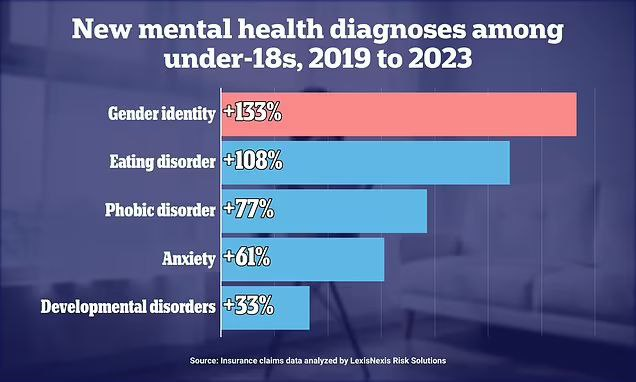
‘Immediately stop the promotion of social affirmation, puberty blockers, cross-sex hormones and surgeries for children and adolescents who experience distress over their biological sex’ — Doctors Protecting Children

Therefore, given the recent research and the revelations of the harmful approach advocated by WPATH and its followers in the United States, we, the undersigned, call upon the medical professional organizations of the United States, including the American Academy of Pediatrics, the  Endocrine Society, the Pediatric Endocrine Society, American Medical Association, the American Psychological Association, and the American Academy of Child and Adolescent Psychiatry to follow the science and their European professional colleagues and immediately stop the promotion of social affirmation, puberty blockers, cross-sex hormones and surgeries for children and adolescents who experience distress over their biological sex.  Instead, these organizations should recommend comprehensive evaluations and therapies aimed at identifying and addressing underlying psychological co-morbidities and neurodiversity that often predispose to and accompany gender dysphoria. We also encourage the physicians who are members of these professional organizations to contact their leadership and urge them to adhere to the evidence-based research now available.”

link