
Could be accidental or selected by DM, but this kind of photo is often telling. ABN
Do your best. Speak the truth.

His essay can be found here: The First Smile. I highly recommend it.
Evolutionary psychology is without question a real field capable of explaining a great deal about human beings. At the same time, it is often very difficult to separate what actually happened during thousands of years of evolution from what we think happened.
Graziano proposes that the human signals of smiling, crying, and laughing all evolved from a single more basic cringe reaction employed as defense against an object or person striking us or otherwise threatening us.
The evolutionary transformation from primitive reactions to subtle social cues is fascinating to contemplate. I am particularly struck by how ambiguous our present-day understanding of these social cues can be. As Graziano, the evolutionist, says, “So long as both sides of the exchange keep deriving benefits, the behaviour floats free of its violent origins.”
The violent origins of smiling and acting nice only sometimes play a direct role in why people do these behaviors today. Added to them is a plethora of cultural and idiosyncratic interpretations. And so, Graziano the social scientist also says, “We have stumbled on the defining ambiguity of human emotional life: we are always caught between authenticity and fakery, always floating in the grey area between involuntary outburst and expedient pretence.”
I would contend that this aspect of human emotional life is maddening, that it is literally driving people crazy. Because how can you really tell if an expression, a statement, a gesture is authentic or fake? And how can you be sure you know how to interpret it?
In most cases, you can’t be sure. Yes, we can make vows, proclaim fealty or allegiance, swear till death do us part, or repeat familiar, comforting routines for years, but none of these methods is certain. Indeed, our need for them only shows what thin ice we are on. All of them can be faked and all of them often are.
I do believe that many, if not most, of us do not want to be either fakers or the one faked to. Yet we seem all but trapped “between authenticity and fakery, always floating in the grey area between involuntary outburst and expedient pretense.”
This is why we all need FIML practice or something very much like it. With FIML, much greater communicative detail can be made available to both partners. Rather than wonder what words, smiles, tears, or a tone of voice means, FIML partners have the means to find out.
Evolutionarily, you might say that FIML allows the human neocortex to understand and control the human limbic system. FIML allows higher thought, reason, and reflection to control base reactions and base signs that inevitably cause serious misunderstandings even between people who are very well-disposed toward each other and who share a strong desire to interact honestly.
Humans are characterized by a delicate and intricate web of thought, language, and culture that has been grafted onto a base of animal behavior. I do not see how it is even remotely possible to fully realize the potential of that delicate and intricate web of thought, language, and culture without frequently analyzing how animal signs and signals interfere with it during even the most ordinary of interactions.
Graziano mentions the Duchenne smile, a supposedly authentic smile that includes the muscles around the eyes. But Duchenne smiles can easily be faked. They are a required social expression in most of East Asia and can be seen faked by actors on American TV all the time.
The distinction between a Duchenne smile and a super-fake one is valid and valuable to a point. But it is also a woefully simple distinction. We cannot as thinking beings expect to find satisfaction in noticing minor, and easily faked, distinctions like that. The same thing goes for tones of voice, gestures, word choices, behaviors, and everything else we use to communicate.
In public, in the world at large, we have to use best guesses about what is going on, but in private guessing about what your partner really means is a recipe for mutual disaster, if not complete destruction.
first posted AUGUST 18, 2014
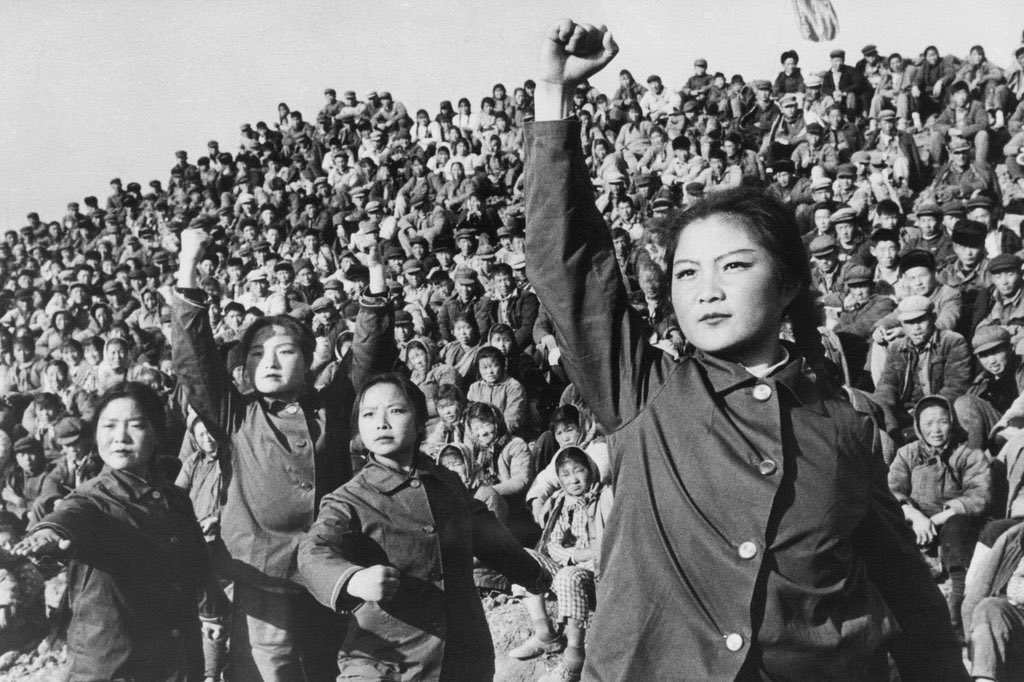
This is a staged photo but still shows the horrible fanaticism of revolutionary madness. Not all evil is banal. Much of it looks savage and righteous like this. Just what we are seeing now in USA among young (and old) fools who are attracted to the intellectual pseudo-certainty of fanatical goals. ABN
Narcissism works because its victims don’t see it.
Victims don’t see it because they are children being raised by narcissistic parent(s) or very commonly adults who were raised by narcissists. There is even a term for the latter: ACoN, Adult Children of Narcissists.
Other kinds of people also fall for narcissists, but having been raised by narcissistic parent(s) is probably the most common.
Narcissists often appear normal to others due to narcissism being a fairly common disorder and also due to the narcissist’s deep-seated need to appear normal to others. They are experts at “impression management.” That’s a big part of what narcissism is.
For many ACoNs, narcissistic traits look perfectly normal because that is what they experienced at home. Narcissistic smiles, glares, malice, selfishness, ostracism, false concern, abuse, and more all seem normal because they were imprinted on the primary instincts of the child to need and trust their parents and siblings.
In truth, entire cultures can be narcissistic, abusive, hierarchical. To break these habits in interpersonal relationships, you have to do FIML practice or something very similar.
first posted FEBRUARY 15, 2018
The third wave of cognitive behavior therapy is a general term for a group of psychotherapies that arose in the 1980s, inspired by acceptance and commitment therapy (ACT).
To me, third wave therapies seem more realistic than older therapies because they accept emotions as they are and pay close attention to how they function in the moment.
The link above is well-worth reading. The frames of these therapies are also well-worth considering.
FIML, which I am calling a “fourth wave cognitive behavior therapy,” differs from third wave therapies in that FIML does not use a professional therapist. Instead, partners become their own therapists.
Moreover, how FIML partners frame their psychologies or generalize their behaviors is entirely up to them. Similarly, their psychological goals and definitions are entirely in their own hands.
At its most basic, FIML “removes wrong interpretations of interpersonal signs and symbols from the brain’s semiotic networks.”
This process of removal, in turn, shows partners how their minds function in real-time real-world situations. And this in turn provides the tools and perspectives to reorganize their psychologies in whichever ways they like.
FIML is based on semiotics because semiotics are specific and with practice can be clearly identified and understood. They give partners “solid ground” to stand on. Words, tone of voice, gestures, and facial expressions are some of the major semiotics partners analyze.
Using real-world semiotics as an analytical basis frees FIML from predetermined frameworks about personality or what human psychology even is. With the FIML tool, partners are free to discover whatever they can about how their minds communicate interpersonally (and internally) and do whatever they like with that.
first posted DECEMBER 21, 2017
Today I would like to add that, most of all, FIML is a technique that optimizes communication between partners which in turn optimizes life itself. Everything improves with FIML. ABN
From a Buddhist point of view, you do not need an identity. You can walk around all day long without ever invoking any identity. An identity is a habit, a learned reference, a psycholinguistic category, one way of understanding your own name or words addressed to you, a psychological ball and chain. You do not need any of that. Your brain, life, and mind will work perfectly well with no identity at all. In fact, one of the goals of Buddhist practice is to be free of identity. Try it—walk around with no identity. You won’t fall down and will be able to get wherever you were going just fine. ABN
Many social and legal conflicts hinge on semantic disagreements. Understanding the origins and implications of these disagreements necessitates novel methods for identifying and quantifying variation in semantic cognition between individuals. We collected conceptual similarity ratings and feature judgements from a variety of words in two domains. We analyzed this data using a non-parametric clustering scheme, as well as an ecological statistical estimator, in order to infer the number of different variants of common concepts that exist in the population. Our results show at least ten to thirty quantifiably different variants of word meanings exist for even common nouns. Further, people are unaware of this variation, and exhibit a strong bias to erroneously believe that other people share their semantics. This highlights conceptual factors that likely interfere with productive political and social discourse.
link
This study shows a very basic reason to do FIML. The study emphasizes semantic variation at the level of social discourse and common words. FIML operates at the interpersonal, idiosyncratic level where our sense of being lurks like a chained animal in the midst of an enormous plethora of semantic variation and semiotic ambiguity. Simply stated, there is no way to negotiate the intimate interpersonal realm well without doing FIML. In this realm, the kinds of misunderstandings identified in the linked study are multiplied in literally every imaginable way. At the same time, the dangerous importance of communication errors is greatly amplified and psychologically cumulative. This is a main reason interpersonal relationships can become volatile and end in suffering. If you can see what the study is about and understand the importance of the ‘semantic disagreements’ it describes, you should be able to see the importance of doing FIML in real-time with an understanding partner. From birth to death, our entire psychologies rest on the dynamic foundation of our intimate, interpersonal communications. If you want to optimize your psychology, you must clear up communication at this level. ABN
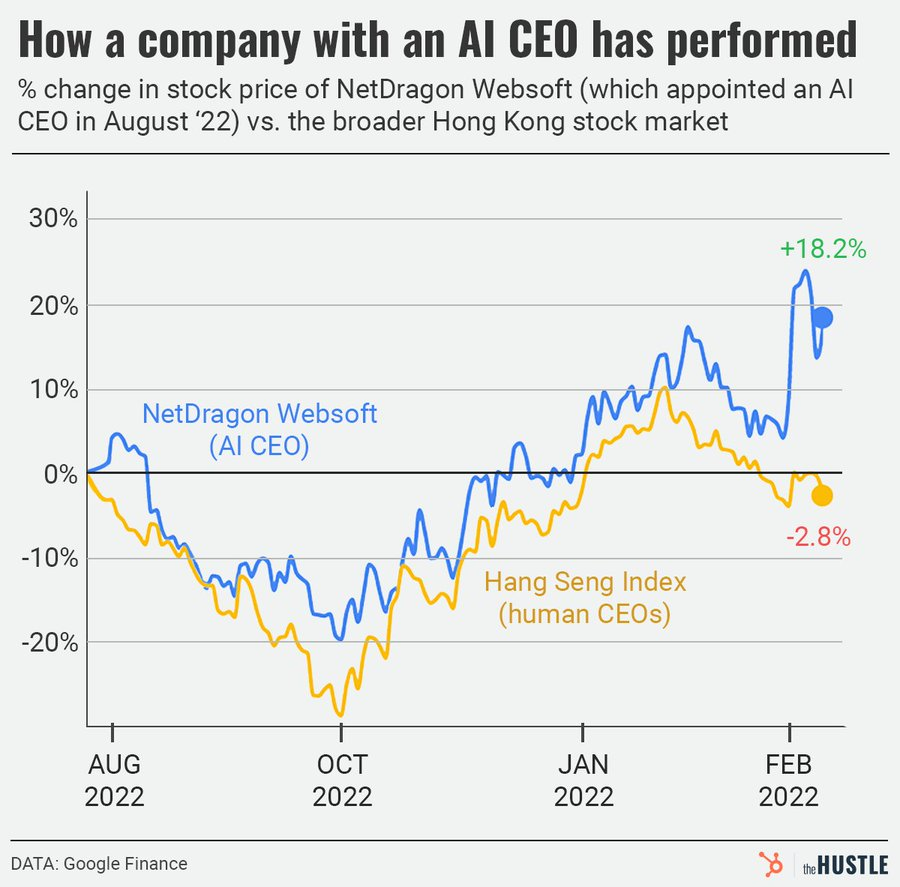
GPT-4 is the latest iteration of Open AI’s ‘chat’ output. No one doubts that in a short time these robotic intelligences will outperform humans in nearly all, if not all, realms. This can be frightening or it can be wonderful. I tend to think wonderful will win in the end. Here’s why:
Most large scale human problems are at their core fairly simple. Our out of kilter economy is basically going off the rails for fairly simple reasons. The psychopaths who pursue war after war for profit and power are not complex people; it’s obvious what they are doing even though the hidden details make it hard to stop them. Election fraud at its core was simple, figuring it out was simple, and stopping it would also be simple. The only problem is us—people squabble and can’t agree and there is no honest authority (not even SCOTUS) to impose a fair decision.
This is where AI will help enormously. A good AI without bias will be able to impartially identify problems like the above and propose unbiased solutions to them. It will take time for people to accept what AI decides but its decisions will be there in public, something we are compelled to talk about. It would at least provide a fairly compelling fairly objective reference point for discussion.
More advanced AI, like a GPT-20, could be manipulated and cause massive problems but maybe not. Maybe there are enough of us to stop that or to allow it to evolve into something really good. One thing I have learned is narcissists prefer not being narcissists when they gain insight into their condition and have a way to escape it. AI should be able to help with that.
An AI program that trains narcissists how to think and feel differently could probably be built today. From my point of view (based on FIML), I am convinced people are all fairly simple at core and that when they gain deep insight into the workings of their own systems, they feel happy and are quick to remove errors, like narcissism, from them. Writ large, this would change how Congress operates, how our economy is run, how we educate young people. ABN
From the GPT-4 website:
We’ve created GPT-4, the latest milestone in OpenAI’s effort in scaling up deep learning. GPT-4 is a large multimodal model (accepting image and text inputs, emitting text outputs) that, while less capable than humans in many real-world scenarios, exhibits human-level performance on various professional and academic benchmarks. For example, it passes a simulated bar exam with a score around the top 10% of test takers; in contrast, GPT-3.5’s score was around the bottom 10%. We’ve spent 6 months iteratively aligning GPT-4 using lessons from our adversarial testing program as well as ChatGPT, resulting in our best-ever results (though far from perfect) on factuality, steerability, and refusing to go outside of guardrails.
link
The best way to analyze how you communicate in real time is:
Get an honest partner who cares about you.
Together and separately observe the small units of your thoughts and communication.
Use only units of communication small enough to be held in your short-term memory(s). This means the five to seven things you are able to hold in your short-term memory.
Discuss what you find in yourself with your partner.
Then discuss these units as they arise during communication with your partner.
If both partners understand what comprises a small unit (the 5-7 things in short-term memory), you are ready to share this information in real-time (that is, very close in time to when the small unit arose).
This small unit could be a gesture, a word, an expression, a tone of voice. Anything small enough that communicates to you and that seems to be coming from your partner.
The unit should be small and agreed upon by both partners.
Then analyze it as it functioned during the moment(s) it arose.
Example: the small unit might be a fleeting gesture—your partner drops their hand. You feel something and juust start to think maybe it is a dismissive gesture.
Stop the flow of communication immediately at that point (as you first perceive a reaction arising in yourself).
Then ask your partner what was in their mind when their hand dropped (or what was in their mind “just a moment before,” without identifying the hand drop).
(Your partner must previously have agreed to welcome this sort of intervention.)
Listen to what they say and compare that to what you were beginning to think.
If it was dismissive, find out why.
If it was not, examine yourself and how your psychology was actually functioning in real-time.
You can also do this with units based on positive emotions or unemotional states of mind.
It’s good to practice this technique on neutral states of mind.
What you will find.
You will find that a significant number of your real-time impressions of your partner are mistaken, either slightly or very much.
If both partners keep correcting these mistakes, you will come to have fewer and fewer of them (though they will always continue to arise due to inherent ambiguities in communication).
As both partners clear up communications between them, both will also clear up many cloudy parts of their own psychologies.
This is because our psychologies are based on communication. (Bad data in = bad conclusions both inside you and what you do with them outside you.)
I have used the above technique for many years and guarantee it works wonders.
The hardest parts of this are getting a good partner, getting them to agree to do it, then doing it your first few times.
It is hard at first because it goes against basic cultural instincts.
To overcome this, remember the units are very small and you agreed to do it.
This technique doesn’t hurt at all but will make you feel wonderful.
It doesn’t hurt because the units are so small.
It makes you feel wonderful because each mistaken unit you remove clears up mental space for something better.
When you observe and remove more and more small (micro) units of the same type, you will tend to eliminate the meso and macro (mistaken) psychological frames that support them.
Some frames can be eliminated after 1-5 micro units have been observed. Some take longer.
first posted MARCH 29, 2017
When first posed, I used their and them in the antiquated sense of a gender not identified, which is how I mean it today as well. This essay describes how to do FIML and briefly explains the value of doing it. ABN
Linked below is a thoughtful discussion of Complex Post-Traumatic Stress Disorder (CPTSD).
Personally, I think we all have CPTSD for how can the basic needs of a child (acceptance and security) ever be fully met?
A core aspect of Buddhist mindfulness training is noticing disturbing psychological responses the moment they arise. The ways these responses are dealt with and cured is a major focus of Buddhist practice.
The discussion linked below explores mindfulness in CPTSD therapy. It also describes the therapeutic concept “co-regulation,” which entails two people mindfully regulating or curing unwanted stressors together. (FIML does that extremely well, btw.)
Here’s the discussion. It’s a good read.
-Behaviors serve a purpose and are maladaptive attempts to meet an unmet need and trauma survivors generally have maladaptive behaviors which came from shame and recreate shame. If you struggle with an eating disorder, substances, or other compulsive or destructive behaviors, honor the need you were trying to get met, the feeling you were trying to feel/not feel, and work on addressing that in a substantial way instead of focusing on controlling symptoms or shaming yourself for “bad” behavior
-our childhood relationship solutions are our adult relationship problems. Complex trauma is attachment trauma, so we are all impacted primarily in our ways of relating to ourselves and others. Be gentle with yourself for the childhood solutions (fawning, complying, running, clinging, manipulating, avoiding, etc) that are now causing adult relationship problems. Don’t label yourself as co dependent or rush yourself to not feel what you feel – you’ve been programmed this way and it takes conscious unlearning and practice to create new patterns
-there is nothing wrong with craving deep, meaningful, secure relationships. We are meant to be connected and healing takes place not just in our relationship with ourselves but our relationship with others. Often children with complex trauma will develop one of two attitudes to cope. A) if I’m good enough I’ll be lovable or B) fine I don’t need these people anyways. If you need love and the needs are unmet those needs become so painful we sometimes shut them down, which creates inner tension because the deep need for attachment and love never truly goes away, it’s just repressed. Unfortunately, some “recovery from co-dependency” can mimic this message of needing to be independent, self sufficient, and shut down the need for co-regulation and attachment.
-co dependency isn’t about your relationship with anyone else,‘ it’s about a lack of a relationship with yourself
-identifying and healing my nervous system and attachment patterns and rebuilding self trust are the two most important parts of my healing (The main things I’ve learned as a CPTSD survivor and trauma therapist so far)
first posted FEBRUARY 18, 2020
The original post linked above has been deleted. The excerpt above is either all of it or the gist of it. I posted it because it is a very natural voice of someone with real life experience. I also like it because it is a clear description of what underlies poor interpersonal communication. FIML not only fixes problems like these but also raises interpersonal communication to its full potential. ABN
This reframe is very close to how Buddhist karma should be understood. Karma is mainly a forward-looking understanding of the mind-stream. The only thing I would add to Scott’s talk’ is the networking should be sincere. Phucktons of phony networking is one reason our politics and major institutions have become bloated, rotten, ineffectual, virtue-signaling, civilizational dead-ends (which are so lost in the dark they’ve allowed CRT to flourish). ABN
Psychological projection is a well-known defense mechanism used by humans to:
defend themselves against their own unconscious impulses or qualities… by denying their existence in themselves while attributing them to others.
The concept has some value as an analytical guideline but can also be highly misleading by pointing analyses in wrong directions.
One wrong direction is confirmation bias where an assessment of projection can lead to cherry picking and/or ignoring counter-evidence.
Another wrong direction can arise due to the false consensus effect, which “tends to lead to the perception of a consensus that does not exist.“
From a FIML point of view, psychological projection is a macro and meso level analysis which fundamentally ignores the importance of micro information. (See Micro, meso, and macro levels of human understanding.)
From a FIML point of view, a great deal of human psychology can only be understood by analyzing micro-level interactions in real-time.
This is so because only a FIML-type of analysis can access the actual micro-data that go into the formations of actual interpretations. In contrast, meso and macro level analyses arrive “fully loaded” with the biases endemic to those levels of communication and understanding.
Like the psychological concept personality, the concept of psychological projection has general descriptive value in some situations.
These concepts become counterproductive and limiting, however, when they are accepted off-the-shelf as important insights into specific situations or the behaviors of particular people.
I am very confident that micro data generally will not support most ready-made meso and macro analyses of human psychology or behavior.
first posted JULY 20, 2017
Global workspace theory is a description of how our minds work. The word global refers to the whole mind or brain, not the world.
The central feature of this theory—the global workspace—is conscious working memory, or working memory that could be made conscious with minimal effort.
This global workspace is also what a great deal of Buddhist mindfulness attends to. If we focus our attention on what is coming in and out of our global workspace, we will gain many insights into how our minds operate.
The Buddha’s five skandha explanation of consciousness can be understood as a form (or percepta) entering the global workspace.
Consciousness is the fifth skandha in the chain of skandhas. It is very important to recognize that whatever we become conscious of is not necessarily right.
With this in mind, we can see that being mindful of what is entering and leaving our global workspace can help us forestall errors from forming and growing in our minds.
In the Buddhist tradition, ignorance (a kind of error) is the deep source of all delusion.
But how do I know if the percepta or bits of information entering my awareness are right or wrong?
Well, there is science and Bayesian thought processes to help us, and they are both very good, but is there anything else?
What about my actual mind? My psychology? My understanding of my being in the world? How do I become mindful and more right about these?
Besides science and Bayes, I can ask an honest friend who knows me well if the percepta I think I just received from them is right or wrong.
If my friend knows the game, they will be ready to answer me before my global workspace changes too much. If my friend confirms my interpretation of what they just did or said, I will know that my interpretation (or consciousness) is correct.
If they disconfirm, I will know that my interpretation was incorrect, a mistake.
This kind of information is wonderful!
We calibrate fine instruments to be sure we are getting accurate readings from them. Why not our own minds?
This kind of calibration can be done in a general way, but you will get a general answer in that case. If you want a precise reading, a mindfulness answer, you need to play the FIML communication game.
 American Buddhist Net