This video segment corroborates what Ashton Forbes has been saying about three orbs revolving around Flight MH370 and making it disappear along with them. ABN
Archaeologists have identified the first ancient Egyptian astronomical observatory on record, which they say is the “first and largest” of its kind, according to a translated statement from the country’s Ministry of Tourism and Antiquities.
An Egyptian archaeological team discovered the remains of the sixth-century-B.C. structure three years ago during excavations at an archaeological site in the ancient city of Buto, now called Tell Al-Faraeen, in Egypt’s Kafr El-Sheikh governorate.
“Everything we found shattered our expectations,” Hossam Ghonim, director general of Kafr El-Sheikh Antiquities and head of the Egyptian archaeological mission, told Live Science.
The team uncovered the ruins of an L-shaped mud-brick building spanning over 9,150 square feet (850 square meters). Its east-facing entrance, marked by a traditional gateway known as a pylon, leads to a spot where sunlight would have illuminated where the sky observer — known as ‘smn pe’ and who was usually a priest — stood to track the sun and stars, Ghonim said.
The astral plane, also called the astral realm or the astral world, is a plane of existence postulated by classical, medieval, oriental, esoteric, and new age philosophies and mystery religions.[1] It is the world of the celestial spheres, crossed by the soul in its astral body on the way to being born and after death, and is generally believed to be populated by angels, spirits or other immaterial beings.[2] In the late 19th and early 20th century the term was popularised by Theosophy and neo-Rosicrucianism.
Another view holds that the astral plane or world, rather than being some kind of boundary area crossed by the soul, is the entirety of spirit existence or spirit worlds to which those who die on Earth go, and where they live out their non-physical lives. It is understood that all consciousness resides in the astral plane.[3] Some writers conflate this realm with heaven or paradise or union with God itself, and others do not. Paramahansa Yogananda wrote in Autobiography of a Yogi (1946), “The astral universe … is hundreds of times larger than the material universe … [with] many astral planets, teeming with astral beings.”
My sense is the term astral plane has fallen a bit out of favor. In some cases it is replaced by ethereal plane. In Buddhism, it is traditionally referred to as ultimate reality or vaguely as nirvana, or what comes after nirvana. More recently among scientists and philosophers, we are seeing the concept of a conscious universe or a thinking universe, a universe in which consciousness is a primary force, feature or dimension. However we refer to it, we need a term that evokes dimensions or planes of awareness beyond earthly or mundane awareness or ‘relative reality’, as it is put in Buddhism.
The concept of an astral plane dates back to Plato if not before. The Buddha was referring to something like that without using any term when he spoke about nirvana. The Buddha was a Scythian who argued against the strong Scythian belief in an absolute distinction between right and wrong and a single, great God (Ahura Mazda) who created the world and could be known only through doing good.
It’s a good development that scientists and philosophers today are increasingly seeing what the Buddha and many others have seen throughout the ages. I believe deep meditative states and a moral life afford us frequent opportunities to commune with or glimpse dimensions or realms beyond our normal default cultural behavioral realms.
Buddhism is a profoundly ethical teaching but it also rejects absolutes. We humans are characterized by emptiness, impermanence, and the suffering wrought by clinging to any concept, belief or idea, and yet are capable of freeing ourselves from ‘relative reality’ through ethical practice and experiential samadhi states.
The Buddha remained silent on matters related to anything like the astral plane because he knew that focusing on ethereal aims (especially in his day?) tends to reify them, which then leads to ossification, doctrine, worship without reason. I wonder if in our day, the Buddha would reason differently as many reasonable thinkers now accept that consciousness may be inexplicable by rank materialism or particle physics or biology based on those; and thus may/must be a primary aspect of all that we know of.
The spatiotemporal variations in national excess all-cause mortality rates allow us to conclude that the Covid-period (2020-2023) excess all-cause mortality in the world is incompatible with a pandemic viral respiratory disease as a primary cause of death. This hypothesis, although believed to be supported by testing campaigns, should be abandoned.
We describe plausible mechanisms and argue that the three primary causes of death associated with the excess all-cause mortality during (and after) the Covid period are:
Biological (including psychological) stress from mandates such as lockdowns and associated socio-economic structural changes
Non-COVID-19-vaccine medical interventions such as mechanical ventilators and drugs (including denial of treatment with antibiotics)
COVID-19 vaccine injection rollouts, including repeated rollouts on the same populations
The carbonate compensation depth — a zone where high pressure and low temperature creates conditions so acidic it dissolves shell and skeleton — could make up half of the global ocean by the end of the century.
In the deepest parts of the ocean, below 13,100 feet (4,000 metres), the combination of high pressure and low temperature creates conditions that dissolve calcium carbonate, the material marine animals use to make their shells.
This contrasts with the widely discussed ocean acidification of surface waters due to the ocean absorbing carbon dioxide from the burning of fossil fuels.
But the two are linked: because of rising concentrations of carbon dioxide in the ocean, its pH is decreasing (becoming more acidic), and the deep-sea area in which calcium carbonate dissolves is growing, from the seafloor up.
The transition zone within which calcium carbonate increasingly becomes chemically unstable and begins to dissolve is called the lysocline. Because the ocean seabed is relatively flat, even a rise of the lysocline by a few metres can rapidly lead to large under-saturated (acidic) areas.
Our research showed this zone has already risen by nearly 100 metres since pre-industrial times and will likely rise further by several hundreds of metres this century.
Millions of square kilometres of ocean floor will potentially undergo a rapid transition whereby calcareous sediment will become chemically unstable and dissolve.
They were able to control their appetite, friendliness, and even maternal behaviors
Scientists at the Institute for Basic Science (IBS) in South Korea have developed a new way to control the minds of mice by manipulating nanoparticle-activated “switches” inside their brains with an external magnetic field.
The system, dubbed Nano-MIND (Magnetogenetic Interface for NeuroDynamics), works by controlling targeted regions of the brain by activating neural circuits.
While it’s not the first “mind control” experiment involving animals, previous approaches have conventionally relied on invasive surgery and bulky external systems that limit the movement of test subjects, as Science Alert points out.
“This is the world’s first technology to freely control specific brain regions using magnetic fields,” said Jinwoo Cheon, director of the IBS Center for Nanomedicine, and senior author of a new paper published in the journal Nature Nanotechnology, in a statement about the research.
A study on this topic: Biometric Morpho-Anatomical Characterization and Dating of The Antiquity of A Tridactyl Humanoid Specimen: Regarding The Case of Nasca-Peru
Results and Discussion: The tomographic imaging analysis showed that the specimen is a desiccated humanoid body with a biological architecture similar to that of a human, but with many morphological and anatomical structural differences such as the lack of hair and ears, an elongated skull and an increase in cranial volume. (30% greater than humans); maxillary and mandibular protrusion as well as protrusion of the eyeballs, absence of the fifth lumbar vertebra, tridactyly in both hands and feet, in additionto different foci of arthropathies. Carbon-14 dating analysis of the specimen gave an age of 1771 ± 30 years, corresponding to 240 AD-383 AD. (after Christ). Implications of the research: If it is demonstrated with further studies that this is a new humanoid species, it would have a strong impact on biology and science and scientific-historical and socio-cultural -implications.
The most sinister and obvious explanation, if there was a third weapon fired, is a professional shooter was further out, backing up the dead assassin. Some say the professional sniper was on the water tower but line of sight is questionable from there. The least sinister and also obvious explanation is the other SS sniper fired a round. I read a fair amount on the third weapon and as of now do not see much substance beyond the speculation above. Even time may not tell on this one. ABN
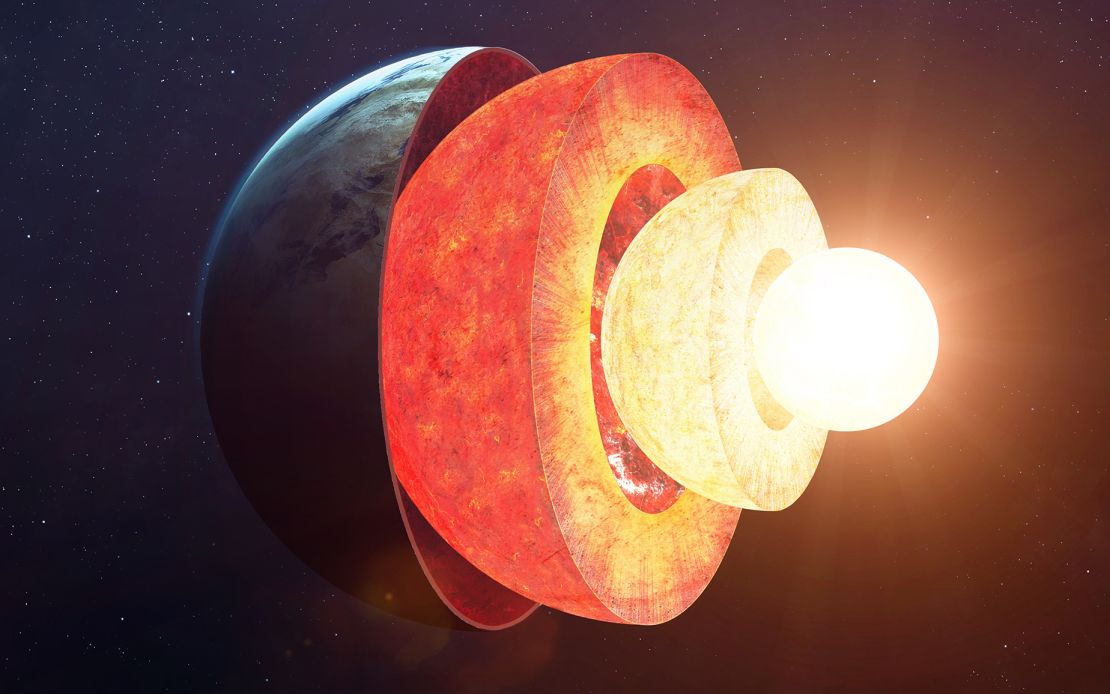
…One promising model proposed in 2023 described an inner core that in the past had spun faster than Earth itself, but was now spinning slower. For a while, the scientists reported, the core’s rotation matched Earth’s spin. Then it slowed even more, until the core was moving backward relative to the fluid layers around it.
At the time, some experts cautioned that more data was needed to bolster this conclusion, and now another team of scientists has delivered compelling new evidence for this hypothesis about the inner core’s rotation rate. Research published June 12 in the journal Nature not only confirms the core slowdown, it supports the 2023 proposal that this core deceleration is part of a decades-long pattern of slowing down and speeding up.
Scientists study the inner core to learn how Earth’s deep interior formed and how activity connects across all the planet’s subsurface layers. forplayday/iStockphoto/Getty Images
The new findings also confirm that the changes in rotational speed follow a 70-year cycle, said study coauthor Dr. John Vidale, Dean’s Professor of Earth Sciences at the University of Southern California’s Dornsife College of Letters, Arts and Sciences.
“We’ve been arguing about this for 20 years, and I think this nails it,” Vidale said. “I think we’ve ended the debate on whether the inner core moves, and what’s been its pattern for the last couple of decades.”
But not all are convinced that the matter is settled, and how a slowdown of the inner core might affect our planet is still an open question — though some experts say Earth’s magnetic field could come into play.
The argument that global warming is coming from heat transfer in the core-mantle region is illuminated by this section from the article: The mysterious region where the liquid outer core envelops the solid inner core is especially interesting, Vidale said. As a place where liquid and solid meet, this boundary is “filled with potential for activity,” as are the core-mantle boundary and the boundary between mantle and crust.
“We might have volcanoes on the inner core boundary, for example, where solid and fluid are meeting and moving,” he said.ABN



 American Buddhist Net