Human men are typically more aggressive than human women, a finding supported by reams of research. But surveys of 4,136 individuals in 24 countries reveal an exception to the trend: aggression in sibling relationships. Douglas T. Kenrick and Michael E.W. Warnum, along with a team of 49 colleagues, asked participants how often they had acted aggressively towards a sister, a brother, a female friend, a male friend, a female acquaintance, or a male acquaintance—both when they were children and when they were adults. Aggressive actions included both direct aggression, such as hitting/slapping or yelling, as well as reputational aggression, such as sharing harmful gossip, or reporting someone’s behavior to an authority—“telling” in a childhood context. In terms of direct aggression, girls and women were slightly more aggressive towards their siblings than were boys and men. Men and boys, by contrast, were more likely to be directly aggressive with non-siblings. Women and girls were also just as likely to be indirectly aggressive to siblings as men and boys were, both in childhood and adulthood. Patterns of sibling aggression by sex were not correlated with country-level gender equality indicators. The trend held in wealthier and poorer countries and in Western and Non-Western cultures, suggesting to the authors that the contextual effect of sibling relationships on female aggression may well be universal. According to the authors, a more nuanced understanding of the relationship between sex and aggression should include the social context in which it occurs.
Experimental research in mice has linked the derived allele to a number of traits, including greater hair shaft diameter, more numerous sweat glands, smaller mammary fat pad, and increased mammary gland density.[6] A 2008 study stated that EDAR is a genetic determinant for hair thickness, and also contributed to variations in hair thickness among Asian populations.[7] Derived variants of EDAR are associated with multiple facial and dental characteristics, such as shovel-shaped incisors.[8][9][10][11] This mutation is also implicated in ear morphology differences and reduced chin protrusion.[12]
A 2013 study suggested that the EDAR variant (370A) arose about 35,000 years ago in central China, a period during which the region was then quite warm and humid.[13] A subsequent study from 2021, based on ancient DNA samples, has suggested that the derived variant became dominant among Ancient Northern East Asians shortly after the Last Glacial Maximum in Northeast Asia, around 19,000 years ago. Ancient remains from Northern East Asia, such as the Tianyuan Man (40,000 years old) and the AR33K (33,000 years old) specimen lacked the derived EDAR allele, while ancient East Asian remains after the LGM carry the derived EDAR allele.[14][15]
It has been hypothesized that natural selection favored this allele during the last ice age in a population of people living in isolation in Beringia, as it may play a role in the synthesis of Vitamin D-rich breast milk in dark environments.[16][17][18] One study suggested that because the EDAR mutation arose in a cool and dry environment, it may have been adaptive by increasing skin lubrication, thus reducing dryness in exposed facial structures.[19]
One of the world’s greatest genetic mysteries is how a DNA marker present in Europe reached North America, leaving no clear trail through Siberia or Alaska.
Scientists have been baffled by how Haplogroup X arrived more than 12,000 years ago, raising new questions about how the Americas were first populated.
Haplogroup X is a rare maternal DNA lineage, passed down from mother to child, found in both Europe and North America.
Its unusual presence suggests that early Americans may have arrived in multiple waves, challenging the traditional view that all Native American maternal lineages came solely from Siberia via the Bering Land Bridge.
Other haplogroups provide a clear picture of the Asian origins of most Native American maternal lineages, which makes Haplogroup X’s unusual distribution all the more striking.
The mysterious DNA marker’s unusual presence suggests that early Americans may have arrived in multiple waves, challenging the traditional view that all Native American maternal lineages came solely from Siberia via the Bering Land Bridge (pictured)
‘That rarity makes it a powerful clue for tracing human history,’ Kostroman said. ‘When an uncommon marker appears in distant, disconnected regions, it signals a shared connection in the deep past.’
Haplogroup X is rare in Siberia and Alaska, with some researchers suggesting that it represents an earlier migration, possibly via a coastal route.
ARECENT GROUNDBREAKING EXPERIMENT in which anesthesia was administered to rats has convinced scientists that tiny structures in the rodents’ brains are responsible for the experience of consciousness. To pull it off, these microscopic hollow tube structures, called “microtubules,” don’t rely on our everyday flavor of classical physics. Instead, experts believe, microtubules perform incredible operations in the quantum realm. Citing the work of earlier researchers, the study infers that the same kind of quantum operations are likely happening in human brains.
During their rat brain experiments, scientists at Wellesley College in Massachusetts gave the rodents isoflurane, a type of inhaled general anesthetic used to induce and maintain unconsciousness for medical procedures. One group of drugged rats also received microtubule-stabilizing drugs, while the other did not. The researchers discovered that the microtubule-stabilizing molecules kept the rats conscious for longer than the non-stabilized rats, which more quickly lost their “righting reflex,” or the ability to restore normal posture, according to their findings, published in the peer-reviewed journal eNeuro in August 2024.
The Wellesley study is significant because the physical source of consciousness has been a mystery for decades. It’s a major step toward verifying a theory that our brains perform quantum operations, and that this ability generates our consciousness—an idea that’s been gaining traction over the past three decades.
Transportation Secretary Sean P. Duffy has had enough of America’s highways being treated like social-justice canvases.
According to the directive issued this week to every governor in the nation, the Trump-appointed cabinet official ordered states to scrub their roads, intersections, and crosswalks of “political messages or artwork,” singling out rainbow-themed crosswalks as prime offenders.
“Roads are for safety, not political messages or artwork. Today I am calling on governors in every state to ensure that roadways, intersections, and crosswalks are kept free of distractions,” said U.S. Transportation Secretary Sean P. Duffy.
“Far too many Americans die each year to traffic fatalities to take our eye off the ball. USDOT stands ready to help communities across the country make their roads safer and easier to navigate.”
Safety communication is always better when it is unambiguous, straight to the point, universally understood and is not distracting. Based on this reasoning alone, it is right to go back to standard crosswalks everyone understands. More pedestrians are hit by motor vehicles than most people realize. If even one person’s leg is saved by this directive, it’s worth it. And, you can be sure lives will be saved. ABN
For at least six decades, neuroscientists have been arguing over a big, foundational question: Do adult brains make new neurons? This process of “neurogenesis” had been shown in other adult animals, but its evidence in humans was circumstantial—until now. Using a new technique, scientists have found newly formed neurons in the brains of adults as old as age 78—and, for the first time, have identified the other brain cells that birthed them.
The results, published on Thursday in Science, are the first signs that cells with the capacity to turn into neurons, called neural precursor cells, exist in adult human brains. “Now we have very strong evidence that the whole process is there in humans, from the precursor cells to the immature neurons,” says Gerd Kempermann, a neurobiologist at the Dresden University of Technology, who was not involved in the study.
The Department of Education announced that the University of Pennsylvania has agreed to resolve Title IX violations related to allowing transgender swimmer Lia Thomas to compete on the women’s team during the 2021-22 season.
As part of the resolution deal, Penn will adopt definitions for male and female consistent with biological sex; restore stolen records and titles to female athletes; and, issue personal apologies to each impacted female swimmer.
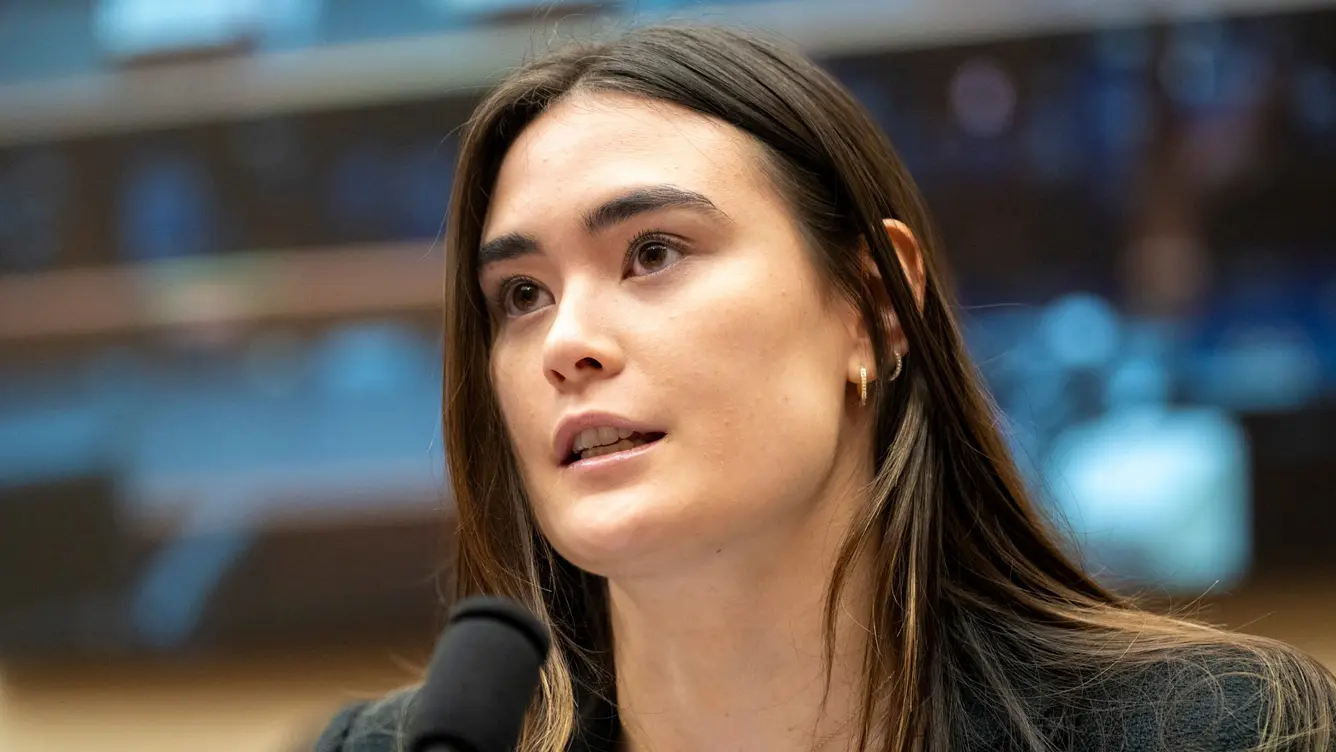
One of those swimmers is Paula Scanlan, a teammate of Thomas who has previously expressed the emotional distress she suffered from being forced to change with a biological male in the women’s locker room for an entire season.
Paula Scanlan, former University of Pennsylvania swimmer and teammate of Lia Thomas, testifies during the House Judiciary Subcommittee on Constitution and Limited Government hearing on gender-affirming care for children.
“I am deeply grateful to the Trump administration for standing firm in protecting women and girls and restoring our rightful accolades,” Scanlan told OutKick. “It is because of their strong leadership that my alma mater now knows it has no choice but to begin the process of reforming its policies to uphold women’s rights. Today marks a momentous step toward repairing the past mistreatment of female athletes and forging a future where sex discrimination no longer limits girls’ potential.”
Scientists have begun work on a controversial project that aims to create human DNA from scratch. World’s largest medical charity, the Wellcome Trust, has donated Rs 117 crore (10 million pounds) to start the project, which involves scientists from universities including Oxford, Cambridge and Imperial College.
“The sky is the limit. We are looking at therapies that will improve people’s lives as they age, that will lead to healthier ageing with less disease as they get older,” Dr Julian Sale, of the MRC Laboratory of Molecular Biology in Cambridge, who is part of the project, told the BBC.
“We are looking to use this approach to generate disease-resistant cells we can use to repopulate damaged organs, for example, in the liver and the heart, even the immune system,” he said.
As per Professor Matthew Hurles, director of the Wellcome Sanger Insititute, studying how genes and DNA regulate our bodies could help us pinpoint when they go wrong and ultimately develop better treatments.
“Building DNA from scratch allows us to test out how DNA really works and test out new theories, because currently we can only really do that by tweaking DNA in DNA that already exists in living systems,” said Mr Hurles.
This isn’t just another UFO mystery. What Greer said in Mexico about the sphere’s materials, movement, and possible alien inscriptions, will blow your mind.
1/ Dr. Steven Greer flew to Mexico for one reason: To examine the Buga Sphere up close. After seeing it, he didn’t hold back:
“This is clearly an anomalous object with multiple possible origins.”
2/ Greer didn’t jump to conclusions. He brought a team of scientists to test the sphere using isotope-level metal analysis and Carbon-14 dating. To determine if it’s from Earth, or from deep space.
3/ They found a polymer embedded in the sphere, near its equator. It contains carbon, and if it’s thousands of years old, then this isn’t a modern object. It predates industrial civilization.
4/ Now here’s where it gets exciting! Inside the Buasphere are microscopic fiber optics which according to Dr. Steven Greer are molded into the structure itself. That’s not 20th-century tech, that’s integrated photonics before we even knew what that was.
5/ Greer says this kind of fabrication doesn’t match anything known from Earth, unless a long-lost civilization once had access to tech we can’t even replicate today.
The Discovery of life on Mars, and by extension, the stars, could be proven by discovery of a single living microbe on the Red Planet. But, at the same time, a mass of independently derived data all indicating a finite probably of life, indicating Occam’s Razor as a factor, can also form the basis for the following Inductive Reasoning: 1. The Conditions on Early Earth, where life appeared, and Early Mars, have now been found to be basically identical; therefore, based on the Principle of Mediocrity, the probability of life is estimated to be PL =0.5 on Mars, an estimated 50% probability. 2. Complex organic matter has been found in recently formed aqueously altered terrains on Mars, and in both ancient and young meteorites from the Red Planet, in aqueously deposited minerals found within them, suggesting a further probability of biological origin versus abiotic of PL =0.5. 3. Reexamination of the Viking Life Experiment results, given new knowledges of both Mars surface chemistry and biologically generated super-oxides on Earth, strongly support the conclusions of Levin that life was found in 1976, 4. The seasonal variations of two biologically produced gases, O2 and CH4 recently discovered, are consistent with widespread microbial life on Mars, and along with the Life Experiment results, again can be estimated to indicate a PL =0.5 for each test. In the article we will explore these four findings holistically and draw the overall Inductive Conclusion that the simplest interpretation for this body of data is that Life began and persists on Mars as surely as it does on Earth. We assume here that, using a probabilistic model, the probability of Mars being sterile is PS =(1-PL)N+1 and yields an estimated probability of Life on Mars as 97%. Life on Mars is thus discovered. This conclusion, similar to a court case built on circumstantial evidence, can also be likened to a Second Copernican Revolution, wherein the Earth is now displaced from the center of the Biological Universe, just as it was formerly displaced from its geometric center.
At around 15 min, the video describes the effects of this observation of those who observed it. Worth watching from the beginning, but I mention that to show it goes somewhere human and very interesting. Filing this one under both ‘science’ and ‘Buddhism’. ABN




 American Buddhist Net