
click images for larger
Do your best. Speak the truth.

click images for larger
Another take on the information presented in this video can be found here, from the Ethical Skeptic: Master Exothermic Core-Mantle Decoupling – Dzhanibekov Oscillation (ECDO) Theory
Another view of what might happen:
This is hypothesized to be the cause of massive global flooding in the past and future caused by the earth’s rotational axis shifting from its current magnetic N-S alignment to a gyroscopic alignment based on planetary irregularities of mass placement. ABN
More from The Ethical Skeptic:
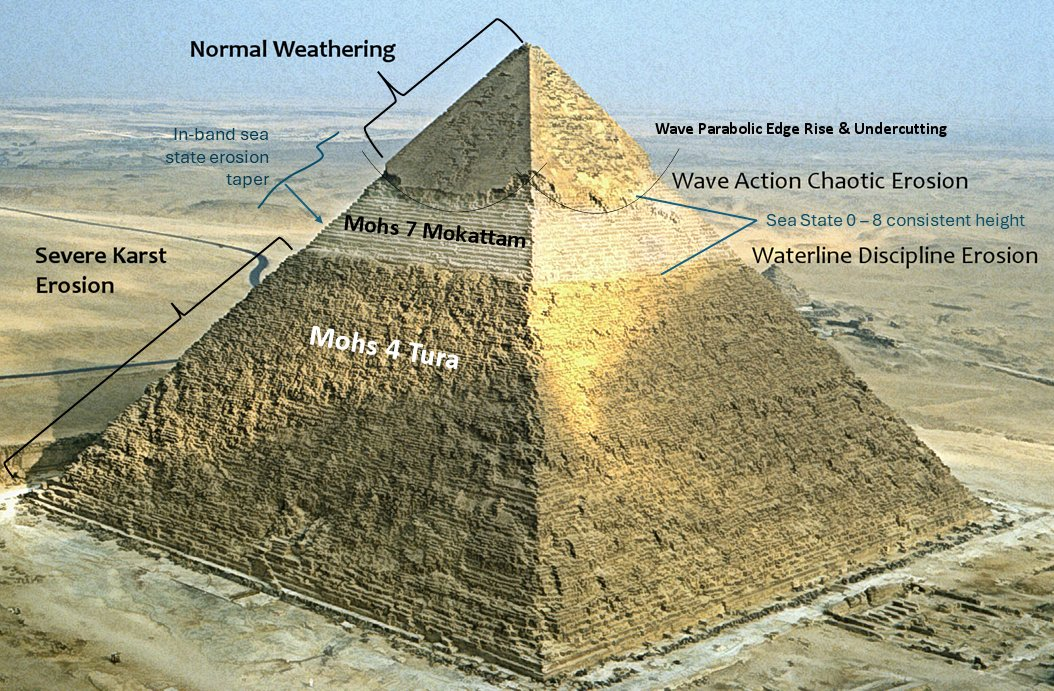
We propose that periodically, the Earth’s core loses its magnetic moment and decouples from the outer rotational body (ORB), which includes the mantle and crust. This decoupling causes a shift in the Earth’s geographic axis of rotation along the 31st East meridian (the same meridian upon which is located both the Giza Plateau as well as the geographic center of the Earth), moving towards South Africa. At this critical transition point the Earth’s inertial moment takes precedent over its magnetic moment causing this change in geographic location of its rotational axis. The process is facilitated by the lubricating effect of exothermic H-layer material shed from the core. These effects enable the Earth’s outer rotational body to shift from today’s geomagnetic mechanical equilibrium, to a 104-degree rotated momentum-conserving gyroscopic one. This cyclical and violent process is consistent with, and may be the impetus behind, the 175 world flood myths—constituting a message important enough to be reflected in the inner design (and at one time, function) of the Khufu Pyramid itself. After a period of time and reversal in this Earth core condition the Earth rotates back to its magnetic moment priority where it spends the majority of its cycle.
A Gibraltar-based company specializing in catalyzed fusion has achieved a significant breakthrough in power generation. ENG8, which has been developing a range of catalyst fusion reactors called EnergiCells, achieved a world-first milestone in the race for fusion energy.
Their system, based on low energy nuclear reactions (LENR) technology, is reported to be capable of operating indefinitely without any external input power.The self-powering system will also be able to export net electricity, according to the company. This is claimed to be the global-first milestone for catalyzed fusion.
Independent validation confirms the company’s claim of achieving a device capable of indefinite operation without external power.
“We can consider that the device can operate indefinitely without any external input power,” said Dr Jean-Paul Biberian, an LENR expert who was commissioned by an investor to conduct technical due diligence on an EnergiCell.
link to video, 11 min (EnergiCell from ENG8, Investigation)
More from the company: 2024-10-17 – ENG8 achieves another global first in the race for fusion energy: a self-powering fusion reactor producing excess electricity
Catalysed fusion specialists at ENG8® International have confirmed the results of the recent independent validation of its EnergiCell®, conducted by world-renowned LENR (low energy nuclear reactions) expert Dr Jean-Paul Biberian.
The validation showed that the system can be self-powering and export net electricity.
Dr Jean-Paul Biberian said: “We can consider that the device can operate indefinitely without any external input power.”
Dr Biberian was commissioned by an investor to conduct technical due diligence on an EnergiCell. His report concluded: “The technology is capable of sustained operations producing kilowatts of output energy, with a net three times more power output than input.”
“ENG8 has a team of competent scientists very focused on plasma physics, and they have good engineers.”
EnergiCells fuse hydrogen nuclei producing photons or light as well as directly producing electrons or electricity. They are currently producing electricity on the scale of milliwatts to tens of kilowatts. This power output is suitable for powering devices like phones and laptops, appliances such as ovens and washing machines, and in time, houses, cars and factories.
Too good to be true? Definitely worth a look. ABN

Masks during covid were signs of compliance. They induced fear while distancing people from each other and from reason itself. Virtually all of ‘The Science’ during covid was mind-control through behavioral manipulation. Keeping six feet apart, arrows on the floor, staying inside out of the sun and fresh air, being arrested for going to the beach, etc — all of that was mind-control through controlling the body. When you do or don’t do something with your body, your mind will follow. Taking the vax was the ultimate irrational submission to authoritarian lies. ABN
More regulations on fluoride in drinking water may be coming due to the new court order last week, experts say.
Fluoride, commonly added to drinking water to prevent cavities, has come under scrutiny.
Several cities have now stopped adding fluoride to their drinking water. But whether the whole landscape will change depends on what the Environmental Protection Agency (EPA) will do next.
How Much Fluoride in Water Might Be Safe?
On Sept. 24, U.S. Federal Judge Edward Chen ordered the EPA to strengthen its rules around fluoride in drinking water.
The decision was made in light of The National Toxicology Program’s (NTP) report in August, which found that 1.5 milligrams of fluoride in drinking water is sufficient to pose neurodevelopmental risks in children.
The EPA calculates a margin of exposure to determine a safety buffer between the exposure and hazard levels. For fluoride, the exposure rate should be one-tenth of the hazard level, lawyer Michael Connett said.
Since the NTP’s report found 1.5 milligrams per liter to be potentially risky, exposure risks could start from 0.15 milligrams per liter, Connett added.
Americans’ current exposure level of 0.7 milligram per liter—”the level presently considered “optimal” in the United States – poses an unreasonable risk of reduced IQ in children,” Chen wrote in his ruling.
Currently, the EPA sets the maximum level for fluoride at 4 milligrams per liter, significantly higher than the risk level cited in the recent study.
I have a friend who manages the water facilities in a fairly large city. She is a credentialed chemist and objects to fluoride most of all because in its raw form it is a very harmful substance and the workers who add it to drinking water are rarely, if ever, properly trained or dressed to do that job safely. ABN

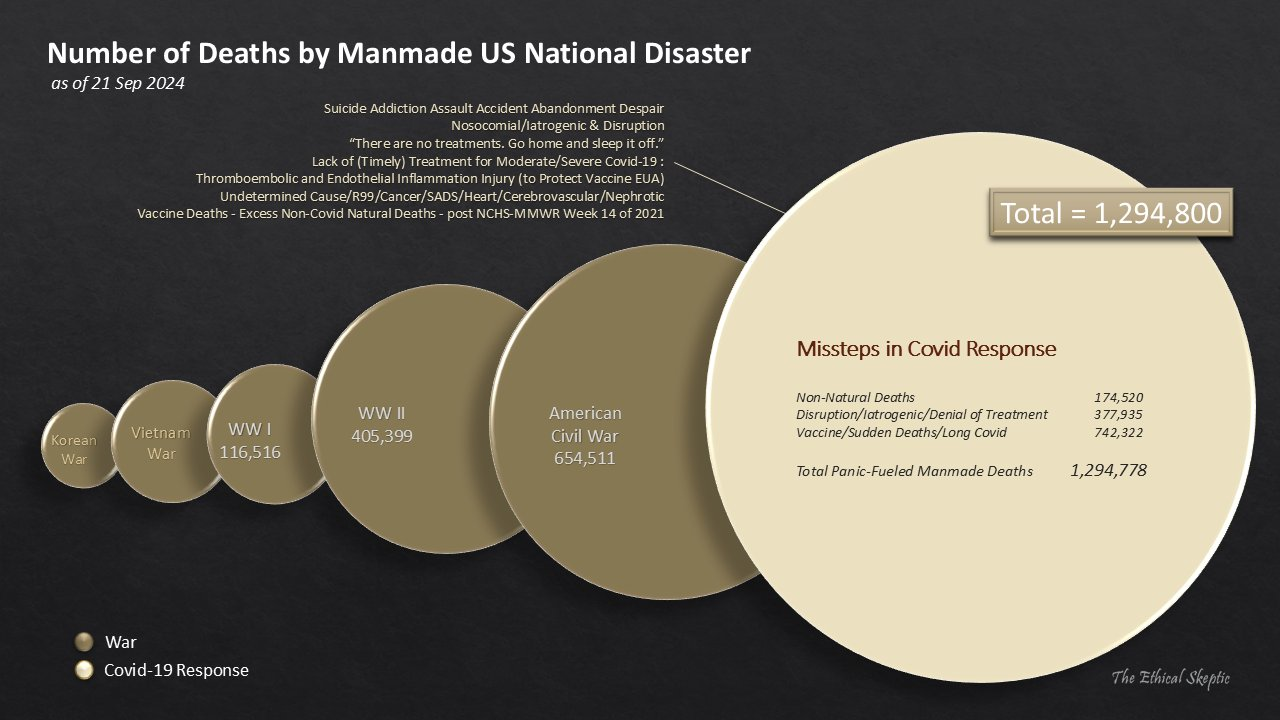
click image for larger
Researchers have discovered strange entities hiding in our guts and mouths that may represent an entirely new class of life—if they are even alive.
Dubbed “obelisks,” these tiny rings of RNA can fold into a structure that looks more like a rod, hence the name. They’re also surprisingly commonplace in our microbiomes—the community of viruses, bacteria, fungi, and their genes that live in our bodies. Yet, they’ve gone undetected until now and represent the latest discovery in an ever-growing list of mysterious “genetic agents” hiding in plain sight. Indeed, the researchers who discovered them report that their function, if they have one, is a mystery.
I hope the word scientist becomes obsolete. Insofar as it has any meaning at all, we are all scientists. Frequent use of the word scientist promotes scientism as we saw during the plandemic. Fauci even claimed he was the science and most of the world bowed before his nonsense. People who do research in special fields are researchers. That’s a good term for an honorable profession which describes what they actually do without conferring upon them the sketchy status of priest of something arcane. ABN
Filing this one under both ‘anti-science’ and ‘science’ because the vaxxes were pure anti-science but the mind-control and behavior modifications are very well based in behavioral science. ABN
 American Buddhist Net