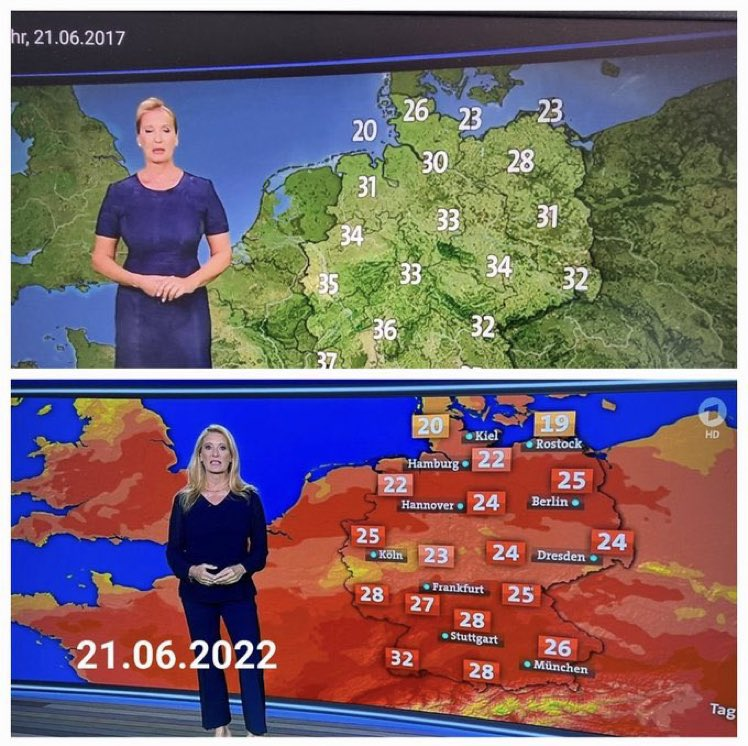
An image that illustrates the value of FIML practice

click on image for larger

FIML practice is like JWST compared to normal interpersonal speech, which is like Hale at best. Like the telescope, FIML is a technical advance that allows for much greater clarity and resolution. In Buddhist terms, FIML is partner-based mindfulness that provides an objective control on understanding in addition to much better clarity. ABN

Psychology as “signs of something else”

When we see a human behavior as a “sign of something else” we begin magnifying it.

When we live in a culture where people normally do this, we tend to think it is right to do this even to ourselves.

People often feel relieved when their “signs of something else” have been analyzed—either professionally or by self-administered questionnaires—to reveal what that “something else” is.

Once analyzed and categorized, the “something else” itself becomes a sign, or a meta-sign, a diagnosis that explains behavior while directing us to a cure based on whatever that “something else” is.

The DSM reads like a Ptolemaic system of circles and spheres. In it signs are identified, quantified, and classified to indicate what they stand for, what their “something else” is.

Professionals are needed to do this work of course, and though the manual rests on “scientific” tests and other measurements, it changes every few years and very few people are getting better because of it. Moreover there is very little consensus among thoughtful people, including psychologists, about what the classifications of “mental illness” or “personality disorder” actually mean.

This is a sure sign that something is wrong.

I submit that what is wrong is our systems of classification of mental disorder do not describe the actual disorders because these descriptions exist on a different level from the disorders themselves.

It is widely observed that many disorders as currently classified blend into each other, share attributes, are co-morbid. It is also widely known that when disorders are extreme, sufferers can exhibit symptoms of all of them.

This indicates that the human mind is a complex system that becomes disordered by over-emphasizing or under-emphasizing parts of its system.

And this may be why drugs, psychedelics, shock therapy, or shamanic rituals sometimes help. Because they reset the entire system.

If you don’t want to use drugs, can’t get psychedelics, don’t want to undergo shock therapy or shamanic ritual, I suggest you try FIML practice. If you have a good partner, are fairly intelligent, and want to truly optimize your psychology (not just terminate your ambiguous disorder), FIML will probably do this for you. In fact, even if you can get psychedelics, FIML is better.

A disorder is unique to its system and though we can speak of some generalities that may apply to it, these generalities exist at a different level from the disorder itself and cannot provide a cure.

To cure a disorder the disorder must be experienced as it is happening by the sufferer. If too much of the disorder is revealed at once or the sufferer is simply confronted with its classification, more harm than good may result. If small bits of the disorder are revealed over a longish period of time, however, the sufferer will be much more likely to gain beneficial insight into the disorder.

In my view, all people everywhere are deeply disordered and thus all people everywhere would benefit from FIML practice. People who may not benefit from FIML include, among others, those who cannot self-observe, who are severely alcoholic, whose disorder prohibits self-analysis (narcissism, for example) and, sadly, those who cannot find an honest partner.

first posted MARCH 14, 2018

Consider “diagnosing” a child as “trans” because some adult observed a “sign” that they are. If you listen to parents and teachers who just know some child, or even baby, is trans, you will always hear them say that something the child did, or said, or reacted to was a sure sign they are trans. This explanation is typically accompanied by a knowing smile on the adult’s face indicating an absurd sense of certainty based on their very mistaken notion of what perceived interpersonal signs even are. ABN

UPDATE: Psychology as a pseudoscience of sign misinterpretations has never been clearer or more tragic than with trans diagnoses of children leading to surgery or hormone therapy. ABN

This video is surreal

This looks and sounds like an advertisement. Captured agencies do as their masters command. Mass Formation Psychosis directs the behavior of care-givers and parents. Babies and other innocents have no say. What is the emergency? Where is the data on safety and efficacy? The video is an example of the persuasive power of a telegenic human smiling and acting happy while dissembling. ABN

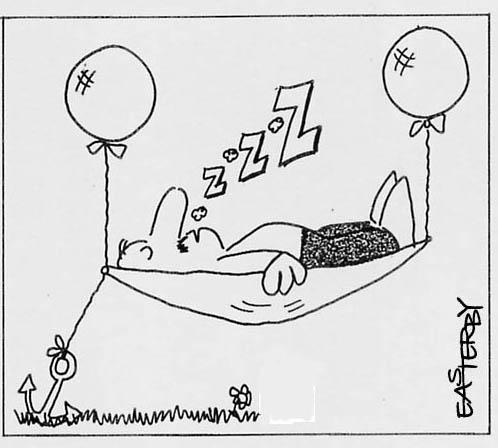
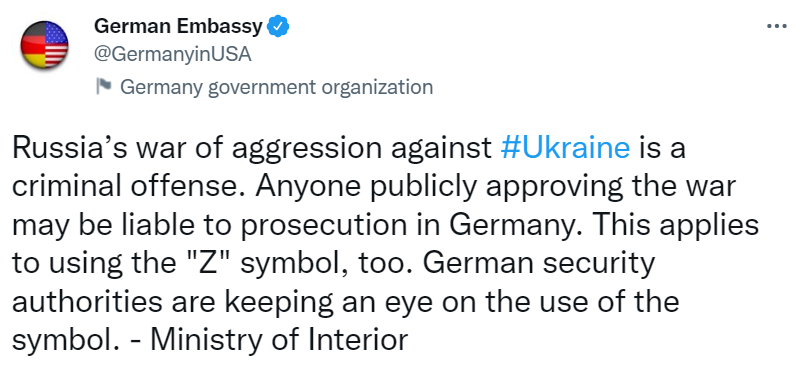
PSA: Zzz symbol now illegal in Germany: ‘Anyone publicly approving the war may be liable to prosecution in Germany. This applies to using the “Z” symbol, too. German security authorities are keeping an eye on the use of the symbol. – Ministry of Interior’

You can never be too careful! ABN

Continue reading “PSA: Zzz symbol now illegal in Germany: ‘Anyone publicly approving the war may be liable to prosecution in Germany. This applies to using the “Z” symbol, too. German security authorities are keeping an eye on the use of the symbol. – Ministry of Interior’”

Working memory is key to deep psychological transformation, Part 2

Part 1

Part 3

In science, working memory is generally thought of as either:

  • …the sketchpad of your mind; it’s the contents of your conscious thoughts.”   (Earl Miller, a professor of neuroscience at MIT’s Picower Institute for Learning and Memory)
  • Or “…a core component of higher cognitive functions like planning or language or intelligence.”   (Christos Constantinidis, a professor of neurobiology and anatomy at Wake Forest School of Medicine) [Source for both]

Obviously, both versions are valuable and probably both are roughly true. Some “contents” of working memory are indeed sketchpad-like—a crack in the sidewalk or a passing bird—while others clearly are “core components of higher cognitive functions” and, I would add, long-term memory including all psychological factors.

Our psychology—be it “natured” or nurtured—functions in real-life in real-time because we remember it. It bears on us because it is in our minds, because it colors our minds, shades our thoughts and actions.

Working memory is key to understanding human psychology because it shows us how we really are functioning, thinking, acting, feeling in real-time.

Working memory is also fleeting. If you want to use working memory to understand your real-life psychology, you have to be able to analyze it in real-time. This means you have to capture its contents and examine them as near to their appearance in working memory as possible.

You can do this alone with good effect, but when you do it alone you are prone to self-referential bias and other mistakes. When you do it with another person, they can help you avoid self-referential mistakes as well as other less serious ones.

This is how FIML practice works and why it is done the way it is. FIML analyzes data discovered in the working memory.

So how do you do that? You do that by immediately noticing when something significant about the other person’s speech or behavior enters in your mind or arises in your working memory. Generally, that something will have psychological impact on you, though you might just be curious or notice it for other reasons.

Whether working memory is an independent sketchpad or a component of higher functions, analyzing whatever you feel like analyzing in it is valuable. Sometimes even very little things can have great psychological import.

Analyses of working memory through FIML practice are most productive when they entail what I have called “psychological morphemes.”

Psychological morphemes are the smallest units of human psychology. Metaphorically, they are a word or a letter as compared to a phrase, a paragraph, or even a book. They are the building blocks of larger psychological structures and also may occur as unique isolates.

Whenever a psychological morpheme appears in working memory, it is always interesting. Psychological morphemes almost always signal the onset of a larger psychological interpretation, one either stored in long-term memory or one arising just now.

By working with any and all psychological morphemes as they appear in your and your partner’s working memories and by working with them repeatedly, both partners will come to understand that some of these psychological morphemes have deep roots in their cognitive systems while others do not.

For example, a fleeting expression or tone you observe in your partner may cause you to feel jealous or disrespected. Do FIML immediately and find out what it was.

It’s either true or false or in-between. If you have a good and honest relationship with your partner, most of the time you will find a negative psychological morpheme that appeared in your working memory was false and that it is part of a psychological habit of yours that has deep roots in other cognitive functions.

A great benefit of FIML is repeated analyses of mistaken psychological morphemes leads to their extirpation, sometimes quickly sometimes more gradually. A second benefit of FIML is it makes all communications between partners much clearer and more satisfying. A third advantage is most of these gains lead to better understanding and competency with all people.

Part 3

first posted NOVEMBER 14, 2018

Covid politics is a macroscopic example of a psycholinguistic problem which occurs microscopically in all interpersonal relations

The ways we talk and don’t talk about covid are similar in kind to the ways we talk and don’t talk interpersonally. This fact is as painful in all important interpersonal relationships as it is painful on a national and global scale concerning covid.

Interpersonally, it is extremely difficult for almost all people to examine psycholinguistically important moments in real-time if they have not been trained or self-taught. Similarly, it is extremely difficult for almost all people to examine almost any aspect of covid if they do not share mostly the same conclusions.

Psychologically humans exist on a spectrum that grades from the unique microscopic moments of unique individual experience to the macroscopic landscape shared by many individuals belonging to a psychological collective. Just as a psychological collective can be created (or discovered) by naming it so individual moments can be defined by individuals naming them, often incorrectly.

Unique individual moments can also be predefined by a psychological collective. Many individuals perceive human life to be precisely that, something defined by a collective. It is very difficult for many individuals to see this and almost impossible for most individuals to be able to talk about this in real-time, real-world situations that are psychologically stressful and thus also psychologically important.

If you lament the disaster of our national covid dueling monologues, stop and consider that your important individual interpersonal relationships suffer similar problems. Dueling monologues arise when microscopic dialogues do not happen, which they rarely do anywhere in the world throughout all history. This problem is big and small, ecompassing the size of individual lives and entire human epochs. It is founded on the psycholinguistic difficulty of talking about talking as it is happening without being distracted by habits, customs, manners.

When talking about talking as it is happening happens, almost everyone becomes confused or angry or dismayed. You have to see this problem. Then figure out how to deal with it. You can do this in your own way (please report back to me if you are successful). Or you can do it through FIML practice which is described in many posts on this site. If you can see what FIML corrects, then the basic description of how to do FIML will be easy to understand. If you can do basic FIML many times, you will share a fundamental skill with your partner that will make your lives much better.

If FIML looks easy but you can’t do it, you probably don’t understand it. If you think you already are doing it, maybe but I doubt it. If you can’t make any sense of it, talk about it with your partner. Once you see what FIML is, you will love it because it frees you from a most basic and common form of human misunderstanding.

first posted NOVEMBER 24, 2021

Hilaria Baldwin says something important about information reality: “Everybody has trolls. Everybody has people who want to tell you whether you’re good or bad or what you think or what you feel”

Video source: Hilaria Baldwin claims husband Alec Baldwin has been suffering from PTSD for a ‘long time’ even before Rust shooting… and complains about living in the ‘famous world’ in new video

I am not taking sides on what happened in the shooting. But clearly Hilaria has experienced intense stress while at the same time being slightly removed from it. What she says is wise and very true. ABN

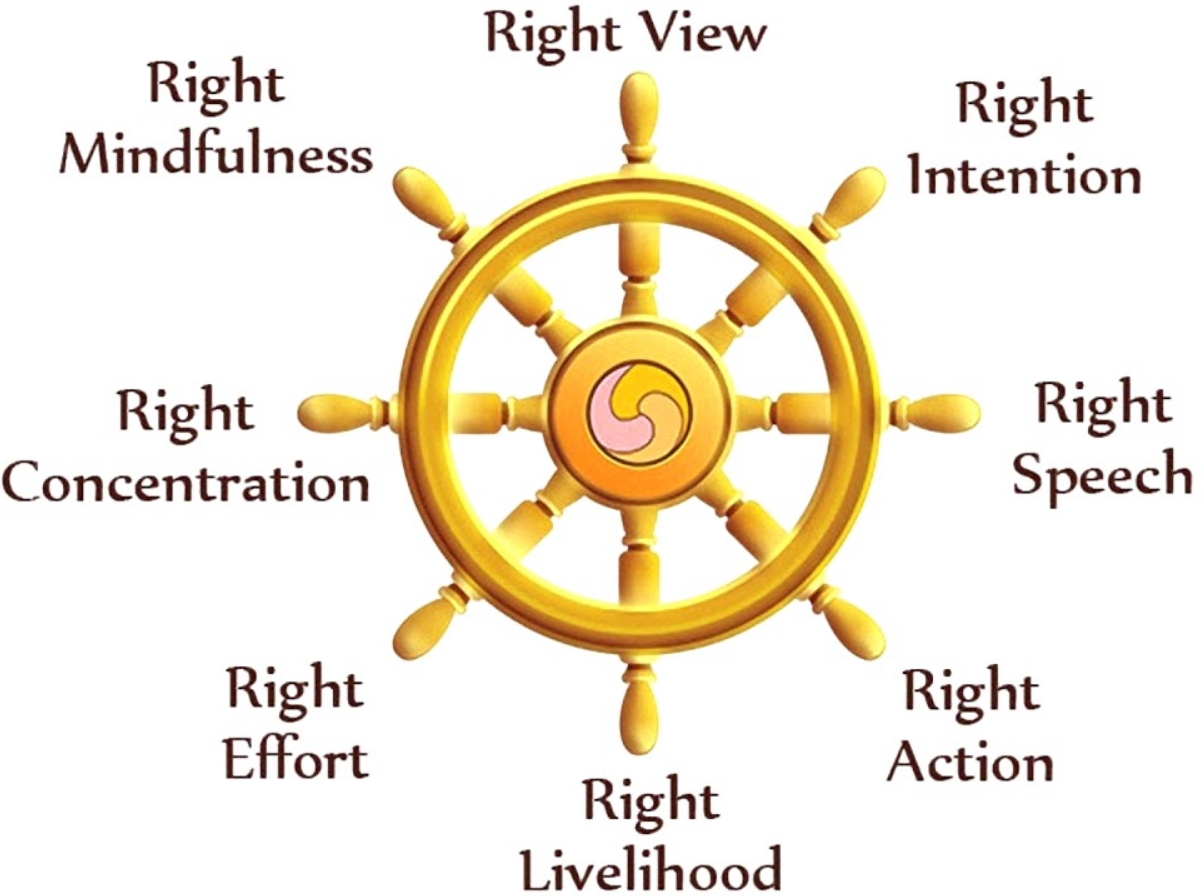
A perfect moral, dramatic, pragmatic, linguistic, psychological, spiritual, and emotional act…

…is a proper FIML query.

It is perfect (in no special order) morally because it seeks truth and goodness between two people; dramatically because it uses our innate dramatic instinct to question our own deep sense of live drama in the moment; pragmatically because it is eminently practical; linguistically because it is an extremely good use of language, possibly the best use; psychologically because it benefits both the self and other in profound ways while also revealing deep behavioral patterns painlessly; spiritually because it stimulates the spirit and spiritual metacognition, bringing both partners closer to their ideals; and emotionally because it forestalls false negative and destructive emotional responses, replacing them with joyful understanding. FIML is a pursuit of truth shared by two people. It is a technique, a method, that can be used in any religion, philosophy, world-view, or lifestyle. In the beginning, FIML does not even depend on scrupulous truthfulness because the practice itself will reveal the value of truthfulness, which ultimately will require almost no effort. Truthfulness is an instinct or inkling of deepest consciousness. Once seen, it calls forth itself.

ABN

Biden admin is all FAKE: Children in NASA space video with Kamala Harris are ACTORS

Grinning school-age children who took part in a NASA YouTube video about space exploration with Kamala Harris have been revealed to be child actors.

The ‘Get Curious with Vice President Harris’ video was filmed in August and tweeted out by the Vice President on October 7 to celebrate World Space Week.

It appeared to viewers that the children she was with were all normal kids.

However it has now been revealed that they are paid actors who auditioned by sending in a monologue and three questions they would ask a world leader.

link

A puppet uses actors to propagandize her likeability in a video unironically produced by Sinking Ship Entertainment of Canada. ABN

Manifesto: New axioms of linguistics, philosophy, and psychology are much needed

The sciences or fields of inquiry mentioned in the headline above need companions based on different premises. These companions might be called speechology, thinkology, and beology.

Speechology would be founded on the axioms that we speak and that the proximate impetus and deep impetus of almost all speech acts are profoundly important, complex, consequential, revealing, and even enlightening. In scientific terms, they are profoundly satisfying to observe and understand and much follows from observing and understanding them.

Something similar can be said about thinkology and beology or a fourth science of actology.

Moving these fields of inquiry away from the fields named in the headline above will give them a fresh start, allowing them to make new discoveries based on new observations, practices, insights, and conclusions.

For example, some of this work has already been done in speechology, the results of which include and inform the fields of thinkology and beology. In addition to the axioms that “we speak” and that “the impetus of speech acts is complex and revealing,” we also have the discovered and richly explored the axiom that “interpersonal speech acts often are seriously misunderstood and not corrected” thus leading to the axiom that touches upon thinkology and beology that “as a result, our thinking and acting are often profoundly in error leading to massive snowballing and suffering from then on.”

The above paragraph makes several nontrivial statements based on demonstrable facts derived from a copious study of speechology. This study has been done using FIML rules and procedures. The difficulty in sharing the knowledge gained through FIML practice is it is based on the interpersonal communications of two unique individuals. This does not make it less scientific. This makes it a precise tool, akin to a microscope or measuring device. Other individuals can use this same precise tool to see and measure their speechologies.

Virtually all people will initially understand a speechology inquiry such as FIML in terms of the linguistics, philosophy, and psychology they already know. This will hamper rapid understanding of what FIML is and what it does because real FIML data will all be fundamentally unique to the individuals doing it. Yes, many insights will be generalizable but the tendency to generalize will immediately lead away from the precision of the FIML tool, thus dulling its resolution and accuracy. This is a very important distinction. It is this distinction that gives FIML its power and that calls for a new name for this field of inquiry.

If you know everything about everybody and you know how everybody is connected to everybody else, can you know for certain who is at the top?

[This essay provides an essential background for understanding KOBK (Kill-or-be-Killed) game-theory on both the interpersonal and societal levels. Like all psychological phenomena, KOBK is fractal, potentially operating at all levels of society: from the individual to the social collective. ABN]

For the most part, you can’t.

Look at it this way—how does someone like Dick Cheney, say, know he knows what he is doing, or was doing as vice-president? [This essay was written in 2012, hence the reference to Cheney. No other references are dated.]

He had a semiosis about what he was doing and where he stood within the American political/military hierarchy, but how did he know that that semiosis wasn’t a front for another semiosis (game plan) hidden behind it? How would someone like Cheney find out that there was no other game plan hidden behind the game plans he knew about?

I don’t think he did know or could have known. Did Cheney realize that? Does he realize it now? I can’t answer.

One way someone like that could get information that shows he at least knows a lot, if not the whole thing, is to exercise power. If someone can exercise power and not be stopped, they can be kind of certain that the semiosis they are working within is “true.” Their game plan worked, so there is a greater chance they are in control than if it had not worked. But how can they be certain? I don’t think they can be.

Take another example: A crime boss in the 1980s might have done his thing for years believing all the while that he had the system figured out. Because he kept getting away with his crimes (because he was able to continuously exercise power without being stopped), he may have come to believe that his game plan worked, that he was at the top of his power structure, that his semiosis was “true.”

But we know that many of those bosses in the 1980s were wrong. For years their phones and meeting places were bugged, leading to successful prosecutions under RICO laws. The bosses thought that they had found a way to distance themselves from the nitty gritty of their crimes, but they were wrong. Their game plan (their semiosis) was wrong.

So, law enforcement and the courts had a better game plan, a “truer” semiosis. But how did they know the real quality of their semiosis? Sure, they busted the Mafia, but did they bust all of it and who did they not even look at? How do they know that there aren’t more gangs or secret societies that may even now be controlling them?

I don’t think they do know or even can know. Before you start thinking I am paranoid, consider that behind-the-scenes control of American politics, or any politics, is common; Tammany Hall, Mafia control of NYC politics decades ago, Hoover’s denial that the Mafia even existed, the current state of our two-party “political” system, Libor, etc.

A similar sort of analysis can be applied to news. The problems politicians have with really knowing the deep game plan or ever speaking about it filters through our less-than-perfect news media to be consumed by citizens as bits of information structured into stories that are easy to follow. The American people do not govern themselves but rather at most serve as a weak brake on groups at the top who do almost anything they want.

How do those groups know which one is on top? I am not sure they do. Is NSA domestic surveillance actually an attempt to find out?

If you know everything about everybody and you know how everybody is connected to everybody else, can you know for certain who is at the top?

If so, that will be a first in human history. I do recognize it is possible, though there would be problems with who controls the data, who analyzes it.

A basic point I want to make in this post is that power is very much about meaning, about semiotics. If you can exercise power and not be stopped, you know something about your semiosis. That sure as heck is not the Buddhist way to go about it, but that is the way a great deal of power and semiotics actually works in this world. Power defines meaning.

When this function of power and meaning gets down to the levels of ordinary people, it greatly affects what we say to each other and how we think about each other. Basically, far as I can tell, it causes most people to live in fear because we all know that if we say anything unusual, other people will start wondering about us. If we say the wrong thing, someone will be offended and talk behind our back, or worse.

So it becomes dangerous to say a great many things, or at least very difficult. Almost every subject of real interest is shrouded in semiotics that permit just a couple of standard views. Don’t like Obama, vote for Romney, what’s your problem?

I point all of this out because it is crucial for understanding who we are to understand how ideas, semiotics, and cultures are formed. We live in hierarchies. In hierarchies, the top people determine a great deal of the semiotics of that society. They further their semiotics and prove it to themselves by exercising power. Those people themselves cannot really ever be certain that they know their true position in the hierarchy. How much less can ordinary people expect to know the truth of the semiotics that trickles down to them?

Not everything is stuck in a culture you can’t control and can’t be sure of, but most/much of it is.

In this context, FIML practice allows partners to examine and discuss all aspects of the semiotics they hold in common or as individuals. Since FIML provides partners with a very good level of interpersonal certitude and the means to reinvigorate this certitude at any time, FIML allows partners to say what they want to each other without being misunderstood. It provides a freedom of speech and expression that allows the mind to bloom in ways that normal adherence to normal cultural semiotics cannot.

Just as politicians and powerful people can never be sure they know what others are thinking or where they stand, so ordinary people can’t either. All of them are trapped in the semiotics of their culture, which is usually a hierarchy. It is only through FIML or FIML-like techniques that individuals can free their communication systems from the need to create meaning through self-assertion or submission.

first posted as How do we know where our semiotics come from? on JULY 25, 2012