Russia is a collective culture, consisting of ’in-groups’. Russians do smile at people they know. Shop assistants smile at the clients they already know, not necessarily at others.
If you smile at a stranger in Russia, he/she can smile back, but it can already mean an invitation to come and talk. Russians take smiling as a sign that the person cares about them. To smile at a stranger can raise the question:” Do we know each other?”
You see two behaviours in one person in Russia: formal – unsmiling is for ’them’ (strangers); friendly – smiling for ’us’ (friends, people he/she knows). Some Russians skip to friendlier behaviour after a shorter time. You can consider yourself accepted when people you have met begin smiling at you.
Real feeling – not fake
Smiling in Russia usually shows the real good mood and good relationship between people, as it is not used as a form of politeness. When a Russian smiles at you, he/she really cares about you or is genuinely in a good mood.
How to smile
Russians prefer not to show their teeth too much when smiling. Showing your upper and lower teeth when smiling, looks a bit vulgar, a horse grin to Russians.
Smiling without a reason
Others must understand the reason of smiling in Russia. If they don’t, it is considered strange. They start wondering what is behind the smile. Perhaps they interpret that the person who ”keeps smiling” is a bit simple or stupid. All Russians know the saying: “The laugh without reason – is the sign of stupidity” (“Smeh bez prichiny – priznak durachiny”)
Pretty sure if was in Kumarajiva’s Commentary on the Great Perfection of Wisdom that I read a passage about how a man should not show his teeth when smiling; a smile should be demure or none at all. Smiles can be understood very differently in different places. ABN
Director of National Intelligence Tulsi Gabbard said: ‘That is a ridiculous and insane statement to make. Coming from a guy who is the former director of the FBI.
‘For Comey to think that we the American people, that he as a former FBI director, former prosecutor, would believe his lie that he didn’t know what this was calling for. The dangerousness of this cannot be understated.’
Others agreed with Gabbard, arguing the messaging of 86 47 has been widely understood in political circles since Trump returned to office.
The phrase has also featured on signs and posters at protests around the nation.
Critics said Comey’s denial also does not make sense, given he admitted that he knew it was a politically charged message.
Others have also questioned whether there is any truth to his argument that he simply stumbled upon the shells already in that formation on a beach, and chose to take a snap without fully understanding what it meant.
Gabbard argued that Comey’s status as a former figure of authority meant his message put Trump at further risk and could have been interpreted as a call to arms.
‘I’m very concerned for the President’s life, and James Comey, in my view, should be held accountable and put behind bars for this,’ she said.
Gabbard argued that a man in Georgia issued a threat against her life earlier this year, and that ‘today, he’s in jail. As he should be.
‘Whatever his [Comey’s] intent, he and people like him need to be held to account according to the law.
‘The rule of law says people like him who issue direct threats against the President of the United States, essentially issuing a call to assassinate him, must be held accountable.’
Psychologists have revealed the tell-tale sign that could indicate a person is a psychopath.
Among the many infamous people who are considered to be psychopaths, are serial killers Ted Bundy, Fred West, and Richard Ramirez.
Although it’s not possible to gauge whether someone is a psychopath simply by looking at them, there are some interesting signs to be aware of.
Researchers at Cardiff and Swansea Universities examined the effect of showing unpleasant images to offenders who are psychopathic and offenders who aren’t.
They saw a marked difference in the eyes of the two groups when they looked at the pictures.
They noted that the psychopathic participants had a unique reaction to horrific scenes – their pupils did not widen.
In contrast, pupils of non-psychopaths dilate when they see upsetting or distressing images as part of a natural response.
Professor Nicola Gray is a clinical and forensic psychologist from Swansea University, who provided clinical supervision for the project.
Speaking at the time, she said: ‘This is one of the first times we have objective, physiological, evidence of an emotional deficit underpinning the offending behaviour of psychopathic offenders that does not depend on invasive methods or expensive equipment.
‘We hope to be able to develop this methodology to assist with clinical assessment and intervention in offender populations.’
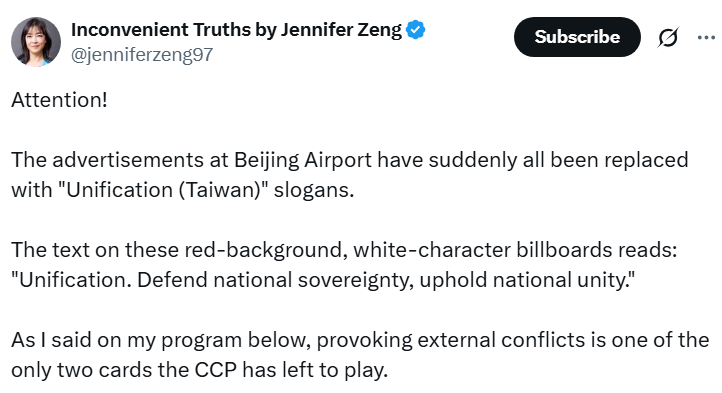
I would take this seriously. CCP has played a zero-sum, parasitic trade game with USA for well over two decades. Trump is calling their bluff. CCP is thus pushed (in their own minds and by their own negative momentum) into Kill-Or-Be-Killed strategic territory. CCP leadership cannot survive domestic economic meltdown unless it takes the world down with it or creates a major light show to distract its people. It does appear that Trump’s tariffs have been designed to confront CCP, among others. The leaders of CCP and USA (and Russia) are trapped in KOBK options. ABN
I don’t mind being called a conspiracy theorist. The killing of JFK was a conspiracy, and 9/11 was a conspiracy, and I wrote theories on both, so I’m a conspiracy theorist. I don’t reject any conspiracy theory on principle. Even looking into those which are obvious nonsense can teach you something about the extent of human gullibility or about the techniques of cognitive infiltration. So in 2023 I looked into the theory that Brigitte Macron was born a man. I concluded it had a very low probability, and I told Xavier Poussard and anybody who asked for my opinion. But I didn’t want to spend any more time on it.
However, I now feel some kind of responsibility to read and review Xavier Poussard’s book, Becoming Brigitte, published last month with the endorsement of Candace Owens. So I bought the original French version, read it in a day, and posted my first impression on March 12, in an ironic tweet saying: “After 292 pages, the ultimate proof. Come on, believe!”
This is a credible debunking of the theory that Brigitte Macron is a transgender man. I read the whole thing as I highly respect and enjoy Guyénot’s work. Then I read the comments under his article and became less sure again. At best, the Brigitte story is an interesting aside in our world; worth some investment if you like but not terribly important. Whether it is true or false, I will probably continue posting interesting pieces on it when I run across them. Owens is funnier on this topic than Guyénot, for whatever that’s worth. ABN
The Russian military must defeat the Ukrainian forces that invaded Kursk Region “as soon as possible,” President Vladimir Putin said on Wednesday. He visited a command post in the region as Moscow’s forces continue a major counteroffensive against Kiev’s remaining troops in the area.
The president held a meeting with Russian military commanders during his visit and listened to a report by the Chief of the General Staff, Gen. Valery Gerasimov. Putin thanked the General Staff and the units fighting in the region for their efforts.
Do FIML practice successfully 25 times and you will understand how wrong the notion of micro-aggression is. Not only wrong but also destructive to self and other. Rather than have us probe own minds, micro-aggression asks us to assert a false interpretation of someone else’s mind. From a Buddhist point of view, micro-aggression turns us 180 degrees away from wisdom and enlightenment ABN.
The Visual Word Form Area (VWFA) is a brain region that helps us recognize written words and letters. Without it, reading requires much more effort. When a man suffered an accidental lesion to his VWFA during brain surgery, he lost much of his ability to read while losing none of his general language abilities. After six months, he had partially recovered, but reading still took twice as long as it had before (Gaillard et al, 2006).
The VWFA is composed of neurons that were once used for face recognition:
Thus, learning to read must involve a ‘neuronal recycling’ process whereby pre-existing cortical systems are harnessed for the novel task of recognizing written words. … [Such areas of the cortex] possess the appropriate receptive fields to recognize the small contrasted shapes that are used as characters, and the appropriate connections to send this information to temporal lobe language areas (Dehaene & Cohen, 2011)
This neuronal recycling seems to have become hardwired, at least in some people. After Swiss preschoolers played a grapheme/phoneme correspondence game for a total of 3.6 hours over 8 weeks, an MRI scan showed their VWFAs preferentially responding to images of strings of letters. Yet only a few of the children could actually read, and only at a rudimentary level (Brem et al., 2010).
Humans may have initially identified words by using face-recognition neurons. As reading became more important, natural selection favored those humans who could free up more of their face-recognition neurons for reading. This selection eventually created a large neuronal population dedicated solely to word recognition, i.e., the VWFA.
This article discusses how our ability to recognize faces evolved to also recognize the written word, especially in alphabetic languages. The face recognition areas in the brain can also be partially commandeered by the development of word-recognition skills through learning to read. As someone with poor face-recognition, I wonder what happened to me. I also learned to read Chinese, so who knows what was going on? Apparently, recognizing Chinese characters requires yet another region of the brain. Some information about that can be found in this paper: The Visual Word Form Area: Evidence from an fMRI study of implicit processing of Chinese characters. ABN
This kind of vocabulary and concept seeding over many years affects all races. It becomes an earworm inducing trance states of shame and hostility. It serves the purpose of its perpetrators, who are striving for world domination. ABN
Our identities are fundamentally made up of semiotic matrices. That is to say, in part, that our identities have meaning; they mean something to us.
Often they mean a great deal to us and from them we derive the semiotics of motivation, intention, life-plans, many of our central interests, and so on.
Identities have strong emotional components, to be sure, but our emotions are ambiguous or diffuse if they are not positioned on a semiotic matrix and focused or defined by that matrix.
Identity is usually tautological in that its components, interests, and associations tend always to lead back to a few central elements. Often these elements have been inculcated in us by training. Some, we learn on our own. These elements are our values and beliefs, and also how these values and beliefs are understood and pursued.
The semiotics of identity must mean something to the person identifying with them. In this sense, they are almost always tautological. I do what I do because that is how I learned how to do it, think it, feel it, perceive it.
Most people are more adept at moving the parts of language around than they are at moving semiotic elements around. When semiotics are unconscious, they act like a vortex pulling perception, emotion, and understanding always toward the center of the identity. I think this is another way to say, in the Buddhist sense, that the self is empty; that it has no “own being.”
We can pursue an understanding of an empty self through Buddhist thought and practice, but we will get better results more quickly if we add a practice that deals directly with the semiotics of our identities.
Since there is no book you can go to to look up how your unique semiotics of identity works, you have to see for yourself how it works. You can do much of this on your own, but eventually you will need a partner because there is no way you will be able to get an objective perspective on yourself acting alone.
FIML practice is the only way I know of to fully see into and through the semiotics of your “identity.” Beneath identity there is a sort of artesian well of pure, undefined consciousness. FIML helps us experience that well while keeping us from rushing back into the tautological matrix of identity or static self-definition and clinging to it.
FIML is able to do this because FIML is process. FIML itself has no definition, only a procedure. It is not a tautology because it has no semiotic boundaries.
I wrote this ten years ago, before the rage of new identities was as hot as it is today. It provides a solid Buddhist view in modern terms of what an identity is and what its pitfalls can be, why all identities are fundamentally delusional. A point worth adding is you really do not need an identity. You can walk around all day long without ever thinking of your identity and you will be better for it. A persona or social thing we show others has some value when dealing with others but it is not an identity as described above or what you are in a deep sense. It is definitely not something to cling to. And it is not something to carve yourself up over. And it is absolutely not something to carve children up over. Clinging to a false self or tautological identity causes suffering; in fact, that is the cause of suffering as explained by the Buddha. Buddhist practice is all about not doing that, not clinging to a false self, a tautological identity, a delusion.
A word on what a persona or social thing is. It is a convenience in language and semiotics, a way of organizing speech and thought when dealing with others. That’s all it is. When we reify our personas or take them too seriously, we begin to delude ourselves and cause suffering through clinging and making bad decisions. ABN


 American Buddhist Net