Narcissistic vengefulness. They view the exposure of that text thread as the beginning of the public recognition that Charlie was betrayed.
It was the launch pad for people with common sense asking “why hide the fact that Charlie’s views were changing about Israel, unless it’s somehow relevant to his assassination?”
“Why didn’t Turning Point, or Erika back Candace up when she told the truth?”
It was the first crack in their narrative. Were they not guilty, they would be tremendously grateful to the people who exposed the truth about Charlie’s final days.
As I have said many times, Turning Point execs possess a dangerously low emotional IQ. They don’t know how innocent parties behave. They can’t even imitate innocence. Anger towards Joe Kent makes them look worse. Were I running their PR, I would have had Joe Kent on the Charlie Kirk show. Instead, they send Israeli attack dogs on him.
Signals are fundamental to everything that exists. There can be no physical realm without signals and certainly no life.
What is a signal? Anything that transmits any effect to anything else is a signal. In this sense, all signals “mean” something, including the smallest signal anyone can think of.
The advantage of basing a model of psychology (not just human psychology) on signals is our fundamental unit of analysis is universal, including everything we can know and think about.
Our bodies do an enormous amount of signalling—both internal and external—without our being conscious of most of it. Many living and non-living systems maintain homeostasis through signalling that is non-conscious (or so we now believe). The laws of physics describe signals that explain, for example, how our solar system came to be the way it is and why it remains in homeostasis.
Signals also explain how non-conscious life-forms—viruses, bacteria, plants, your blood, etc.—have arisen and how they maintain their dynamic homeostasis vis–à–vis the ever changing environment that surrounds them and signals to them constantly.
Consciousness itself almost certainly emerges out of a network of signals. Conscious beings read signals in the environment while frequently signaling each other. Cats and birds use conscious signals extensively. Even life-forms that we believe to be non-conscious, such as worms and plants, send and receive signals constantly to each other, while also signalling internally and with their environment.
Draw the line between conscious and non-conscious signalling wherever you like. Then let’s jump to human psychology.
Humans are different from cats and other animals in that we specialize in signals. Birds are specialists of the air, fish of the water, and humans of signals.
Humans signal each other constantly with signs that can employ any of our senses—sight, hearing, touch, taste, and so on. Our preeminent signalling system is, of course, language. With language humans are capable of remembering complex groupings of signals. We are also capable of thinking about these signals and transmitting our understanding of them to others.
Right now, as you read, you are receiving a complex signal from me.
Consciousness is arguably our most precious quality. Human consciousness is filled with and based upon signals. For our psychological well-being—the well-being of our consciousness—the signals we send and receive to and from other human beings are of fundamental importance.
To say it another way, humans are profoundly interactive signalling systems and the quality of the signals sent between us and other human systems are of primary importance to our sense of well-being, our psychological health, our conscious sense of who we are and how we are doing.
When our consciousness is filled with or marked by clear, truthful, and ethically sound signals, we feel good. In those moments we do not suffer confusion, neurosis, or pain. When consciousness is filled with or marked by confusion, lies, and ethically unsound signals, we feel bad. In those moments, we suffer, often greatly. (Of course, there are exceptions to these statements. Injury and truth, to name two, can cause us pain and confusion. But the basic distinction made here works well enough.)
It makes sense, thus, to focus on human signalling if we want to figure out what makes us tick.
The science of human signalling is often called semiotics, which can be roughly defined as the study of signs and their meanings. Semiotics can and does also include non-human signs and signals, but for now let’s limit ourselves to human signalling. There are other sciences that describe human signalling, but semiotics, which emphasizes signs and their interpretation, will serve us well enough that we can temporarily ignore other ways of understanding human meaning—game theory, traditional psychology, anthropology, etc. Semiotics works well because semiotic analyses can be reduced to single signals; they have a distinct and clearly defined basic unit—the signal or the sign.
Why do we focus so much of our inquiry into human psychology on emotion? Emotion is inchoate, often even unfelt, until it is defined or given meaning as a signal or sign.
Emotions are real, but they are massively subject to cultural interpretation, to definitions that have arisen outside of the individual experiencing them. Culture is little more than a system of signs and symbols shared among a group of people. Human cultures have great variety because the signs and signals and the meanings of those signs and signals develop differently in different places and under different conditions. This fact alone should suffice to show that the meanings of human signs often are arbitrary.
As long as a bunch of people believe that the sun is a chariot driven by a god, that meaning of the sun will work as a cultural standard, or cultural element with varying interpretations. If most people in a community think the sun is the center of the universe, that will also work until a better idea comes along. If enough people believe that human hearts have to be sacrificed to keep the sun moving across the sky, that will also work well-enough to hold that society together. Wherever you look, you will find great cultural variety, much of it based on arbitrary decisions that have long been forgotten by the people adhering to that system of meaning,.
In this context, isn’t it clear that focusing our inquiries into human psychology on emotion is going to provide us with many tautological results?
Similar statements can be made about many other elements of our traditional understanding of human psychology, including such elements as personality, neurosis, mental health, what being normal means, what our goals and desires are, and so on. The emotions and/or “psychological states” that these areas of inquiry deal with are vague and almost entirely changeable over time and place.
What is not vague are signals. When we ask what signals are and what their quality is we can get much better answers based on much better data compared to the answers we get when we ask only how someone feels and where those feelings came from.
How do we do that? More precisely, in the context of what we call human psychology, how do we analyze our signalling?
Is it valuable to compare my assessment of my internal signalling with “data” taken from “surveys” of other people who speak my language and live in a society which is sort of maybe the “same” or similar to my own? Yes, you can get something from that data but you will also make many mistakes because it is very crude, or general, data and will never fully apply to any individual or even come close to actually describing anything of significant value to most people. Such data will contain so many mistakes, it should be handled with great caution, if it is used at all. (You most certainly can fool people with that data. But that happens because many people will believe the data is scientific and provides an accurate metric that describes who they are. And that is an example of how a cultural semiotic can and does impose “meaning” on individuals; not hugely different from believing you have to sacrifice human hearts to make the sun go round.)
You can’t really get at the important signalling people do by using general surveys because your data is is coming from a tautological loop based on surveys that are generally put together on the basis of other surveys involving stuff like common words or feelings.
For psychology, for human mental health, the most important signalling people do is interpersonal signalling with significant other people.
When we try to figure ourselves out by remembering (a dubious exercise in so many cases) what our parents did or said or made us feel, we can get some useful information, but it is not that reliable and suffers from the same sort of misinterpretation as personality studies or studies of human emotion do. You can read whatever you want into it and/or be subject to the vagaries of chance interpretations.
The only significant interpersonal signalling data we can really know with significant certainty are data noticed, remembered, and agreed upon by two (or more in some cases) people engaged in significant interpersonal communication (signalling).
A mere observer (much less a surveyor) of this communication will never be able to know or analyze the data with anything approaching the accuracy or validity of the two people involved if those two people have a reliable method for gathering that data. Even if an observer has a video record of the exchange, they will never be able to know or analyze it with the accuracy of the individuals directly involved if those two people have a reliable method for gathering that data.
The day may come when brain scans can provide us with real-time data of that sort, but for now all we have is FIML practice, or something very much like it.
In my opinion, “personality disorders” are more easily understood as signaling problems.
All types of personality disorder involve dysfunctional signaling with other people. Signals are both sent and received in ways that result in suffering.
As currently defined, personality disorders “develop early, are inflexible, and are associated with significant distress or disability.”
Thus, if there are no significant brain injuries or other biological problems, all personality disorders (PD) develop through experience.
This means that during childhood the PD sufferer has received many bad signals (and/or interpreted many signals badly) resulting in their failing to form a coherent well-functioning internal signaling system.
The way to fix this is work with the signals. And the best way to do this is FIML practice. A professional psychotherapist cannot possibly provide this level of treatment.
This brings me to a second point: is there anyone who would not benefit from improving their signaling?
Why do we view psychotherapy as treatment designed merely to make us look and feel “average”? Why don’t we instead work to optimize our psychologies every day?
The Buddha said we are all crazy. We are. We all need to work on our signaling—our personality disorders—all the time.
The distinctions between one PD and another and those who have PDs and those who don’t are vague. This is because all PD problems (absent significant biological deficits, which may include intelligence) are idiosyncratic varieties of signaling malfunctions.
If signaling is the core problem, it should follow that all acquired PD will be classifiable as some kind of signaling malfunction. And that is precisely what we see.
Narcissism is a too simple signaling system. Borderline is an unstable signaling system. Compulsive, passive aggressive, histrionic, avoidant, and so on all are variations of a poorly formed internal signaling system.
The way to study this is through interpersonal semiotics; that is interpersonal semiotic analysis of real-time, real-world communicative signs and symbols.
All people need to do this to optimize their psychologies (their internal signaling systems). Why would anyone not want to do this? Maybe not wanting to do this is the surest sign of PD there is.
The hardest part about doing FIML is finding a willing and able partner. To me, this shows how pervasive bad signaling is. Most people will do almost anything but examine their own signaling with the help of another person.
Buddhism is very much a system of ethics. Buddhist practice is founded on the Five Precepts of refraining from killing, stealing, sexual misconduct, lying, and the irresponsible use of alcohol.
In most Buddhist traditions, these precepts are taught as if they are fundamental to the workings of the universe. But how can morality be fundamental to the workings of the universe? How does it really even matter to human beings?
If we think of a human being as a signaling system, we may be able to show that ethical thoughts and behavior are of fundamental importance to the system itself.
Human signaling systems signal internally, within themselves, and externally, toward other people. Our most important signaling system is the one we share with that person who is most important to us, our mate or best friend. Let’s confine our discussion to this sort of primary signaling system.
If I lie to my partner or cheat her, I may gain something outside of our shared signaling system, but that signaling system will suffer. And when that shared system suffers, my own internal signaling system will also suffer because it will contain errors. It will no longer be in its optimal state. Similarly, if she lies to me or cheats me, our mutual signaling system will become less than optimal as will both of our individual, or internal, signaling systems.
My own signaling system cannot grow or become optimal without my partner treating me with the best ethical behavior she can muster. And the same is true for her with respect to me. And we both know this.
We would be good to each other anyway, but it is helpful to see that our being good to each other has a very practical foundation—it assures us optimal performance of our mutual and internal signaling systems.
FIMLpractice is designed to provide partners with a clear and reasonably objective means to communicate honestly with each other. FIML practice will gradually optimize communication between partners by making it much clearer and more honest. In doing this, it will also optimize the operations of their mutual and individual signaling systems.
To my knowledge, there is nothing like FIML in any Buddhist tradition. But if I try to read FIML into the tradition, I may be able to find something similar in the way monks traveled together in pairs for much of the year. I don’t know what instructions the Buddha may have given them or how they spoke to each other, but it may be that they did a practice with each other similar to FIML practice.
In any case, if we view human being as a signaling system, we may be able to claim that clear signaling—that is, ethical signaling—is fundamental to the optimization of that system.
Meaning can be defined as two or more signaling systems connecting. Connecting means “sending and receiving, receiving and sending.”
To visualize this, think of Newton’s every action produces an opposite and equal reaction; thus sending (action) produces receiving (reaction), which in turn sends a message back. For example, a photon hits a hydrogen atom; the photon “sends” while the atom “receives”; by receiving, it also sends a message back and out; it affects the photon and more.
Space is the foundation of the plethora of signaling systems. Time is the foundation of their activity and extent.
Meaning is the most basic word in language.
When you look at it “psychologically,” it’s not what the sign is but what the meaning is. Thus, meaning is a deep basis of semiotics.
In this context, it makes sense to say that time and space are the sine qua non of signaling systems. This “defines” time and space in terms of signaling systems.
Identity depends on meaning as defined above.
Our identities are (somewhat) complex nexuses of meaning/signaling that “embody” our comprehension of the semiotics of our cultures and experiences. They lie at the center of how we understand ourselves. Identity signaling occurs internally as well as externally.
In non-FIML social intercourse it is normal for people to assert/display the props/symbols of their identities, as they understand them.
People who do FIML also need identities, but they do not need the social props that help non-FIML people define each other.
You really do not want to be defined by props and symbols. It’s a static role that leads away from authentic being.
People do not truly belong to a culture. Rather they maintain the illusion that they belong to a culture. This is clear when we think and analyze identity in terms semiotics, which here means “the science of communicable meaning.”
Having a weak or confused identity can be a very good thing as this may prompt you to learn how identities are made and maintained.
No Buddhist should want an identity defined by props and symbols.
Buddhism is about authentic being, the “thusness” of being, the experiential existential being that you really are, the one that occurs before there are definitions, props, and symbols.
This being can be hard to see because humans are semiotic entities; that is, we are entities that seek, create, and communicate meaning. This causes us to look within semiotics for the definition of our authentic being, a place where it can never be found. You have to look outside of semiotics.
But you can’t look outside semiotics unless you know how to look inside. You have to fully understand how the “language” of your semiotics works to be able to step outside of it.
Your semiotics is your unique take on the semiotics of your culture(s) and experiences.
You cannot fully explore your semiotics, your identity, your nexus of individual meaning alone because there is no way you can check your work. You cannot see yourself.
Each of us is a social, interactive, communicative being. You can only fully explore your unique semiotics/identity with a partner who wants to do the same.
Two people working together are able to stop the flow of conversation to analyze the semiotics of how they are hearing and speaking. One person working alone is only guessing.
Find a partner and do FIML. You will learn a lot from it.
Do not expect FIML to give you new symbols or props or tell you how to be. FIML is only a procedure. It is empty, almost devoid of its own content. It is a process that will help you see and recreate your identity.
Do not expect your FIML teacher to be an example for you. Do not expect your teacher to be impressive or to project signs and symbols at you. Do not expect to follow your teacher.
For decades, we’ve been looking to the skies for any sign of aliens – but it turns out we may have been missing attempts at contact.
A new study has cast doubt on our radio signal detection methods, arguing that ‘space weather’ could be distorting incoming transmissions.
Until now, most experiments have focused on identifying spikes in radio frequency – signals unlikely to be produced by any other natural processes in space.
But experts have highlighted an overlooked complication.
Even if an extraterrestrial transmitter produces a perfectly narrow radio signal, it may not remain narrow by the time it leaves its home star’s atmosphere.
This distortion, which happens near the point of origin, can ‘smear’ the signal’s frequency, meaning it can be missed by our detectors that are primed to search for more focused radio waves.
‘Searches are often optimized for extremely narrow signals,’ Dr Vishal Gajjar, astronomer at the SETI Institute and lead author of the paper, said.
‘If a signal gets broadened by its own star’s environment, it can slip below our detection thresholds, even if it’s there, potentially helping explain some of the radio silence we’ve seen in technosignature searches.’
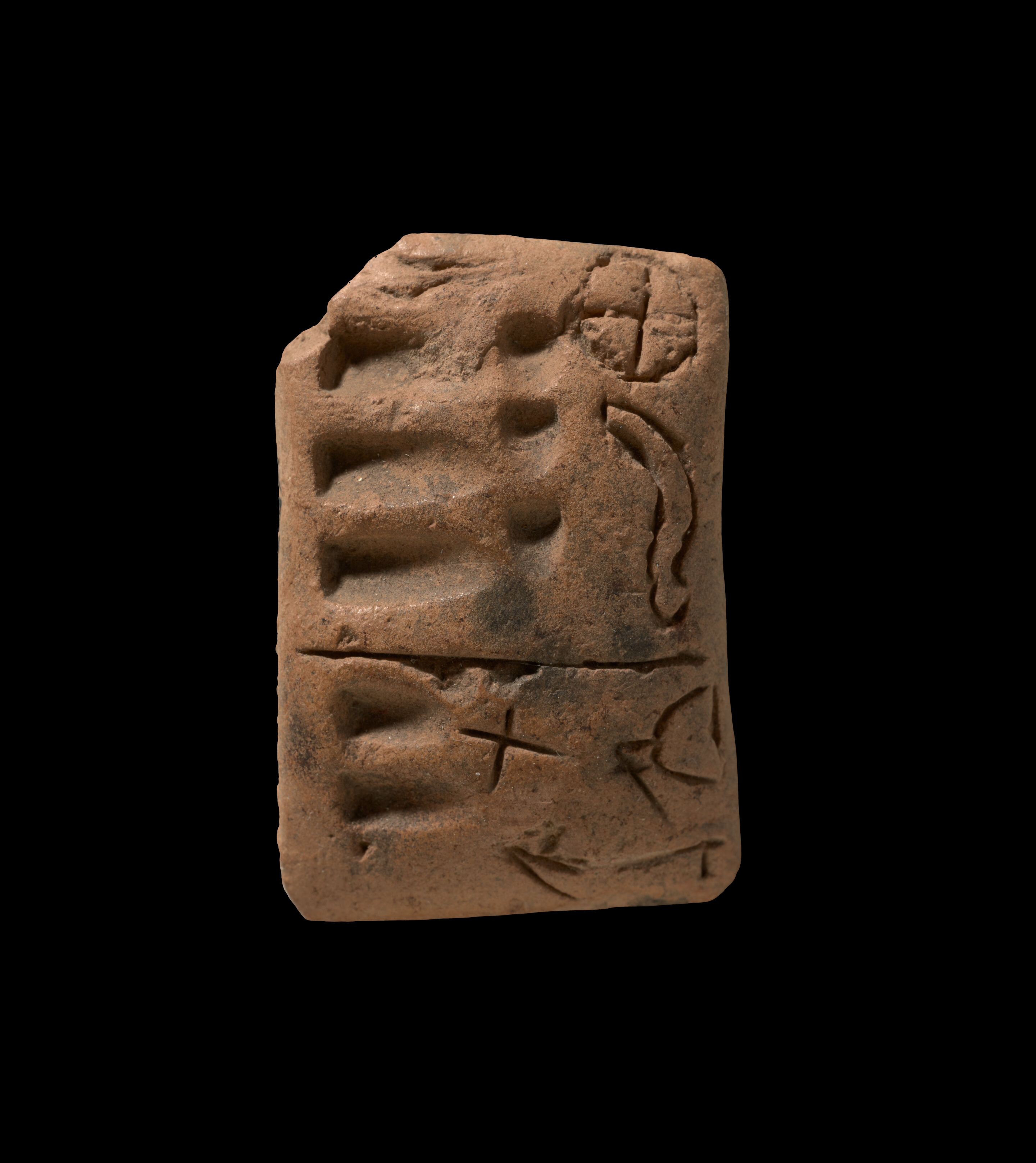
Over 40,000 years ago, our early ancestors were already carving signs into tools and sculptures. According to a new analysis by linguist Christian Bentz at Saarland University and archaeologist Ewa Dutkiewicz at the Museum für Vor- und Frühgeschichte (Museum of Prehistory and Early History) in Berlin, these sign sequences have the same level of complexity and information density as the earliest proto-cuneiform script that emerged tens of thousands of years later, around 3,000 B.C.E.
Using a computational approach, the team examined over 3,000 signs found on 260 objects to reveal insights into the origins of writing. Their findings, which have been published in the journal PNAS, were clear—and surprised even the researchers.
Paleolithic objects dating back between 34,000 and 45,000 years bear mysterious sign sequences—often repeated lines, notches, dots and crosses. Many of these artifacts were discovered in caves in the Swabian Jura, such as a small mammoth found in the Vogelherd Cave in Lone Valley in southwestern Germany.
A Stone Age human carved the mammoth figurine out of a mammoth tusk and carefully engraved it with rows of crosses and dots. Other artifacts found in the Swabian Jura are also etched with signs.
Proto-cuneiform tablet of the Uruk IV period (VAT 14774). This so-called numero-ideographic tablet features number signs on the left-hand side and more diverse ideographs on the right-hand side. This tablet is additionally partitioned by a horizontal line. Credit: Staatliche Museen zu Berlin, Vorderasiatisches Museum / Olaf M. Tesmer, CC-BY-SA 4.0
[Semiotics, also known as semiology, is the interdisciplinary study of signs, symbols, and sign processes, examining how meaning is created and communicated. It encompasses both linguistic and non-linguistic signs—such as words, images, gestures, traffic signals, and cultural artifacts—and analyzes their relationships to objects, concepts, and interpreters].
A semiotic analysis of a person’s “internal and external signaling” often can be more conducive to understanding than a “psychological” analysis.
From a semiotic point of view, it is not at all necessary that even a very significant adult behavior will have started with a significant trauma or any other sort of strong influence.
The smallest thing can constitute the start of a “semiotic slope” that, once begun, will tend to persist.
For example, your mom may not have understood that as a three-year-old it was normal for you to prefer the company of your father. Her misunderstanding may then have led to her withdrawing from you very slightly, and this snowballed between the two of you. When, years later, you wanted a closer relation with your mom and were not able to get it, it may have seemed to you that the cause was some trauma in her relation with her mother. But the actual start of the whole thing began with nothing more than your mom never having learned the simple fact that toddlers often prefer one parent over the other for a period of time.
What happened was she misunderstood the semiotics of toddler behavior and many things followed from that. There was no trauma, no ideal state not attained due to some seriously bad thing having happened to her.
Another way to put this is most people do not remember very much before the age of five or so. But didn’t a lot of formative things happen back then? Some probably were traumatic, and we do tend to remember those experiences more clearly than others, but much of what started our paths of development also began with very simple, often accidental, interpretations or misinterpretations of what was said or done to us or around us.
In a semiotic analysis, we recognize that a good deal of what we think/feel/believe began with a small thing, a random or accidental interpretation that got us going in some direction that we likely today see as a major component of our “personality.”
Once your mom began to interpret, even very slightly, your toddler behavior as “meaning” that you did not love her as much as your father, many things followed for all of you. But there was no trauma, no glaring formative event, no Freudian ghost from her past coming to haunt your life. Rather, she simply made a mistake due to her ignorance of toddler behavior.
Ironically, the fact that many of us still today tend to understand much of human “psychology” as being determined by unconscious Freudianesque forces is a good example of how a “semiotic slope” once begun tends to continue. Freud started us down a “semiotic slope” that still shapes much of our world today.
The persistence of what is simply a wrong interpretation in an individual can be compared to what happens in cultures. Something begins, then it snowballs, then it becomes a tradition or an established idea. The semiotic network that is culture is hard to change once it is established. Something very similar is also true for individuals.
I am not claiming that emotional traumas do not happen and that they do not affect people. I am claiming that what we are is often due to small accidents as much as large traumas. And that people who are “resilient” after having suffered significant traumas may be so because their semiotic development led them to view the “meaning” of their trauma in a more “resilient,” or useful, way.
FIML practice is designed to focus on real-world, real-time semiotic understanding. It’s a lot of fun once you understand what you are doing and how to do it. Communication between two mutually caring adults very often can go deeply wrong due even to very small misunderstandings. Not everything we do comes from childhood. A great deal of adult life is conditioned by semiotic misunderstandings. I can’t help but think of Amber Heard as I write this.
Identity is constructed of memories, memories that have to be tended to, and this takes time and energy.
You have to remember who you are and often have to work pretty hard just to maintain that image within yourself, to say nothing of projecting it toward other people and getting them to accept it.
A big problem with this way of constructing a “self,” an identity, is it’s probably based on misinterpretations and a good deal of self-deceit.
Our identities, such that they are, are complex fictions. They are a central flaw in our internal signaling system.
If your identity is large and complex, it will use a good deal of energy. As you signal internally to yourself about your identity, you will also be receiving signals from other people, and these signals will necessarily be processed by your large and complex identity. And that, of course, will lead to serious misinterpretations, both internal and external.
If you belong to a group that defines, or helps you define, your identity, you can save some energy but will have as much fiction, maybe even worse fiction.
Consider the codes of group behavior (group signaling) for Stalin’s NKVD officers who purged so many millions of innocents in the 1930s. All of those officers had identities that were largely determined by signals coming from the NKVD and Joseph Stalin.
There was a weird sort of ethical behavior among those officers in that they were trying to adhere to a group signaling system and not go their own way. This same problem in less serious form can be observed all over the world in every culture.
One problem with ethics and ethical signaling within groups is ethical questions can be difficult. There are few formulas that will always work, and formulas are what hold groups together.
Back to your identity. I hope it is clear that you have to be careful when you base your identity on group signaling systems. If you are a banker, you might do many bad things out of loyalty to your group. Same for all of us.
While ethics are hard to codify, the will to behave ethically is simpler. I want to do the right thing but I don’t always know what it is or how to do it. That is a good statement to make. If you can honestly say that to yourself, that is good because that means that your internal signaling system is seeking greater integrity, great clarity.
When we seek clarity and integrity within our signaling systems, we are seeking better ethics. We are changing our identities, or allowing our identities to be transformed by a higher desire for clarity, purity, integrity, goodness.
When we seek to improve our signaling systems, our ethics, we begin to abandon static identities and poorly constructed fictions about ourselves by subjecting them to a higher order of thought. If we can take a meta-position on ourselves, we will find the process of improving signaling is easier and more enjoyable than clinging to a static fictionalized identity that may have been constructed years before, or by other people..
I don’t believe ‘the truth always comes out’, but it often does, especially within the surface signals of day-to-day news. Good brief video breakdown. ABN
Green, derived from the Hebrew yarok (יָרֹק), is deeply rooted in Jewish texts as a symbol of life, vegetation, and renewal. It appears in the Torah in reference to grass (yerek, יֶרֶק) and pasture (Job 39:8), emphasizing sustenance and divine provision. The color is linked to the primordial state of tohu (chaos) before creation, described in the Gemara (Chagigah) as marked by a green line, representing the world’s initial, unformed potential. This ties into the Kabbalistic concept of Ohr HaMakif (enveloping light), where green symbolizes transcendent renewal and spiritual insight.
Kabbalistic and Mystical Interpretations
In Kabbalah, green is associated with balance and harmony. It is seen as a synthesis of red (passion, justice), white (mercy, purity), and azure (wisdom), reflecting the integration of divine attributes. Rabbi Isaac Arama (15th century) interpreted green as the middle path between extremes, aligning with the ethical principle of moderation in character development. This idea resonates with the broader Jewish value of shvil ha-zahav (the golden mean).
Modern National Symbolism
Since the October 7, 2023, attacks, the green uniform of the IDF has become a powerful unifying symbol for Jews worldwide. Unlike the ornate garments of the Kohen Gadol, the IDF’s practical green fatigues represent resilience, sacrifice, and national solidarity. This shift reflects a transformation in Jewish identity—from ancient priestly glory to contemporary collective defense and hope.
Cultural and Linguistic Notes
The phrase “green with envy” appears in the story of Joseph, whose brothers’ jealousy over his “coat of many colors” led to his betrayal—symbolizing how unchecked emotion can distort moral vision.
In Talmudic literature, green (yarok) also describes bodily fluids and mold (Leviticus 13:49), linking it to both life and decay, underscoring its dual nature.
The green body of The Hulk is not intentionally symbolic of Jewish identity, but the character has been interpreted through a Jewish lens due to his creators and thematic parallels.
Creator Background: Stan Lee (born Stanley Lieber) and Jack Kirby (Jacob Kurtzberg), both Jewish, co-created The Hulk in 1962. While Lee did not overtly inject Jewish themes into his work, he explicitly compared The Hulk to the Golem—a clay protector from Jewish folklore—highlighting a subconscious cultural resonance. The Hulk, like the Golem, is a powerful, misunderstood being created through science (radiation) rather than magic, embodying both strength and vulnerability.
Color Choice: The Hulk was originally intended to be gray, but due to printing difficulties, the color shifted to green in the second issue. This practical decision, not symbolic intent, established the character’s iconic look.
Metaphorical Interpretations: Some writers and fans interpret The Hulk as a Jewish allegory—a figure of exile, inner turmoil, and defensive power. Articles such as “Hulk the Jew” draw parallels between Bruce Banner’s struggle to suppress his alter ego and Israel’s defensive posture in the world: peaceful by nature but feared when provoked.
Jewish Roles in Star Trek
Key Jewish Creators and Actors
Leonard Nimoy (Spock) and William Shatner (Kirk), both sons of Ukrainian Jewish immigrants, brought their cultural experiences to the show. Nimoy explicitly linked Spock’s outsider status to the Jewish diaspora experience—logical, reserved, and different.
Walter Koenig (Chekov) is also Jewish, making three of the original bridge officers played by Jewish actors.
The Vulcan Salute: A Jewish Symbol
Nimoy based Spock’s iconic “Live long and prosper” hand gesture on the Kohen’s blessing (Birkat Kohanim) from Jewish tradition. The two-fingered V-shape mirrors the Hebrew letter shin (ש), symbolizing Shaddai (Almighty God). Though modified for television, the salute is widely recognized as rooted in Judaism.
FIMLis fundamentally a communication technique with wide-ranging implications for many other aspects of being human.
FIML removes mistakes from communications between partners. FIML reduces or eliminates neurotic feelings. FIML encourages honesty, integrity, responsibility, and many other virtues. It greatly improves communication. It transforms beliefs in a static self, a personality, an ego, or a set autobiography to a more realistic understanding of the dynamic nature of being, speaking, listening, remembering, functioning. FIML skills are useful when dealing with people other than the FIML partner. FIML greatly reduces the need to rely on external standards (public semiotics) for self-definition and/or communication. FIML elevates consciousness in the sense that FIML practice is done consciously and improvements are made in partners’ consciousnesses. FIML works directly with partners’ experiences and thus is a deeply experiential practice that generates experiential understanding.
FIML greatly supports Buddhist practice and though FIML is not specifically a traditional Buddhist teaching, it does not contradict any core Buddhist teaching. For many people, FIML may be a very good tool to use with the Dharma. This is so because FIML allows each partner to identify kleshas (mistaken interpretations) the moment they arise and to correct them with input from their partner. FIML also helps partners experience the reality of no-self, impermanence, emptiness, and dependent origination. When these truths are experienced together with a partner, both partners are able to deeply confirm the validity of their insights as both share in this confirmation. Both partners will notice kleshas being eliminated and both will be able to confirm this to each other, through explicit statements to each other and also through observations of each other.
FIML practice also helps partners understand and experience how the First and Second Noble Truths actually operate in their lives. When one partner discovers a klesha through a FIML query, they will see very clearly how their mistaken interpretation, if not corrected, could be the source of suffering. When they correct their mistake, they will see how eliminating a klesha is liberating and how it produces a bit of “enlightenment” (Third and Fourth Noble Truths).
FIML practice encourages honesty between partners and many other virtues. FIML partners will directly experience the importance of being honest with their partner and treating them with the utmost respect and integrity. This strengthens partners’ understanding of the Buddha’s teachings on morality (sila).
FIML’s emphasis on fully understanding the roles of language and semiotics supports the Buddha’s teachings on Right Speech (for language) and wisdom (for semiotics). In the Prajna Sutras, “dharmas of the mind” (laksana) very closely correspond to the modern English word semiotics as that word is used in FIML practice. By focusing on this word and concept and experiencing with a partner how semiotics affect everything we think and do, partners will gain great insight into the kind of consciousness described in the Diamond Sutra—a consciousness without the “marks” or “characteristics” (laksana, semiotics, signs) of a self, a human being, a sentient being, or a being that takes rebirth.
FIML accomplishes most of what it does by being a technique that is called up quickly, the moment it is needed. FIML queries almost always lead to long and interesting discussions, but the basic technique must be done quickly. The moment either partner feels a klesha arising, they should stop and query their partner about what is/was in their mind. After hearing your partner’s honest answer, compare it to what you had thought. The better data from your partner should eliminate that particular klesha after a small number of its appearances. Remember, your partner’s data is better because you asked them quickly enough for them to be able to recall with great accuracy what really was in their mind during the moments you were asking them about. If you wait too long or get into long stories or theories, or become emotional, you will miss the chance to catch that klesha. When you do catch a klesha, feel good about it. That means there is one less hindrance in your mind.
Non-Buddhists will experience the same results from FIML practice as Buddhists, though their understanding of these results will be framed differently. We have discussed FIML from a non-Buddhist point of view in many other posts. Interested readers are encouraged to browse some of those posts for more on that angle.
Education frees us from whatever ignorant state came before it. But it can also trap us in a different sort of ignorance.
For example, someone who feels lost and alone may join a street gang and learn many new things while forming new alliances. But that same person may well trap themselves in a criminal life-style. Once learned, the education a gang provides can prevent gang members from learning even better things.
I believe all education can be like that if we are not careful. To be clear, education in this context refers to learning anything.
Another way to say the above is once we learn or take on a new semiotic matrix or code, we may become trapped by it. Many people who fell for the semiotics of the Obama campaign retained their “belief” in him long after he had shown himself to be a disappointment. Because many of his supporters are good people, they were trapped in his attractive, but false, semiotic matrix of hope and change.
Similarly, another person may learn that his religion is wrong and take on the semiotics of “science” without realizing for many years that science has limits and that it can operate in ways that resemble fundamentalist religion.
I think we can say with few reservations that it is axiomatic that semiotics, language, and education can trap us even as they free us from whatever state came before them. They do not always trap us, but they almost always can trap us if we are not careful.
A microcosmic example of how language can trap us might be this: you say something sort of muddled, get called on it as if your statement were much more specific, and before you know it you find yourself trapped in defending a point of view you never held.
A teenager might want to learn about psychology and in doing so learn what the word personality means. Then they might decide that their personality is of some type. Then they may get trapped in molding themselves according to their understanding of that personality type. The same thing can happen with astrological signs—you read yours when you are young and retain for many years, if not a lifetime, some sense that you belong to the semiotic matrix indicated by that sign.
In good science, real skeptical science, bold science that demands explanations of facts, traps are usually discovered and overcome quickly. But science has a limited range and it cannot do very much for the emotions, subjectivity, or authentic uniqueness of each individual.
Individuals can overcome some individual or subjective traps through science and general learning, but they can never overcome them all in those ways. Our deepest and most significant subjective states can never be well understood through generalities.
And if those subjective states contain errors or traps (as they surely do), they can only be cleared up by observing those errors or traps as they function in real-world situations.
An especially alert and intelligent gang member might gain insight into what his gang membership is doing to him and how it is trapping him. But he will surely retain many of the gang’s subjective interpretations of the world around him even after he has left the gang. His comprehension of cultural semiotics—the semiotic matrix that he perceives around him—will remain deeply imbued with the gang’s interpretations long after he has left.
For example, the former gang member may retain a sense of pride that makes him quick to anger. He may retain feelings of fear or non-belonging after leaving the gang. Psychotherapy may help in these areas, but a practice like FIML will do even more because FIML will allow the person to see how their former interpretations of the world are still actively functioning even though they may have repudiated the general semiotics of those interpretations.
Joining the gang liberated him from his former state, and then leaving the gang liberated him from the strictures of gang life. But in both cases, his new education has imposed a new semiotic code that can easily trap him in new mistakes and miseries.
The same can be said about all of us concerning almost anything we learn, which means practically anything we do. If we do not come to fully understand how our subjective states—our interpretations–actually function within the semiotic codes we have taken on, we will be trapped in the new state even as we have been liberated, partially, from the former state.
Micro FIML practice is basic to all FIML practice.
(A description of micro FIML can be found here: How to do FIML.)
Basic or micro FIML provides a sturdy foundation for many other kinds of interpersonal discussions. This is so because basic FIML makes partners confident that they can say what they think without fearing that their partner will significantly misunderstand them.
Why is that? The reason is if your partner interprets what you have said in a palpable—and especially a negative—way, they will ask you about it. Once they have asked you, you can clarify what you meant, change it, expand on it, explain it, or do anything else you want with it as long as you are being honest.
Basic FIML explicates all new clouds that appear on the horizon. If your partner speaks or communicates in a way that causes a small cloud to appear on your horizon and you have time, bring it up immediately using the basic FIML technique linked above. If you don’t have time to bring it up immediately, do it later when you do have time if the cloud is still there. Even if the cloud is gone, it can still be interesting to bring it up later because you can discuss the incident and learn more about yourselves from that. Very small incidents are often the most interesting because data points are clear and strong emotions are not likely to be aroused.
No FIML partner should ever carry around a shadow of misgiving or negativity about their partner without saying something about it. This is where meso and macro levels of FIML come into play.
Meso and macro FIML come into play when you discover that even though you have been doing basic FIML perfectly and dealt with every cloud that appeared on your horizon, still there is a shadow or haze developing in your mind.
You can’t remember when it started or how it started, but you know it is there.
If you have been doing basic FIML and are reasonably skilled in it, you should be able to bring up the matter of a gathering haze in your mind and clear it with your partner. Maybe you partner is spending too much time away from you or too close to you. Maybe you are starting to feel weird about something they keep saying. No single incident of their saying whatever it is has bothered you enough to mention it, but they keep saying it and that is getting to you. Once you notice anything like that, just bring it up and discuss it at a meso level while relying on basic micro FIML practice to steer you toward a good resolution that works for both of you.
Another example of a meso discussion might be something like: you are a bit tired, your partner says something and you respond in what seems a pleasant way to you and they respond to that in a way that seems sharp or restrictive to you. Since you are tired, you don’t do basic FIML at the right moment but instead respond sharply to what you had perceived as their sharpness.
If your partner questions you on that and/or if you notice it yourself, just do a meso FIML discussion that brings in all of the factors you are aware of. Your habit of doing basic FIML will make it much easier to have conversations on meso or macro levels than if you had never done basic FIML at all.
A macro level FIML discussion might entail a growing shift in your understanding of any macro subject—science, religion, philosophy, politics, etc.
As with meso discussions, macro discussions will be much easier and more enjoyable if partners know how to do basic FIML.
Basic FIML solves most communication problems by helping partners be honest with each other in ways that are helpful and productive without being phony. Basic FIML also helps partners sail past the many minor snags that can occur in conversations, such as quibbling over word choices, minor details, tone of voice, gestures, and so on.
This happens because basic FIML will already have provided many examples of small snags and how to overcome them. It does take some practice to get to this point, but it is not much harder than learning to sew or make pizza. Requires some work and there are better and worse results, but once you get going the benefits should be clear enough to keep you going.
In my view, FIML will not work for partners only if a misinterpretation is not addressed, not honestly addressed, or not substantially addressed from the micro level on up. If you always jump in at meso and macro levels, you will almost certainly cause more problems than you will solve.
This is an interactive version of the Exposure Based Face Memory Test.
Introduction: The human brain has a special module that is used to recognize faces. People with prosopagnosia, also known as “face blindness”, have difficulty remembering faces. Every time they see a face it looks to them like a face they have never seen before and such people have to use other information such as hair, voice, and body to recognize others. The Exposure Based Face Memory Test was developed as an open source measure of face memory and was designed with a procedure that is both closer to the demands on face memory experienced in every day life, and minimizes administration time.
Procedure: In this test you will be shown a long series of faces. For each face you must say if you have been shown that person before, or if this is a new face you have not been shown yet. It should take 2-5 minutes to complete. This test can only be taken once. It is spoiled if you have seen any of the faces before. So if want accurate results, make sure to take it seriously the first time.
Participation: You use of this assessment should be for educational or entertainment purposes only. This is not psychological advice of any kind. Additionally, your responses to this questionnaire will be anonymously saved and possibly used for research or otherwise distributed.
This is a quick test which will give you some sense of whether you have or do not have face-blindness. I scored better than just 16.5% of people who have taken the test, which does not qualify as prosopagnosia, though I do have moderate-significant face-blindness. One aspect of this condition not yet studied, far as I know, is I sometimes see the faces of people I should recognize as distorted, sometimes rather weirdly so, sometimes just a bit weirdly; this happens just before I fully recognize them by voice or some other prompt. If you have face-blindness it is probably a good idea to tell people you meet about it. Some people react with surprise and confusion but many have heard of prosopagnosia and appreciate getting the information. Human faces form a semiotic ‘language’ which people with excellent face-recognition probably greatly enjoy. Easily recognizing/ remembering faces facilitates building social relationships. Not easily recognizing faces causes a delay in fully receiving into your mind the social presence of another person, thus making it more difficult to build social relationships. I have probably spent more time thinking about language and interpersonal communications than most people because I largely remember people initially or click with them through their speech idiosyncrasies more than by remembering their faces. ABN

 American Buddhist Net