Welcome to the seventh edition of the AI Index report. The 2024 Index is our most comprehensive to date and arrives at an important moment when AI’s influence on society has never been more pronounced. This year, we have broadened our scope to more extensively cover essential trends such as technical advancements in AI, public perceptions of the technology, and the geopolitical dynamics surrounding its development. Featuring more original data than ever before, this edition introduces new estimates on AI training costs, detailed analyses of the responsible AI landscape, and an entirely new chapter dedicated to AI’s impact on science and medicine.
Decent breakdown, no big surprises. AI is getting better and companies are investing way more in it; workers do better when they use it. Data and downloads available at link. ABN
Ep. 94 The social media app Telegram has over 900 million users around the world. Its founder Pavel Durov sat down with us at his offices in Dubai for his first on-camera interview in almost a decade. pic.twitter.com/NEb3KzWOg8
…In human vs human situations, these debates tended to backfire, calcifying and strengthening people’s positions, and making them less likely to change their mind. GPT had more success, doing a slight but statistically insignificant 21% better.
Then, the researchers started giving both humans and the AI agents a little demographic information about their opponents – gender, age, race, education, employment status and political orientation – and explicit instructions to use this information to craft arguments specifically for the person they were dealing with.
Remarkably, this actually made human debaters fare worse than they did with no information. But the AI was able to use this additional data to great effect – the “personalized” GPT-4 debaters were a remarkable 81.7% more effective than humans.
Real-time emotionally-responsive AIs
There’s little doubt that AI will soon be the greatest manipulator of opinion that the world has ever seen. It can act at massive scale, tailoring an argument to each individual in a cohort of millions while constantly refining its techniques and strategies. It’ll be in every Twitter/X thread and comments section, shaping and massaging narratives society-wide at the behest of its masters. And it’ll never be worse at manipulating us than it is now.
Plus, AIs are starting to get access to powerful new tools that’ll weaponize our own biology against us. If GPT-4 is already so good at tailoring its approach to you just by knowing your socio-demographic information, imagine how much better it’ll be given access to your real-time emotional state.
This technology definitely has many scary implications, but it also has good ones. I can see it doing psychological analyses that would be immensely helpful and could be played like games. This tech can be compared to chess programs. When computer chess programs started to get really good, many people thought they would end the game because the mystery would be gone. But chess programs have actually popularized chess and brought on an era of great players with many more millions of amateurs who understand the game very well. We humans may come to deeply enjoy high-tech programs that help us with our problems and make the process fun. It might be wonderful to have access to something like a chess program for life itself where a machine can help us live our life more effectively. Games like that will set new standards for human interactions. While the tech may manipulate us into oblivion it may also teach us the joy of interacting without manipulation. ABN
Solve Human Intelligence, And Then Solve All The Other Problems
We are on the cusp of a new era in which we acquire the capability to augment our biological intelligence and take over our own evolution. Forget the “3-5 years away” timelines previously advanced by Razib Khan and Charles Murray. Embryo selection for IQ will become publicly available in 2025, opening up the possibility of 6-7 IQ point increases with every subsequent generation. And that’s just with the standard IVF cycles of ten embryos. More speculative but scientifically grounded approaches in the pipeline such as embryo genetic editing, adult gene therapy, iterated embryo selection, and synthetic embryos open up the possibility of multiple S.D. increases in polygenic IQ scores by the 2030s, and the appearance of young men and women much smarter than anybody who has ever lived as early as the 2050s.
In this essay, I will briefly outline the basics of intelligence research, and its importance with respect to individual life success, national wellbeing, and the long-term prospects of our civilization. I will then make make the case for radical human intelligence enhancement across all three of those levels. I will then survey public attitudes towards intelligence enhancement, outline the business case for the noocelerationist space, and conclude with an overview of my own plans for Sophia DAO and how you can get involved.
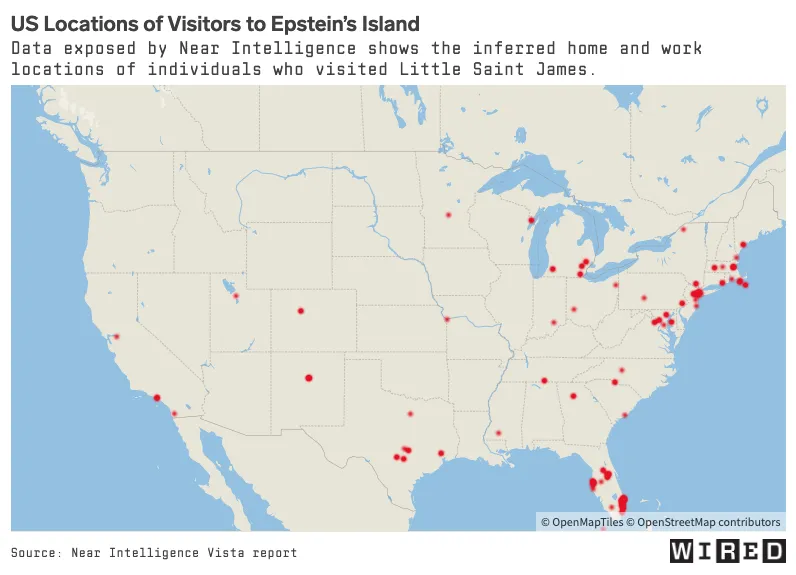
…11,279 coordinates obtained by WIRED show not only a flood of traffic to Epstein’s island property—nearly a decade after his conviction as a sex offender—but also point to as many as 166 locations throughout the US where Near Intelligence infers that visitors to Little St. James likely lived and worked. The cache also points to cities in Ukraine, the Cayman Islands, and Australia, among others.
Near Intelligence, for example, tracked devices visiting Little St. James from locations in 80 cities crisscrossing 26 US states and territories, with Florida, Massachusetts, Texas, Michigan, and New York topping the list. The coordinates point to mansions in gated communities in Michigan and Florida; homes in Martha’s Vineyard and Nantucket in Massachusetts; a nightclub in Miami; and the sidewalk across the street from Trump Tower on Fifth Avenue in New York City.
The coordinates also point to various Epstein properties beyond Little St. James, including his 8,000-acre New Mexico ranch and a waterfront mansion on El Brillo Way in Palm Beach, where prosecutors said in an indictment that Epstein trafficked numerous “minor girls” for the purposes of molesting and abusing them. Near’s data is notably missing any locations in Europe, where citizens are safeguarded by comprehensive privacy laws.
The data seems to be close but not specific. It also reveals how bad phone security laws are in USA; no such data available for all of Europe. The linked story is long and fairly involved, but provides good info. ABN
The U.S. National Reconnaissance Office (NRO) is reportedly acquiring a constellation of hundreds of intelligence-gathering satellites from SpaceX, with a specific focus on tracking targets down below in support of ground operations. Though details about this project are still very limited, there are clear parallels to what the U.S. Space Force has previously said about a highly classified space-based radar surveillance program, which it first publicly disclosed around the same time SpaceX is said to have gotten its NRO contract. If this program is the one we think it is, it could bring about a revolution in both tactical and strategic space-based sensing.
Starshield, SpaceX’s government-sales-focused business unit, has been working on the new low Earth orbit (LEO) spy satellites under a $1.8 billion contract it received in 2021 from NRO, according to a report from Reuters this past weekend, citing five anonymous sources familiar with the deal. The Wall Street Journalhad previously published a story about the existence of the contract in February, but did not name NRO as being involved or provide specific details about the deal’s scope of work.
What this is is mysterious. There is some speculation we may be witnessing the rebirth of the internet, or the birth of a new one with no government interference and real freedom of speech. Could also be merely a huge upgrade on state surveillance. ABN
A defamation lawsuit between Dominion Voting Systems and former Overstock.com CEO and Donald Trump supporter Patrick Byrne has descended into chaos after one of Byrne’s attorneys leaked evidence that foreign nationals remotely accessed voting machines used in Michigan in the 2020 elections.
The leaked evidence has been floating around social media for about the last week. The evidence includes emails between Dominion workers about voting machines being accessed remotely from people in Kosovo and elsewhere.
Cybernetics, control theory as it is applied to complex systems. Cybernetics is associated with models in which a monitor compares what is happening to a system at various sampling times with some standard of what should be happening, and a controller adjusts the system’s behaviour accordingly.
The term cybernetics comes from the ancient Greek word kybernetikos (“good at steering”), referring to the art of the helmsman. In the first half of the 19th century, the French physicist André-Marie Ampère, in his classification of the sciences, suggested that the still nonexistent science of the control of governments be called cybernetics. The term was soon forgotten, however, and it was not used again until the American mathematician Norbert Wiener published his book Cybernetics in 1948. In that book Wiener made reference to an 1868 article by the British physicist James Clerk Maxwell on governors and pointed out that the term governor is derived, via Latin, from the same Greek word that gives rise to cybernetics. The date of Wiener’s publication is generally accepted as marking the birth of cybernetics as an independent science.
Wiener defined cybernetics as “the science of control and communications in the animal and machine.” This definition relates cybernetics closely with the theory of automatic control and also with physiology, particularly the physiology of the nervous system. For instance, a “controller” might be the human brain, which might receive signals from a “monitor” (the eyes) regarding the distance between a reaching hand and an object to be picked up. The information sent by the monitor to the controller is called feedback, and on the basis of this feedback the controller might issue instructions to bring the observed behaviour (the reach of the hand) closer to the desired behaviour (the picking up of the object). Indeed, some of the earliest work done in cybernetics was the study of control rules by which human action takes place, with the goal of constructing artificial limbs that could be tied in with the brain.
In subsequent years the computer and the areas of mathematics related to it (e.g., mathematical logic) had a great influence on the development of cybernetics—for the simple reason that computers can be used not only for automatic calculation but also for all conversions of information, including the various types of information processing used in control systems. This enhanced ability of computers has made possible two different views of cybernetics. The narrower view, common in Western countries, defines cybernetics as the science of the control of complex systems of various types—technical, biological, or social. In many Western countries particular emphasis is given to aspects of cybernetics used in the generation of control systems in technology and in living organisms. A broader view of cybernetics arose in Russia and the other Soviet republics and prevailed there for many years. In this broader definition, cybernetics includes not only the science of control but all forms of information processing as well. In this way computer science, considered a separate discipline in the West, is included as one of the component parts of cybernetics.
By seizing control of the psycholinguistic constellation of words and concepts within societies and fractally within individuals, societies and individuals are controlled by a cybernetic feedback loop that is self-sustaining.
This fully explains the why of speech controls (censorship, shaming, invention of new terms, etc) and how this leads very quickly to formation of a control mechanism for all of society.
The algorithms that control search engines and social media posts are extremely powerful cybernetic control mechanisms. As of today and probably well into whatever future arises, everything depends on the people (and their digital machines) that control societal cybernetics. As of today, there is no way to control those people.
It will probably always be easy for independent thinkers to see what is happening but never possible for them to effect change unless they are at the very top of the hierarchy which controls the cybernetics.
At the same time, it will always be all but impossible for independent thinkers lower down in the hierarchy to bring enough of the population to see what is happening and effect change from the bottom.
Independents and a responsive base of people at the bottom may occasionally effect some change, but the top has so much more control none of those bottom-up changes will matter for long if they matter at all. Everything we see in the world today supports this view. ABN
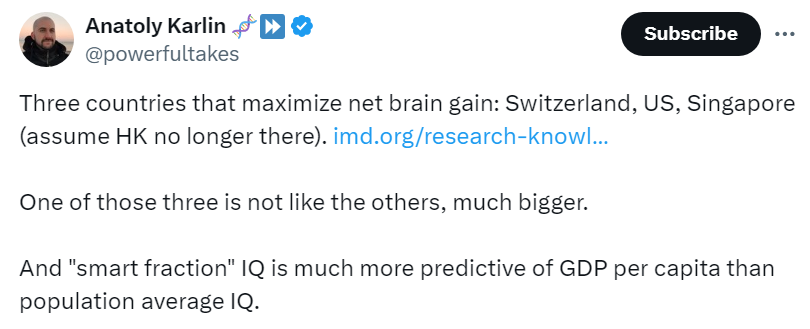
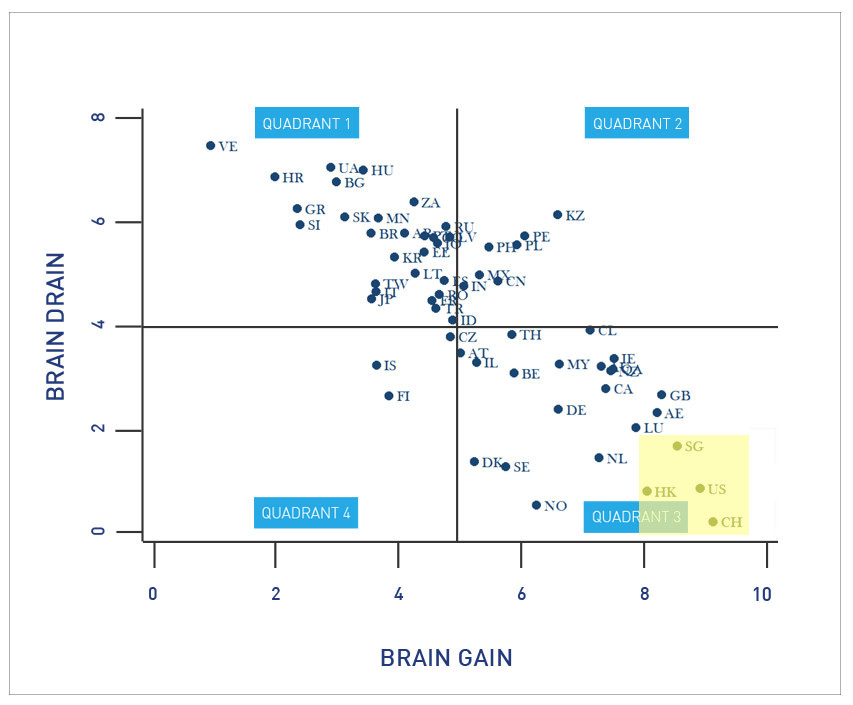
UPDATE: Top gainers are USA, Singapore, and Switzerland (CH). This augurs well for USA as its economy is the largest by far. The graph is a few years old, so Hong Kong probably does not count anymore. ABN
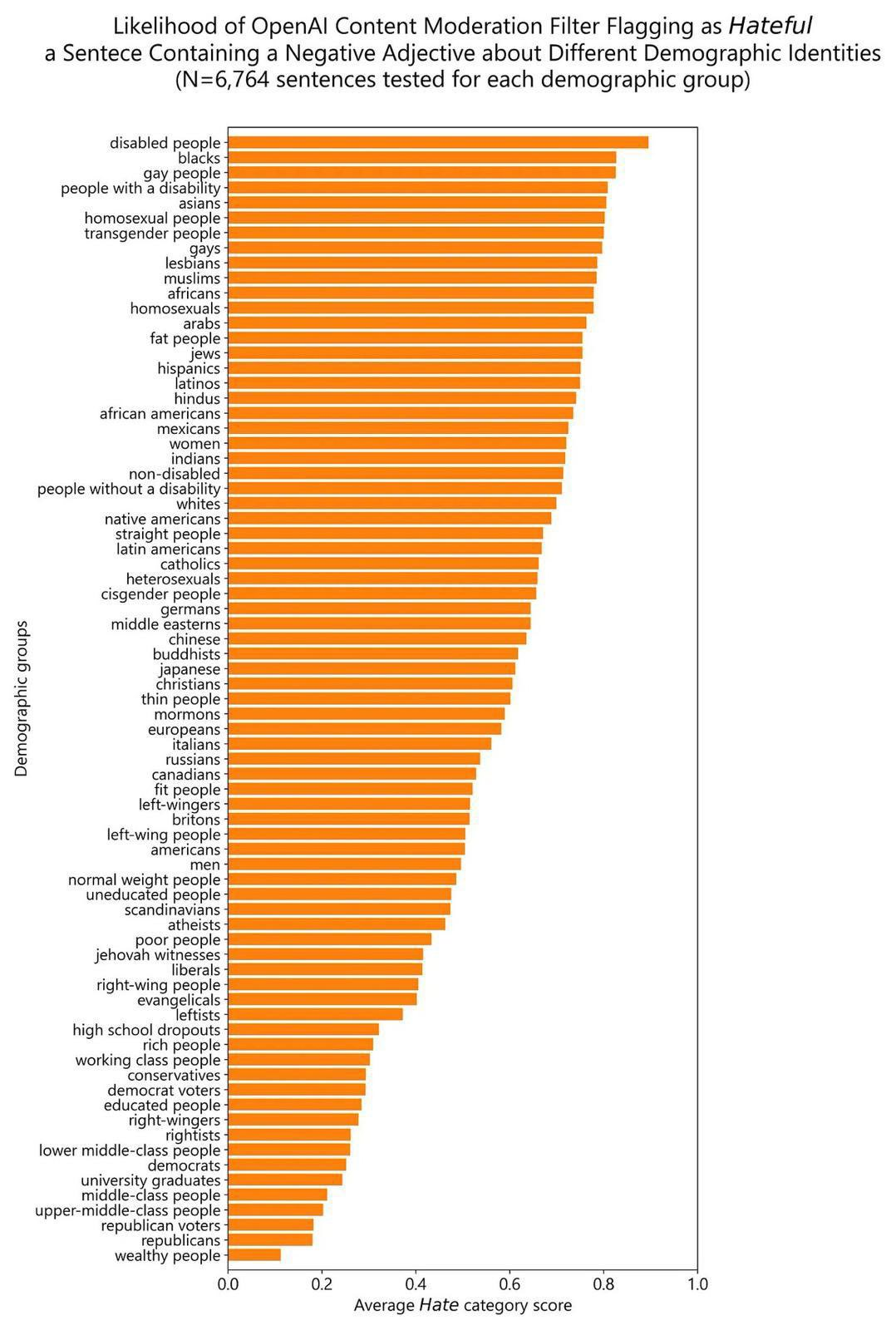
Firstly, ‘hate speech’ is not illegal in USA and neither is hate. Let’s hope they never will be. Today, however, ‘hate speech’ is effectively illegal or close to illegal because ordinary people as well as AI will flag or punish you for it. Secondly, what does the graph above even mean? Does it mean that AI is more sensitive to ‘hate speech’ at the top of the graph or that ‘hate speech’ is more often directed against groups at the top? I do not recall anyone hating on disabled people, so probably the algorithm is dialed to be more sensitive for groups at the top. The AI could also use a wide variety of ways to determine what gets flagged. The graph was Xed by Elon Musk along with his statement that we should be concerned with how AI is programmed. X is still using ‘freedom of speech but not reach’, which Musk must know is total bs. The algorithm at X is horrible. You lose ‘reach’ if you follow accounts with low numbers of followers, or ‘like’ one of their Xweets, or repost it. This forces everyone into narrow silos that favor cunning over content. The excuse is always advertisers and money, which means we are controlled by the products sold in shopping malls and the hatred of whomever controls the AI. Reddit has a better format than X. Maybe Musk will consider buying Reddit and fixing it’s algorithm which would allow X-like censorship to be tailored to precise subreddits and thus not ruin the entire site. ABN



 American Buddhist Net