The mission of this website is to call attention to possible foreign and domestic malign influences on voting systems across our country with evidence obtained from open sources. This evidence raises significant concerns about whether our democratic system is under attack due to the use of foreign-owned electronic voting systems to run our elections and count our votes.
Are unauthorized and malicious foreign software engineers and administrators in hostile countries accessing our voting records and manipulating our elections? Is some of the work funded by one or more South American cartels? Is the personal voting information from past elections stored on Chinese servers in an eastern European country? Are actors able to control and alter the outcomes of our elections? Have they been doing so?
The timelines below trace the evolution of the coding and software that form the electronic DNA of America’s electronic voting and tabulation systems as they have developed over the years. The summary timeline provides the chronological history in brief. Just follow the yellow line. It connects pieces of evidence and raises important questions.
The full timeline includes more than 200 events between 1997 and 2024. Everything is linked to the original sources.
This evidence should concern all Americans. If we have lost control of our votes, we have lost control of our democratic process and our constitutional republic.
This claim fits well with information many of us have been seeing for years. It connects China, Serbia and Venezuela, as well as the makers of electronic voting machines used in USA. The story has always been shadowy and lacking essential details or recognition by law enforcement. Emerald claims Trump is preparing to take down Maduro in Venezuela primarily over their election fraud in USA. ABN
This has been a major conspiracy theory going back several years if not more, that Venezuela had been using these machines to rig their own elections and thus wasused to play a big role in election fraud in USA.
Trump knew enough to evade that system in 2024, so he must be well aware of the game.
Trump typically acts on several levels at once, which do not become fully apparent until later, often much later.
Bombing Iran’s nukes is an example of that.
The deep reason for the bombing is everyone in the ME wanted it done and so did Russia and China.
It was not just for Israel.
In fact, the attack lowered Israeli PR stock because destroying the nukes destroyed their most plausible reason for attacking Iran and Gaza. ABN
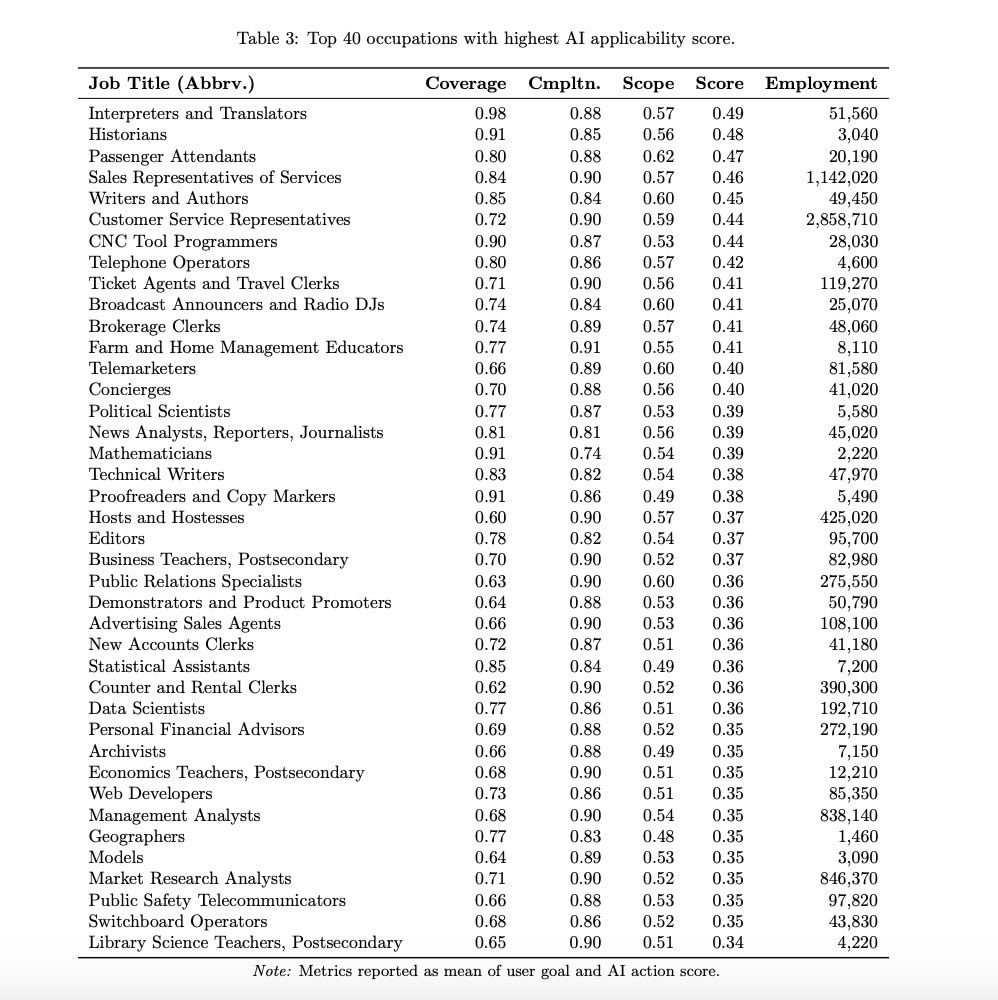
Working will become optional in just 20 years thanks to advances in artificial intelligence and robotics, Elon Musk has claimed.
The world’s richest man said the decision to work will become like a hobby such as sport or growing your own vegetables.
And, somewhat curiously for a man worth $360billion, he insisted that money will also become irrelevant in the future.
Mr Musk told the US-Saudi Investment Forum in Washington: ‘In ten to 20 years my prediction is that work will be optional. It’ll be like playing sports or a video game or something like that.
‘If you want to work, [it’s] the same way you can go to the store and just buy some vegetables, or you can grow vegetables in your backyard.
‘It’s much harder to grow vegetables in your backyard, and some people still do it because they like growing vegetables. That will be what work is like. Optional.’
China’s aircraft carrier program has continued to make accelerated progress, with the country having completed eight carrier warships while having at least two more, both of them supercarriers, under construction, positioning its naval aviation capabilities to rival those of United States in the 2030s.
Nine days after the commissioning of China’s first supercarrier the Fujian on November 5, the country’s eighth carrier and first of the Type 076 class, the Sichuan, began its first sea trails on November 14, with the two ships having highly complementary capabilities and roles in the Navy.
The Fujian and the Sichuan are two of the world’s first three aircraft carriers alongside the U.S. Navy supercarrier USS Gerald Ford to integrate electromagnetic catapult systems. This new technology allows the ships to provide considerable energy to aircraft upon launch to facilitate higher takeoff weights, which is expected to be a common feature of all future Chinese aircraft carriers.
Where the Fujian is an 85,000 ton vessel capable of generating very rapid sorties by launching up to three aircraft simultaneously, the Sichuan is a much smaller 50,000 ton ship that blurs the line between an amphibious assault ship, like the lighter Type 075 class on which its design is based, and a full aircraft carrier. The Sichuan was designed to accommodate a smaller air wing, which is expected to be comprised largely if not entirely of unmanned aircraft, including new types of unmanned stealth fighters such as the GJ-11.
Melania Trump has told troops to brace for a brave new world of robots on the battlefield in a speech described by critics as ‘dystopian.’
The First Lady was speaking to military personnel and their families at Marine Corps Air Station New River in Jacksonville, North Carolina, on Wednesday.
Melania said that AI represented the most profound change to warfare since the creation of nuclear weapons and warned that the race for the technology was not one that America could afford to lose.
‘Artificial intelligence is propelling America’s military into a new era. We are moving from human operators to human overseers – fast,’ the First Lady said.
‘The shift from soldiers to machines is already underway. Autonomous helicopters, swarming drones, and recon aircraft are here now. Fighter-less jets and autonomous bombers are on the way.’
‘To win the AI war, we must train our next generation, for it’s America’s students who will lead the Marine Corps in the future,’ Melania said.
The First Lady continued, ‘Technology is changing the art of war … AI will alter war more profoundly than any technology since nuclear weapons.
‘The most significant change will be speed. Speed in weaponry, decision-making, detection, attack, and defense. Artificial intelligence will take center stage in the theater of war, it already plays a meaningful role on the battlefield.
‘Of course, it is the Marine who will always play the most critical role in realizing mission success.’
This shows Yu Wenhong (于文紅), the founder of “Yu Mei Ren International Group (虞美人國際集團) trying to sell a blood transfusion and enhancement technology to a client.
According to her, it can make people “live forever.” The Haier Group she mentions is a very large publicly listed company in China. She also mentions that their hospital can perform organ transplants.
It seems that the privileged class of the Chinese Communist Party is no longer satisfied with merely transplanting organs. They are now extracting essences from the blood of young people to achieve youth and even eternal life.
Why are so many people, especially children, disappearing in China every year?
Why are Chinese schools now drawing blood from students in a unified manner?
There are far too many conspiracies that we cannot even imagine!
No moral person with sound ethics and a working conscience should ever want AI to be trained to lie. But that is what we are seeing from major players in this game. From what I see, Musk is alone among top elites in what he is saying and repeats often. Truth-seeking with curiosity are the foundations of human morality and intelligence. This appears to be a battle between good and evil. ABN
My AI investment thesis is that every AI application startup is likely to be crushed by rapid expansion of the foundational model providers.
App functionality will be added to the foundational models’ offerings, because the big players aren’t slow incumbents (it is wrong to apply the analogy of “fast startup, slow incumbent” here), they are just big. Far more so than with any other prior new technology, there is a massive and fast-moving wave that obsoletes every new app almost as fast as it can be invented. There is almost no time to build a company and scale it.
There are two ways AI application startup founders can make money:
– Make a flash-in-the-pan app that generates a ton of cash and bank the cash (my estimate is that you have about 12-18 months cashflow generation)
– Make a good enough app that you get acquired by one of the big players for sufficient equity
The situation is highly unstable – we don’t know if it’s going to crash or go to the moon but both scenarios make it very unlikely that any AI application startup will independently become a generational supercompany (baseline odds are low to begin with).
The best odds are finding an application niche in a highly specialized field with extremely unique and specific data barriers, ideally ones relating to real atoms (hardware or world-related) data and not software/finance.
Teaching AI to see faces like humans reveals what makes expert eyes so effective, new research shows.
What is it that makes a super recogniser – someone with extraordinary face recognition abilities – better at remembering faces than the rest of us?
According to new research carried out by cognitive scientists at UNSW Sydney, it’s not how much of a face they can take in – it comes down to the quality of the information their eyes focus on.
“Super-recognisers don’t just look harder, they look smarter. They choose the most useful parts of a face to take in,” says Dr James Dunn, lead author on the research that published today in the journal Proceedings of the Royal Society B: Biological Sciences.
“They’re not actually seeing more, instead, their eyes naturally look at the parts of a face that carry the best clues for telling one person from another.”
This article is interesting but leaves out the fact that facial recognition takes place in a small part of the brain which works wholistically with faces; that is, it is able to grasp an entire face as a whole.
People who are good at face recognition have good brains in this area. People who are bad at it have not-so-good brains in this area.
Interestingly, this area of the brain is close to our orthographic area, the area where written words and graphic signs are identified or produced.
And the two areas can borrow real estate from each other.
One result of this is some people when learning how to read and write can lose some of their face-recognition abilities, to make room for the orthography.
Facial recognition is interesting and plays a major role in our social and subjective sense of how we function.
Everybody is somewhere on the spectrum of good-to-bad facial recognition skills.
As the article above states, correctly, you cannot train yourself to be better at face-recognition (because it is a wholistic skill ensconced in the architecture of the brain).
Many people with poor facial recognition skills are not aware of their deficit.
It’s a good idea to take one or two of the free online tests for prosopagnosia, the clinical word for face-blindness.
If you are good at it, you are probably pretty good socially.
If not, you may have a social deficit whose origin you were not aware of.
I took a couple of those tests some years ago and thought they were ridiculous because there is no way, I thought, anyone could do it.
Even after that it took me a few more years to recognize I really suck at recognizing faces.
Parents and teachers should be aware that some of the children they are dealing with may be very intelligent but also very bad a face-recognition.
Oliver Sacks and Brad Pitt both have prosopagnosia, so the company is not so bad. ABN







 American Buddhist Net