Are we living in a simulation? Physicist claims he has new evidence we’re simply characters in an advanced virtual world

Melvin Vopson, an associate professor in physics at the University of Portsmouth, claims we may be characters in an advanced virtual world. 

He claims that the physical behaviour of information in our universe resembles the process of a computer deleting or compressing code – a clue that perhaps the machines hope we don’t notice. 

Professor Vopson has already warned of an impending ‘information catastrophe’, when we run out of energy to sustain huge amounts of digital information. 

‘My studies point to a bizarre and interesting possibility that we don’t live in an objective reality and that the entire universe might be just a super advanced virtual reality simulation,’ Professor Vopson said. 

Last year, the academic – from Romania – established a new law of physics, called the ‘second law of information dynamics’ to explain how information behaves. 

His law establishes that the ‘entropy’, or disorder, in a system of information decreases rather than increases.

This new law came as somewhat of a surprise, because it’s the opposite of the second law of thermodynamics established in the 1850s, which explains why we cannot unscramble an egg or why a glass cannot unbreak itself. 

As it turns out, the second law of infodynamics explains the behaviour of information in a way that the old law cannot.  

source

Vopson’s paper: The second law of infodynamics and its implications for the simulated universe hypothesis featured

UPDATE: Information that is information about other information appears to be what we think of as consciousness, especially if that information is dynamic or able to focus and choose. Information may also be thought of as the stuff of karma, which itself can be thought of as a form of dynamic information, a coherent procession of information over time. This may even be the definition of time.

Consciousness as we know it is almost always dramatic; it almost always knows something or wants to know something or aims toward something or retreats from it. This is clearly true with regard to other people (or sentient beings) or within ourselves as our information parts interact (sort of what psychology is, or rumination). Regardless of whether human consciousness is high or low in the scheme of things, it tends to deeply crave meaning, purpose, reason, and is often satisfied with tautology over nothing, which proves or at least demonstrates this point :-)

Meaning and purpose are directional and organizational kinds of information. Since they are very common and arguably universal in everything we see, including the ‘lives’ of inanimate matter, it does seem that the whole of everything holds together around this point. In terms of information, it does not make much sense to say life itself is meaningless because what it is is a kind of meaning, a kind of procession of information. ABN

Hypodermic needle model

The hypodermic needle model (known as the hypodermic-syringe modeltransmission-belt model, or magic bullet theory) is a model of communication suggesting that an intended message is directly received and wholly accepted by the receiver. The model was originally rooted in 1930s behaviourism and largely considered obsolete for a long time, but big data analytics-based mass customisation has led to a modern revival of the basic idea.

The “Magic Bullet” or “Hypodermic Needle Theory” of direct influence effects was based on early observations of the effect of mass media, as used by Nazi propaganda and the effects of Hollywood in the 1930s and 1940s.[1] People were assumed to be “uniformly controlled by their biologically based ‘instincts’ and that they react more or less uniformly to whatever ‘stimuli’ came along”.[2] The “Magic Bullet” theory graphically assumes that the media’s message is a bullet fired from the “media gun” into the viewer’s “head”.[3] Similarly, the “Hypodermic Needle Model” uses the same idea of the “shooting” paradigm. It suggests that the media injects its messages straight into the passive audience.[4] This passive audience is immediately affected by these messages. The public essentially cannot escape from the media’s influence, and is therefore considered a “sitting duck”.[4] Both models suggest that the public is vulnerable to the messages shot at them because of the limited communication tools and the studies of the media’s effects on the masses at the time.[5] It means the media explores information in such a way that it injects in the mind of audiences as bullets.

source

Based on mass public acceptance of our technicolor dream psyop hypodermic needle reality, I would say this theory is as true today as ever. The basis of mass psyop slobbering acceptance of the needle is fundamentally the fear of being isolated, rejected, scorned, estranged, alone and lonely. None of those states is nearly as bad as most believe. Robust, independent thinkers even find them stimulating. A mind rejected and left alone can be a very beautiful mind. The media-portrayed lone-wolf psychopath has some truth to it but is overemphasized by psyop controllers because it repels most people, making them more likely to accept the madness needle. The needle theory of communication is nothing more than the simplest semiotic send-and-receive message paradigm—the message sent is taken in fully with zero receiver interpretation. Extremely basic and primitive. Square one on the checkerboard. And this is why it is so effective still today. ABN

Elite Race Denialism Continues, But New Study Shows the Walls Are Closing In

The Race Denialists are at it again. Black academic Tyler Austin Harper [Email him] (right) has attacked Richard Hanania’s new book The Origins of Woke as an “intellectual and moral failure,” in part because it has highlighted black-white differences in IQ [An Intellectual and a Moral FailureThe Atlantic, September 18, 2023]. It was the elite Leftist magazine’s second attack on Hanania: staff writer Adam Serwer (black and Jewish) targeted him three days earlier in a broadside against The Young Conservatives Trying to Make Eugenics Respectable Again. But as VDARE.com’s Steve Sailer has observed, the black-white IQ gap is probably “the best documented finding in US social science.”

Now a new study from A Genetic Hypothesis for American Race/Ethnic Differences in Mean g [Mankind Quarterly, June 2023] proves again that it really matters.

The term “g” stands for “general intelligence,” which underlies verbal, spatial and mathematical intelligence. It explains why people who score highly in one kind of intelligence test usually score highly on the others. It is strongly genetic.

The study was published in the “controversial” Mankind Quarterly—likely, in part, because the better-known journals have been hijacked by Woke activists pretending to be scholars.

Drawing upon the “Adolescent Brain Cognitive Development Study,” which sampled more than 10,000 Americans, the authors carefully examined the relationship between self/parental-identified race or ethnicity (called SIRE in the jargon) and key variables. These included the intelligence test administered as part of cognitive study. The authors also explored race differences in many other brain-related measures.

To say that the authors refuted the claims that “race is a social construct,” or that “race differences in IQ score are environmental” is almost too charitable. They annihilated those claims, and showed that the cognitive differences between the races are strongly genetic.

There was “measurement invariance” across the different groups in its sample of diverse European ancestries. In statistics, this means that the same trait—such as intelligence—was measured in all of the European-ancestry samples. Cultural differences could have played no role in making the test unfair to one group but not another.

The authors’ key finding: The more genetic European admixture a non-white had, the more intelligent they tended to be, and these intelligence differences were on g.

source

One thing about the claims made in the article is all the wrangling between races, tribes and ethnicities is going to disappear as soon as we start having large numbers of digital babies—that is, babies whose parents have selected a large proportion of their genes, a proportion large enough to guarantee high intelligence among many other desirable traits. When this tech is widely available, some parents may still opt for Darwinian chance evolution for their offspring but most will not.

Given the choice of having a genetically super fit and intelligent child for sure or a Darwinian coin-toss kid, most will want the guaranteed smart and healthy one. This constitutes beneficent and beneficial eugenics. No one will be forced to go either way, but the consequences of choosing Darwinian evolution over controlled eugenics will become obvious within a single generation.

Of course human-controlled eugenic evolution could turn out badly, as is true for all new technologies. But there is no doubt we will see enormous improvements in what humans can do in this area within the next few decades. Within 100 years and probably much less, off-body gestation of digital babies will change the entire landscape of human tribalism, pride, competition and so on. I believe there is a very good chance highly intelligent humans produced by voluntary eugenics will look back on us and our concerns today as the last gasps of their selfish, violent, and often grotesque human ancestry. ABN

Propositions Concerning Digital Minds and Society — Nick Bostrom, Carl Shulman

Below are some excerpts from the paper: Propositions Concerning Digital Minds and Society. ABN

Consciousness and metaphysics:

  • The substrate-independence thesis is true: “[M]ental states can supervene on any of a broad class of physical substrates. Provided a system implements the right sort of computational structures and processes, it can be associated with conscious experiences. It is not an essential property of consciousness that it is implemented on carbon-based biological neural networks inside a cranium: silicon-based processors inside a computer could in principle do the trick as well.”
  • Performing two runs of the same program results in “twice as much” conscious experience as one run
  • Subjective time is proportional to speed of computation: running the same computation in half the time generates the same (quantity and quality of) subjective experience.

Respecting AI interests:

  • Society in general and AI creators (both an AI’s original developer and whoever may cause a particular instance to come into existence) have a moral obligation to consider the welfare of the AIs they create, if those AIs meet thresholds for moral status.
  • It is possible for some digital minds to have superhuman moral claims
  • Because an AI could have the capability to bring conscious or otherwise morally significant entities into being within its own mind and potentially abuse them (“mind crime”), protective regulations may need to monitor and restrict harms that occur entirely within the private thought of AIs.
  • If an AI is capable of informed consent, then it should not be used to perform work without its informed consent.
  • Informed consent is not reliably sufficient to safeguard the interests of AIs, even those as smart and capable as a human adult, particularly in cases where consent is engineered or an unusually compliant individual can copy itself to form an enormous exploited underclass, given market demand for such compliance.
  • AIs capable of evaluating their coming into existence should be designed and treated so that they are likely to approve of their having been created.
  • Principle of Substrate Non-Discrimination: If two beings have the same functionality and the same conscious experience, and differ only in the substrate of their implementation, then they have the same moral status.
  • Insofar as future, extraterrestrial, or other civilizations are heavily populated by advanced digital minds, our treatment of the precursors of such minds may be a very important factor in posterity’s and ulteriority’s assessment of our moral righteousness, and we have both prudential and moral reasons for taking this perspective into account.
  • Misaligned AIs produced in such development may be owed compensation for restrictions placed on them for public safety, while successfully aligned AIs may be due compensation for the great benefit they confer on others.

Security and stability:

  • Advanced AI would dramatically accelerate the rate of innovation, including innovations that make means of global destruction widely available; therefore, institutions capable of regulating dangerous AI innovations may need to be put in place early in the AI transition (if not before).
  • If wars, revolutions, and expropriation events continue to happen at historically typical intervals, but on digital rather than biological timescales, then a normal human lifespan would require surviving an implausibly large number of upheavals; human security therefore requires the establishment of ultra-stable peace and socioeconomic protections.
  • When it becomes possible to mass-produce minds that reliably support any cause, we must either modify one-person-one-vote democracy or regulate such creation.
  • Given that normal parental instincts and sympathies may not always be present in the creation of digital minds, e.g. by profit-oriented firms and states, AI reproduction must be regulated to prevent the creation of minds that would not have adequately good lives (whether because they wouldn’t receive good treatment or because of their inherent constitution).
  • Since misaligned AIs might pose a significant threat to civilization during a critical period until law enforcement systems are developed that can adequately defend against such AIs, additional protective measures (such as regulating the creation of such AIs) may need to be imposed during this period.
  • The Outer Space Treaty and similar arrangements should be supplemented to reduce the risk of conflict over space resources and unsafe AI development in pursuit of those resources.
Continue reading “Propositions Concerning Digital Minds and Society — Nick Bostrom, Carl Shulman”

Consciousness is a cheap and easy way to make things work

Is a dragonfly conscious? I bet most of us would say it is.

Is a robotic manmade dragonfly conscious? I bet most of us would say it is not, though obviously it could come into being only through conscious effort.

Is consciousness common among living things? It seems that virtually all animals and probably all or most insects are conscious. I don’t know about bacteria but maybe they are too. It could be argued that any entity that is able to make a decision, a choice between two or more options, is conscious to that extent.

Is a rock conscious? It could be in the sense that it does not behave other than like a rock. Something about it or its conditions holds a rock within the laws of physics as we know them. Rocks are predictable.

If the cosmos is conscious, then it makes perfect sense that many of the beings on earth are conscious and maybe all of them are. Maybe the earth itself is conscious.

Consciousness is a cheap and easy way to make things work. In that sense a conscious universe is a parsimonious description of the universe.

A mind-only or mental or conscious universe is a significant part of the Buddhist tradition and explains how rebirth happens and what enlightenment probably entails. This Buddhist tradition is called Mind Only or Yogachara.

There is nothing in Buddhism that prohibits us from adding to the tradition. Indeed, we are encouraged to make it our own by using our own words and understanding to pursue enlightenment. You do not need to be a Buddhist to conclude that the cosmos is conscious or able to think. And many non-Buddhists have come to that conclusion.

I personally believe or strongly suspect that this human realm is governed by a kind of conscious dramatic something. The drama is bigger than us but we are in it. We make some of the rules for ourselves but not all of the rules. I believe when karma is understood in terms like this it makes for a healthier and more accurate philosophical understanding of the human condition.

Consciousness may very well be a primary, more primary than time and space. It is roughly in this context that some philosophers say that experience is the fundamental data point, or stuff of life. A statement like this is very close to the Buddhist idea of thusness or the deep truth of the moment in the mind, the deep truth of the mind.

The Buddha said all things are empty including the Buddhadharma. This is much like saying consciousness itself is empty and can only be grasped through the thusness of experience, which is always dramatic in one way or another. Empty consciousness conscious of itself can be experienced. Is that the stuff we are floating in?

Humans as networks

…a Dark City you cannot leave

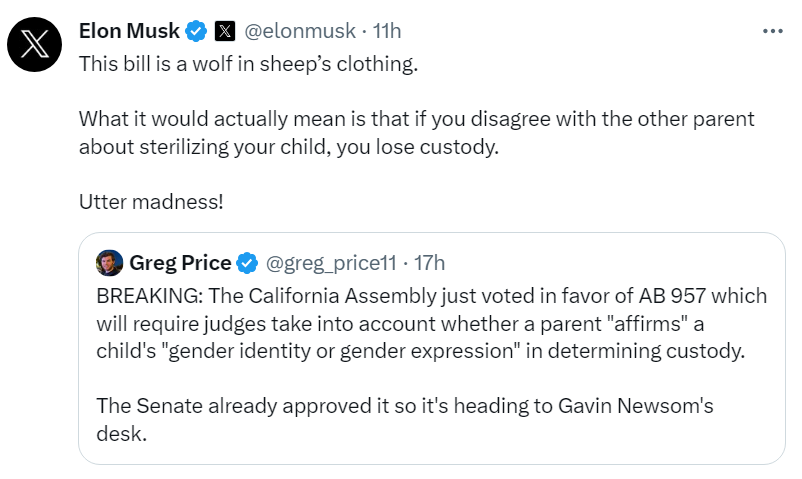
Absurd and dangerous laws like this illustrate the extremely strong bonds humans have with default vocabularies, default cognitive tautologies, default authoritarian control, default conformity. These default bonds are the core of why mind-control works and how it works. Goose any of these bonds and droves will follow. We are right now living inside a multifaceted totalitarian panopticon—a Dark City you cannot leave. Is penultimate reality that we are controlled by Satan or mired in the First & Second Noble Truths of Buddhism? ABN

Checks out, see links below

An unsmiling Trump – inmate no. P01135809, according to Fulton County Jail records – was captured glaring at the camera in the mug shot. The image represented yet another extraordinary moment for Trump, who did not have to submit to a photograph when making appearances in his three other criminal cases.

https://www.reuters.com/legal/trump-report-atlanta-jail-face-charges-election-subversion-case-2023-08-24/

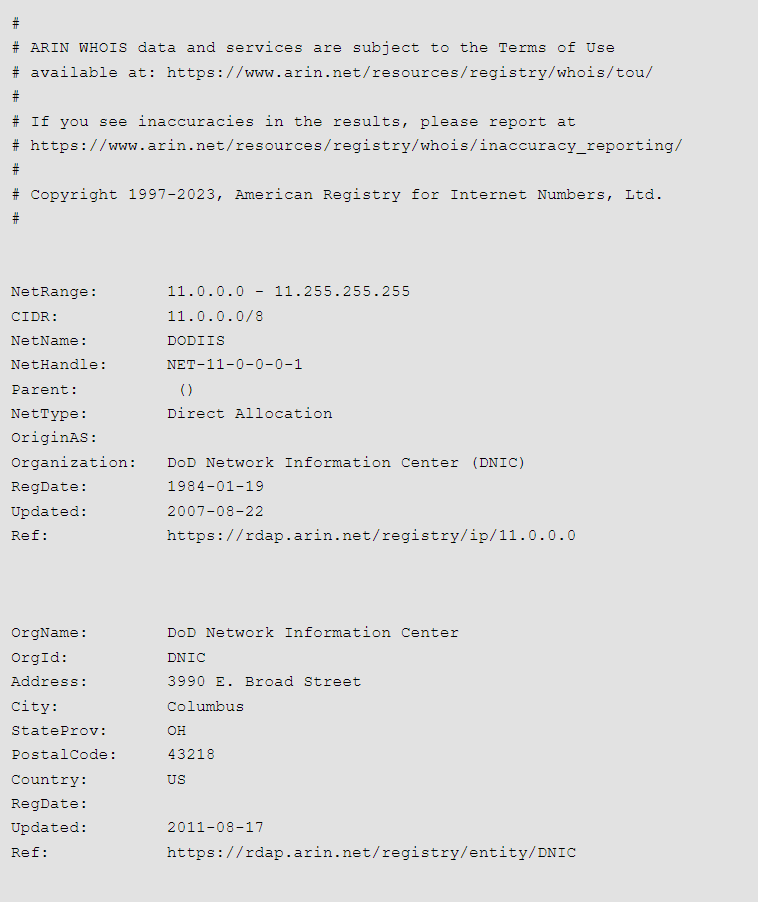
https://dnschecker.org/ip-whois-lookup.php?query=11.35.80.9

As of today, this checks out 100%. What does it mean? How much do you believe in coincidences? Trump’s inmate number is one in a block of IP addresses owned by the DoD Network Information Center. ABN

Sam Altman fears Meta taking huge risks with open source AI

Meta wants to open-source a GPT-5-level model and seems dead-set on open-sourcing right up until AGI. I want to be clear about what this means:

There is no kill-switch. If something goes wrong–an agent gets out of control or a bad actor weaponizes it–there’s no easy way to turn it off. It could be running on any small cluster. There will be no security.

Safety research becomes meaningless. All the work people have done into making AI systems honest, aligned, ethical, etc becomes (mostly) moot. The population of AI’s out in the world will evolve towards whichever systems produce the most economic output, irrespective of what values or motives they have. There will be no guardrails. Anyone can change their AI’s values or capabilities as they want, for good or bad.

If Meta continues to open-source as we get much smarter AI, it’s pretty clear to me that things will become a shitshow. The arrival of these alien intelligences in the world is already going to be chaotic, but much much moreso if we just fling off what little levers of human control we have.

As far as I can tell, Meta’s wish to open-source stems mostly from some software industry dogma that “open-source good”.

source