Are We Doomed?

Breeding the Human Herd is an ideal introduction to the topic of eugenics. In admirably clear and engaging prose, Prof. Dutton’s book lays out the basic concepts of eugenics as well as the history both of its rise and its decline. Prof. Dutton defines eugenics as “the study of how to arrange reproduction within a human population in order to increase the occurrence of heritable characteristics regarded as desirable.” “Positive” eugenic policies are intended to increase the prevalence of desirable traits in a population (e.g., encouraging intelligent people to have children), while “negative” eugenics involves decreasing undesirable traits (e.g., “incentivizing those with low intelligence to limit their fertility”).

If all the book did was explain the basic concepts of eugenics, it would perform a valuable service. But the heart of Breeding the Human Herd is a demonstration of the power of eugenic theory to explain the decline of the West. Drawing upon a vast number of studies in the social sciences, Prof. Dutton argues that what we have witnessed since the advent of the Industrial Revolution is a dysgenic collapse, resulting in a steep decline in mental and physical health, as well as the decline of vital social institutions and social cohesion.

Particularly worthy of note is Prof. Dutton’s treatment of Leftist perversities as the result of a lack of genetic fitness. Leftists are, to use his unforgettable term, “spiteful mutants” whose “high mutational load” results in an unusually large number of physical and mental abnormalities. In the pre-industrial era, such individuals would probably have never reached adulthood. Prof. Dutton supports these claims by appealing to cutting-edge research in the social sciences — for example, studies that show a high correlation between espousing left-wing views and various heritable psychopathologies. This part of the book is particularly fascinating.

…The trouble, however, is that conservatives are likely to be religious, which in the West usually means Christian. Christianity acts to thwart the healthy tendency of its adherents toward what we might call “natural eugenics” (i.e., the “gut feeling” that health and intelligence are good and that those with them should breed, and those without should not). As noted earlier, in the modern West, opposition to eugenics has frequently come from religious conservatives. Whatever psychological benefits may accrue to its adherents, Christianity is a fundamentally dysgenic belief system, for it preaches egalitarianism and opposes “love of one’s own” with an impossible ideal of “universal love.” (Nietzsche was right about Christianity, too.)

link

To add one idea to this wide-ranging discussion of eugenics, our ability to manipulate gametes and zygotes already allows for selection of offspring. When physical and digital insertions of genes into gametes and zygotes becomes more fully developed, parents will be able to choose even more of their offspring’s traits. Before too much longer, children eugenically selected by the free-will of their parents will have IQs two and three times greater than their parents and physical traits to match those high IQs. It is conceivable that these changes will be accepted societally without much fuss, thus producing a rapid transformation in human evolution to a stage that might be called ‘post Darwinian evolution’ or ‘conscious evolution’. In my view, this is something to be looked forward to and not feared. It will quickly solve many of humanity’s most vexing problems. ABN

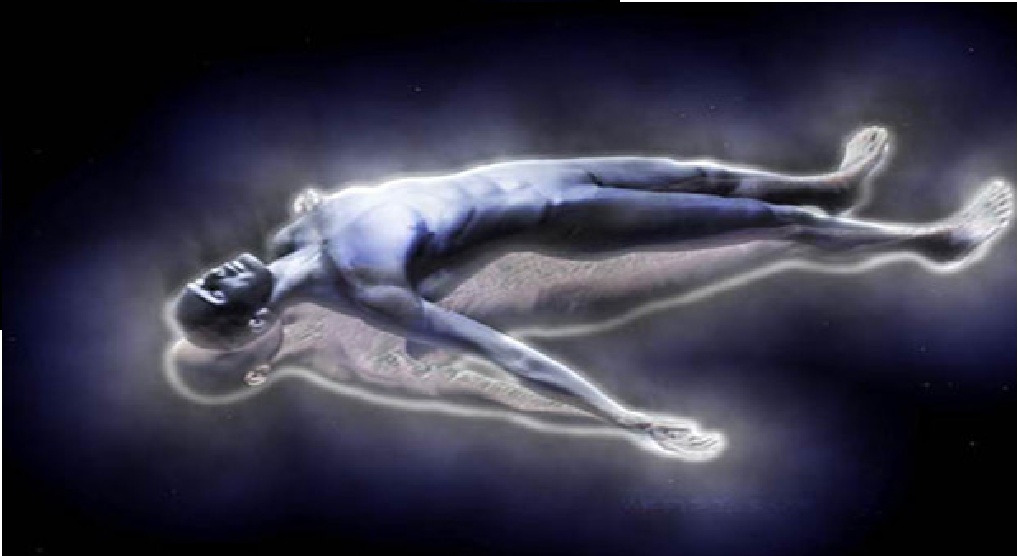
Scientists Claim That Quantum Theory Proves Consciousness Moves To Another Universe At Death

A book titled “Biocentrism: How Life and Consciousness Are the Keys to Understanding the Nature of the Universe“ has stirred up the Internet, because it contained a notion that life does not end when the body dies, and it can last forever. The author of this publication, scientist Dr. Robert Lanza who was voted the 3rd most important scientist alive by the NY Times, has no doubts that this is possible.

Lanza is an expert in regenerative medicine and scientific director of Advanced Cell Technology Company. Before he has been known for his extensive research which dealt with stem cells, he was also famous for several successful experiments on cloning endangered animal species.

But not so long ago, the scientist became involved with physics, quantum mechanics and astrophysics. This explosive mixture has given birth to the new theory of biocentrism, which the professor has been preaching ever since.  Biocentrism teaches that life and consciousness are fundamental to the universe.  It is consciousness that creates the material universe, not the other way around.

Lanza points to the structure of the universe itself, and that the laws, forces, and constants of the universe appear to be fine-tuned for life, implying intelligence existed prior to matter.  

He also claims that space and time are not objects or things, but rather tools of our animal understanding.  Lanza says that we carry space and time around with us “like turtles with shells.” meaning that when the shell comes off (space and time), we still exist.

The theory implies that death of consciousness simply does not exist.   It only exists as a thought because people identify themselves with their body. They believe that the body is going to perish, sooner or later, thinking their consciousness will disappear too.  If the body generates consciousness, then consciousness dies when the body dies.

link

These ideas are consonant—even consilient—with Mind Only Buddhism. This may be of interest: How to understand why Buddhist rebirth does not require a self or soul. ABN

UPDATE: By Robert Lanza: The Grand Biocentric Design: How Life Creates Reality. I have not read this book but probably will, and may have something to say about it. ABN

A deep philosophical flaw of the West is the root cause of our downfall

The West has failed to analyze and understand metalevels of interpersonal communication. Our philosophies employ metalevel concepts and vocabularies but have never delved into or properly understood metalevels of interpersonal communication.

This failure to properly understand metalevels of interpersonal communication has very large downstream effects. It has retarded our religious understanding and psychologies, our group formation, our understanding of other groups, and our ability to form profound interpersonal relationships.

The basis of this claim is that when interpersonal language is deeply restricted—as ours is by this massive hole in Western philosophy—all other forms of language use are negatively affected. When metalevels of interpersonal communication are limited, so is almost everything else.

I believe our philosophers never went there for the same reason no one elsewhere has either—analysis of interpersonal metacognitive language and thought goes against a primitive human instinct to not question others too closely, especially in real-time and about usage and meaning.

The few areas of Western endeavor that have not been hobbled in this way are science, technology, and to some extent economics and politics. This is because these areas by definition must deal with metalevel concepts and thus are very capable of understanding and manipulating them, but only in their own self-described contexts. They are successful because they are practically engaged with the real-world.

In contrast, Western religions, psychologies, group formations, and intergroup communication are so severely hobbled by limited metacognitive understanding, they are all but forced to use rigid definitions of what their metacognitive levels are. Thus Western psychologies are theoretical, religions are dogmatic, group formations are formal at best or ideologically tribal, indicating the need to enforce metacognitive language and concepts rather than analyze or discuss them.

Wittgenstein came close to understanding the problem but did not provide a solution or seem to see that there is one. I hope readers of this site understand that FIML is both the solution to this problem and the best way to personally experience and come to grips with how very serious it is. ABN

first posted JUNE 1, 2023

The Six Types of Valid Anecdote

The plural of anecdote is data. An anecdote to ignorance or absence is not.

Many of us are familiar with the misquote attributed to Wolfinger, stating that “The plural of anecdote is not data.” However, this commonly repeated trope of social skepticism is actually incorrect. In reality, there are certain types of anecdotes that can be considered as data, information, or even intelligence.1 There are six circumstances in which a single anecdote holds valid inferential significance – yes, even if it involves personal testimony. It is important to recognize that skeptics who dismiss all forms of anecdotal evidence, except for one particular invalid application cited in strikethrough below, are using a deceptive tactic. This deceptive tactic is akin to a magician’s trick – the anecdotal appeal to ignorance or absence.

link

Some depressing thoughts about the evolution of human intelligence

Firstly, human evolution is typically not survival of the fittest, but rather survival of the average. Outliers are misunderstood, envied, feared, killed or harmed. This happens to the less intelligent as well as the more intelligent.

The reason this happens to the intelligent is humans are envious and violent and prone to misunderstanding people who are smarter than them. This leads to violence toward, obstruction of, or not helping those who seem more intelligent.

It’s hard to escape a black ghetto because you will be perceived as “acting white” and attacked for that. It’s not very different in white “rural ghettos” (or urban) where intelligence is perceived as a threat. In many societies, average people cannot or will not lend support to their more intelligent members because they know, or imagine, that such behaviors will eventually lead to them being “lorded over” by the person(s) they helped.

Just a few generations ago, Italian American communities were famous for discouraging higher education among their children because it threatened the social structure if sons, let alone daughters, attained better careers than their fathers.

I am sure there are many other subcultures within the USA and throughout the world that have similar attitudes. Siblings often envy and decline helping each other, to say the least.

In the more distant past, violent death at the hands of other humans was a very common way for people to leave this vale of tears. Today the killing is less, but I doubt the harming is all that much less. Nowadays people use rumors, lies, poison, and many sorts of hindrance to prevent intelligent people from rising above them.

In a gruesome but very realistic way, this all makes sense because, evolutionarily, why should an individual help a genotype that is different from their own? This is probably why so much extant human intelligence, such that it is, is devoted to deceiving other humans, outsmarting them, out-competing them, getting ahead of them. Humans do better in a capitalist system because capitalism allows them to compete by virtually any means they can get away with.

Some strongly hierarchical societies, like China, do tend to help intelligent people if they are well-connected or have already risen to the top of a hierarchy. On the way to the top, though, the internecine fighting can be as bitter as anywhere else in the world.

In times of war or perceived threat, many groups will help the smarter ones of their own, but compensate by harming other groups even more viciously that usual. You can see this behavior in some cults, cliques, and secret societies within the USA today. Sometimes they help their genotype and sometimes they help their ideological types by that sort of behavior. In a sense, groups like that are just acting like individuals on a larger stage; they are selfish and violent as a group, but not too bad to themselves.

Having spent so much time with FIML practice and its considerable social and psychological implications, I don’t feel sanguine about the statements above. Isaac Newton helped the whole human race because somehow he was both left alone and helped. Had he spent time in public houses just being himself, he probably would have been beaten, and thus returned through brain damage to the common lot. Had he not been helped, he probably would have done nothing, and certainly much less. My guess is England probably had hundreds of potential Newtons, but just that one survived to produce great science.

Archimedes was murdered by a Roman soldier. Socrates was poisoned. Newton survived. These are the few we know about. I am sure there are many thousands more who were destroyed before they ever did anything to cause us to know about them.

My guess is the Buddha meant something like the above when he described the Four Noble Truths. Notice, that his formula provides no way for societies (large groups) to escape suffering en masse, but only a way for individuals or small groups.

Large groups can become more comfortable but, it seems, always at the expensive of even larger groups that are exploited by them. Maybe computers and machines will fix this problem in the future, but there doesn’t seem to be much hope today. Multiculturalism will very likely make things even worse, except for the few groups that dominate the others. Not much different, except in scale, from a normal bad neighborhood today.

first posted JUNE 16, 2014

Note for today: What we rightly fear about machine intelligence/AI is it will act like us as described above. And there appears to be no way—or no sure way—to prevent AI from destroying us. Maybe digital babies with IQs of 300 will grow up to figure something out though to a huge AI, a 300 IQ human will be like a gnat. ABN

Buddhism and poetic consilience

Poetic justice is a small slice of poetic consilience. Buddhist practice is luminous, light and light-filled, consilient. It receives poetic and spiritual resonance in unexpected places and at unexpected moments.

Trains of thought, tributaries of the mind-stream, encounter other trains of thought from somewhere else and a magnificent blending or realization occurs. Sometimes we can barely hold it because it is so much brighter and realer than anything else; it becomes a glimpse, an inkling, a part of our deepest and most important memory.

Buddhism is a subjective science we do on ourselves. It has principles and rules we would do well to follow. Much of it can be bent and interpreted in our own way; much of it should be bent and interpreted in our own way; the Buddha even said that. That is good Buddhism.

But not all of it can be bent and interpreted in our own way. At its core Buddhism is a moral existential philosophy that is practiced as a subjective science. Karma is what we do well or badly in this respect.

Wholesome thoughts and behavior lead away from delusion toward enlightenment or purity of mind. Unwholesome thoughts and behaviors lead away from enlightenment or purity of mind toward delusion, toward clinging to a false self which will lead to suffering.

Wholesome and unwholesome can be defined in those terms. Pursuing wholesome thoughts and behaviors yields spiritual victory. Failing to pursue them or, worse, pursuing their opposite, yields spiritual defeat.

That is what Buddhism is. That is how you do it.

‘Don’t do bad. Do good always. Purify your mind. These are the teachings of all Buddhas.’

For decades this area has been kept relatively cool by sulfur emissions from ships… but this changed in 2020

More from Leon Simons: Climate Impact of Decreasing Atmospheric Sulphate Aerosols and the Risk of a Termination Shock. Simons is focusing on shipping lanes and sulfur emissions while others are saying that though this is true an even larger factor which has appeared in the past few years is deep sea warming through volcanic activity or, in other words, exothermic emissions from the earth’s core. The topic of CO2 has receded as ocean temperatures continue rising. A basic problem in solving the ocean heat anomaly is we know very little about what is happening in the deep ocean, very little. Obviously, rising ocean heat is a very big deal and figuring it out will require real dialog and real science. I hope we do not go through another dumbfuk anti-science period as we have been with covid bullshit. ABN

How to understand why Buddhist rebirth does not require a self or soul

The basic reason no self or soul is reborn is neither exists independently of the mental universe that gave rise to our illusion of selfhood.

The mental universe within which we all exist is dynamic and so are we. In Buddhist terms, this dynamism is action or karma.

Buddhism does not say we do not exists. It only says that our selves are empty, that they do not ultimately exist. When we die our karma, the mental activity of this life, reconstitutes as a new being ensconced within the larger mental universe.

No one explains this better in modern terms than Bernardo Kastrup. In his essay Making Sense of the Mental Universe, he does not write about rebirth but rather about the conditions of our existence within the mental universe.

Nonetheless, his explanation of a “mental universe” shows precisely how rebirth can occur without there being any soul or pudgala or anything else that flies from the body upon death to transmigrate to another one.

I highly recommend reading the essay linked above. I have no idea if Kastrup is a Buddhist thinker. It’s even better if he is not, if his thinking arrived independently at a place consonant with original Buddhist thought.

Most Buddhists know that even Buddhists have trouble understanding how someone can be reborn without having a soul, self, or pudgala. What did the Buddha even mean by that? I know more than one university professor of Buddhist studies who explains Buddhist rebirth by saying, there is no such thing and neither is there such a thing as karma.

Those professors explain away karma and rebirth by claiming those fundamentals of Buddhist thought are nothing more than the Buddha “using the concepts of his day” to teach his moral doctrines and what amounts to his “atheistic Stoic” philosophy.

I mean no disrespect for the professors. It is hard to understand how something can be reborn and yet be empty of any perduring self or soul.

The essay linked above provides an excellent explanation of how that happens. I strongly encourage Buddhists or people who teach Buddhism or are interested in it to read Kastrup’s essay when you are in a good mood and want to learn something new and really interesting.

This essay can give you another angle on Kastrup’s thinking: Matter is nothing more than the extrinsic appearance of inner experience.

And here are some of my comments on Kastrup’s essay Making Sense of the Mental Universe.

first posted APRIL 2, 2020

A deep philosophical flaw of the West is the root cause of our downfall

Ambiguity and social hierarchy

In this post I am going to contend that: linguistic ambiguity tends to lead to or produce hierarchical social systems.

By linguistics, in this context, I just mean language and its uses, though expressions, gestures, roles, and so on can also be factors. Of course, many other things–genes, wars, historical precedents, etc.–also produce hierarchical societies, but today we will just deal with language.

Another way of stating the contention above is: humans have adapted to linguistic ambiguity by forming hierarchies. Or human hierarchical societies have evolved as adaptations to linguistic ambiguity. A stronger way of saying that would be human hierarchical societies have evolved as adaptations to linguistic ambiguity and they exploit ambiguity to maintain themselves.

Another way of saying all that might be to say that in hierarchical societies linguistic ambiguity is good for the top people because it maintains the status quo. This happens because if the ambiguity matters in any way, it is almost always the top people who will decide what it means.

I am going to present a microcosmic example of this point. Please notice as you read this example that this kind of ambiguity is very common. Something like this will occur in your life very often, maybe as often as a few times per hour of conversation, maybe more.

This morning I was cutting some (store-bought) potatoes for breakfast. As I was doing that I said to my partner: “The potatoes from our garden are so much better than these store-bought ones.” All I meant was that. I had no further implication in mind.

My partner (my FIML partner) did a FIML query and asked me: “Did you say that to make me feel good about our garden?” I replied: “No, I did not.” After which she said: “Because if you had I would have felt bad because I was very careful when I bought those potatoes so I would have felt that you were criticizing my shopping.”

This example shows very clearly that the only way to resolve the ambiguity inherent in my statement is to fully discuss the statement–why I said it, what I meant by it, and what I didn’t mean by it. Anything less would leave a puzzle in my partner’s mind.

This example also shows the value of trivial incidents for FIML practice, something we have emphasized many times. That this incident is trivial and small (just a single sentence) makes it perfect material for a FIML query. If the incident were larger, it would be harder to isolate and agree upon data points. As it was, my partner and I were able to clearly remember what I had said and how we both understood that statement very differently. As it was, we were able to clear up the ambiguity very quickly. No, I was not implying criticism. Yes, I do appreciate your careful shopping. Yes, these are excellent store-bought potatoes, but they aren’t as good as the ones we grow in our garden.

Everything was clear and we both experienced a resolution, my partner more than I because I had not initially noticed the ambiguity in my statement or the effect it had on my partner.

That’s a good example of a FIML query. And it is a good example of how a FIML query can lead to an extensive discussion. The extensive discussion in this case is how even very minor ambiguities like the potato incident can lead to or support hierarchical social structures.

In most non-FIML homes, I am pretty sure most people would not have inquired as my partner did. Most people would probably not say anything. Not saying anything would maintain whatever status quo had been established in that home.

If our home were a hierarchy and I were the top dog (and we did not do FIML), my partner would be forced to wonder silently about what I meant about my potato comment. Maybe she would suffer or feel confused or resentful. It is natural for humans to interpret language in a self-centric manner and it is natural (normal) for humans to be a little paranoid about what they hear. If my partner were the top dog and I had said that, she might question me in an aggressive manner or accuse me of being ungrateful. In that case, I would probably be forced to apologize and claim that I hadn’t meant it that way. Going forward, I might become more wary about what I said around her.

So, not inquiring, not resolving small linguistic ambiguities maintains the status quo. If the status quo is a hierarchy, it will be maintained.

If the status quo is not hierarchical, other problems will result from not resolving ambiguities even as small as the potato example. In the example of partners who live together, partners will feel a mounting sense of confusion and uncertainty as ambiguities like that accumulate. It will be harder for them to trust each other. Kind motives may be misinterpreted as being aggressive, and so on. In time, things may get so bad partners will separate or stay together but divide their lives into separate spheres of influence. If they separate, no status quo has been maintained (demonstrating my main point). If they divide their lives into separate spheres of influence, they will essentially be dividing their lives into small hierarchical spheres of influence (ditto). The garden is yours. The basement is mine. Et cetera.

Some hierarchy is inevitable and desirable between friends or in the home. But for close relationships, less hierarchy is better for most people because it is through egalitarian relationships that we learn the most about ourselves and each other, and it is in these sorts of relationships that we develop the most.

In hierarchical societies, generally speaking the person who is higher up decrees the resolution to all ambiguities. Do what the boss says. Just do what you’re told. She’s in charge. He is infallible, etc.

One reason hierarchies get away with decrees like that is it would simply take far too much time to resolve every ambiguity in a perfectly egalitarian way. Thus, almost all humans today are well-adapted to living in hierarchies. I am sort of OK with that in many professional and business contexts.

Where I am not OK with it is between close friends or couples, except for a little bit here and there depending on context (for example, one partner has special knowledge or experience the other doesn’t have). I suppose many people are very content living in a hierarchy in their own home, but that’s not for me. I don’t want my partner obeying me or being afraid of me and I don’t want to obey or be afraid of her either.

From this small potato example, I hope readers will be able to extrapolate to the formations of social groups. Surely social groups formed in many places at many different times. As history moved forward in time, less well-adapted groups were dominated by groups that were better adapted. And that is why the world is run by hierarchies almost everywhere.

One consequence of this is it affects the individual psychology of all of us who live in hierarchical societies. This may make us intolerant of ambiguity. It may make us view our private lives through hierarchical lenses. Without FIML, our massive training in hierarchical systems will lead to confusion and suffering in our private lives. The inevitable ambiguity will eat away at us if we have no way to fully deal with it.

Another consequence of living in hierarchical societies is people who for one reason or another don’t quite understand the rules will often be judged as mentally ill, dangerous, trouble-makers, outlaws, and so on. In very rigid societies you can be sent to a gulag or be burned at the stake for not conforming. In less rigid societies, you will be fired or ostracized.

first posted JUNE 20, 2012