Totalitarianism is inevitable, expect it

Two things are certain:

  1. technological advances cannot be stopped, only hidden for awhile
  2. KOBK game theory is always at play

Therefore, totalitarianism is inevitable. Advances in technology are now and will continue to be used by KOBK players against each other and against any and all potential rivals, including the masses.

That’s all there is to it. Nothing can stop it.

The only options are better or worse totalitarianism. I can imagine a fairly decent state with very low crime and a thriving population. I can also imagine something really bad.

A really bad state would lobotomize any potential enemy within, even for minor disruption. Lobotomies are already being used to control populations in many parts of the world, including USA. There will be even more of it. There will be less need to cut off your digital dollars or monitor your face because it’s much easier to simply lobotomize you without your permission or knowledge.

Who will be in ultimate control? Whichever group is strongest, most cohesive, most ruthless. How will we know them? Secrecy is to their advantage, so it’s highly probable we will never know who they are.

Who was in control of the Biden administration? Who controls US IC, Five Eyes? How much power do Jews really have? How much power do European royal families really have? How much power does Putin or Xi have?

Empires are inevitable due to the basic reality of KOBK game theory — that players in KOBK conflicts do not know for certain how powerful they are vis-a-vis their adversaries or how powerful their adversaries are. Moreover they do not know for certain the aims, motivations, and/or methods of their adversaries.

This is why hierarchies always grow and always strive to become more powerful. There is not going to be a multipolar world in any other sense than more than one empire competing with the other(s). Within each empire, totalitarianism. Total control. ABN
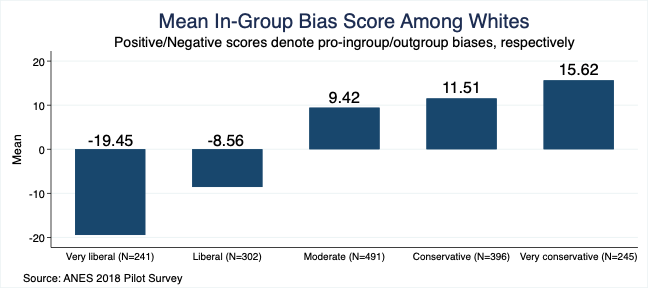
White Advocacy Is for All of Us — Gregory Hood

The only people who say they are “beyond left and right” are people their opponents call “far right.” White advocacy is nominally on the Right because it defends hierarchy. Leftism is egalitarian. We defend the interests of our own race, and races are not equal.

However, if someone is not just a race realist but also a white advocate, there is a sense in which he is egalitarian and collectivist. Racial identity means that being part of a people has inherent worth. It means that every white person is important because he or she is white. All are our people. Race is our extended family.

Patriotism is similar. We owe more loyalty to countrymen than to foreigners. Patriotism grew out of racial or ethnic solidarity when European countries were homogenous, but today it is largely an abstraction.

It is easy to sneer at it, but national loyalty is still the bedrock of the international system. Even the most decadent liberal democracy has stern penalties for treason. And — only when it suits them — liberals piously warn us we must protect our “sovereignty” from “foreign interference.”

Historically, nationalism has at least some left-wing elements. It assumes that the masses, or at least the middle class, will participate in politics. The true reactionary Right — philosophers such as Julius Evola and statesmen such as Metternich — were skeptical of nationalism and other movements that promised to give the masses a voice. In the 19th century, nationalists wanted to unite Germany in the name of the people, not to benefit local princes. The Risorgimento in Italy led to a constitutional monarchy with an elected lower house in parliament.

link

This a an excellent essay and very well written. Highly recommended. ABN

Trump to ban transgender troops and DEI military programs

President Donald Trump is keeping his promise to eliminate government diversity, equity and inclusion (DEI) programs by now banning the practice from the military.

Trump plans to sign two executive orders this week that will both eliminate DEI from the military and prohibit transgender people from the services, DailyMail.com confirmed. 

He already signed an executive order on his first day in office last week reversing Joe Biden‘s 2021 directive allowing transgender people to serve in the military.

A new order will go even further and lay out new military standards regarding pronoun usage and gender identity.

It also directly bans transgender troops from serving in the U.S. military.

Trump has already taken several actions seeking to outlaw DEI initiatives in the federal government.

The practices require that certain protected groups – like minorities, women and those with disabilities – be prioritized for job placement.

link

The LA Fire Dept is a vivid example of how wrong and dangerous DEI policies are. Academia is another. The compass of the Western world is swinging all over the place. But it’s easy to correct. Just set your aim on reality. It should never be the government’s job to legally require us to associate with anyone (a lamentable lapse in the First Amendment), but to force us to work with incompetent hires is to endanger all of us while also causing social and intellectual standards to sink like a stone. Import the third world, become the third world. Promote the incompetent, expect disaster. ABN

Emotion versus reason in numbers

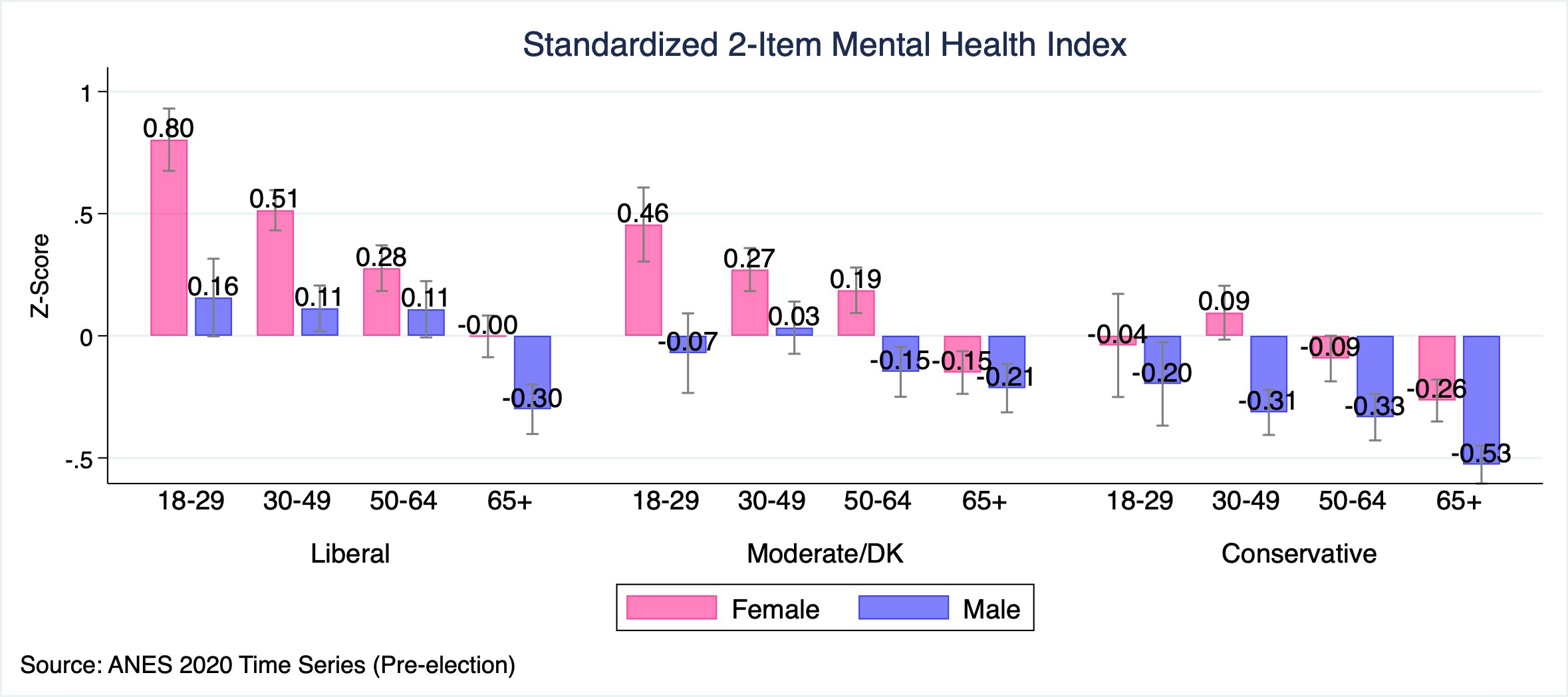
My sense is these statistics are roughly correct. They also bolster the Buddhist ethical position that compassion must be based on wisdom. Indeed, the greatest virtue in Buddhism is wisdom, not compassion. Buddhism counsels dispassion and calm reflection on all speech and behavior; I would add perception as well. An argument that appeals to emotion is not necessarily all bad. But one that uses emotion as mind-control is all bad. The wise often lose political debates because their positions are more complex, based on dispassionate analysis rather than single-minded emotion. Women have had many years in power now and the results are not good. This is probably due to greater emotionality among our dearly loved fair sex. Not sure where this will lead but it is always best to place your bets on reason and sound ethics above all else. Of course, emotion and compassion can and should be factors in any complex position, just not the preeminent, leading factors. ABN

Why did the West work with the communists to destroy Rhodesia?

Why did the West work with the communists to destroy Rhodesia?

Or, why would the “free” side of the Cold War ally with the communists to destroy a thriving, resource republic in a critical area

It makes no sense at first. But it makes much sense with a closer look 🧵👇

Critical to understand here is what the two main sides of the Cold War were

On one side was the communist block. It wanted, whatever its internal divisions, to spread communism abroad, mainly by launching revolutions within the old Empires of the Great Powers

The other side was America. It, by hook or crook, aimed to contain and then roll back communism, mainly by subsuming the same former Great Power colonies the communists were aiming for, and replacing colonial government with nationalist-minded locals that would engage in free trade with America and at least pay lip service to liberal democracy

link

Does the Universe think? (with Bernardo Kastrup)

228

UPDATE: I’ve watched 45 minutes of this and, so far, it is a beautiful model of how to talk. These guys are both trained philosophers and act like it. They listen charitably (means use the best possible interpretation of what they hear) to each other, delight in rebuttals, and quickly and easily clear up misunderstandings with evident pleasure as they move almost seamlessly together deeper and deeper into their topic without losing sight of where they want to go. Maybe at minute 46 they are going to kill each other in a fit of anger, who knows? Up to minute 45, they provide an exquisite example of how to talk about philosophy. And what FIML can teach partners about how to talk to each other.

The field of FIML is not philosophy per se. It is the idiosyncratic intermeshed fields of the FIML partners themselves. I have often said FIML has no content save what partners bring to it. FIML is a technique which reveals what our content is, what we are bringing to our relationship. Once both partners see clearly through the eyes and ears of each other what both of you are bringing, you will also delight in the fun of being able to talk as well as Kastrup and Hawkins (but about much more than just philosophy). I doubt either one of them does FIML and both of them might find it difficult since so much of their psycholinguistic constellations are defined by academic philosophy, but I know they could do it if they tried. ABN

Dear Elon:

This is very good and well-worth the time. Pretty much what your basic American thinks or feels put very well. The parts on Indians ring true. It’s the same story for Jews but with different scenery. Simplicity that actually cuts to the core is always good. But you have to take it for that and not spin off into ‘fuck your own face’ or whatever Musk said. I hope Elon turns this episode around. People will hate you for what you do but will forgive you for what you did if your really reform. That happens to be basic (based?) Buddhism. It’s all transient. Or to say it better, all bullshit is transient but ethical, moral, generous, compassionate deeds and intentions are not. ABN

Bernardo Kastrup, Richard Watson, and Mike Levin — conversation 1

UPDATE: This is a very accessible philosophical discussion during which Kastrup lays out a clear argument for Analytical Idealism. What Kastrup describes is a very good way to understand Buddhist philosophy, which is based on similar thinking but takes it further. I highly recommend this discussion and other videos and essays by Kastrup. He is a perfect advocate for understanding Buddhism since he seems to be entirely unaware of Buddhist thought and entirely devoid of normative Buddhist cliches. ABN

Kastrup responds to my criticisms of Analytic Idealism (part 1)

UPDATE: This is a very good discussion which can be understood within a Buddhist ‘mind only’ framework (or not). I have posted it especially because it seems to conform very well with what the Buddha might have thought and/or how later Buddhists came to understand Buddhist enlightenment, the cessation of all suffering through fully understanding all of reality. This video is the first part of a planned two-part discussion. The second part has not yet been posted. The second part is going to start with the question why the universal mind itself does not experience metacognition. I have some idea how Kastrup will answer that question, but will wait for his take before commenting further. Kastrup’s work in general seems to me to be a good way to consider Buddhist practice and thought from a modern point of view, using vocabularies and concepts we are familiar with or which can be readily accessed. It is important to know that the captions for the above video rarely correctly render the term Markov Blanket. This is an important term for understanding Kastrup’s ideas. More information can be found here: Markov Blanket. ABN

UPDATE 2: Near the end of the discussion linked above, Kastrup says he is incapable of meditation. I hope he reads this because I want to point out to him and others that meditation, or samadhi in Buddhism, is the method for the ‘small self’, which resides inside its Markov Blanket, to commune with the One Mind (Kastrup’s term, which works well with Buddhist thought). Samadhi is a natural state. When you take your attention away from Kastrup’s ‘dashboard’ and open the windows (let’s ignore the wind in his metaphor), your ‘small self’ perceives and experiences One Mind. Like all experience, samadhi states become richer and richer the more we experience and appreciate them. I would like to also encourage Kastrup and others to read this description of the Five Skandhas. The ‘consciousness’ which arises out of the first four skandhas is the consciousness of the small self, the self ensconced in its Markov Blanket. Whether he knows it or not, Kastrup has done an excellent job of describing Buddhist thought and practice in modern terms. I particularly like his work because, as far as I know, he has never mentioned Buddhism. For this reason, he provides a very refreshing take on the Dharma very clearly explicated and coming from a different angle from all others. ABN