UPDATE: Almost all humans become slaves to their metacognitive content, whatever that may be. In the video above, all participants are beholding (or pretending to behold) Jesus as the top of their metacognitive content. In Iran, political leaders are beholding something else at the top of their metacognitive content. In Israel, leaders are beholding something else. All three of these religions sprang from an inchoate Abrahamic tradition. Among these three, there are numerous further divisions and subdivisions. I believe there is not a single Catholic in the room above. Prayer is good and I am glad they are praying. I am not trying to dump on anyone, but do want to mention that Buddhism is different from all other religions in that it enjoins us (more or less) to not behold, or hold, anything at the top of our metacognitive content. This is the area the Buddha refused to describe, define or answer questions about. Why is that? It is because reifying top metacognitive content, holding it as absolute truth, is to retreat from its true reality; believing you absolutely know what God wants, however you put that, is a hindrance to fully experiencing Ultimate Reality, which you can call God if you want. The Buddha did not even use the term Ultimate Reality. He left the top metacognitive category blank, to be filled only by your own individual experience. For the fun of it, no matter how you see yourself, try throwing all of it out, leaving nothing at the top of your metacognition — no content, no identity, no self, no pride, no gods, no Buddha. Then go outside and walk around. Notice how easy it is to function perfectly well after replacing your habitual metacognitive prison with pure experience. ABN
…President Trump proactively secured the border, targeted narcotraffickers, confronted narcoterrorists, targeted Mexican drug cartel leadership, leveraged the DOJ to indict regional actors, pushed China out of control in the Panama Canal, took out Nicholas Maduro, took control of Venezuela oil production – both for the security of the U.S. and benefit of the Venezuelan people, removed the discounted oil benefit for China and reasserted stability in the Western hemisphere.
Then, with all that in place, he turned toward Iran…. but, proactively planned for a ‘Shield of the Americas Summit’ before the Iran operation began and scheduled it while Operation Epic Fury continues.
This is but a snippet from a longer article which is well-worth reading. I largely agree with the snippet above and with what Trump appears to be doing in the Western Hemisphere so far. The timing of Trump’s actions is also appropriate, but the author of this essay seems to agree with the attack on Iran. I respect the website this essay comes from and view it every day because it often has good insights into USA politics. At the same time, Jewish Supremacy and its roles in USA and US policy is never mentioned. This is unfortunate and could be due to habitual blinders or something else. In today’s world Jewish Supremacy and its terrible harms to USA and the world cannot reasonably be ignored. One could say that JS and its followers have the power and opportunity to conquer Iran and Russia, so let them do it. That is not an entirely irrational thing to say. I am not in that camp, but this is a Kill-Or-Be-Killed (KOBK) world at the top and that is how the world has always been. A KOBK analysis of what is happening is a deep and gruesome one, but KOBK is also the very nature of elite reality. JS and others going for world domination probably see themselves as Alexander the Great, which if they succeed would sort of be true. It’s always a good idea to see any event from all points of view, including the JS POV. ABN
The Kurdish militias, based across the border in Iraq, began the offensive in northwestern Iran on Wednesday.
President Donald Trump on Sunday night spoke with the heads of Kurdish militant groups in Iraq to discuss the situation in Iran.
The CIA was exploring plans to arm the Kurdish forces with the aim of sparking a popular uprising in Iran, CNN reported Tuesday.
The Kurdish groups are widely seen as the most well-organized segment of the fragmented Iranian opposition and are believed to have thousands of trained fighters.
Their entry into the war could pose a significant challenge to the besieged authorities in Tehran and could also risk pulling Iraq further into the conflict.
Asked earlier about Kurdish involvement, Defense Secretary Pete Hegseth told reporters: ‘None of our objectives are premised on the support or the arming of any particular force.
‘So, what other entities may be doing, we’re aware of, but our objectives aren’t centered on that.’
My guess is the US/Israeli goal is to divide Iran into smaller nations, which will be easier for them to control, while also posing less of a threat to Israel. The Ukraine War has been a similar event in that the ultimate goal is to dismember Russia and divide it into smaller nations. ABN
UPDATE: Most analysts are saying it is not possible for Israel/USA to break up Iran into smaller countries. Or to do that to Russia. But the long-term NATO encroachment against Russia has fundamentally had that goal in mind since the fall of the Soviet Union. We see the same goal for Iran today. I do see how they have failed in Ukraine and are failing in Iran, but their ace card is to use nukes in Iran and see what happens after that vis-a-vis Russia. The elitists doing this are hellbent on world domination and are still going for it now, just as they have been all along. In their minds, there is nothing to stop them from using nukes. Indeed, it seems probable that their strategy is to allow Iran to cause so much damage in Israel and the Gulf states that using nukes will strike many as a good move. At the core of this onslaught lies Jewish Supremacy, a hardheaded self-deceiving fanatical meta-cognitive doctrine couched in intransigent religious terms. Thirty to fifty million Americans have fallen for it along with a majority of Jews, many of whom have deeply infiltrated USA. ABN
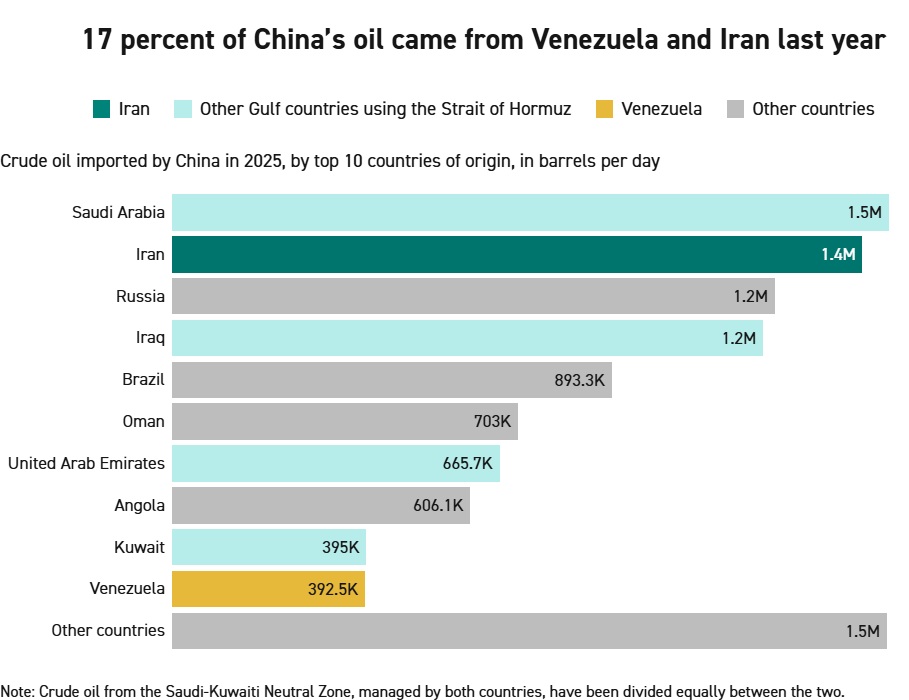
Consider the severe economic body blows to China in the past 14 months.
♦ First blow, the Trump tariffs hit Beijing hardest. ♦ Second blow, the Beijing tentacle on the Panama Canal is severed. ♦ Third blow, global tariff threats changed the risk dynamic for southeast Asia countries who acted as transnational shippers for China. ♦ Fourth blow, cheap sanctioned oil from Venezuela was cut-off. ♦ Now, the fifth blow; cheap, sanctioned Iranian oil is disrupted.
It’s not just a factor of oil flow, but also the price that China will ultimately end up having to pay. Beijing was buying oil from Venezuela, Iran and Russia at steep discounts because their purchases were skirting western sanctions.
With Iranian oil production now no longer a market option, China will seek to replace their needs with more Russian alternative. However, that diversion means the oil India was purchasing from Russia will come at a higher price, and the refined final product that was exported by India will arrive to the European Union carrying an additional cost.
Simultaneously, Vladimir Putin was asked about Russia’s lack of military support to Iran in response to the U.S. military action, to wit the Russian president noted the technical terms of their joint military agreements did not include Russia’s immediate involvement. In shorthand, Russia is busy and is not getting involved.
Russia was/is partially dependent on receiving military supplies from Iran in exchange for oil transfers. The military component is reported to include drones from Iran for use in the Ukraine conflict. Now that exchange profile is shuttered.
Taking Iran’s malign influence off the geopolitical chessboard is beginning to surface in major challenges to the BRICS assembly (Brazil, Russia, India, China, South Africa). Russia, China and India are impacted directly.
The BRICS nations were skirting western oil sanctions by trading the commodity outside the petrodollar structure. However, President Trump now controls the flow of oil from Venezuela, and his administration controls the currency in which it is sold.
With Iranian oil removed from the non-petro supply chain, the only remaining non-petro oil producer is Russia – who is simultaneously hit with a loss in military hardware support. China may end up as a larger oil customer to Russia, but at what price and in what payment structure.
With global oil supplies in a state of flux, and with the USA in control of the oil flow from Venezuela, North America is certainly in the best position for minimal energy disruption.
Asia is heavily dependent on oil flows through the Strait of Hormuz, and the majority of Europe has already shut themselves off from Russian oil production, putting themselves in a position of dependency to the global markets. The short-term ramifications of this oil disruption hit China, Southeast Asia, Japan and Europe particularly hard.
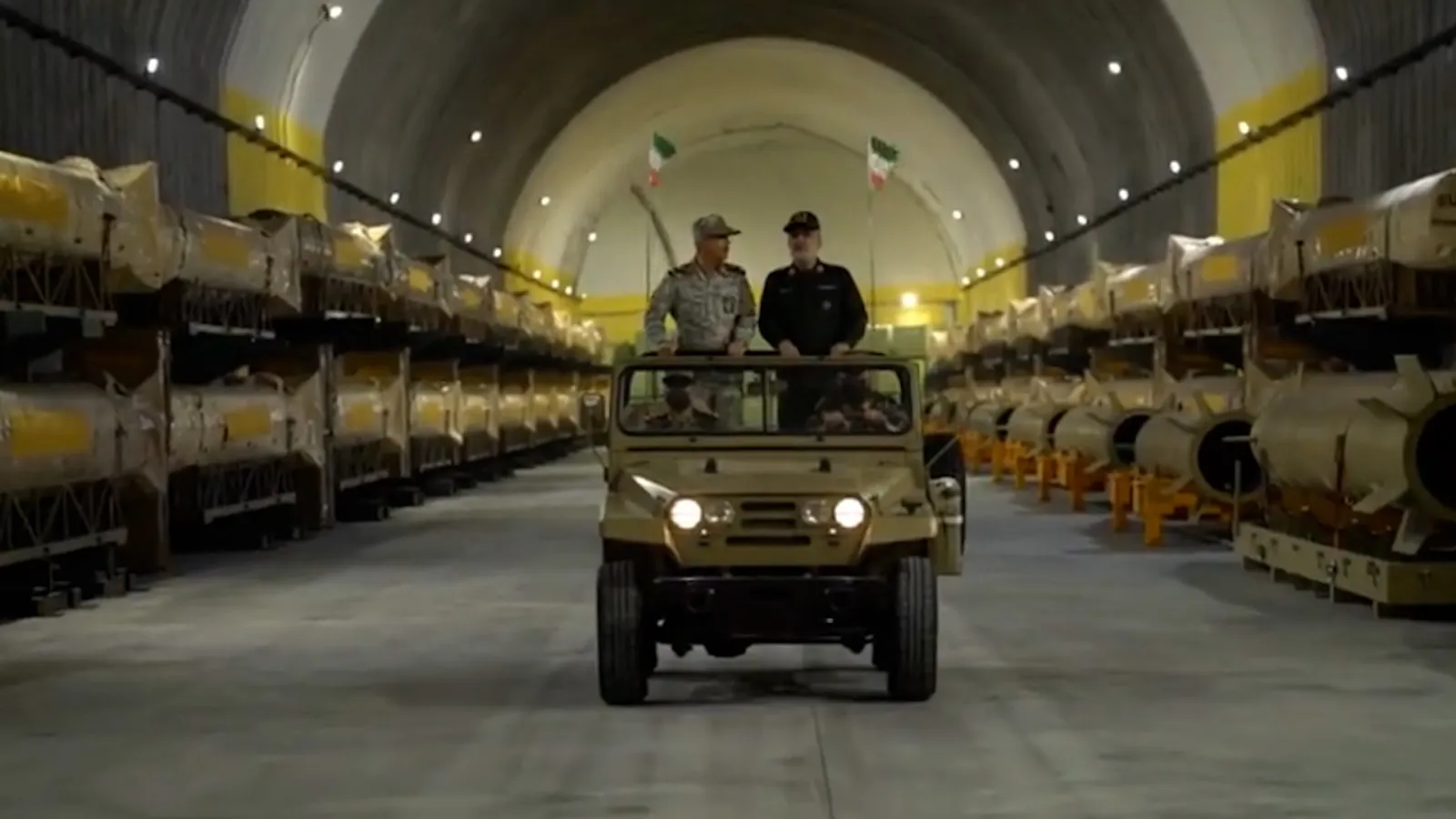
Iran’s underground and hidden missile reserves are a cornerstone of its military strategy, designed to survive and retaliate against large-scale attacks. The country has developed extensive “missile cities”—vast underground complexes excavated deep into mountains, some reaching 500 meters below ground—to store and launch ballistic missiles and drones. These facilities, scattered across provinces like Lorestan, East Azerbaijan, Isfahan, and Kermanshah, house long-range missiles such as the Shahab-3, Sejil, and Khorramshahr, with ranges up to 2,000 km (1,242 miles).
Iran's Revolutionary Guard Corps (IRGC) unveiled one of its largest underground missile cities on Tuesday, March 25. | IRNA/IRNA
Key sites include:
Khorramabad (Lorestan): A major storage and launch site for surface-to-surface and cruise missiles.
Tabriz (East Azerbaijan): Iran’s second-largest missile silo complex, capable of launching missiles toward Eastern Europe.
Isfahan: Home to the largest missile assembly and production site, producing components and missiles like the Shahab-3.
Kermanshah: Hosts the Bakhtaran and Panj Pelleh bases, strategically positioned to target Israel and Gulf states.
Iran has also constructed underground naval missile bases in southern Iran and the Gulf, with one unveiled in 2025. These facilities are often accessed through concealed entrances and protected by multiple layers of bunkers and berms. Despite their resilience, analysts highlight a critical vulnerability: many of these tunnels store munitions in open caverns without blast doors or separated revetments, making them susceptible to catastrophic chain reactions if breached.
While Israel and the U.S. have targeted these sites in recent airstrikes—damaging facilities like the Tabriz base—Iran continues to maintain a large stockpile of over 3,000 ballistic missiles, with about 2,000 capable of reaching neighboring countries. The Islamic Revolutionary Guard Corps Aerospace Force (IRGC-AF) uses these hidden reserves as part of a “war of salvos” strategy, aiming to overwhelm enemy missile defenses and increase the cost of military operations.
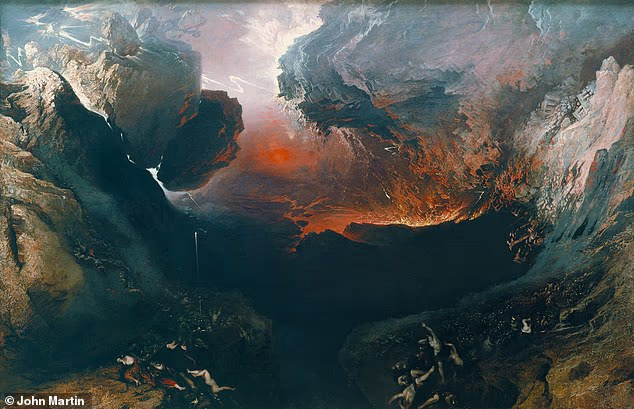
Donald Trump‘s commanders have been accused of telling troops that the war with Iran is part of God’s plan for Armageddon.
The Military Religious Freedom Foundation (MRFF), a non-profit civil rights watchdog, said it has received 110 complaints from troops since the war broke out on Saturday.
The complaints span more than 40 different units across 30 military sites, first reported on veteran journalist Jonathan Larsen’s Substack.
A non-commissioned officer (NCO) wrote to the MRFF Monday that his combat-unit commander had claimed Trump was ‘anointed by Jesus to light the signal fire in Iran to cause Armageddon and mark his return to Earth.’
‘He urged us to tell our troops that this was “all part of God’s divine plan” and he specifically referenced numerous citations out of the Book of Revelation referring to Armageddon and the imminent return of Jesus Christ,’ the NCO said.
The Great Day of His Wrath (1853), oil painting on canvas by the English painter John Martin
The video shows footage of an Iranian ballistic missile attack on Israel on March 1, 2026, where cluster warheads reportedly split into up to 80 submunitions, a capability IDF officials described as unprecedented for maximizing civilian area coverage.
Iran’s missile program, originating in the 1980s, has advanced indigenously, bolstered by over 233,000 annual engineering graduates—third globally—enabling self-reliant innovations despite sanctions and assassinations.
The attacks involving these advanced cluster-capable missiles have primarily targeted central Israel, with confirmed impacts and damage in:
Petah Tikva (a major city east of Tel Aviv, hit by a missile with fragmentation/cluster elements, causing shrapnel damage across residential areas but no direct fatalities reported in that specific strike).
Tel Aviv area and suburbs (multiple barrages triggered sirens nationwide, with penetrations and damage to buildings/apartments).
Beit Shemesh (west of Jerusalem; one of the worst incidents involved a direct or near-direct hit killing around 9 people and injuring dozens, with cluster submunitions noted in some waves).
Broader central Israel regions, including areas near Jerusalem suburbs, Ramat Gan (near Tel Aviv), and scattered impacts from shrapnel/submunitions.
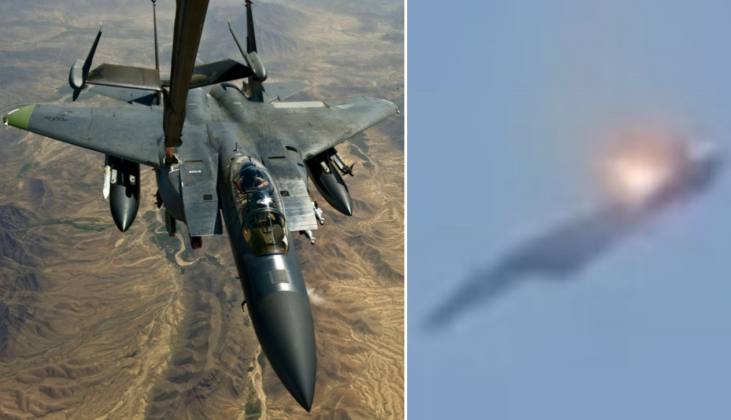
The United States Central Command has confirmed that three U.S. Air Force F-15E long range fighters were shot down over Kuwait on March 1, following multiple unconfirmed repots of shootdowns, and the subsequent release of footage showing one of the aircraft falling in flames in an uncontrolled spiral over Kuwaiti skies.
“At 11:03 p.m. ET, March 1, three U.S. F-15E Strike Eagles flying in support of Operation Epic Fury went down over Kuwait due to an apparent friendly fire incident… During active combat—that included attacks from Iranian aircraft, ballistic missiles, and drones — the U.S. Air Force fighter jets were mistakenly shot down by Kuwaiti air defences,” the Command reported.
Claims that the aircraft were shot down by Kuwaiti forces, rather than by hostile air defences in Iran or Iraq, having been bought to serious question.
F-15E and F-15E Crashing Over Kuwait
With Kuwait employing exclusively NATO standard air defence systems and fighter aircraft, modern identification friend or foe systems leave only a minimal possibility of shooting down friendly fighter aircraft, fuelling speculation that claims that the aircraft were shot down by friendly forces may be an attempt to deny Iran credit for what would be one of the most signifiant air defence operations in recent decades
While it is still early in the conflict, Iran appears to have maintained military momentum despite high-profile assassinations of senior Iranian military officials and Supreme Leader Ali Khamenei. Claims that regime change objectives have stalled reflect the absence, thus far, of visible elite fragmentation inside Iran.
Moreover, Iran has targeted regional energy and infrastructure, plus threatened maritime traffic through the Strait of Hormuz. Any sustained closure of the strait would represent a major escalation; at present, the waterway is all but closed — with ships avoiding it due to insurance risk and increasingly threatening statements from Iranian officials.
Iran appears prepared for a conflict that could extend for months. By contrast, US and Israeli planning assumptions appeared to expect to be able to wrap up operations in days or weeks. The legality of the initial strikes also remains contested, and this issue is likely to shape international diplomatic pressure as economic consequences mount.
The question is whether Gulf Arab states may reassess aspects of their security relationships depending on perceptions of US deterrence credibility; Washington may confront force posture and sustainability challenges if the conflict becomes protracted.
The international community is likely to press for de-escalation, but the Iranian government sees this conflict as an existential threat, so any termination terms would need to reflect that calculation, or the war will not end.
Trump said that it was his assessment that ‘the way the negotiation was going’ with Iran, he believed they would attack first, ‘and I didn’t want that to happen.’
‘You see we were having negotiations with these lunatics and it was my opinion that they were going to attack first,’ the president explained. ‘They were going to attack first, I felt strongly about that.’
‘So if anything I might have forced Israel’s hand.’


 American Buddhist Net