
Iran’s underground and hidden missile reserves are a cornerstone of its military strategy, designed to survive and retaliate against large-scale attacks. The country has developed extensive “missile cities”—vast underground complexes excavated deep into mountains, some reaching 500 meters below ground—to store and launch ballistic missiles and drones. These facilities, scattered across provinces like Lorestan, East Azerbaijan, Isfahan, and Kermanshah, house long-range missiles such as the Shahab-3, Sejil, and Khorramshahr, with ranges up to 2,000 km (1,242 miles).
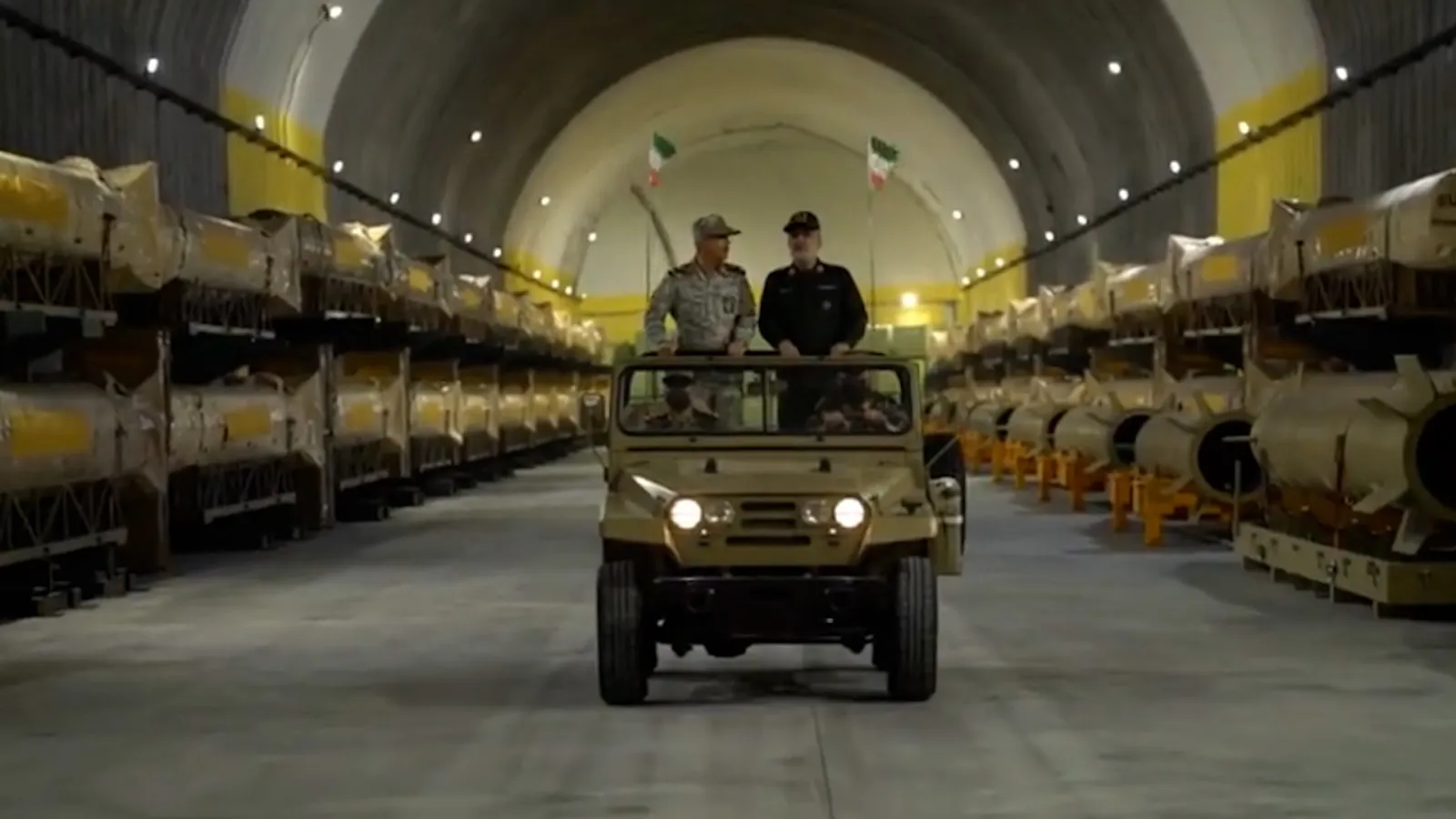
Iran's Revolutionary Guard Corps (IRGC) unveiled one of its largest underground missile cities on Tuesday, March 25. | IRNA/IRNA
- Key sites include:
- Khorramabad (Lorestan): A major storage and launch site for surface-to-surface and cruise missiles.
- Tabriz (East Azerbaijan): Iran’s second-largest missile silo complex, capable of launching missiles toward Eastern Europe.
- Isfahan: Home to the largest missile assembly and production site, producing components and missiles like the Shahab-3.
- Kermanshah: Hosts the Bakhtaran and Panj Pelleh bases, strategically positioned to target Israel and Gulf states.
Iran has also constructed underground naval missile bases in southern Iran and the Gulf, with one unveiled in 2025. These facilities are often accessed through concealed entrances and protected by multiple layers of bunkers and berms. Despite their resilience, analysts highlight a critical vulnerability: many of these tunnels store munitions in open caverns without blast doors or separated revetments, making them susceptible to catastrophic chain reactions if breached.
While Israel and the U.S. have targeted these sites in recent airstrikes—damaging facilities like the Tabriz base—Iran continues to maintain a large stockpile of over 3,000 ballistic missiles, with about 2,000 capable of reaching neighboring countries. The Islamic Revolutionary Guard Corps Aerospace Force (IRGC-AF) uses these hidden reserves as part of a “war of salvos” strategy, aiming to overwhelm enemy missile defenses and increase the cost of military operations.

 American Buddhist Net