Most of us go through periods of stress in our everyday lives – but there are actually seven types of ‘hyperarousal’, according to a new study.
Researchers say the feeling of tension can be teased out into distinct subgroups.
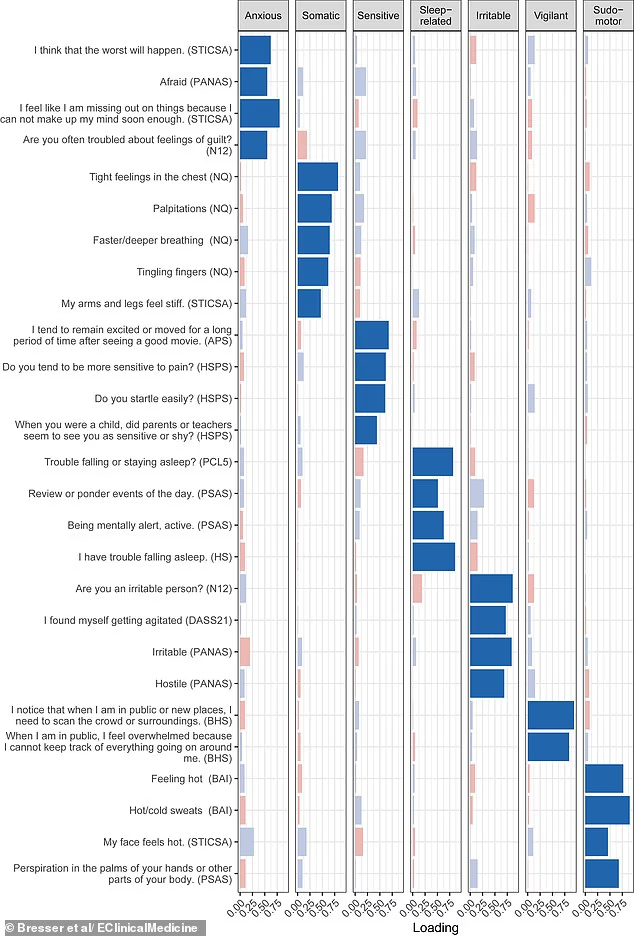
This includes anxious, somatic, sensitive, sleep–related, irritable, vigilant and sudomotor – and each are characterised slightly differently.
Perhaps the most well–known, the ‘anxious’ feeling of tension, is defined by being worried or concerned about something bad happening in the future. It can also indicate feelings of guilt or fears about missing out on things.
Feeling ‘sensitive hyperarousal’ indicates emotional vulnerability and being easily startled, the scientists explained.
Another common source of tension is ‘sleep–related’ – defined by trouble falling or staying asleep and leading to trouble being mentally alert.
‘No previous study has addressed the unresolved question of whether hyperarousal may be one common…construct or rather has multiple dimensions,’ the team, from the Netherlands Institute for Neuroscience, wrote in the journal EClinicalMedicine.
‘This study discovered seven different dimensions of hyperarousal and provides a concise instrument to assess them.’
Psychology gets lots of stuff wrong, but generally does a good job with descriptive overviews like this. This study is based on a questionnaire of 467 adults, all of whom had some sort of psychiatric diagnosis. Seems worth thinking about. Anything well described constitutes or can lead to useful explanations, which may yield methods of control or intervention. ABN


 American Buddhist Net