Over 40,000 years ago, our early ancestors were already carving signs into tools and sculptures. According to a new analysis by linguist Christian Bentz at Saarland University and archaeologist Ewa Dutkiewicz at the Museum für Vor- und Frühgeschichte (Museum of Prehistory and Early History) in Berlin, these sign sequences have the same level of complexity and information density as the earliest proto-cuneiform script that emerged tens of thousands of years later, around 3,000 B.C.E.
Using a computational approach, the team examined over 3,000 signs found on 260 objects to reveal insights into the origins of writing. Their findings, which have been published in the journal PNAS, were clear—and surprised even the researchers.
Paleolithic objects dating back between 34,000 and 45,000 years bear mysterious sign sequences—often repeated lines, notches, dots and crosses. Many of these artifacts were discovered in caves in the Swabian Jura, such as a small mammoth found in the Vogelherd Cave in Lone Valley in southwestern Germany.
A Stone Age human carved the mammoth figurine out of a mammoth tusk and carefully engraved it with rows of crosses and dots. Other artifacts found in the Swabian Jura are also etched with signs.
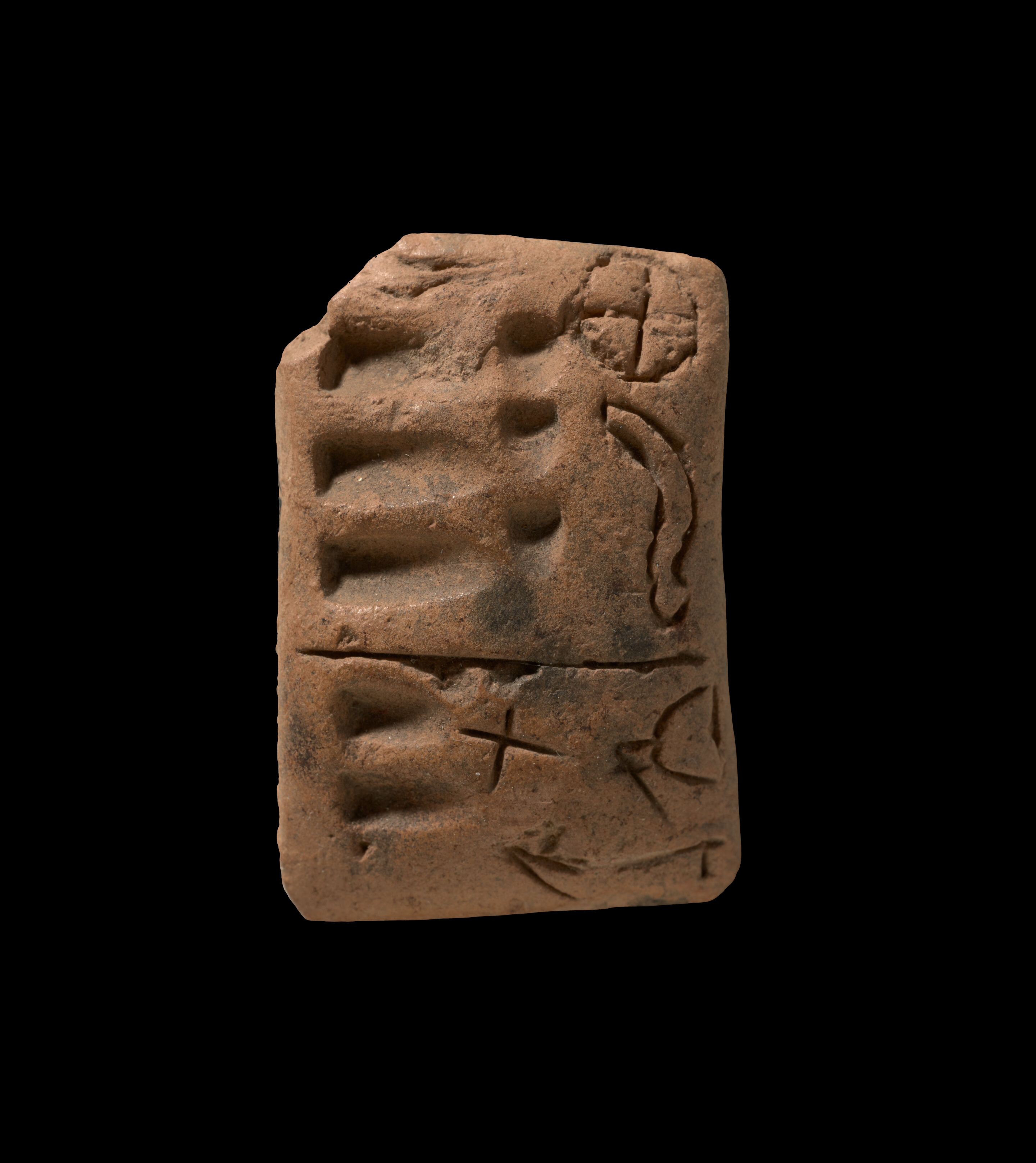
Proto-cuneiform tablet of the Uruk IV period (VAT 14774). This so-called numero-ideographic tablet features number signs on the left-hand side and more diverse ideographs on the right-hand side. This tablet is additionally partitioned by a horizontal line. Credit: Staatliche Museen zu Berlin, Vorderasiatisches Museum / Olaf M. Tesmer, CC-BY-SA 4.0


 American Buddhist Net