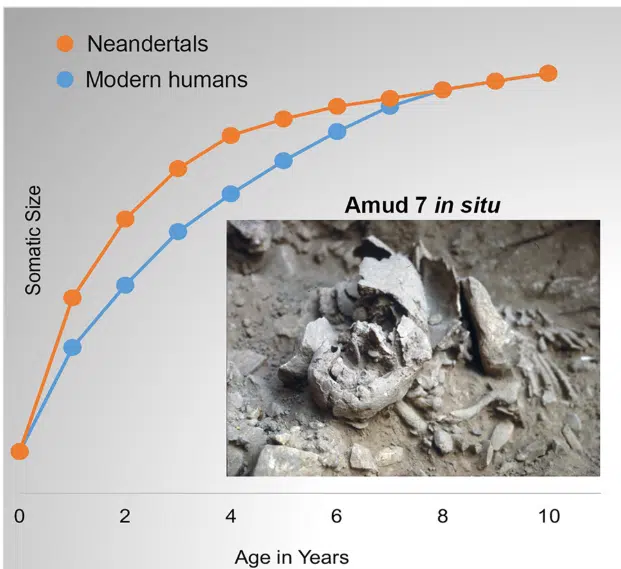
A six-month old Neanderthal infant who lived more than 50,000 years ago reached the physical size of a modern one-year old toddler in just six months. The discovery, based on a highly complete skeleton, points to a rapid growth pattern in early life.
The fossil, called Amud 7, was found in a cave near the Sea of Galilee and dates back between 51,000 and 56,000 years. Reconstructed from 111 bone fragments, gave to scientists a detailed look at Neanderthal infancy, a stage rarely preserved in the archaeological record.
Growth rates influence energy needs, parental care, and adaptation to climate. In this situation, the findings suggest a faster start to life in a demanding environment.


 American Buddhist Net