You can create fiber inside food that didn’t have it before. The trigger is temperature.
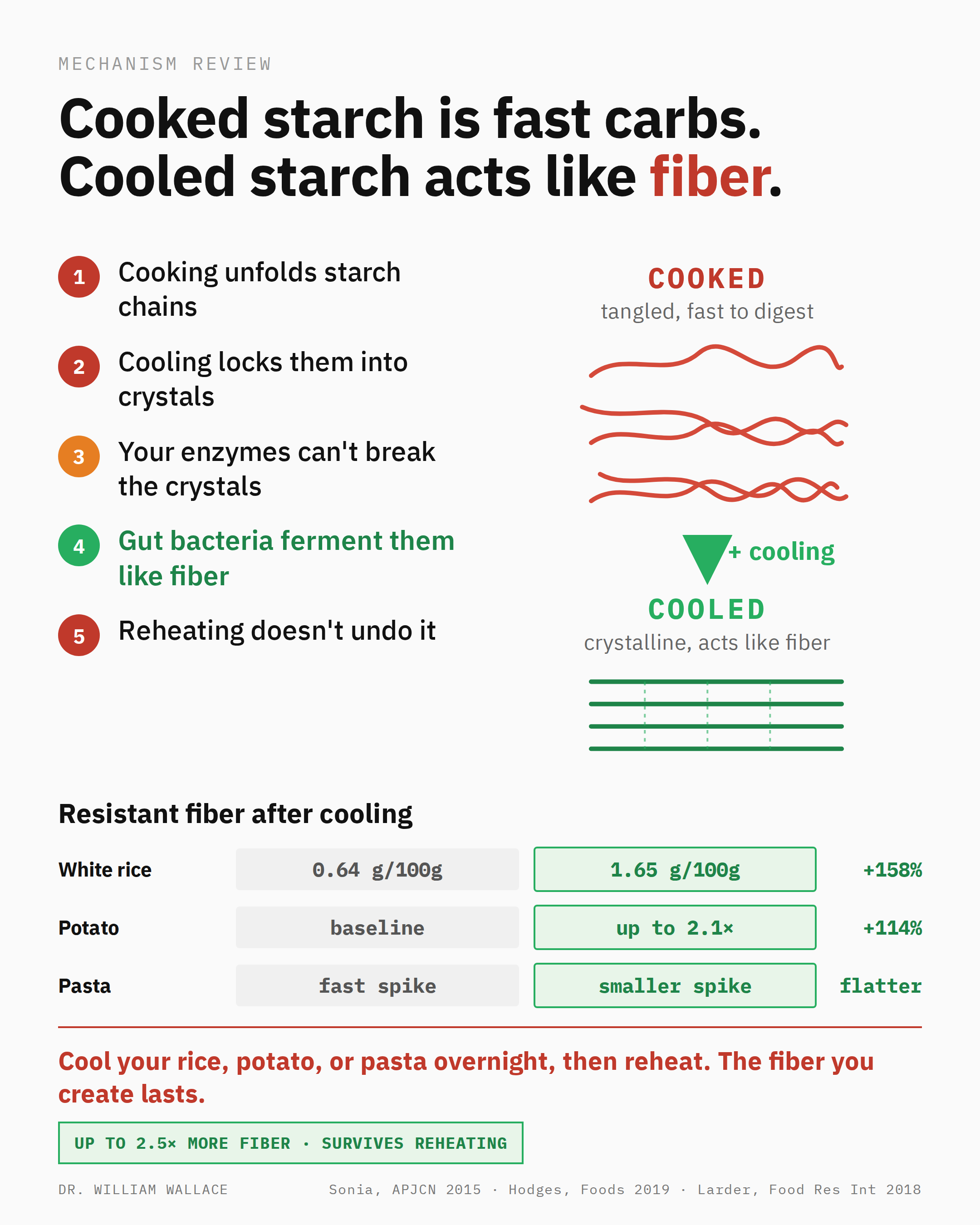
When starch is cooked, the chains unfold and digest fast. When it cools, the chains realign into crystals that resist digestion. Your gut bacteria ferment them into short-chain fatty acids including butyrate. The FDA classifies this retrograded starch as dietary fiber.
Sonia 2015 measured the shift in white rice. Resistant starch more than doubled when rice was cooked, refrigerated 24 hours at 4°C, then reheated (0.64 → 1.65 g per 100g). In 15 healthy adults, the cooled-and-reheated rice produced a meaningfully lower glucose response than fresh rice.
Larder 2018 found cooled potatoes had up to 114% more resistant starch after extended cooling. Hodges 2019 showed reheated pasta produced a smaller glucose spike than hot pasta. Cool your rice, potato, or pasta overnight. Reheat. The fiber you create survives.


 American Buddhist Net