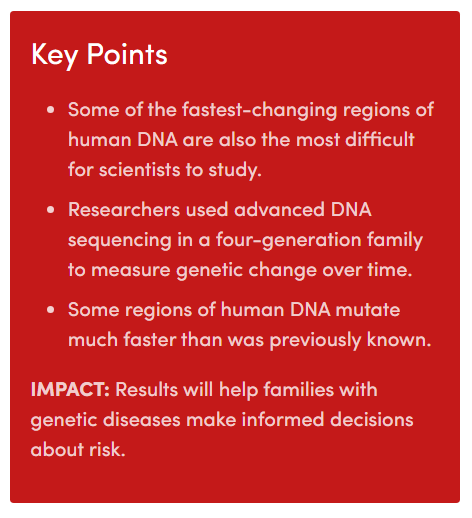
Knowing how human DNA changes over generations is essential to estimating genetic disease risks and understanding how we evolved. But some of the most changeable regions of our DNA have been off-limits to researchers—until now.
A team of researchers from University of Utah Health, University of Washington, PacBio, and other institutions has used multiple DNA sequencing technologies to develop the most comprehensive atlas yet of genetic change through generations.
The new investigation revealed that parts of the human genome change much faster than was previously known, laying the foundations for new insights into the roots of human disease and evolution.
“It’s mutations that ultimately differentiate us from other species,” says author Lynn Jorde, PhD. “We’re getting at a very basic property of what makes us human.”


 American Buddhist Net