Following the cessation of Iranian-Israeli hostilities in a ceasefire June 24, 11 days after they had been initiated, speculation has continued to grow regarding how Iran may respond to a possible new wave of attacks on its territory.
Prior Iranian strikes on Israeli targets made use of a wide range of missiles, from the lower end Shahab-3 which began to enter service in the late 1990s, to the solid fueled Fattah which uses a hypersonic glide vehicle for guidance.
While Iran’s ballistic missile development has for decades relied heavily on components and technology transfers from North Korea, the country has also procured a small number of North Korean missiles ‘off the shelf’.
Although the vast majority of these procurements were short ranged Hwasong-5 and Hwasong-6 models sold during the 1980s and 1990s, a small number of Hwasong-10 missiles were also reportedly transferred. When acquired in the mid-2000s, they were by far the most capable in the Iranian arsenal.
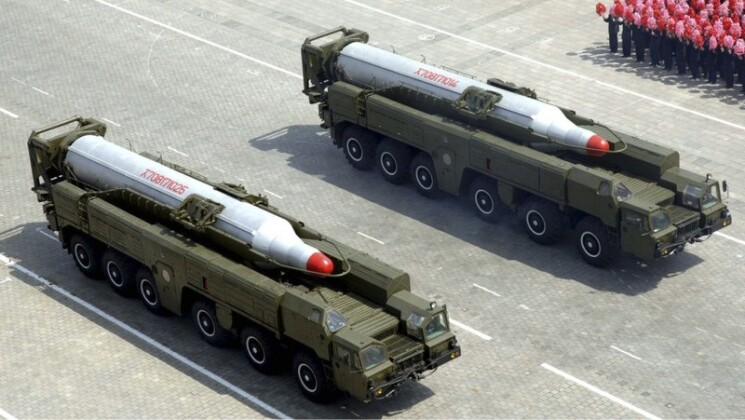
Hwasong-10 Ballistic Missile on Parade
U.S. and South Korean intelligence reported the Hwasong-10’s entry into service in 2006, after reports in January that year indicated that it had been flight tested in Iran under North Korean supervision. These exports were a particularly sensitive issue at a time when a Western attack on Iran was under consideration.


 American Buddhist Net