Following confirmation of the planned deployment of U.S. Air Force F-35A fighter aircraft to Puerto Rico to support ongoing operations near Venezuela, questions have increasingly been raised regarding how the fighters may be utilised to support an American offensive against its southern neighbour as tensions continue to escalate.
The deployment of F-35s was announced hours after an overflight by two Venezuelan Air Force F-16 fighters over the U.S. Navy Arleigh Burke Class destroyer USS Jason Dunham in the Caribbean Sea, and at a time when the United States is actively considering options to escalate hostilities to launch attacks on Venezuelan soil.
As part this escalation, the United States government has placed a higher bounty on the head of Venezuelan President Nicolas Maduro, following years of sustained efforts to oust him from power including a failed kidnapping attempt in 2020.
The F-35 is the only fifth generation fighter class in production anywhere in the Western world, and is considered unrivalled in its sophistication by any non-Chinese fighter class.
The aircraft is heavily optimised for operations against advanced air defence networks, making it an ideal fighter to neutralise the S-300VM, BuK-M2 and S-125 systems guarding Venezuelan airspace, all of which are deployed in only relatively limited numbers.
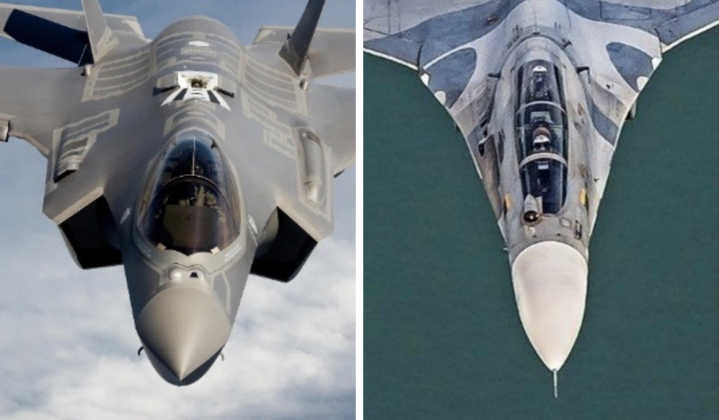
F-35 (left) and Venezuelan Su-30MK2
With Venezuela’s F-16s being among the oldest and least capable in the world, the greatest challenge to any attempts to attack the country by air will come from its fleet of 22 Su-30MK2 fighter aircraft, which considered by far the most capable in Latin America.
A comparison of the capabilities of the rival fighter classes could thus provide valuable insight into how a potential engagement could play out.


 American Buddhist Net